
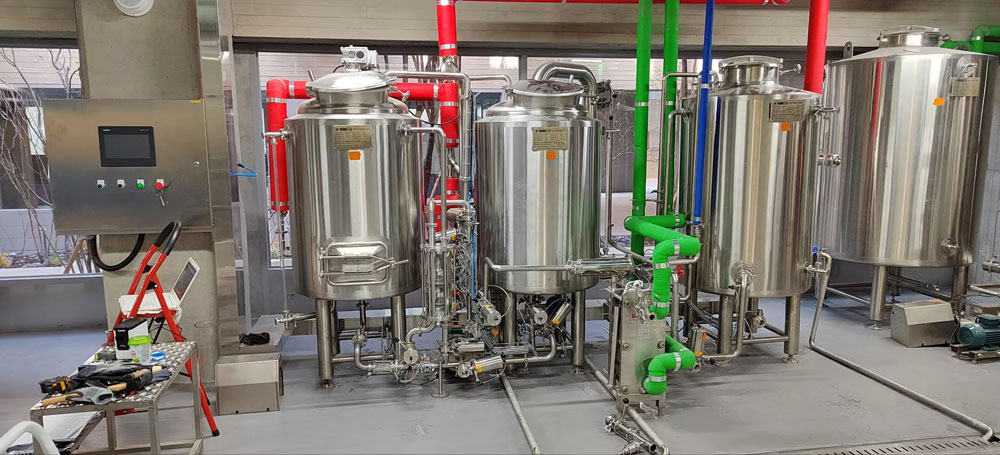
Beer brewing is both a science and an art—and when you move from small batches to commercial production, success depends on repeatable process control, sanitary design, and a well-engineered equipment package. If you’re planning a 30HL (30-hectoliter) Turnkey brewery focused on IPA and lager with bottling, your brewhouse and cellar design must balance throughput, quality, and expansion potential.
This article explains the beer brewing process in four simplified steps—mashing, separation (lautering), boiling, and fermentation—then translates those steps into practical equipment requirements for a 30HL turnkey brewery project. It also covers the extra systems a real commercial brewery needs: glycol cooling, CIP, utilities, bright beer tanks, and a bottling line.
1) Overview: What Does “30HL Brewery” Mean?
A 30HL brewhouse typically produces 3,000 liters of wort per batch (about 25.5 US beer barrels). For IPA and lager production, this size is popular because it supports commercial distribution while remaining flexible enough for multiple beer styles.
At 30HL scale, the key design goals are:
- Stable quality for hop-forward IPA (oxygen control, dry-hopping capability, cold-side hygiene)
- Clean, consistent lager fermentation (tight temperature control, longer tank residency times)
- Reliable packaging performance for bottles (clarity, carbonation stability, low dissolved oxygen)
2) The Four Key Ingredients for Brewing Beer
All beer styles—including IPA and lager—are based on the same four ingredients:
Malt
Malt provides fermentable sugars and sets the base flavor and color. IPA grists often use pale malt with specialty malts for body; lagers typically use cleaner base malts with a crisp finish.
Water
Water chemistry influences mash performance and flavor balance. IPA often benefits from water profiles that enhance hop expression; lagers often require a cleaner, smoother profile and consistent alkalinity control.
Hops
Hops define bitterness and aroma in IPA, and contribute balance in many lagers. Timing is crucial: kettle additions provide bitterness, while late hopping and dry hopping create aroma.
Yeast
Yeast turns wort into beer. IPA is often fermented with ale yeast (warmer, faster, aroma-driven), while lager uses lager yeast at cooler temperatures with longer maturation.
3) Step 1: Mashing (Converting Starch to Sugar)
Mashing is the process of mixing crushed malt with hot water to create wort. Enzymes in the malt convert starches into sugars, which yeast can later ferment.
At 30HL scale, mashing performance directly affects:
- Extract efficiency (raw material cost per hectoliter)
- Wort fermentability (dry vs. full-bodied beer)
- Batch-to-batch consistency
Recommended brewhouse features for a 30HL turnkey brewery
- Mash tun or mash mixer with effective agitation and insulation
- Accurate temperature measurement and control
- Well-designed grain handling to support safe, efficient operations
- Hot liquor tank sized for brewing and sparging demands
4) Step 2: Separation (Lautering / Wort Separation)
After mashing, wort must be separated from spent grain. This is commonly done in a lauter tun or a combined mash/lauter vessel.
Why lautering matters in a 30HL brewhouse
At commercial scale, separation is often the step that defines brewhouse cycle time. A well-designed lauter system reduces stuck mash risk and supports predictable brew days.
Key lautering controls
- Vorlauf (recirculation) to clarify wort
- Stable runoff rate to protect the grain bed
- Sparging strategy to rinse sugars without extracting harsh tannins
Equipment considerations
- Lauter tun with reliable false bottom design
- Rakes/knives for grain bed management and fast discharge
- Proper piping, valves, and flow control for consistent performance
5) Step 3: Boiling (Hop Utilization, Sterilization, and Wort Stability)
Wort boiling sterilizes the wort, stabilizes it, and enables hop utilization. This stage is especially important for IPA because hop additions and whirlpool management strongly influence aroma and bitterness quality.
What boiling achieves
- Sterilization before fermentation
- Hop isomerization (bitterness development)
- Removal of undesirable volatiles
- Protein coagulation (improves clarity and stability)
Whirlpool and wort cooling
After boiling, a whirlpool helps separate hop solids and trub. The wort is then cooled rapidly via a plate heat exchanger before fermentation.
30HL system recommendations
- Steam-heated kettle (common for efficiency) or electric (depending on site)
- Whirlpool function/tank designed for clean trub separation
- Plate heat exchanger sized for target knockout speed
- Inline oxygenation for yeast performance (with controlled dosing)
6) Step 4: Fermentation (Quality Control Center for IPA & Lager)
Fermentation is where wort becomes beer. At 30HL scale, fermentation consistency is the biggest driver of quality, especially when packaging in bottles.
IPA fermentation priorities
- Controlled fermentation temperature
- Dry hopping capability (ports, hop dosing method, safe CO2 purging)
- Low oxygen pickup on the cold side to protect hop aroma
Lager fermentation priorities
- Precise temperature control at lower ranges
- Longer tank occupancy time (lagering/maturation)
- Clean yeast management and consistent fermentation profiles
Recommended 30HL cellar equipment
- Jacketed, insulated conical fermentation tanks (pressure-rated)
- Glycol cooling system with properly calculated load and peak demand
- Bright beer tanks (BBTs) for carbonation, stabilization, and packaging supply
- CO2 system for purging and pressure transfers
- Reliable CIP system to maintain sanitation standards
7) Bottling at 30HL Scale: What Your Process Must Support
Bottling is not just a packaging decision—it changes how you must design the cold-side process. For bottled IPA in particular, oxygen control is critical because oxygen quickly degrades hop aroma and creates stale flavors.
Key bottling quality targets (high-level)
- Stable carbonation and temperature control
- Consistent clarity (depending on whether you filter)
- Low oxygen pickup during transfers and filling
Typical bottling-related systems in a turnkey brewery
- Bright beer tanks feeding the filler via closed, CO2-purged lines
- Inline carbonation (optional) and stable tank pressure control
- Bottle rinser, filler/capper, labeling, date coding, and packaging tables
- Pasteurization (optional, market-dependent) or sterile filtration (optional)
- Lab/QC tools and SOPs to control oxygen and microbiology
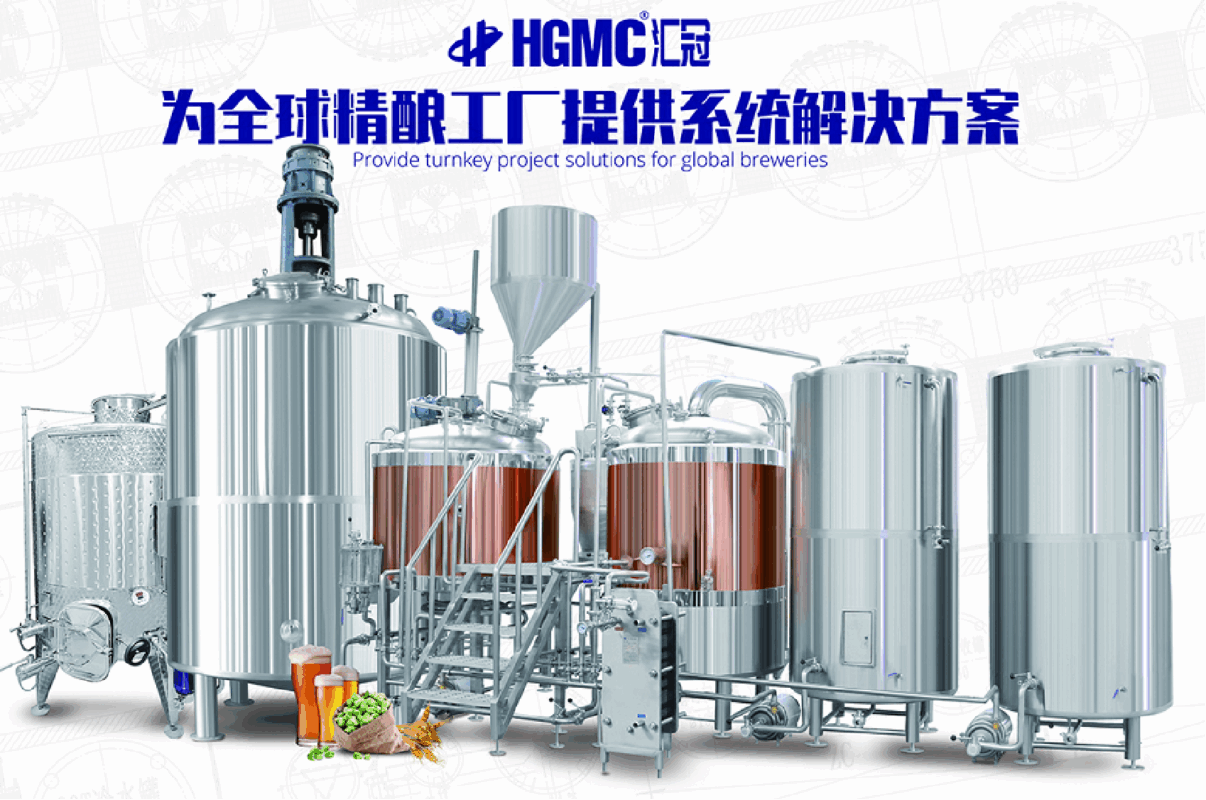
8) Suggested Equipment Scope for a 30HL Turnkey Brewery (IPA/Lager + Bottling)
A practical 30HL turnkey brewery scope often includes:
Brewhouse (30HL)
- Mash system + lauter system + kettle/whirlpool
- Wort transfer piping, pumps, valves, and automation
- HLT and CLT (hot and cold liquor tanks) sized for brew length and turnaround
Cellar
- Fermenters sized and counted based on production plan (IPA vs lager tank residency differs)
- Bright beer tanks (commonly essential for bottling)
- Yeast handling options (basic collection to more advanced propagation, as needed)
Utilities and process support
- Glycol chiller and distribution manifold
- CIP station (caustic/acid/hot water or sanitation configuration)
- Steam boiler or electric heating supply (site dependent)
- Air compressor (instrument air), CO2 supply, water treatment
Bottling line (scope depends on output and automation)
- Bottle rinser + filler + capper
- Labeler and date coder
- Conveyors, packing tables, and integration with cold room logistics
9) Turnkey Brewery Setup: Layout, Installation, and Commissioning
A turnkey brewery is not only equipment supply—it is project delivery. For a 30HL facility, good layout design improves:
- Operator workflow and safety
- Cleaning efficiency and hygiene
- Energy use and utility routing
- Expansion readiness (adding tanks or upgrading packaging later)
Turnkey delivery commonly includes
- Process flow design and layout guidance
- Equipment manufacturing and FAT (factory acceptance testing)
- Onsite installation support and commissioning
- Brewing and maintenance training
- Documentation package and spare parts support
10) Conclusion: Build a 30HL Brewery That Brews Consistently and Packages Reliably
A 30HL brewery designed for IPA and lager with bottling must do more than “make beer.” It must produce consistent wort, maintain fermentation precision, protect beer from oxygen on the cold side, and supply the bottling line with stable, well-conditioned beer.
By starting with the four core brewing steps—mashing, separation, boiling, and fermentation—and then engineering the full system (CIP, glycol, utilities, BBTs, and bottling integration), a turnkey brewery project can reduce startup risk, shorten time to market, and support long-term growth in the USA, Canada, Australia, and Europe.
