
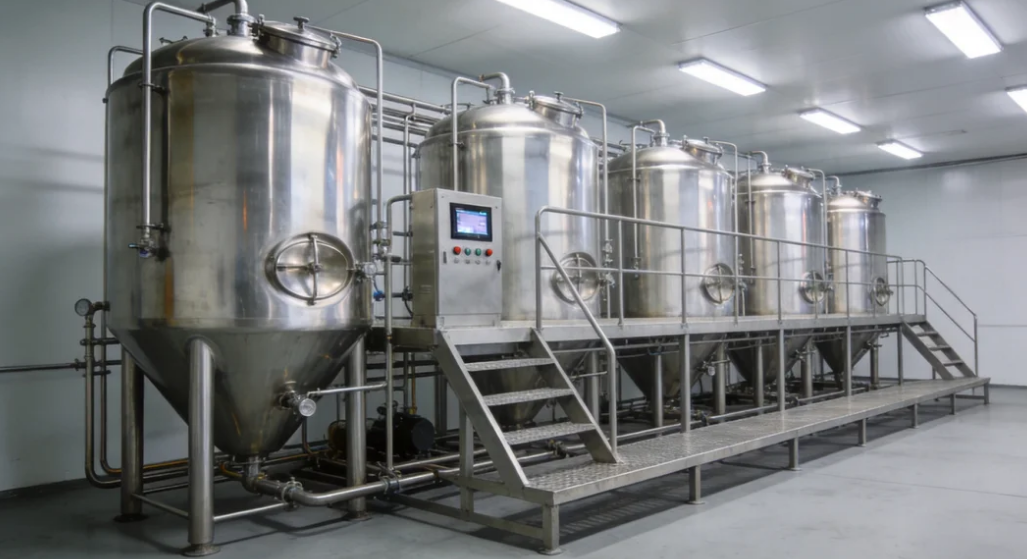
The cost of a 500L brewing system depends on its equipment configuration, fermentation capacity, automation level, material quality, and supporting components. Buyers should evaluate the complete brewing setup rather than compare prices based on brewhouse capacity alone. The right system should match expected production volume, available installation space, beer styles, and future expansion plans. Understanding these factors helps brewery owners control their initial investment while maintaining reliable production and long-term operating efficiency.
What Equipment Configuration Affects the Cost of a 500L Brewing System?
The brewhouse configuration is one of the main factors determining the total investment in a 500L brewing system. Common configurations include two-vessel and three-vessel arrangements, with the choice depending on production requirements, available space, and workflow preferences.
A two-vessel system combines certain brewing operations to reduce the equipment footprint and simplify installation. It may suit small commercial breweries with limited space. A three-vessel configuration separates more processes, potentially providing greater workflow flexibility when production requirements become more demanding.
Buyers should compare vessel design, heating methods, insulation, pump configuration, and control functions. The lowest-priced 500L brewing system may not provide the best value if it creates production bottlenecks or requires expensive modifications later.
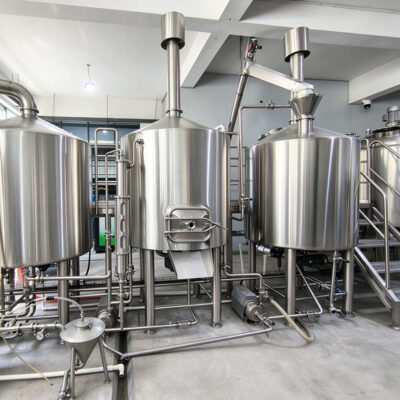
How Does Fermentation Capacity Influence the Total Investment?
Fermentation tank quantity and capacity directly affect how efficiently a 500L brewing system supports regular production. Although the brewhouse determines the nominal batch size, fermentation duration determines how frequently tanks become available for the next batch.
A brewery producing different beer styles may require additional fermentation tanks to accommodate different fermentation schedules. More tanks generally increase the initial investment, but insufficient fermentation capacity can prevent the brewery from reaching its intended output.
Before purchasing a 500L brewing system, estimate the number of batches planned each week, the average fermentation and maturation period, and the expected packaging schedule. Buyers should also consider whether bright beer tanks are needed for conditioning, carbonation, or temporary storage before packaging.
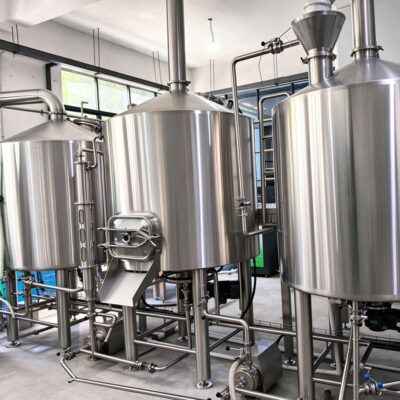
Which Materials and Manufacturing Standards Should Buyers Check?
Material selection affects equipment durability, cleaning requirements, and long-term maintenance costs. Stainless steel is widely used in commercial brewing equipment because it supports hygienic production and is practical for routine cleaning.
Buyers should confirm the stainless steel grade used for product-contact surfaces, the quality of welding and finishing, and the design of tank interiors. They should also check insulation, fittings, seals, valves, and other components that influence daily operation.
When comparing 500L brewing system suppliers, request a technical specification sheet that identifies the materials used in different equipment sections. Clear documentation makes it easier to compare quotations and assess long-term value.
How Does Automation Change the Price of a 500L Brewing System?
Automation can increase the initial cost of a 500L brewing system, but it may also reduce repetitive manual work and improve process consistency. The best choice depends on the brewery’s operating model, staffing, and production targets.
A semi-automatic system allows operators to manage important brewing steps while using selected controls for temperature regulation or other functions. It can provide a practical balance between investment and operating convenience.
An automated 500L brewing system may include integrated control panels, sensors, automated valves, and programmable process settings. These features can improve monitoring and repeatability, although the benefits depend on proper configuration, calibration, and operator training.
| Comparison Factor | Basic Manual System | Semi-Automatic System | Automated System |
|---|---|---|---|
| Initial investment | Generally lower | Moderate | Generally higher |
| Operator involvement | High | Moderate | Lower for selected tasks |
| Process monitoring | Mainly manual | Partial automation | Integrated monitoring may be available |
| Temperature control | Depends on configuration | May be automated | Can use programmed control |
| Installation complexity | Relatively simple | Moderate | May require more integration |
| Suitable application | Small-scale production | Growing craft breweries | Commercial operations needing greater control |
These categories are general comparisons, not fixed price tiers. Actual costs depend on the supplier, equipment design, included components, and project requirements.
What Supporting Equipment Should Buyers Include in Their Budget?
A complete 500L brewing system requires supporting equipment beyond the brewhouse and fermentation tanks. Cooling, cleaning, transfer, and packaging components can significantly influence the final project cost.
A glycol chiller may be required to maintain fermentation temperatures. A heat exchanger helps cool wort before fermentation, while a cleaning-in-place system can simplify cleaning procedures when properly designed. Pumps, piping, valves, and control components are also important parts of the production workflow.
Packaging equipment should match the brewery’s sales strategy. A brewery selling primarily through kegs may have different equipment needs from one supplying retail markets in cans or bottles.
When requesting a quotation for a 500L brewing system, ask the supplier to separate standard equipment, optional accessories, installation services, and packaging equipment. This makes it easier to identify missing components and avoid unexpected expenses.
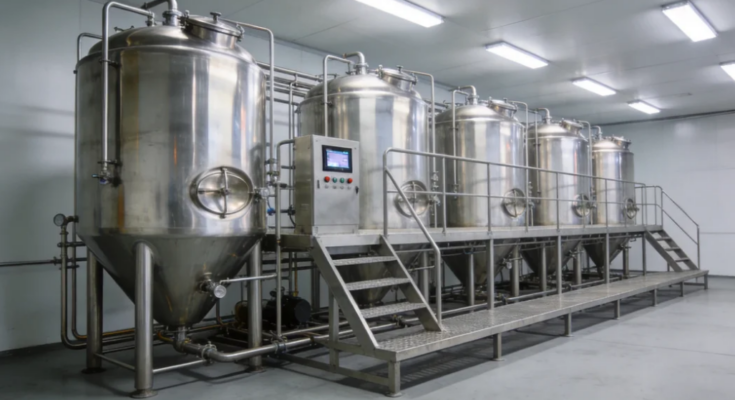
How Can Buyers Select a Cost-Effective 500L Brewing System?
The most cost-effective 500L brewing system is one that meets production requirements without unnecessary features. Buyers should start by defining expected output, beer styles, available space, staffing, and expansion plans.
Next, request an itemized quotation covering vessel specifications, fermentation capacity, automation functions, utilities, installation, warranty, and after-sales service. Compare suppliers using the same requirements so that differences in configuration are clear.
It is also important to evaluate technical support and spare-part availability. A lower purchase price may offer limited value if equipment downtime is difficult to resolve or replacement components take too long to obtain.
A well-planned 500L brewing system should balance initial investment, production efficiency, maintainability, and future flexibility.
Frequently Asked Questions
1. What Determines the Cost of a 500L Brewing System?
The main factors include brewhouse configuration, fermentation tank quantity, automation level, material specifications, and supporting equipment. Installation, shipping, and after-sales service may also affect the total project investment.
2. Is a Two-Vessel or Three-Vessel 500L Brewing System Better?
A two-vessel 500L brewing system may be suitable when space and initial investment are priorities. A three-vessel system can offer more workflow flexibility, depending on the brewing process. Buyers should compare production schedules and vessel functions before deciding.
3. How Many Fermentation Tanks Does a 500L Brewing System Need?
The required number depends on batch frequency, fermentation duration, maturation time, and the variety of beers produced. Buyers should calculate the complete production schedule instead of selecting tank quantity based on brewhouse capacity alone.
4. How Can Buyers Avoid Unexpected Costs When Purchasing a 500L Brewing System?
Request an itemized quotation that lists included vessels, pumps, valves, controls, cooling equipment, cleaning systems, packaging machinery, installation, and training. Confirm utility requirements, warranty terms, and spare-part arrangements before placing an order.
