
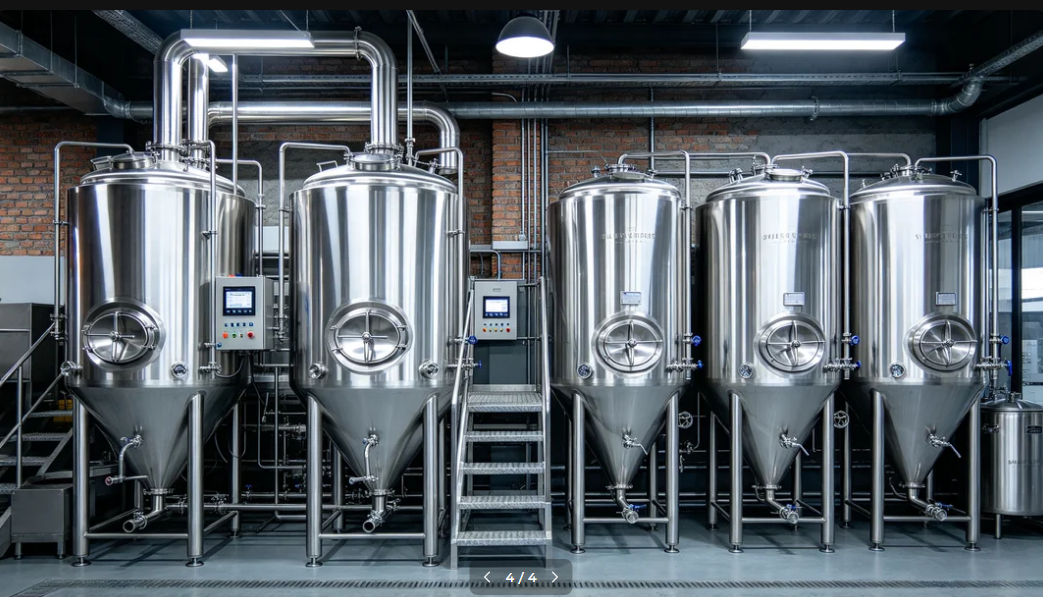
A suitable Brewhouse system is the foundation of efficient brewery expansion because it directly affects production capacity, beer quality, energy consumption, and future scalability. Buyers should evaluate brewhouse design, vessel configuration, automation level, and production targets before investing. A well-planned brewhouse not only improves daily brewing efficiency but also helps breweries reduce operating costs and prepare for long-term growth.
What Is a Brewhouse and Why Is It Important for Brewery Expansion?
A Brewhouse is the core production area where raw materials are transformed into wort before fermentation, making it one of the most important investments for any brewery project. The system usually includes vessels for mashing, lautering, boiling, and whirlpooling, allowing brewers to control each stage of wort production.
For breweries planning expansion, the brewhouse determines how much beer can be produced within a specific period. If the brewhouse capacity is too small, fermentation tanks and packaging equipment may remain underutilized. If it is oversized without proper planning, the initial investment and operating costs may become unnecessarily high.
Modern brewery expansion projects increasingly focus on integrated systems that connect brewhouse operations with fermentation, cooling, CIP cleaning, and automation. A complete turnkey approach allows suppliers to design the entire production workflow instead of simply supplying individual machines.
A properly designed Brewhouse helps buyers achieve:
- Higher production efficiency
- Stable beer quality
- Lower labor requirements
- Easier future upgrades
- Better energy management
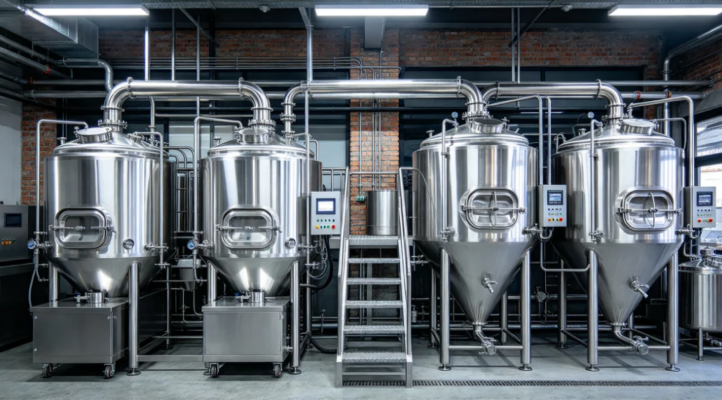
How Should Buyers Select Brewhouse Capacity for Their Brewery Goals?
The correct Brewhouse capacity should match current production requirements while leaving room for future expansion. Buyers should calculate expected annual output, batch frequency, beer styles, and available working space before choosing equipment.
Small craft breweries often select compact brewhouse systems between 300L and 2000L, while commercial breweries may require larger systems from 3000L to 10000L or more depending on market demand.
The following example shows common brewhouse configurations:
| Brewery Type | Brewhouse Capacity | Daily Output Range | Recommended Application |
|---|---|---|---|
| Nano Brewery | 100L-500L | 100L-1500L/day | Brewpubs, restaurants, startup breweries |
| Micro Brewery | 500L-2000L | 500L-6000L/day | Craft beer production and local distribution |
| Commercial Brewery | 3000L-10000L | 3000L-30000L/day | Regional beer brands |
| Industrial Brewery | 10000L+ | 30000L+/day | Large-scale beer manufacturing |
The right capacity selection depends not only on production volume but also on brewing frequency. For example, a 1000L brewhouse operating multiple batches per week may produce more efficiently than a larger system that is poorly matched with fermentation and packaging capacity.

What Brewhouse Configuration Should Buyers Consider?
The Brewhouse configuration directly influences workflow, labor requirements, and production flexibility. Buyers should select vessel arrangements based on their brewing process and expected growth.
Two-Vessel Brewhouse System
A two-vessel Brewhouse combines multiple functions into fewer tanks, usually integrating mash and boil operations or mash and lauter operations.
This design provides:
- Lower equipment investment
- Smaller installation footprint
- Easier operation for small breweries
It is commonly selected by brewpubs and startup breweries where space efficiency and cost control are important.
Three-Vessel Brewhouse System
A three-vessel system normally includes:
- Mash tun
- Lauter tun
- Boiling/whirlpool vessel
This configuration provides better production flexibility and higher efficiency because different brewing stages can operate independently.
For breweries expecting continuous growth, a three-vessel Brewhouse often provides better scalability and improved production scheduling.
Four-Vessel Brewhouse System
Large breweries usually prefer four-vessel systems because they allow higher throughput and more precise process control.
Typical vessels include:
- Mash vessel
- Lauter vessel
- Boiling kettle
- Whirlpool tank
This structure reduces waiting time between brewing steps and supports larger production volumes.
Which Features Should Buyers Check Before Purchasing a Brewhouse?
A high-quality Brewhouse should include reliable materials, efficient heating systems, precise temperature control, and sanitary design. These factors directly influence brewing consistency and equipment lifespan.
Stainless Steel Construction
Food-grade stainless steel is essential because it provides corrosion resistance, easy cleaning, and long-term durability. Most professional brewhouse systems use stainless steel 304 or higher-grade materials for product-contact surfaces.
Heating Method
Buyers should evaluate heating options according to local energy availability.
Common heating methods include:
- Electric heating
- Steam heating
- Gas-fired heating
- Thermal oil heating
Steam heating is widely used in larger breweries because it provides stable temperature control and efficient heat transfer.
Automation System
Automation improves repeatability and reduces manual operation errors.
Modern Brewhouse systems may include:
- PLC control systems
- Automatic temperature adjustment
- Pump control
- Recipe management
- Remote monitoring
Automation is especially valuable for breweries expanding production because consistent operation becomes more difficult as output increases.
How Does a Brewhouse Improve Brewery Production Efficiency?
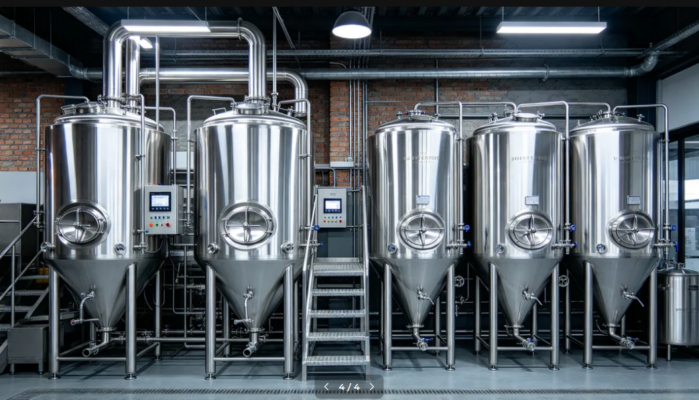
A well-designed Brewhouse improves efficiency by optimizing the entire brewing workflow from raw material handling to wort transfer.
The main efficiency improvements include:
Faster Brewing Cycles
Optimized vessel design reduces waiting time between mashing, lautering, boiling, and whirlpooling processes.
Better Energy Utilization
Modern systems can recover heat from brewing processes, reducing steam or electricity consumption.
Reduced Labor Costs
Automated valves, pumps, and controls allow operators to manage more production tasks with fewer manual adjustments.
Improved Product Consistency
Precise control over temperature, time, and flow rate ensures every batch follows the same production standards.
For breweries expanding production, improving brewhouse throughput can sometimes delay the need for complete facility expansion by removing production bottlenecks.
What Brewhouse Specifications Should Buyers Compare?
Before placing an order, buyers should compare technical specifications instead of focusing only on purchase price.
| Specification | Entry-Level Brewhouse | Professional Brewhouse | Commercial Brewhouse |
|---|---|---|---|
| Capacity | 300L-1000L | 1000L-5000L | 5000L+ |
| Vessel Design | 2-vessel | 3-vessel | 4-vessel |
| Material | SUS304 Stainless Steel | SUS304/SUS316 Options | Industrial Stainless Steel |
| Control System | Manual/Semi-auto | PLC Automatic Control | Fully Automated System |
| Heating | Electric/Steam | Steam/Electric | High-efficiency Steam |
| Expansion Capability | Limited | Modular Upgrade | Designed for Growth |
| Application | Brewpub | Craft Brewery | Commercial Production |
Comparing these parameters helps buyers select equipment that fits both current production needs and future expansion plans.
Why Should Buyers Choose a Turnkey Brewhouse Solution?
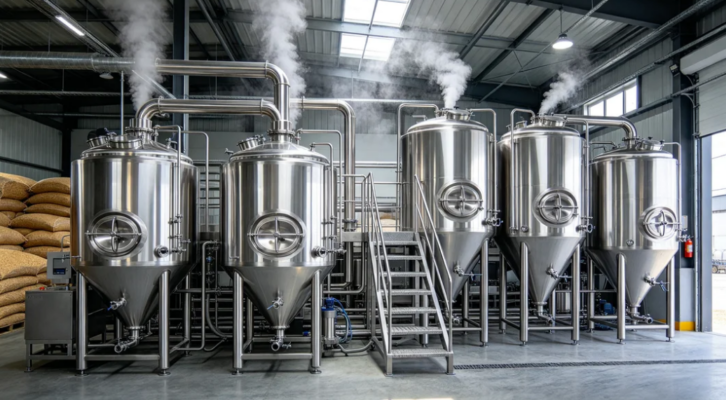
A turnkey Brewhouse solution reduces project complexity because one supplier manages design, manufacturing, installation support, and commissioning.
Instead of purchasing vessels from different suppliers, breweries can receive a coordinated system including:
- Brewhouse equipment
- Fermentation tanks
- Bright beer tanks
- Cooling system
- CIP cleaning system
- Automation controls
- Layout design
This integrated approach helps avoid compatibility problems between different equipment suppliers. Turnkey brewery projects commonly combine brewhouse systems, cellar equipment, utilities, and startup support into one complete solution.
For buyers planning brewery expansion, turnkey solutions provide:
- Faster project implementation
- Simplified communication
- Better system compatibility
- Professional technical support
How Can Buyers Prepare Before Ordering a Brewhouse?
Buyers should provide detailed project information before requesting a quotation. Accurate information allows manufacturers to design a suitable system.
Important details include:
- Target production capacity
- Available building space
- Beer styles to produce
- Energy supply conditions
- Automation requirements
- Future expansion plans
A professional supplier can then optimize vessel sizes, piping layout, control systems, and supporting equipment according to actual brewery requirements.
FAQ About Brewhouse Systems
1. What is the main function of a Brewhouse?
A Brewhouse is used to produce wort through processes including mashing, lautering, boiling, and whirlpooling before fermentation. It is the central production system that determines brewing efficiency and output capacity.
2. What size Brewhouse is suitable for a startup brewery?
Most startup breweries choose 300L to 1000L Brewhouse systems because they provide manageable investment costs while allowing commercial beer production. The final choice depends on sales expectations and expansion plans.
3. Can a Brewhouse system be upgraded in the future?
Yes. Many modern Brewhouse systems are designed with modular structures that allow additional fermentation tanks, automation upgrades, or capacity expansion later.
4. Should buyers choose manual or automatic Brewhouse equipment?
Manual systems usually have lower initial costs, while automatic Brewhouse systems provide better consistency, efficiency, and labor savings. Breweries planning long-term growth often prefer automated solutions.
