
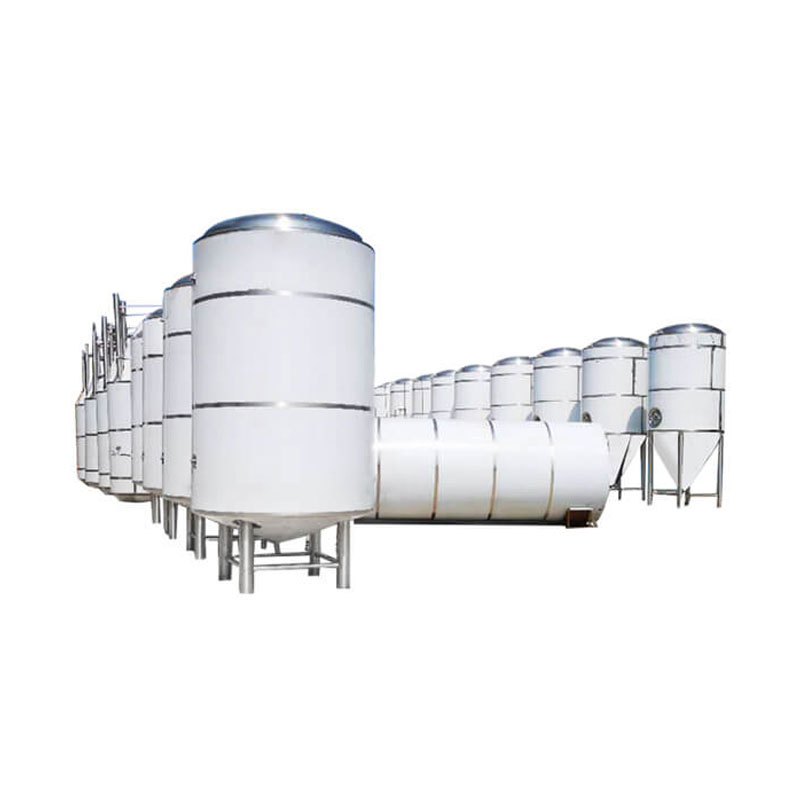
Bright Beer Tanks (BBTs)—also called brite tanks or serving tanks—are a key part of the “cold side” of a brewery. They help breweries deliver consistent carbonation, clarity, and packaging-ready beer, whether the final format is kegs, bottles, or cans.
In this guide, we’ll cover how bright beer tanks are used in modern breweries, what makes an efficient BBT, how to compare sizes and capacities, how to choose materials (304 vs 316 stainless steel), practical maintenance tips, and where the technology is heading.
If you are sourcing bright beer tanks in China, this article will also help you evaluate manufacturers and specifications in a more engineering-focused way.
1) Overview of Bright Beer Tanks in China
What is a bright beer tank?
A bright tank is typically a pressure-rated, temperature-controlled vessel used to hold finished beer before packaging. It’s often the last vessel the beer touches before it goes into kegs/cans/bottles, so quality control at this stage is critical. A standard industry definition describes a bright tank as a pressure-rated, temperature-controlled tank used to hold beer in preparation for packaging, and it may include carbonation hardware such as a carbonation stone for in-tank adjustments. Source: Craft Beer & Brewing (Oxford Companion to Beer excerpt)
https://www.beerandbrewing.com/dictionary/aOLd7DR4Zg
Why China is a major sourcing hub for BBTs
China has become one of the most active manufacturing centers for stainless steel brewing and beverage equipment, largely because it combines:
- Mature stainless fabrication supply chains (plates, fittings, sanitary valves)
- Strong customization capability (dimensions, pressure ratings, manways, jacket zoning, automation)
- Competitive lead times for export-oriented production
For buyers, the key is to purchase based on verified specification details—material grade, weld and polish quality, pressure compliance, and hygienic design—not just appearance or price.
How BBTs fit into the brewery process
In many breweries, beer moves through:
- Fermentation (often in conical unitanks or CCTs)
- Clarification/conditioning (varies by brewery: cold conditioning, filtration, centrifuge, finings)
- Bright tank (final adjustments + stable storage under pressure)
- Packaging/serving
Bright tanks can also serve beer directly in brewpub settings as serving vessels, depending on the layout and dispensing setup. Source: Craft Brewing Business (interview-style overview)
2) Key Features of Efficient Bright Beer Tanks
“Efficient” doesn’t only mean fast cooling—it also means fast turnaround, reliable cleaning, stable carbonation, and minimal product loss.
Here are the engineering features that typically matter most:
Pressure rating and safety protection
Because bright tanks hold carbonated beer, they must be designed for pressure use. Key items include:
- Adequate design pressure for the brewery’s carbonation and transfer process
- Safety devices such as pressure/vacuum relief (PVRV) to prevent overpressure and vacuum collapse (especially during cooling or CIP)
A typical bright tank product spec from established suppliers will highlight pressure design features and fittings intended for safe packaging operations.
Temperature control (jackets + insulation)
Efficient BBTs usually include:
- Glycol cooling jackets (often dimple jackets) for stable temperature control
- Proper insulation to reduce energy loss and stabilize beer temperature during holding
Some manufacturers claim efficiency gains from jacket design improvements (for example, integrated baffling reducing glycol demand). Source (manufacturer statement): Portland Kettle Works
https://www.portlandkettleworks.com/brite-tanks-and-brewing-equipment/
Carbonation capability
Depending on the brewery process, carbonation may be:
- In-line (beer arrives fully carbonated)
- In-tank (or final “trim” adjustments)
If carbonation is done in the tank, common features include:
- Carbonation stone / sintered stainless diffusion element
- Accurate pressure gauge and controls
- Stable temperature control (carbonation depends on temperature and pressure)
Hygienic design for cleanability (CIP-ready)
A bright tank should be designed to clean thoroughly and repeatably, including:
- Proper CIP spray device configuration (spray ball or rotating jet, depending on size and soil load)
- Minimal dead legs and hygienic fittings
- Smooth internal surfaces and sanitary welding
A practical CIP overview shows typical steps (pre-rinse → caustic wash → rinse, etc.) and emphasizes consistent, standardized cleaning. Source: MME Brew / MetoBrew CIP overview
https://metobrew.com/the-cip-system-in-brewery-equipment/
Also, hygienic design and CIP matter because fouling and cross-contamination increase contamination risk and reduce heat transfer efficiency. Source: ScienceDirect (book chapter abstract on hygienic design and CIP in breweries)
https://www.sciencedirect.com/science/article/abs/pii/B9781782423317000101
Instrumentation and operational convenience
Common “efficiency” features that reduce labor and improve control:
- Thermowell + temperature probe
- Sample valve (sanitary design)
- Level indication (sight glass or load cells in advanced installations)
- Easy-access manway (top or side, chosen based on install space and cleaning preference)
3) Top Manufacturers of Bright Beer Tanks in China (How to Evaluate)
Rather than listing names that can quickly become outdated, here is a buyer’s checklist you can use to compare Chinese BBT manufacturers more objectively (and improve RFQ quality for Google lead generation too).
A. Compliance and documentation
Request and verify:
- Material certificates (heat number traceability)
- Weld procedure and QA approach (especially for internal welds)
- Pressure test documentation where applicable
- Quality management system documentation (many suppliers reference ISO 9001:2015—ensure it is verifiable and relevant to actual production control)
B. Sanitary fabrication capability
Ask for:
- Internal finish targets (e.g., stated Ra value) and how it’s measured
- Photos/videos of internal welds (not only exterior polish)
- Passivation approach after fabrication (important for corrosion resistance and long-term hygiene)
C. Engineering customization ability (not just “custom size”)
For bright tanks, “custom” should include:
- Jacket zoning choices (shell, cone/head zones)
- Headspace design (for foaming, carbonation, transfers)
- Pressure rating options
- Instrumentation and automation readiness
- Integration compatibility with your filler, CIP skid, and glycol system
D. Export experience and packaging
For overseas delivery, check:
- Export packing method and anti-damage protection
- Spare parts list and after-sales response time
- Standardization of fittings (Tri-clamp sizes, valve brands, etc.)
4) Comparative Analysis of Tank Sizes and Capacities
Common capacity ranges (practical market view)
Many suppliers offer brite tanks from small craft sizes up to large production volumes. For example, DME Brewing Solutions states standard bright tanks ranging from 5 BBL to 120 BBL and custom up to much larger. Source: DME bright tanks page
https://dme.ca/beer/cold-block/bright-beer-tanks/
When comparing sizes, do not only compare “working volume.” Also compare:
- Total volume vs working volume
- Headspace percentage (important for carbonation, pressure stability, and safe operation)
- Diameter and height constraints (shipping container, ceiling height, door access)
- Surface area vs volume (affects cooling rate)
A practical sizing approach
When selecting BBT volume, buyers often consider:
- Batch size (brewhouse size and fermentation volume)
- Packaging schedule (daily/weekly output)
- Product mix (each tank typically holds one beer at a time)
- Fermenter-to-brite ratio planning
One industry rule-of-thumb discussion suggests considering a ratio like one brite tank for every three or four fermenters (varies with production model and beer portfolio). Source: Craftmaster Stainless blog
https://www.craftmasterstainless.com/blog/2022/4/27/how-many-brite-tanks-should-your-brewery-have
Comparing “same volume” tanks from different manufacturers
Even for the same nominal volume (e.g., 10 BBL / 20 hL), differences that matter include:
- Jacket design effectiveness and coverage
- Insulation thickness and outer cladding quality
- Internal geometry (cone/head shape impacts draining and yeast/solids management)
- Valve placement and piping routing (cleanability + operator workflow)
- Pressure rating and safety devices
5) Material Selection and Durability of Bright Beer Tanks
Why stainless steel is the standard
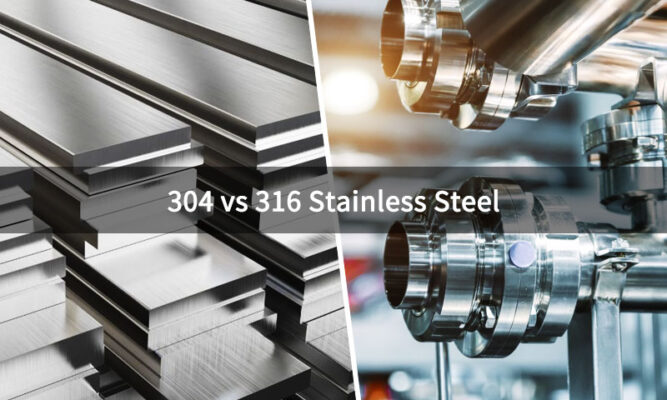
Stainless steel is widely preferred in breweries because it offers corrosion resistance, hygiene, and durability under frequent cleaning and temperature cycling. Many references point to AISI 304 and AISI 316 as common brewery grades. Source: Waterfitters overview
304 vs 316 stainless steel (how to choose)
In many beer applications, 304 is sufficient—especially when:
- Cleaning chemicals are controlled properly
- Chloride exposure is not excessive
- The brewery is producing standard beer styles
316 (often 316L) is frequently recommended when:
- Chloride levels are higher (water chemistry, environment, or cleaners)
- More aggressive cleaning chemicals are used
- The brewery produces more acidic products (some mixed fermentation or non-beer beverages)
A common explanation is that 316 contains molybdenum, improving corrosion resistance—particularly against chlorides—compared with 304. Source: Zwirner Equipment discussion of 304 vs 316 use
https://www.zwirnerequipment.com/blog/stainless-steel-equipment-is-optimal-for-breweries/
Also note: long-term durability depends not only on grade but on surface finish, weld quality, passivation, and correct CIP chemical handling.
Finish quality affects corrosion resistance
Even high-grade stainless can corrode if:
- Weld heat tint is not properly treated
- Surface is scratched and not repassivated
- Harsh chemicals are used incorrectly
- Chloride-based products are mismanaged
So “durability” is a system outcome: material + fabrication + cleaning discipline.
6) Maintenance Tips for Optimal Performance
A bright tank that is well-maintained protects beer quality, reduces product loss, and extends tank life.
Daily/weekly operational practices
- Monitor pressure stability and carbonation consistency (watch for slow leaks at seals, valves, and PRVs)
- Verify temperature control performance (glycol supply temp, jacket performance, insulation)
- Inspect gaskets and seals on manways and tri-clamp connections
CIP and sanitation discipline (very high impact)
CIP effectiveness depends on the combination of Temperature, Action, Chemicals, and Time (often described as TACT). Source: Alfa Laval CIP tips discussion
https://www.alfalaval.com.au/media/stories/beverage-processing/tank-cleaning-and-cip-for-brewers/
Also, caustic soda is commonly used in breweries in certain concentrations and temperatures, but it must be handled safely and rinsed properly. Source: Brewing Science Institute overview
https://brewingscience.com/cleaning-and-sanitizing-in-the-brewery/
Practical maintenance tips:
- Use validated CIP cycles (repeatable parameters, documented)
- Avoid creating “shadow areas” by ensuring spray device coverage is appropriate for tank size
- Rinse thoroughly to prevent chemical residues that can cause flavor or corrosion issues
- Periodically inspect and clean the CIP spray device itself (blocked spray holes reduce cleaning effectiveness)
Protect the tank’s surface
- Avoid using abrasive tools that scratch stainless surfaces
- If scratching occurs, consider appropriate remediation and repassivation procedures (work with qualified professionals)
- Keep chloride exposure under control (including cleaning products and water chemistry)
Calibration and instrumentation
- Calibrate pressure gauges and temperature probes on a defined schedule
- Verify PRV/PVRV condition and cleanliness (these are safety-critical components)
7) Future Trends in Bright Beer Tank Technology
Bright tanks are evolving along with broader brewery modernization: automation, data logging, and sustainability.
1) Automation + data logging (quality and efficiency)
More breweries are moving toward:
- Integrated sensors for temperature and pressure stability
- Automated valve control and recipe-driven operations
- Batch records for quality audits and troubleshooting
Industrial beer processing systems can generate large numbers of data points that, when captured and analyzed, improve process control and reduce retrospective “after-the-fact” corrections. Source: Pall PDF on IoT/data points in brewing systems
2) Remote monitoring and connected operations
IoT-style monitoring is increasingly discussed in craft and mid-sized brewing for:
- Real-time alerts
- Reduced manual checks
- Better consistency and reduced waste
(Implementation quality varies, but the direction is clear: more measurement, more traceability.)
3) Energy efficiency and sustainability focus
Expect continued improvements in:
- Jacket efficiency and zoning (cool only where needed)
- Better insulation and reduced heat gain
- CIP optimization to reduce water/chemical use while maintaining hygiene
4) Market growth context (why investment continues)
Equipment investment is supported by broader brewery equipment market expansion. A Grand View Research summary estimates the global brewery equipment market at USD 18.45 billion in 2024 and projects growth (CAGR 6.1% from 2025 to 2030). Source: Grand View Research market summary
https://www.grandviewresearch.com/industry-analysis/brewery-equipment-market
Even though this figure covers more than brite tanks alone, it supports the idea that breweries are continuing to invest in modernization—where bright tanks remain a core “packaging readiness” asset.
Frequently Asked Questions (FAQ)
Q1: What’s the difference between a bright beer tank and a unitank?
A unitank is designed to ferment and condition in the same vessel (fermentation + maturation functions combined). A bright beer tank is typically used after fermentation/conditioning as the final vessel for clarification stabilization, carbonation adjustment, and packaging/serving under pressure. Source discussion of process options: Craft Brewing Business
Q2: Do I need a carbonation stone in my bright tank?
If your process relies on in-tank carbonation or frequent carbonation “trimming,” a carbonation stone is useful. If carbonation is consistently performed in-line before the tank, you may not need it (but many breweries still include it for flexibility). Source definition mentions carbonation stone usage for adjustments: Craft Beer & Brewing
https://www.beerandbrewing.com/dictionary/aOLd7DR4Zg
Q3: How much headspace should a bright beer tank have?
There isn’t one universal number, but adequate headspace helps manage foaming, carbonation stability, and safe transfers under pressure. When comparing suppliers, confirm whether quoted capacity is total volume or working volume, and request a clear headspace specification.
Q4: Is 304 stainless steel good enough for bright beer tanks?
For many standard beer operations, yes—304 is widely used. But 316/316L can be a better choice in higher-chloride environments, more aggressive cleaning regimes, or when added corrosion resistance is desired. Source overview on 304 vs 316 usage: Waterfitters; Zwirner Equipment
https://www.zwirnerequipment.com/blog/stainless-steel-equipment-is-optimal-for-breweries/
Q5: What are the most important features to request when sourcing a bright tank from China?
Focus on:
- Verified material certificates and finish quality
- Pressure rating and safety protection (PRV/PVRV)
- CIP-ready hygienic design (cleanability, sanitary fittings, correct spray device)
- Jacket + insulation design (stable temperature, efficient cooling)
- Documentation, QA, and export experience
Q6: How do I keep a bright tank performing well over 5–10 years?
Most long-term issues come from cleaning errors, surface damage, and neglected seals/instrumentation. Use consistent CIP practices (TACT discipline), inspect seals regularly, protect stainless surfaces from scratching/chemical misuse, and keep safety devices maintained. Sources: Alfa Laval CIP tips; Brewing Science Institute
https://www.alfalaval.com.au/media/stories/beverage-processing/tank-cleaning-and-cip-for-brewers/
https://brewingscience.com/cleaning-and-sanitizing-in-the-brewery/
Conclusion
A bright beer tank is not just a storage vessel—it’s a quality-control tool and a packaging stability platform. For breweries, the right BBT design improves carbonation consistency, reduces downtime, supports hygienic operations, and protects final product quality.
For buyers sourcing bright beer tanks in China, the best results come from engineering-led procurement: define pressure and temperature requirements clearly, specify hygienic and CIP expectations, choose the right stainless grade based on cleaning chemistry and environment, and evaluate manufacturers based on documentation and fabrication quality—not just polished photos.
