With the rapid growth of ready-to-drink (RTD) beverages, functional drinks, and “clean-label” positioning, manufacturers are under pressure to scale production while keeping flavor consistent and operations food-safe. Cold brew technology—defined by low-temperature, long-contact extraction—has moved beyond cafés into factories because it can produce smooth, stable flavor profiles and support product differentiation (coffee, tea, botanicals, and even adjunct extraction for fermented beverages).
Market demand is also rising quickly. For example, Grand View Research estimates the global cold brew coffee market generated USD 506.1 million in 2023 and could reach USD 1,751.6 million by 2030 (19.4% CAGR from 2024–2030).[1] Other industry research reports similarly project rapid expansion into the next decade.[2]
This guide explains what a commercial cold brew system is, how it works at industrial scale, what equipment modules matter most, and what parameters and compliance points buyers should evaluate.
1) Definition: What is a Commercial Cold Brew System?
A commercial cold brew system is an industrial-scale set of equipment and processes designed to extract soluble compounds from coffee, tea, botanicals, or other flavor materials at low or controlled temperatures over extended time—while ensuring batch repeatability, sanitation, and integration with downstream packaging.
Compared with small-batch manual methods, commercial systems are characterized by:
- Large-scale capacity (tens to thousands of liters per batch, or continuous flow)
- Automation and controllability (temperature, time, recirculation, filtration, and recipe repeatability)
- Hygienic design and food-grade construction (commonly SUS304/SUS316 stainless steel)
- CIP-ready cleaning architecture (cleaning without disassembly using validated procedures)[3]
- Modular integration (cold storage, nitrogen dosing, pasteurization options, and filling lines)
In industrial operations, “cold brew” is less about a trendy beverage name and more about a controlled extraction method that can be standardized like any other beverage unit operation.
2) Why Cold Brew Matters in Commercial Brewing & Beverage Production
Flavor optimization and product differentiation
Low-temperature extraction tends to reduce harshness and preserve aromatic balance because the extraction is slower and can be managed with fewer “thermal” flavor changes. This is a key reason cold brew products are often described as smoother and less bitter—attributes that can be positioned for mass-market appeal.
For breweries and other fermented beverage producers, cold brew systems can also function as an adjunct extraction platform:
- Coffee-beer (coffee stout, coffee porter, cold-brewed coffee dosing)
- Tea- or botanical-infused products
- Low-alcohol or hybrid beverages seeking layered aroma without aggressive bitterness
Process innovation
Cold brew systems allow beverage brands to create new categories (nitro cold brew, sparkling coffee, tea concentrates, botanical bases) while keeping the “base extraction” consistent. In practice, the extraction module becomes a repeatable “ingredient factory.”
Efficiency and cost control
Industrial systems reduce labor, reduce variation, and improve utilization by standardizing:
- Solids-to-water ratio
- Contact time
- Flow/recirculation intensity
- Filtration strategy and turbidity control
- Batch record keeping for continuous improvement
Energy can also be optimized. While cold brew requires chilling capacity (especially for 2–10°C extraction), it avoids high-temperature extraction energy loads and can be designed around off-peak chilling and cold-room batching.
Food safety and quality assurance
Cold does not mean sterile. Cold brew materials are rich in organics; without hygienic design and controlled cleaning, microbial risks and off-odors can appear quickly. This is why serious commercial systems emphasize:
- Closed extraction and closed transfers
- CIP capability
- Validated sanitation cycles and batch traceability
- HACCP-based management (hazard analysis, critical control points, monitoring, corrective actions, records)[4]
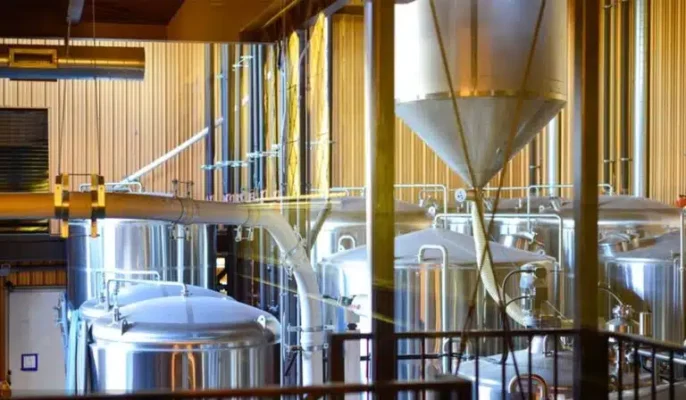
3) Main System Modules (What’s Inside an Industrial Cold Brew Line?)
A commercial cold brew system typically includes these modules (exact configuration depends on batch vs continuous design):
A) Extraction vessel(s)
- Jacketed extraction tanks or insulated vessels
- Agitators or gentle mixing options (depending on product)
- Spray balls / hygienic ports for CIP
- Bottom drains designed to minimize dead legs and residue
B) Temperature control
- Glycol jackets or chilled water loops
- Cold room batching (for some factories)
- Sensors and logging for time/temperature compliance
C) Recirculation / circulation pumps (optional but common)
Recirculation can improve extraction uniformity and reduce “channeling” in some designs. It can also shorten process time versus passive immersion—useful for factories with high throughput demands.
D) Filtration train
Industrial cold brew often uses staged filtration to balance clarity, flavor, and shelf life. Common stages include:
- Coarse filtration (screens, filter bags)
- Fine filtration (cartridge filters)
- Optional microfiltration (commonly discussed ranges around 0.45–1 μm depending on product goals and regulatory approach)
Note: filtration is not only “appearance control”—it is also about stability, line protection, and downstream filling reliability.
E) CIP (Clean-in-Place) cleaning system
CIP is widely used across beverage and food plants because it allows cleaning without disassembly using validated procedures.[3] For commercial cold brew, CIP is often critical because extraction residues can be sticky and microbial growth risk increases if residue remains in tanks, hoses, or filter housings.
F) Downstream integration modules (as needed)
- Buffer tanks and cold storage
- Nitrogen dosing / nitro infusion and canning
- Pasteurization (if required by product strategy, shelf-life target, or route-to-market)
- Aseptic or hygienic filling line interfaces
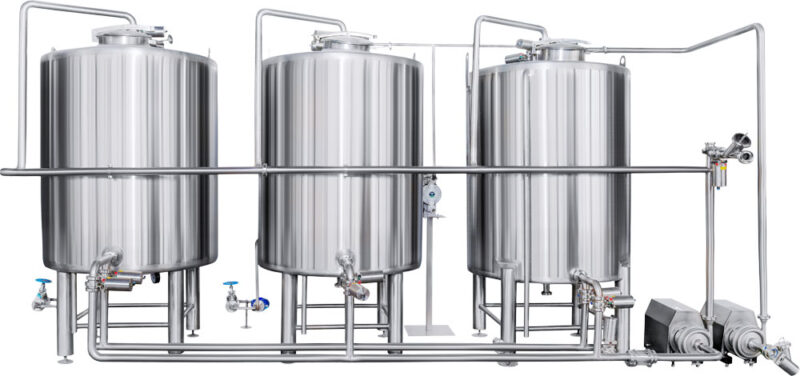
4) Types of Commercial Cold Brew Systems (And Where Each Fits)
1) Batch immersion systems (most common)
Principle: grounds/leaves/botanicals are immersed for long contact time, then separated and filtered.
Best for:
- Mid-scale beverage plants
- Coffee/tea concentrate production
- Brands needing flexibility (multiple recipes)
Strengths:
- Simple scaling and straightforward controls
- Usually easier commissioning and training
2) Cold drip / slow drip systems
Principle: water drips through a bed of coffee; high clarity, often boutique.
Best for:
- Specialty or experiential production
- Low throughput premium products
Limitations:
- Lower output per unit, harder to industrialize economically
3) Recirculating / continuous systems
Principle: controlled circulation through beds/tanks for faster and more repeatable extraction; can be semi-continuous.
Best for:
- Large-scale factories
- Central kitchens / chain operations
- Throughput-constrained environments
Strengths:
- Higher capacity, automation-friendly, more consistent extraction dynamics
4) Nitro cold brew & RTD packaging systems
Principle: nitrogen infusion after extraction (often with special controls for dissolved gas, foaming, and oxygen pickup).
Best for:
- Draft service and packaged RTD differentiation
Key challenge:
- Oxygen management (flavor stability), package compatibility, and fill consistency
5) Operating Parameters
Exact recipes must be validated in trials, but commercial teams often standardize parameter windows so QA and production can stay aligned.
Coffee-to-water ratio (for concentrate)
Industry guidance commonly references concentrate brewing ratios that can be diluted later. Counter Culture Coffee, for instance, describes a preferred 1:8 ratio and notes stronger concentrates may go down near 1:4.5 depending on the desired strength and dilution plan.[5]
Steeping time
Many professional references describe cold brew as an extended extraction—commonly 12 hours or more, often reaching into the 12–24 hour range depending on temperature, ratio, and grind. For example, Equator Coffees recommends a minimum of 12 hours (based on their testing), and points to a typical “sweet spot” range for many coffees.[6]
Temperature
In industrial setups, temperature is often managed for both flavor and microbial risk control. Many producers use refrigerated extraction or chilled environments, then maintain cold-chain transfer to filtration and filling.
Filtration level and clarity strategy
A staged filtration plan is usually more stable than trying to force clarity in one step. The best approach depends on:
- Target shelf life
- Sensory goals (some filtration removes oils and changes body)
- Downstream filling system tolerance
- Regulatory labeling/claims strategy
Quality control & batch records
Commercial operations typically track:
- TDS / strength metrics (refractometer)
- Sensory scorecards (panel)
- Turbidity or clarity indicators
- Time-temperature logs and sanitation records for audits
6) Food Safety & Compliance: What Buyers Must Get Right
HACCP-based control
HACCP is a preventive system built on hazard analysis, critical control point identification, monitoring, corrective actions, verification, and record-keeping.[4] Even if your market doesn’t legally mandate HACCP for every beverage category, many distributors, importers, and large retail channels expect HACCP-aligned documentation.
For cold brew, typical hazard considerations include:
- Microbial growth during long extraction and storage
- Cross-contamination during transfers and filtration
- Allergen cross-contact (if flavored with dairy or other ingredients later)
- Packaging oxygen pickup (quality degradation) and sanitation of fillers
CIP capability (not optional at scale)
CIP is defined as cleaning food-processing equipment without disassembly using validated procedures.[3] From a procurement perspective, CIP readiness is not only a “cleaning feature”—it directly impacts:
- Downtime between batches
- Repeatability and flavor stability
- Audit readiness and sanitation validation
- Labor cost and operator safety
7) Procurement Checklist: How to Choose a Commercial Cold Brew System
When selecting equipment for a beverage factory (or a brewery expanding into coffee/tea RTD), focus on these decision points:
- Capacity and production model
Define daily/weekly output and peak demand, then decide: batch immersion, semi-continuous recirculation, or a hybrid approach.
- Material & hygienic design
SUS304/SUS316 options, weld quality, drainability, gasket selection, sanitary fittings, and minimized dead legs.
- Automation level and controls
PLC/touchscreen recipes, alarm handling, data logging, traceability support, sensor calibration routines.
- Filtration architecture
Can you scale filtration without constant clogging? Are filter housings accessible and CIP-able? Are consumables readily available?
- CIP integration and validation readiness
Spray coverage, return flow design, chemical compatibility, and the ability to document cycle parameters.
- Downstream compatibility
Interfaces to:
- cold rooms / chillers
- buffer tanks
- nitrogen dosing
- pasteurization / sterile filtration strategy
- filling and packaging formats (keg, can, bottle)
- Supplier engineering support and after-sales
Factory commissioning, operator training, spare parts lead time, and remote troubleshooting capability often matter as much as equipment specs.
8) FAQ (Q&A Block for SEO)
Q1: What is the difference between a commercial cold brew system and a café cold brew setup?
A commercial cold brew system is designed for industrial throughput, repeatability, and hygiene. It typically includes controlled temperature management, automated circulation/filtration, and CIP-ready construction, whereas café setups are often manual, smaller, and less instrumented.
Q2: How long does commercial cold brew extraction take?
Many producers operate in long-contact ranges, commonly 12 hours or longer depending on temperature and recipe. Some brands cite a minimum 12-hour extraction for full flavor development.[6] Industrial recirculating designs may reduce time, but the correct duration must be validated via sensory and QC metrics.
Q3: What ratio is used for commercial cold brew concentrate?
Concentrate ratios vary by brand positioning and dilution plan. A commonly referenced approach is around 1:8 coffee-to-water by weight, with stronger concentrates reaching lower ratios depending on desired strength.[5]
Q4: Why is CIP important for cold brew equipment?
Because cold brew runs at low temperatures and contains high organic loads, residues can support microbial growth if not removed effectively. CIP enables cleaning without disassembly using validated procedures—improving sanitation reliability and reducing downtime.[3]
Q5: Does cold brew require HACCP?
HACCP is a widely recognized preventive framework for food safety management. It emphasizes hazard analysis, monitoring, corrective actions, and record-keeping—practices that are especially relevant when you have long extraction times, cold storage, and complex transfers.[4] Many commercial buyers and retail channels expect HACCP-aligned systems even if local regulations differ.
Q6: How do commercial cold brew systems support RTD production?
They can integrate with clarification/filtration, nitrogen dosing (nitro), cold-chain storage, and hygienic filling. The goal is to deliver consistent extraction strength and stable flavor while reducing oxygen pickup and contamination risk.
Conclusion
A commercial cold brew system is best understood as a standardized industrial extraction platform: it scales low-temperature extraction into a repeatable, hygienic process that can feed RTD lines, keg programs, or hybrid beverage innovations. The most successful projects treat cold brew like a full manufacturing workflow—capacity planning, recipe control, filtration strategy, CIP sanitation, and HACCP-aligned documentation—rather than “just a bigger brewing tank.”
As market demand grows rapidly and competition increases, manufacturers who invest in controllable, cleanable, and integration-ready cold brew systems will be better positioned to deliver consistent quality at scale.[1][2]
