
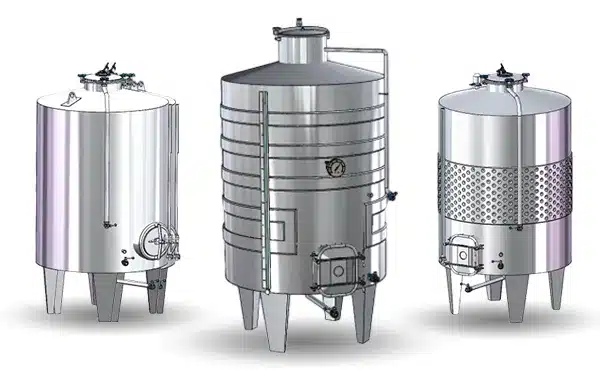
The wine market is entering a period where growth is less about volume and more about value. Industry reporting shows a clear shift toward premiumization and operational discipline, with performance gaps widening between top and bottom performers. Silicon Valley Bank’s wine industry reporting highlights how results increasingly depend on behavior, process, and efficiency rather than market “tailwinds.”[1]
For home winemakers and enthusiasts, this same logic applies: better process control and better equipment create more repeatable outcomes. In 2026, “wine making equipment” is no longer just a bucket and an airlock. It is a small system: fermentation vessels, hygienic transfer tools, temperature control, filtration choices, and bottling practices that preserve aroma and stability.
1) 2026 Trends in Home Wine Making Equipment for Enthusiasts
Trend A: “Process control” beats “more gadgets”
Enthusiasts are prioritizing upgrades that reduce variability:
- Better fermentation vessels that are easier to clean and seal.
- Simple temperature management (cooling/heating control, fermentation jackets, or insulated setups).
- Cleaner transfers (closed transfer, better valves, anti-oxidation handling).
This mirrors broader industry emphasis on performance discipline. SVB’s reporting shows top performers can produce positive growth while others decline, underscoring that execution matters.[1]
Trend B: Hygiene-first design
Home winemakers increasingly choose equipment with:
- Fewer crevices and dead legs.
- Food-grade materials and certified seals.
- Tri-clamp connections (borrowed from brewing/dairy) for easier sanitation.
Trend C: Small-batch “premiumization”
Even when overall wine volumes are flat, value can grow through premiumization and quality focus.[2]
Home winemakers are doing the same: smaller batches, higher-quality fruit, more attention to oxygen management, and better bottling.
2) Essential Wine Making Equipment and Their Functions Explained
Below is a practical, minimal-to-advanced list. You can present this as a table on your landing page.
| Equipment | Main Function | Why It Matters for Quality |
|---|---|---|
| Fermentation vessel (bucket/carboy/stainless tank) | Primary fermentation and containment | Controls oxygen exposure, sanitation, temperature stability |
| Airlock / blow-off system | Releases CO₂ while blocking contaminants | Reduces oxidation and microbial risk |
| Hydrometer or refractometer | Measures sugar and fermentation progress | Helps avoid stuck fermentation and estimate alcohol |
| Thermometer + temperature controller | Tracks and stabilizes fermentation temperature | Improves aroma retention and fermentation reliability |
| Racking cane / pump + tubing | Transfers wine off sediment | Cleaner wine, less off-flavor risk, better clarity |
| Sanitizer + cleaning tools | Cleaning and microbial control | Often the #1 factor in preventing faults |
| Bottles, corks/caps, corker/capper | Packaging and sealing | Directly affects oxidation rate and shelf life |
3) Comparative Analysis of Fermentation Vessels in Home Wine Production
Choosing the right fermentation vessel affects sanitation, oxygen exposure, thermal stability, and ease of use. Here is a comparison:
Option 1: Food-grade plastic fermenters (buckets)
Pros
- Low cost, lightweight, beginner friendly
Cons
- Scratches can harbor microbes
- Less oxygen barrier over long aging
Best for: primary fermentation, short-duration contact.
Option 2: Glass carboys
Pros
- Good oxygen barrier
- Easy to visually inspect
Cons
- Heavy, break risk
- Cleaning can be difficult
Best for: aging and secondary fermentation if handling is safe.
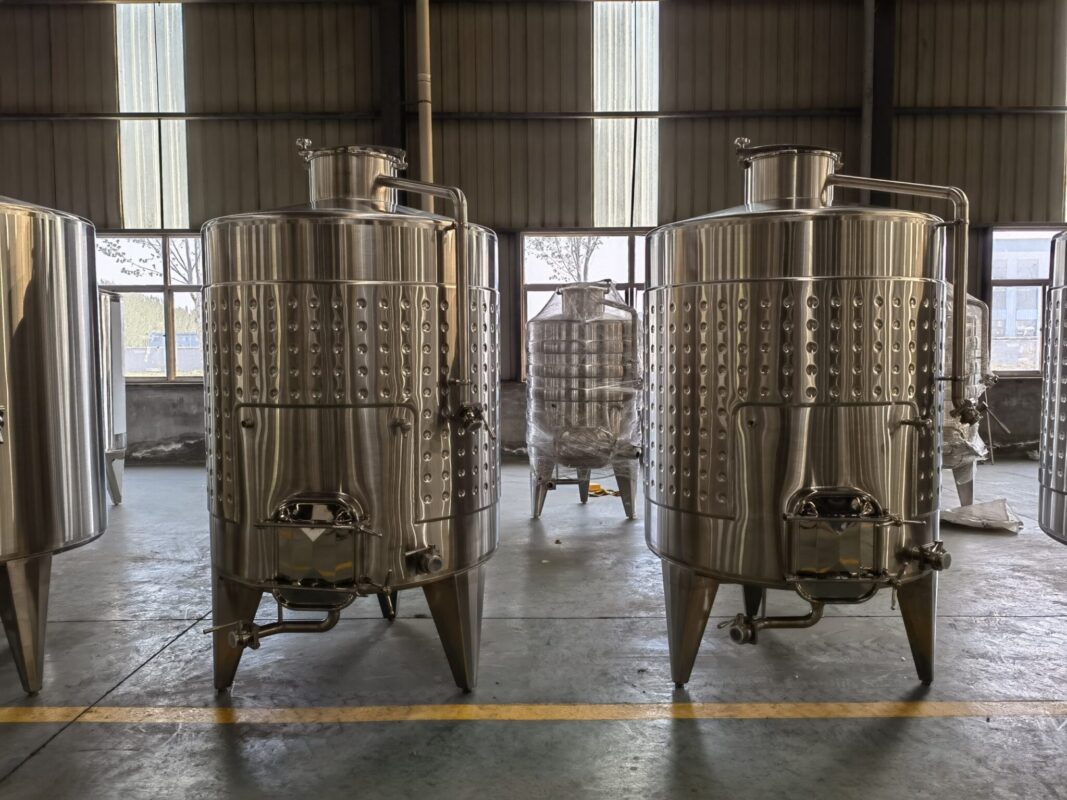
Option 3: Stainless steel fermentation tanks (small home scale)
Pros
- Excellent sanitation, durable
- Can include valves, sample ports, sealed lids
- Better compatibility with temperature control accessories
Cons
- Higher upfront cost
Best for: enthusiasts aiming for repeatable results and reduced oxidation.
Data-driven angle you can include:
- Track “time spent cleaning” and “losses per transfer” across vessel types. This creates your own internal benchmark chart.
Chart suggestion (bar chart):
- X-axis: plastic / glass / stainless
- Y-axis: (a) cleaning time, (b) breakage risk score, (c) oxidation risk score (qualitative scoring)
4) Understanding the Role of Wine Presses and Their Efficiency Ratings
A wine press does two key jobs:
- Separates juice/wine from skins and solids.
- Influences extraction (color, tannin, phenolics) depending on press style and pressure.
What does “press efficiency” mean?
In home winemaking, “efficiency” is usually a mix of:
- Yield: liters of juice recovered per kg of fruit (or % recovery)
- Quality: how clean the juice is (less harsh phenolics when pressing gently)
- Speed and labor: how long it takes and how physically demanding it is
Common press types for home use
- Basket press: traditional, gentle, good for small batches.
- Bladder press: more controlled, often higher yield with gentler pressure distribution.
Image suggestion: A simple diagram showing how basket vs bladder presses apply pressure.
Chart suggestion (scatter plot):
- X-axis: pressure level (low → high)
- Y-axis: “perceived quality score” (sensory)
- Points: different press cycles (free-run, first press, hard press)
This is highly shareable content.
5) Evaluating the Importance of Temperature Control in Wine Fermentation
Temperature control is one of the highest-impact upgrades because fermentation is a biochemical process driven by yeast activity, and yeast performance is temperature sensitive.
Practical reasons temperature control improves results
- Aroma retention: Cooler fermentation can help preserve volatile aroma compounds (especially for aromatic whites and fruit wines).
- Fermentation reliability: Stable temperatures reduce the risk of sluggish or stuck fermentation.
- Cleaner flavor: Avoids excessive heat stress that can produce harsh or “hot” notes.
Even in commercial wine, SVB’s reporting emphasizes that strong outcomes come from disciplined execution and process control rather than relying on market conditions.[1] Temperature management is a direct, practical version of that discipline at home scale.
Chart suggestion (line chart):
- X-axis: days of fermentation
- Y-axis: temperature (°C)
- Two lines: uncontrolled room temp vs controlled target band
Add a second chart: gravity drop over time for the same two cases.
6) Choosing the Right Bottling Equipment for Optimal Wine Storage
Bottling is where many home winemakers accidentally introduce oxygen or contamination. Good bottling equipment helps you create a consistent fill level, tight seal, and cleaner transfer.
Key factors when selecting bottling equipment
- Oxygen exposure control
- Prefer closed transfers where possible.
- Use a bottling wand to reduce splashing.
- Consistent fill height
- Too much headspace speeds oxidation.
- Closure choice
- Cork vs cap depends on style, intended aging time, and storage conditions.
Recommended bottling setup tiers
- Basic: siphon + bottling wand + hand corker/capper
- Intermediate: small transfer pump + inline filter option + floor corker
- Advanced: counter-pressure or low-oxygen bottling approach (adapted from beverage packaging)
7) Innovative Technologies Revolutionizing Home Wine Making Techniques
In 2026, innovation is less about “fancy features” and more about lowering failure rates and increasing repeatability.
Innovation examples (home scale)
- Smarter monitoring: affordable digital thermometers, data logging, and alerts.
- Improved valves and sealed lids: better oxygen management and easier sampling.
- Better small-scale stainless designs: sanitary ports, tri-clamp compatibility, easier CIP-style cleaning habits.
FAQ (Q&A) — Wine Making Equipment
Q1: What is the most important wine making equipment upgrade for beginners?
A practical first upgrade is better fermentation control: a reliable fermenter that seals well, plus accurate temperature tracking. Stable, clean fermentation reduces faults and improves repeatability.
Q2: Is stainless steel fermentation equipment worth it for home winemaking?
If you make wine repeatedly and care about consistency, stainless steel can be worth it due to sanitation, durability, and lower oxidation risk. The main tradeoff is upfront cost.
Q3: What’s the difference between primary and secondary fermentation vessels?
Primary fermentation needs space for active CO₂ release and foam. Secondary fermentation (or aging) prioritizes oxygen protection and stable storage, often with minimal headspace.
Q4: How do I choose a wine press for home use?
Choose based on batch size, desired yield, and labor. Basket presses are common and gentle. Bladder presses can provide more controlled pressing and efficient extraction, depending on setup and budget.
Q5: Why does temperature control matter so much in fermentation?
Fermentation temperature influences yeast behavior, fermentation speed, and aroma retention. Stable temperature reduces stuck fermentation risk and supports cleaner flavor development.
Q6: What bottling equipment helps wine last longer?
Equipment that minimizes oxygen pickup helps the most: a bottling wand, gentle transfers, consistent fill height, and reliable corking/capping.
Q7: What trends will shape home wine making equipment in 2026?
Expect more emphasis on sanitation-first designs, sealed transfers, affordable monitoring tools, and small-scale stainless systems. Broader industry reporting suggests outcomes increasingly depend on disciplined execution and process control.[1]
Conclusion: Build a Home Winemaking “System,” Not a Pile of Tools
The best home wine making equipment choices in 2026 revolve around one goal: repeatable quality. Instead of chasing every gadget, invest in equipment that strengthens the core workflow:
- sanitary, easy-to-clean fermentation vessels
- practical temperature stability
- low-oxygen transfers and reliable bottling
That is how enthusiasts consistently produce better wine and reduce common failure points.
