

If you are researching craft beer production, you have probably seen the term microbrewery everywhere. But what exactly is a microbrewery, and how is it different from other craft brewery types?
In this guide, we will explain the microbrewery definition in plain language, show how capacity impacts business planning, and break down the startup cost, required brewery equipment list, revenue potential, and ongoing operating costs. You will also find a practical FAQ section designed for real-world decision-making.
About HGMC
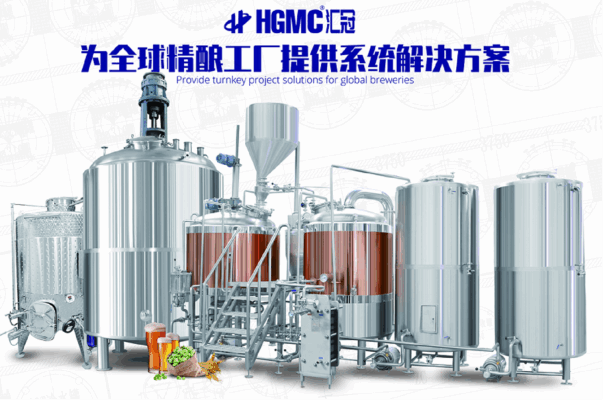
HGMC is a global manufacturer of beer brewing equipment, beverage equipment, and canning/bottling lines. We support both individual equipment supply and turnkey microbrewery projects, and our systems are exported to customers in more than 120 countries.
What Is a Microbrewery?
A microbrewery is commonly understood as a type of craft brewery that is defined mainly by production volume (capacity) and typical distribution patterns.
The Brewers Association (a leading industry organization in the U.S.) categorizes the craft beer industry into market segments including microbreweries and brewpubs, among others.[1] This matters because “microbrewery” is not only a marketing word. It is also widely used in industry reporting, licensing discussions, and business planning.
A broader umbrella term is craft brewery. The Brewers Association defines an American craft brewer as “small and independent,” and specifies “small” as annual production of 6 million barrels of beer or less.[2] In other words, “craft brewer” can cover many sizes, while “microbrewery” is usually used for a smaller production tier.
Many industry explanations use a capacity threshold of 15,000 barrels per year to describe microbreweries, and note that microbreweries commonly sell a large portion of beer off-site through multiple channels (depending on local laws and distribution systems).[3]
Practical takeaway:
For most brewery founders and investors, “microbrewery” is best treated as a capacity-based business model. If you know your planned output (bbl/year or hL/year), you can quickly determine whether your project is positioned as a microbrewery.
Microbrewery vs. Craft Brewery vs. Brewpub (Simple Comparison)
People often mix up these terms, so here is a decision-friendly view:
| Type | Typical definition focus | Common facility features | Best for |
|---|---|---|---|
| Microbrewery | Smaller production capacity, often under a micro-tier threshold | Brewhouse + cellar; may have taproom | Packaged beer + local distribution, flexible channels |
| Craft brewery (umbrella) | “Small and independent” in the BA definition (production can be much larger than micro) | From small to large plants | Brands targeting craft identity at various scales |
| Brewpub | Beer is closely tied to on-site food service and on-premise sales | Restaurant + brewery integration | High-margin on-site sales, strong local experience |
The Brewers Association explicitly treats microbreweries and brewpubs as different market segments.[1]
Microbrewery Sales Models (3 Common Routes)
Your distribution model strongly impacts equipment sizing, packaging choices, and cash flow.
- Direct Sales (Taproom / On-site bar)
- Highest gross margin in many markets
- Strong brand experience
- Often lower logistics complexity at the beginning
- Secondary Sales (Self-distribution / acting like a wholesaler)
- The brewery sells to retailers directly (where legal)
- Requires sales operations, delivery scheduling, and account management
- Three-tier distribution
- Brewery → distributor/wholesaler → retailers → consumers
- Common in regulated markets
- Often requires stable volume, consistent quality, and predictable packaging output
1) How Much Does It Cost to Start a Microbrewery Project?
Startup cost is not one number. It is a combination of:
- Brewing capacity targets
- Taproom vs. distribution focus
- Local building/utility conditions
- New vs. used equipment
- Automation level (manual vs PLC/SCADA)
- Packaging plan (kegs only vs cans/bottles)
Cost Drivers You Should Budget For (Checklist)
- Facility build-out (floor drains, trenching, waterproofing, insulation)
- Utilities (steam/electric load, water supply, compressed air, glycol system)
- Brewhouse + cellar equipment
- CIP system and cleaning chemicals
- Lab & QC tools (even basic)
- Packaging line (or mobile canning contract)
- Cold storage and logistics
- Licenses, permits, compliance, and inspections
- Initial ingredients, consumables, spare parts
- Working capital (3–12 months runway is common in practice)
2) List of Brewery Equipment for a Microbrewery (Core + Optional)
Below is a practical equipment list you can copy into a project plan.
A. Brewhouse Equipment (Hot Side)
- Malt mill (2-roller or 4-roller)
- Grist case / auger (optional but efficient)
- Mash tun / lauter tun (or mash/lauter combo)
- Brew kettle (often with whirlpool function)
- Heat exchanger (plate type)
- Hot liquor tank (HLT)
- Pumps, valves, piping, fittings
- Control system (manual, semi-auto, or PLC)
- Steam system or electric heating system (depending on region)
B. Cellar Equipment (Cold Side)
- Fermentation vessels (FVs)
- Bright beer tank(s) (BBTs)
- Glycol chiller + glycol piping
- Carbonation stone / inline carbonation (optional)
- Yeast brink (optional but helpful for repitching)
- Dry hopping system (if producing hop-forward styles)
C. Cleaning & Sanitation
- CIP cart or centralized CIP station
- CIP spray balls (built into tanks)
- Chemical dosing and safety storage
- Water treatment (carbon filtration, RO, softener as needed)
D. Packaging & Dispense
Kegs
- Keg washer / filler
- Keg couplers, draft system
Cans/Bottles
- Can rinser + filler + seamer (or bottling line)
- Labeler or shrink sleeve (optional)
- Date coder / inkjet printer (highly recommended)
- Conveyor tables and accumulation
E. Quality Control (Minimum Viable QC)
- Hydrometers / densitometer
- pH meter
- Dissolved oxygen (DO) meter (very valuable for packaged beer quality)
- Temperature probes, record-keeping
3) How Much Money Can You Make Running a Microbrewery?
Profit depends more on channel mix and consistency than on “being micro.”
Revenue Levers That Matter Most
- Taproom share (direct-to-consumer often yields better margins)
- Packaging mix (kegs vs cans vs bottles)
- Brand positioning and repeat purchase rate
- Batch-to-batch consistency (reduces dump rate and returns)
- Capacity utilization (how much of installed capacity is actually used)
- Labor efficiency (automation and process design)
4) What Are the Ongoing Costs of a Microbrewery?
Many new breweries underestimate operating costs. The most common ongoing costs include:
Fixed or Semi-Fixed Costs
- Rent or mortgage
- Salaries and payroll taxes
- Insurance (property, liability, product, workers’ comp)
- Maintenance contracts and spare parts
- Software (POS, inventory, accounting, production tracking)
Variable Costs (Scale With Volume)
- Malt, hops, yeast, adjuncts
- Packaging materials (cans, lids, bottles, cartons, labels)
- CO₂ and nitrogen
- Chemicals (caustic, acid, sanitizer)
- Water and wastewater fees
- Electricity / gas / steam
- Freight, warehousing, cold chain
Quality-Related Costs (Often Hidden)
- Beer loss from over-foaming packaging
- Dissolved oxygen pickup leading to shorter shelf life
- Returns from wholesalers/retailers
- Dumped batches from contamination or process drift
Equipment tip: Investing in process stability (tank design, temperature control, CIP performance, oxygen control, reliable automation) can reduce ongoing quality losses and protect brand reputation.
FAQ: Microbrewery Questions
Q1: What is the official definition of a microbrewery?
A microbrewery is generally defined as a smaller-capacity brewery, and it is commonly discussed as a distinct craft beer market segment.[1] Many industry explanations use a production threshold (such as 15,000 barrels/year) as a practical reference point.[3]
Q2: Is every microbrewery a craft brewery?
Not necessarily. “Craft brewery” is often used as a broader category. For example, the Brewers Association defines an American craft brewer as “small and independent,” and uses production limits as part of the definition.[2] A microbrewery may fit within craft, but craft breweries can be much larger than micro.
Q3: What is the difference between a microbrewery and a brewpub?
A microbrewery is typically discussed mainly by capacity and distribution approach, while a brewpub is closely tied to on-premise sales and food service. The Brewers Association lists microbreweries and brewpubs as separate craft market segments.[1]
Q4: What equipment do I need first if I want to start small?
Start with: brewhouse, at least 2–4 fermenters, a glycol system, CIP capability, and a basic QC setup. If your main channel is taproom draft, you can delay a full packaging line and scale later.
Q5: Can a microbrewery be profitable without a packaging line?
Yes. Many projects begin with kegs and taproom sales to validate demand. Packaging becomes important when you need wider distribution, longer shelf-life management, and more scalable logistics.
Q6: What are the most common operational mistakes in microbreweries?
Undersized cold room, poor glycol capacity planning, weak CIP design, insufficient drain slope, and oxygen control issues during transfer/packaging.

Conclusion: Build a Microbrewery Around Capacity, Channel, and Quality
A microbrewery is best understood as a capacity-driven craft brewery model that influences everything from facility design to equipment selection and distribution strategy. The Brewers Association’s segmentation of microbreweries within the craft market highlights that it is a widely recognized business category.[1]
If you plan your microbrewery around:
- realistic capacity targets,
- a clear sales route (taproom vs distribution),
- and stable process control,
you will make better equipment decisions and reduce costly rebuilds later.
