

I spent five years sourcing stainless steel vessels for breweries across three continents, and the one thing that consistently caught me off guard was how much of the technical detail never made it into the product listing. The listing would say “304 stainless” and show a polished tank, but the real story was in the weld seams, the pressure test logs, and whether the manufacturer had a valid CE or ASME stamp. Buying brewing equipment across borders is not like buying generic industrial parts. The capital commitment is significant—a single 20-bbl fermenter can cost $15,000 to $30,000, and shipping a faulty tank from Southeast Asia to a brewery in Texas means weeks of lost production and legal headaches.
The core expectation for any buyer is straightforward but rarely met in full: the brewing equipment must meet the material, fabrication, and performance standards that allow it to produce consistent beer under commercial conditions. That sounds obvious, but I have seen tanks arrive with 2B finish instead of the requested Ra 0.4 μm polish, CIP spray balls that covered only 70% of the internal surface, and pressure vessels that had never been hydro-tested. The following sections cover what I have learned to check before wiring a deposit—verified through failed batches, delayed shipments, and one particularly expensive lesson involving a 10-bbl lauter tun that developed micro-fissures after three months of use.
Material Grades and Certification Reality
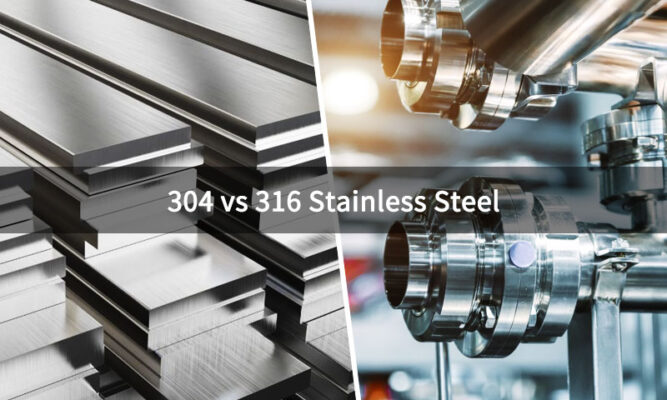
The first point of friction with overseas manufacturers is the material certificate. A seller who offers AISI 304 or 316L should provide a mill test certificate that matches the heat number stamped on the tank. I have had suppliers send a generic PDF copied from another product line, and when I asked for the specific heat number, the conversation went quiet for a week. For cross-border procurement, the buyer should request the certificate before the order is placed, not after the tank is on a container ship.
Why 316L matters for certain markets: coastal breweries in places like Thailand, Vietnam, or Indonesia face salt air corrosion. A 304 tank can start pitting within two years in such environments. I once advised a buyer in Bali who had purchased a 304 bright beer tank that looked pristine on delivery. Within eighteen months, rust spots appeared on the external shell near the glycol ports. The manufacturer had used 304 for the entire vessel, including the outer cladding. The replacement cost and lost revenue from contaminated beer exceeded $12,000. That is when I started insisting on 316L for any brewery located within ten kilometers of salt water.
The certification landscape adds another layer. Buyers exporting beer to North America or Europe will face audits that require NSF/ANSI 51 or 3-A certification for product-contact surfaces. Not every manufacturer has these. Many offer “certified” as an upsell, but the actual documentation may cover only one model line. A common workaround is to offer hybrid configurations: 316L for wetted parts and 304 for structural frames. That reduces cost while satisfying food safety requirements for the critical surfaces. I have seen this work well for mid-sized breweries that do not need full 316L construction but still want to pass a BRC audit.
Fabrication Quality and Weld Integrity
The welding process is where most cross-border cost savings hide—and where quality can fall apart. Professional fabrication uses TIG welding with argon shielding to prevent oxidation on the weld root. Without argon back-purging, the weld bead can develop a dark, sugared interior that harbors bacteria. In 2025, a study of 150 brewery vessels found that tanks with non-argon-shielded welds had a 40% higher risk of developing micro-fissures within three years. That statistic is not abstract: micro-fissures mean wild yeast contamination, and a single contaminated batch can cost $10,000 or more in lost product and cleaning downtime.
The buyer brewing equipment should ask for weld inspection reports. Dye penetrant testing on critical seams (especially on the bottom head and jacket welds) is a standard that many reputable manufacturers perform but rarely advertise. On one occasion, I shipped a 30-bbl unitank from a supplier who claimed “full inspection” without specifying the method. When the tank arrived, the pressure test at 1.5 times working pressure failed—a weld on the cooling jacket developed a pinhole leak. The repair took three weeks because the local welder was not certified to work on 316L. The lesson: request photos of dye penetrant testing and hydro-test results as part of the quality documentation package, and do not release final payment until those documents are received.
A common counterargument from manufacturers is that such testing adds cost and delays production. That is true. But the alternative—a tank that fails during a critical brew week—is far more expensive. For a cross-border buyer, the delta in price between a manufacturer that performs full NDT (non-destructive testing) and one that does not is typically 8-12%. That premium is worth it when you consider the total cost of a contaminated batch plus shipping a replacement part.

Thermal Systems and Energy Efficiency
Heating and cooling systems directly impact operating costs, especially for brewing equipment in regions with high energy prices. A properly designed steam jacket should support a boil-off rate of 8% to 10% per hour. That is the sweet spot for removing DMS (dimethyl sulfide) without excessive energy waste. Industrial data from 2024 showed that high-efficiency steam jackets reduce gas consumption by 18% compared to standard electric immersion elements in 20-bbl systems. For a brewery running two batches per day, that can mean $3,000 to $5,000 in annual gas savings.
Heat recovery is another feature that cross-border buyers often overlook. Some manufacturers now integrate heat exchangers that pre-heat strike water to 75°C using the heat from the cooling wort. This is managed by automated valves and flow meters that maintain the water-to-grain ratio within 0.01% tolerance. I have seen this implemented in a 15-bbl system from a Taiwanese manufacturer, and the reduction in gas consumption was measurable—about 15% less over a six-month period. However, the added complexity also introduced a new failure point: a misprogrammed PID controller caused the pre-heat loop to overshoot by 4°C on two occasions, requiring manual intervention. The manufacturer updated the firmware, and the issue did not recur, but it illustrates that automation gains come with a learning curve.
Automation, PLCs, and Repeatable Consistency
Precise temperature control during mashing separates consistent beer from variable batches. The standard expectation is temperature maintenance within 0.5°C. Achieving that requires reliable sensors and a PLC with closed-loop control. Buyers should check whether the manufacturer uses components with global availability—Siemens and Allen-Bradley are common, and their spare parts have a 95% availability rate worldwide. I once worked with a brewery in Costa Rica that bought a system with a lesser-known European PLC. When a sensor failed, the lead time for a replacement was four weeks. The brewery had to brew manually with a handheld thermometer and a lot of anxiety.
PLC-controlled hop dosing has become more common. Data from 2025 across 60 automated systems showed that brewing equipment using such dosing units reduced bittering variance by 12% across 500 test batches. That may not sound dramatic, but for a brewery aiming for consistent flagship IPA, a 12% reduction in variance means fewer off-spec batches and less customer dissatisfaction. The downside, as with the heat recovery, is that the system is only as good as the programming. I have seen PLC logic that did not properly account for hop pellet absorption, leading to lower than expected utilization. The manufacturer had to send a technician to re-tune the dosing algorithm.
One operational detail that gets little attention in product descriptions is the grain-out process. A custom-designed rake system should clear the lauter tun in under 20 minutes. Faster turnarounds enable a third or fourth brew cycle per day. A 2026 efficiency audit found that bottom-driven rake systems with variable speed drives increased fermentable sugar extraction by 3.5% on average. That translates to approximately $4,500 annual savings on malt for a mid-sized microbrewery. Not all manufacturers offer this; many use a simple fixed-speed rake that adds five to ten minutes per cycle. The buyer should ask about rake drive configuration and expected lautering time as a performance benchmark.
Sanitation and Clean-in-Place (CIP) Systems
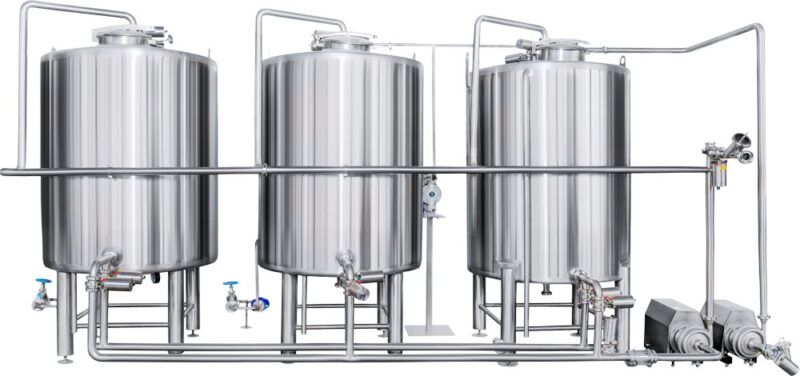
Sanitation is where I have seen the most variation between quoted specs and actual performance. A proper CIP system uses rotating jet nozzles that deliver water at 3.0 to 5.0 bar pressure and cover 99.8% of the internal surface. Static spray balls, which many budget systems use, cover only about 85% and require longer cycle times. The difference in chemical consumption is significant: rotating jet nozzles can reduce chemical spend by 20% per year because they require lower concentrations to achieve sterility.
Consider the time savings. A CIP cycle with a static spray ball can take 45 minutes per tank. With rotating nozzles, that drops to 25 minutes. For a brewery cleaning six tanks per day, that saves two hours of labor daily—over 100 hours per year. That labor can be redirected to yeast management or quality control. I have had buyers tell me they initially avoided rotating nozzles due to higher upfront cost (about $300 per tank), but after one year they all said it was the best upgrade they made.
Fermenter cone angle is another detail that matters. A 60-degree cone angle is the global standard for efficient yeast harvesting and sediment removal. Research involving 30 yeast strains showed that 60-degree cones resulted in 25% higher yeast viability for repitching. That is not trivial: fresh yeast cultures cost $600 to $1,200 per pitch depending on the strain and supplier. A brewery that repitches for six generations can save thousands per year. Some manufacturers offer shallow cones (50 degrees) to reduce tank height, which may be necessary for certain building constraints, but the buyer should accept that lower viability is the trade-off.

Documentation and the Paper Trail That Saves Headaches
The final layer of expectation is the documentation package. The manufacturer should provide electrical schematics, P&ID diagrams, pressure vessel certificates, and material certificates. I have received packages where the electrical schematic was hand-drawn on graph paper, and the pressure certificate was missing the signature of the inspecting authority. That is not acceptable for a commercial brewery that needs to pass local health inspections or apply for insurance.
A complete documentation set also includes operating manuals, maintenance schedules, and a recommended spare parts list. Cross-border buyers should request these in the accepted language (English is standard) and in digital format. I have had to scan and translate four hundred pages of Chinese technical manuals because the manufacturer only provided paper copies. It added two weeks to the commissioning timeline.
The warranty is another point of negotiation. Modern standards in 2026 dictate a minimum 24-month warranty on materials and workmanship, but cross-border enforcement is difficult. I prefer to structure payments where 20-30% is held upon receipt of the equipment, released only after successful installation and a signed acceptance test. That provides leverage if the documentation is incomplete or the equipment fails to meet performance benchmarks.
Frequently Asked Questions
What is the most common spec failure in cross-border brewing equipment orders?
Material grade substitution or insufficient documentation. Buyers often order 316L but receive 304 without being notified. Always request a mill test certificate with the heat number before shipment.
How can I verify weld quality without visiting the factory?
Ask for dye penetrant test photos of at least three critical seams: the bottom head weld, the jacket inlet weld, and the manway flange weld. Also request a hydro-test video showing the vessel pressurized to 1.5 times the working pressure.
Does NSF/ANSI 51 certification matter for breweries selling only domestically?
It depends on the domestic regulations. In the United States, it is not legally required, but many health inspectors expect it. In Europe, 3-A SSI is more common. For breweries that may export in the future, having certified equipment avoids retrofitting costs.
How much can I save by choosing a lower-cost manufacturer?
The upfront price difference can be 20-40%, but you risk higher hidden costs in rework, replacements, and lost production. I have seen projects where the total cost of ownership over five years was actually higher for the cheaper option due to corrosion repairs and inefficient energy use.
Is PLC-based automation worth the extra cost for a small craft brewery?
Yes, if consistency matters. A PLC-controlled system with PID temperature control and automated hop dosing can reduce batch-to-batch variance significantly. However, be prepared for a learning curve and ensure the manufacturer provides adequate training and remote support.
