When a brewery starts planning its equipment purchase, the phrase “complete beer making equipment” rarely means the same thing to every brewer. Some envision a single brewhouse; others imagine a dozen tanks and a maze of piping. The operational friction lies in knowing which components are truly essential and how they must work together to turn raw ingredients into consistent, safe beer at scale.
Complete beer making equipment means covering every process step from mash-in to packaging, with vessels, pumps, valves, hoses, cleaning tools, and controls all sized and arranged so production runs smoothly rather than requiring constant workarounds. A brewery is not complete if it has a beautiful brewhouse but no CIP system, or plenty of tanks but undersized cooling that forces production to stop every afternoon. The definition shifts depending on brewing model, batch size, and growth plans, but the core principle stays the same: the equipment must function as a coordinated system, not a collection of disconnected parts.
The Brewhouse – Where Wort Is Born
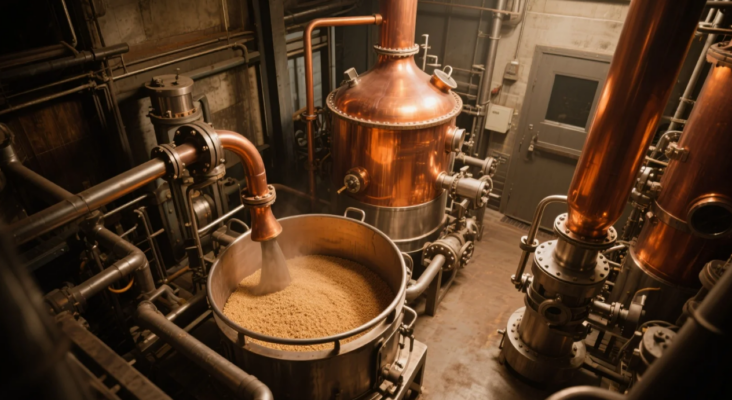
The brewhouse transforms malt and water into hot wort through a sequence of mashing, lautering, boiling, and whirlpool separation. A typical brewhouse includes a mash tun and lauter tun—sometimes combined into a single mash/lauter vessel—plus a kettle and a whirlpool. Some designs merge the kettle and whirlpool into one tank to save floor space, while others keep them separate for more precise trub removal. A heat exchanger cools the hot wort down to fermentation temperature before it transfers to the fermentation tanks. Pumps, sanitary valves, brewhouse piping, and access platforms complete the setup.
A fully functional brewhouse typically operates at a boil-off rate of 4–8% per hour, depending on vessel geometry, heating method, and atmospheric conditions. Below 4%, the wort may not develop enough hop bitterness or color; above 8%, water and energy waste become significant. Matching the boil-off rate to the recipe design is one of those details that looks minor on paper but shows up immediately in finished beer consistency.
The brewhouse is defined by mash performance and lautering efficiency. A mash tun with poor temperature distribution will leave unconverted starch in the grain bed, while a lauter tun that channels instead of filters evenly will produce hazy wort and stuck mashes. Stable boil control matters too—rolling boil for exactly the right duration, neither too gentle nor too violent. Reliable trub separation in the whirlpool determines how much protein and hop debris reaches the fermentation tank. Smooth, hygienic transfers between vessels prevent oxygen pickup and contamination before the yeast ever touches the wort.
Different configurations exist for different batch sizes and brewing styles. A brewpub running 500-liter batches might use a two-vessel system with a combined mash/lauter tun and a combined kettle/whirlpool. A production brewery doing 10,000-liter batches typically separates all four functions into dedicated vessels. The choice is not about quality—both can produce excellent beer—but about cleaning frequency, recipe flexibility, and how the brewhouse fits into the rest of the brewery layout.
Fermentation and Conditioning – Where Beer Develops
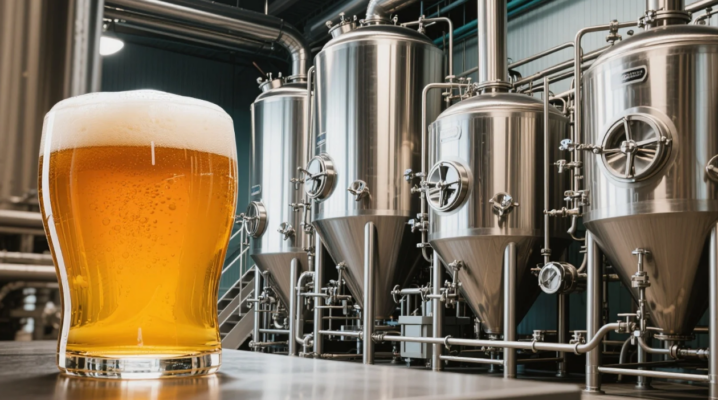
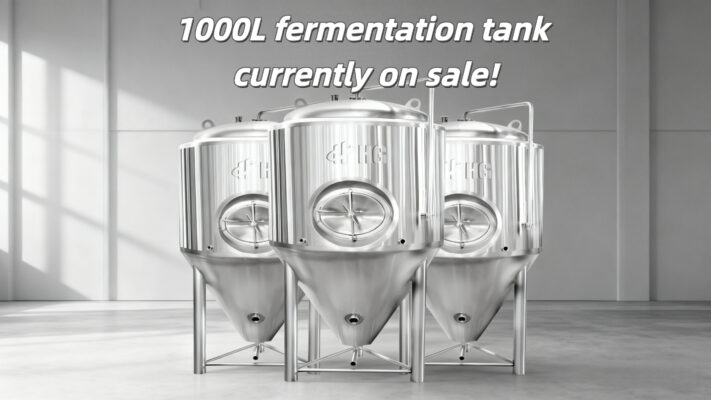
The fermentation and conditioning block turns wort into beer, then stabilizes it for packaging. Cylindroconical fermentation tanks are the standard choice, sized to match batch volume from the brewhouse. Bright beer tanks handle maturation and carbonation. Cooling jackets wrap around the tanks to control temperature, with insulation to reduce heat exchange with the environment. Temperature measurement points, sample valves, manways, and appropriate pressure fittings complete each vessel.
You must control temperature precisely during fermentation—a 2-degree swing can turn a clean ale into a fusel-alcohol disaster or stall a lager yeast completely. Most craft breweries budget for at least 1.5 to 2 fermentation tanks per brewhouse batch to allow for varying fermentation cycles. If you brew one batch per day and your ales take 7 days to ferment, you need at least 7 tanks plus one or two for conditioning. Many new brewers calculate this wrong and end up with a brewhouse that can produce wort faster than the tank farm can ferment it, creating a bottleneck that wastes the brewhouse capacity.
Multiple beers at different stages run concurrently in a well-designed tank farm. One tank might be in active fermentation, another cold crashing, a third carbonating, and a fourth being cleaned. You need enough vessels and enough cooling zones to separate these stages without cross-contamination or temperature conflicts. The bright beer tanks need their own temperature control, usually colder than fermentation tanks, to stabilize the beer and hold it ready for packaging.
Sample valves and manways are not optional accessories. Without sample valves, you cannot track fermentation progress without opening the tank and exposing the beer to oxygen and contamination. Without properly sized manways, cleaning becomes difficult and inspection impossible. Pressure fittings matter if you carbonate naturally or force carbonate—a tank rated for 1.5 bar cannot handle the same procedures as one rated for 0.5 bar.
The tank farm must match your production patterns and beer portfolio. A brewery that runs six core beers and three seasonals needs more tanks than one that runs two core beers, even at the same total volume. Tank sizing also affects flexibility: four 10,000-liter tanks give less recipe freedom than ten 4,000-liter tanks, even though the total volume is nearly the same. Many brewers treat the brewhouse as the main investment, but fermentation tank count and cooling capacity are usually the real throughput limiters.
Cleaning and Hygiene – Protecting Every Batch
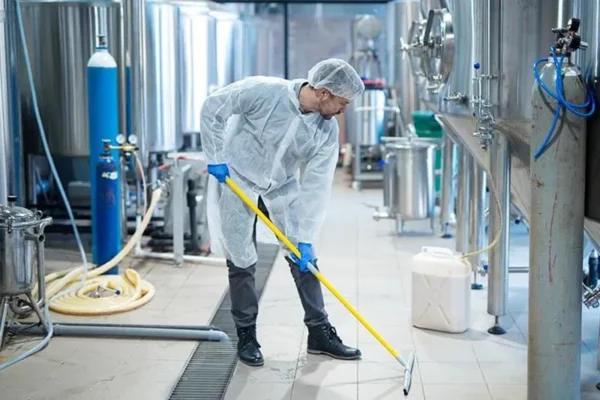
No brewery is complete without a robust cleaning setup. The clean-in-place (CIP) station includes chemical tanks and pumps that circulate detergent, acid, and sanitizer through the vessels and piping. CIP spray devices inside each vessel direct the cleaning solution across all internal surfaces. CIP manifolds and lines reach every critical part of the brewery—brewhouse vessels, fermentation tanks, bright beer tanks, and the transfer piping between them. Seals, gaskets, clamps, and hoses must be compatible with the cleaning chemicals and temperatures used.
A standard CIP cycle for a fermentation tank takes 30–45 minutes, depending on soil level and detergent temperature. If you have 10 tanks and each needs one CIP cycle per turn, that is 5 to 7.5 hours of cleaning per tank farm turnover. The CIP system design determines whether those hours happen efficiently or wastefully. A recirculation loop that is too long wastes heat and chemical concentration. A spray device that misses the top dome of a tank leaves organic soil that spoils the next batch.
The tradeoff here is painful: skimping on CIP capacity leads to spoilage and lost batches. Many new brewers buy equipment piecemeal and end up with mismatched tanks, undersized cooling, or awkward cleaning loops—resulting in 6–12 months of lost production and costly retrofits. A brewery that saved money by buying a cheap CIP cart with undersized pumps discovers that it takes twice as long to clean each tank, which means fewer batches per week. Another brewery that skipped spray devices in favor of manual cleaning quickly finds that the manway is too small to reach the top of the tank with a hose, and organic soil accumulates in the headspace until a diacetyl infection ruins a 20,000-liter batch.
The CIP system often gets ignored until the first stuck cleaning cycle, but its design directly affects tank turnaround and beer quality more than vessel polish. A tank that looks shiny on the outside but has microscopic biofilm on the inside will produce off-flavors, slow fermentation, and inconsistent attenuation. Cleaning must be thorough, repeatable, and efficient. Repeatable means the same procedure every time, regardless of which staff member runs it. Efficient means tanks turn faster without wasting water and chemicals, and the cleaning team can clean multiple tanks simultaneously rather than queuing them one by one.
CIP integration should be considered from the start. Vessel design, piping routes, and cleaning circuits must be planned together instead of being added as an afterthought. A fermentation tank with a bottom outlet that is not sloped properly will never drain cleanly, no matter how good the CIP pump is. A CIP return line that runs uphill will air-lock and stop flowing. These details look minor in the equipment drawing but cause real operational pain once the brewery is running.
Controls and Utilities – The Invisible Backbone
Behind the visible stainless steel, controls and utilities keep the brewery running. Temperature controllers and automation panels manage the heating, cooling, and timing of each process step. Glycol cooling systems and distribution manifolds remove the heat generated during fermentation and crash-cool the beer for clarification. Steam boilers or electric heating systems provide the energy for mashing and boiling. Electrical connections, safety devices, and instrumentation tie everything together.
A typical 10-barrel brewhouse requires a glycol chiller capable of removing roughly 60,000–80,000 BTU/h during peak chilling hours. If the chiller is undersized, the heat exchanger cannot cool the wort to pitching temperature fast enough, and the brewhouse sits idle waiting for the next batch. If the distribution manifold is not balanced, some tanks freeze while others stay warm, and the fermentation temperature control becomes unreliable.
Failure to properly size utilities is a common mistake that bottlenecks production. A brewery might buy a 15-barrel brewhouse with a 10-barrel glycol chiller because the chiller was cheaper, then discover that during summer months the fermentation temperature rises 4 degrees above target, producing esters that do not match the recipe. The solution—buying a second chiller or replacing the undersized one—costs more than buying the right size initially, plus months of inconsistent beer.
Controls and utilities must provide enough cooling and heating capacity for peak demand. Peak demand is not the average fermentation load; it is the moment when the brewhouse needs to crash-cool a bright beer tank while three fermentation tanks are at their most active phase. If the system is sized for average load, peak events will push it past capacity, and the brewery will have to stagger operations to avoid overloading the utilities.
Brewers need clear visibility of what is happening in the process. Temperature readouts on the tanks tell one story, but the glycol return temperature tells another. Automation panels that log temperature curves help brewers spot problems—a fermentation that stalled because the glycol valve stuck open, a heat exchanger that fouled because the flow rate dropped. Without these tools, troubleshooting becomes guesswork.
Controls and utility systems must match the brewery’s capacity, staffing, and local conditions. A brewery in a hot climate needs a larger glycol chiller than the same brewery in a cool climate. A brewery with two brewers per shift needs more automation than a brewery with five brewers per shift, because the smaller team cannot monitor every tank manually. The equipment vendor should configure these systems to fit the specific operation, not offer a one-size-fits-all panel that either overwhelms the team with complexity or lacks the features they need.
Safe operation and straightforward troubleshooting matter more than fancy automation. A brewery that automates everything but does not train the staff on manual override procedures will struggle when a sensor fails at 2 AM and no one knows how to complete the batch manually. Simpler controls with good documentation often outperform complex systems that the brewery cannot maintain.
FAQ
What exactly counts as “complete” beer making equipment – does it include packaging?
Complete beer making equipment covers everything from grain intake to packaged beer ready for sale. This includes the brewhouse, fermentation and conditioning tanks, CIP system, controls and utilities, and packaging equipment such as keg washers, bottle fillers, or canning lines. Some suppliers define “complete” as brewhouse plus tanks only, leaving packaging as a separate purchase, so you must clarify what the vendor includes in their quote.
Can I start with one brewhouse and add fermentation tanks later?
Yes, but you need to plan for expansion from the beginning. The brewhouse vessel layout, piping connections, and utility capacity must accommodate future tanks. If you install a glycol system sized only for the initial tank count, adding tanks later requires replacing the chiller rather than just adding capacity. Most breweries find that starting with 1.5 to 2 fermentation tanks per brewhouse batch is the minimum viable setup.
How important is the CIP system – can I clean manually instead?
Manual cleaning is possible for very small systems—under 100 liters—but impractical and risky at any commercial scale. A fermentation tank that is 2 meters tall cannot be reached from the manway to scrub the top dome. Manual cleaning is also inconsistent: different staff members will do it differently, and human error leads to contamination. A proper CIP system with spray devices and recirculation is not optional for commercial brewing.
Do I need automation, or can I operate manually?
Manual operation works for very small breweries with experienced brewers who can watch every step, but it does not scale. Once a brewery runs more than one batch per day or more than a few tanks, manual monitoring becomes a bottleneck. Basic automation of temperature control and timing frees the brewers to focus on quality and troubleshooting rather than watching thermometers. Full automation of the brewhouse is not necessary for most breweries, but partial automation of temperature control and CIP sequences is strongly recommended.
