
Designing a 20000L beer factory production line requires more than selecting large brewing tanks. Buyers need to coordinate brewhouse capacity, fermentation space, cooling, cleaning, packaging, and factory layout to achieve reliable output and consistent beer quality. The most effective solution matches equipment specifications to the production schedule, target beer styles, available utilities, and long-term business plans. By evaluating the entire brewing process before purchasing equipment, investors can control project costs, improve operating efficiency, and avoid expensive modifications after installation.
What Equipment Does a 20000L Beer Factory Production Line Need?
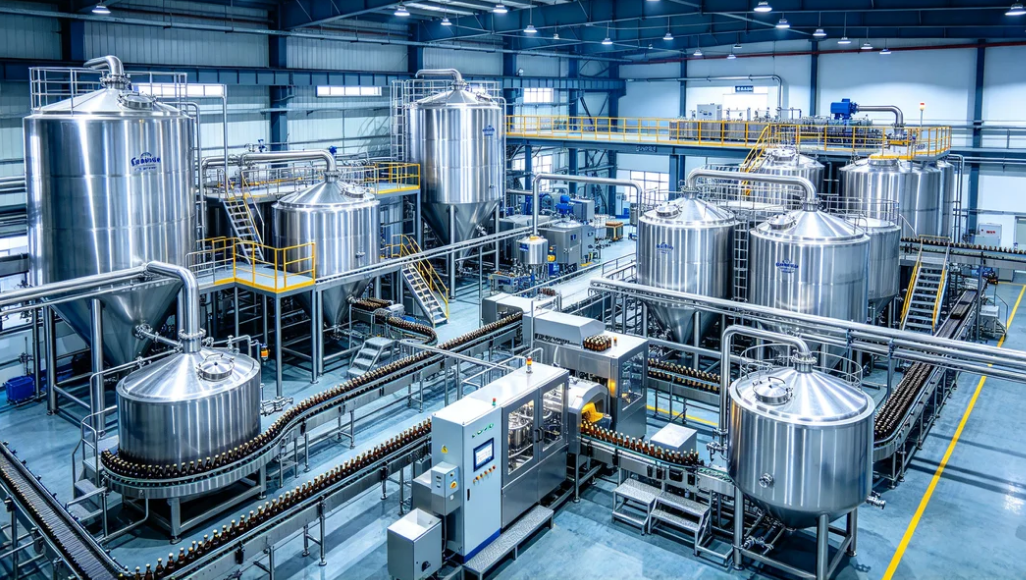
A complete 20000L beer factory production line should integrate every major stage of commercial beer manufacturing. Each system must work with the others to maintain a continuous and hygienic production workflow.
The main equipment typically includes:
- Brewhouse system: Mash tuns, lauter tuns, brew kettles, whirlpool vessels, and hot water tanks, depending on the selected configuration.
- Fermentation tanks: Stainless steel vessels designed for controlled fermentation and maturation.
- Bright beer tanks: Equipment for beer conditioning, carbonation, and temporary storage before packaging.
- Cooling system: Glycol chillers and associated pipelines for temperature control.
- CIP cleaning system: Cleaning tanks, pumps, valves, and pipelines for efficient equipment sanitation.
- Packaging equipment: Bottling, canning, or kegging lines selected according to the target market.
- Control system: Manual, semi-automatic, or PLC-based controls for managing brewing operations.
Buyers should request a complete equipment list rather than evaluating the brewhouse alone. Missing auxiliary systems can increase installation costs and delay the start of commercial production.
How Should Buyers Choose the Right Brewing Equipment Configuration?
The best configuration depends on production frequency, available space, labor requirements, and the brewery’s target output. A well-designed system balances initial investment with daily operating efficiency.
Which Brewhouse Structure Is Suitable for Commercial Brewing?
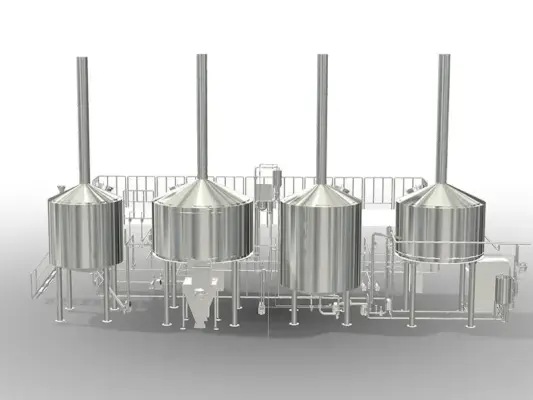
A two-vessel brewhouse combines multiple processes in fewer vessels, making it suitable for projects with limited space. A three-vessel system separates key brewing stages and provides greater operational flexibility. Four-vessel systems offer additional process separation for breweries with demanding production schedules.
The right choice depends on the number of batches required per day, cleaning intervals, and the degree of process overlap needed.
How Should Fermentation Capacity Be Calculated?
Fermentation capacity should be calculated from the brewing schedule and fermentation cycle, not simply matched to the brewhouse volume. If fermentation takes longer than brewing, insufficient tank capacity can quickly become a production bottleneck.
Buyers should consider batch volume, fermentation duration, maturation time, beer variety, and packaging schedules. Allowing for future tank additions can also reduce expansion costs.
What Technical Parameters Should Buyers Compare?
A meaningful comparison should cover working capacity, materials, temperature control, automation, and cleaning requirements. The following table provides an illustrative framework for evaluating a commercial brewery project.
| Equipment | Typical specification or option | Main purchasing consideration |
|---|---|---|
| Brewhouse | 2000L–5000L per batch, depending on design | Batch frequency and target output |
| Fermentation tanks | Commonly 2000L–10000L per tank | Fermentation cycle and tank quantity |
| Bright beer tanks | Sized to match packaging demand | Storage time and filling speed |
| Material | Food-grade stainless steel, commonly SS304 | Corrosion resistance and hygienic design |
| Temperature control | Glycol cooling with individual controls | Temperature stability and energy use |
| Automation | Manual, semi-automatic, or PLC-based | Labor availability and process repeatability |
| Cleaning system | Manual cleaning or CIP | Sanitation requirements and production frequency |
These figures are indicative planning ranges, not confirmed specifications for every 20000L system. Actual capacities, material grades, pressure ratings, and configurations should be confirmed with the manufacturer.
How Can Factory Layout Improve Production Efficiency?
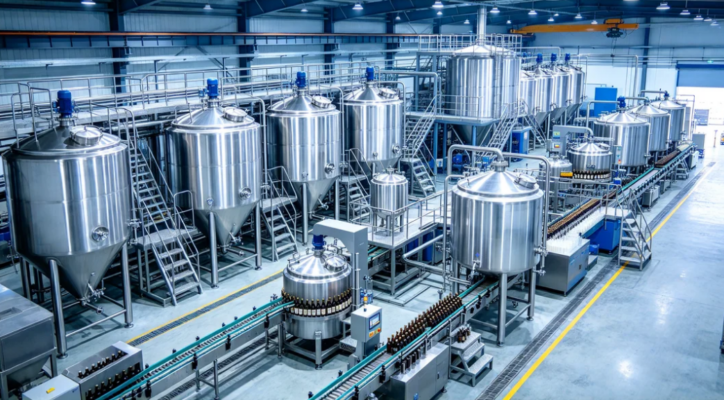
A practical factory layout reduces unnecessary material movement, simplifies maintenance, and improves operator safety. Equipment should follow the production sequence from raw material handling to finished beer packaging.
Before finalizing the layout, buyers should confirm building dimensions, ceiling height, drainage, floor loading, electrical supply, water availability, ventilation, and access for equipment installation. Pipeline routes should also minimize unnecessary bends and provide suitable access for cleaning and maintenance.
Packaging and finished-product storage areas need enough space to accommodate the planned filling rate. Reserving space and utility connections for additional fermentation tanks can make future expansion easier.
How Much Does a 20000L Beer Factory Project Cost?
The investment depends on equipment configuration, production capacity, automation, packaging requirements, installation scope, and local infrastructure. Two systems with similar nominal output can have substantially different prices if their included equipment and technical specifications differ.
For an accurate quotation, buyers should provide the manufacturer with the target daily or annual output, brewing schedule, preferred beer styles, packaging format, factory drawings, utility conditions, and budget range.
A detailed quotation should identify equipment quantities, material specifications, electrical components, cooling capacity, shipping, installation, commissioning, training, warranty, and after-sales support. Comparing these items helps buyers evaluate the total project cost instead of focusing only on the initial equipment price.
How Can Buyers Prepare for Future Brewery Expansion?
A flexible production line should accommodate changing market demand without requiring a complete redesign. Expansion planning is most effective before equipment manufacturing begins.
Buyers can discuss reserved floor space, additional tank connections, cooling capacity, electrical loads, control-system scalability, and packaging upgrades with the manufacturer. These provisions may increase initial planning requirements but can reduce disruption when production grows.
Working with an experienced brewery equipment manufacturer also helps coordinate equipment selection, engineering, manufacturing, installation, and commissioning as one project.
Frequently Asked Questions
1. What does a 20000L beer factory production line include?
It generally includes a brewhouse, fermentation tanks, bright beer tanks, cooling equipment, CIP cleaning equipment, process pipelines, controls, and packaging machinery. The exact configuration depends on production targets and project requirements.
2. How many fermentation tanks are needed for a 20000L brewery?
The number depends on batch volume, brewing frequency, fermentation and maturation time, and the variety of beers produced. Buyers should calculate total required cellar capacity from a realistic production schedule before confirming tank quantities.
3. Is automation necessary for a 20000L beer factory?
Automation is not mandatory for every project, but it can improve process repeatability, temperature management, and production monitoring. The appropriate level depends on labor availability, operating complexity, budget, and quality-control requirements.
4. What information should buyers provide when requesting a quotation?
Buyers should provide target production capacity, batch size, beer styles, packaging requirements, factory layout, utility conditions, preferred automation level, and expansion plans. These details help manufacturers recommend a suitable configuration and prepare a more accurate quotation.
