
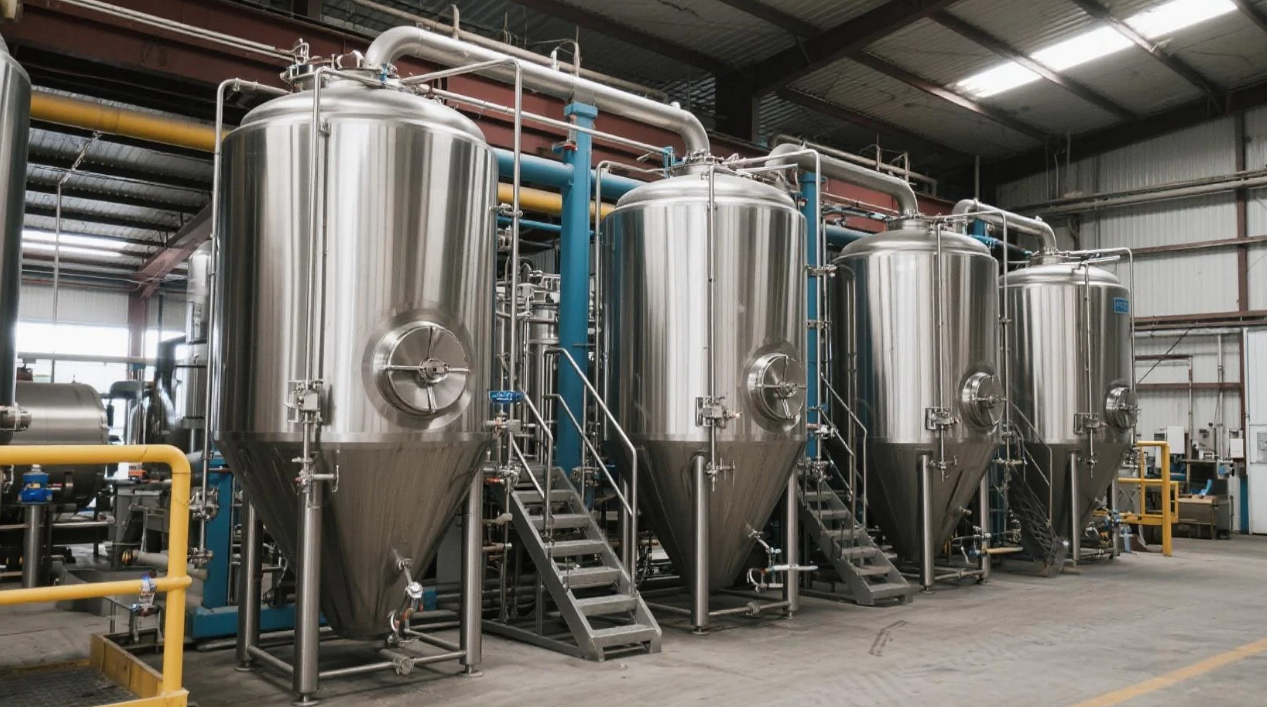
A brewery in Australia ordered what the supplier called a “complete” brewing line. The containers arrived with a brewhouse and tanks, but no CIP station. The glycol chiller was undersized for the local climate. The voltage conversion was never discussed. That “turnkey” system took three months of retrofitting before producing beer, and five batches were lost to temperature spikes during the wait.
“Complete” means different things to different equipment vendors. Some ship a brewhouse and call it a system. Others include tanks but skip cleaning infrastructure. The only way to avoid a six-figure surprise is to treat complete beer making equipment as an integrated system—not a collection of parts—and verify every block before signing a purchase order. Four core modules define a genuinely complete brewery: the brewhouse, the fermentation and conditioning block, the cleaning and hygiene setup, and the controls and utilities backbone. Each must be sized, configured, and documented for your batch volume, beer styles, climate, and local electrical standards.
What “Complete” Really Means for Brewery Equipment
When a brewery buyer searches for complete beer making equipment, they are not looking for one vessel or a couple of tanks. They need every pump, valve, hose, cleaning tool, and control element required to turn malt, hops, water, and yeast into packaged beer consistently. A complete system covers all process steps from mashing to packaging. Equipment is sized and arranged so production runs without bottlenecks. Hygiene, safety, and future expansion are built into the design from the start, not patched in later.
A typical microbrewery starts with a 2,000-liter batch size and scales from there. That batch volume dictates the brewhouse capacity, fermentation tank count, bright tank volume, CIP cycle frequency, and utility sizing. A system that works for a 500-liter brewpub will fail at 2,000 liters. The difference is not just bigger tanks—it is thicker insulation, larger heat exchangers, more powerful pumps, and a CIP station capable of cleaning larger surfaces in the same cycle time.
The most common mistake among first-time importers is thinking of the brewery as a brewhouse plus tanks. In reality, the brewhouse is one block in a four-block system. Ignoring any of the other three means the equipment will not function as promised. A brewhouse without a properly matched CIP station produces dirty beer. Tanks without adequate glycol cooling produce off-flavors. Controls without voltage configuration produce dead panels.
The Brewhouse – Where Wort Is Born
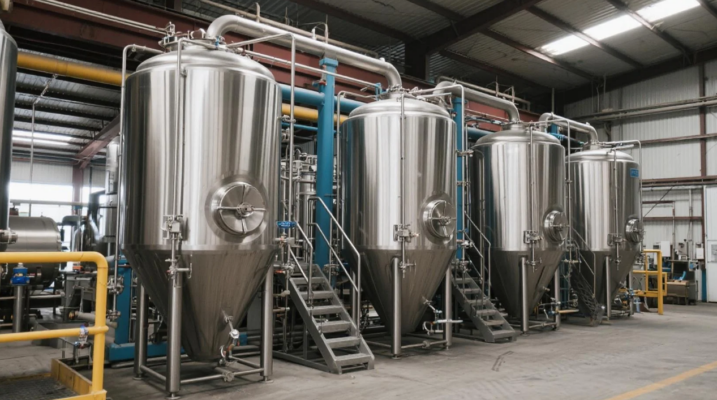
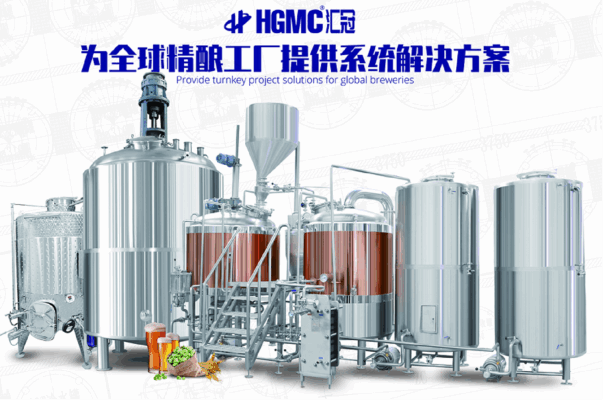
The brewhouse transforms malt and water into hot wort. Its core vessels include the mash tun, lauter tun, kettle, and whirlpool. The heat exchanger cools the wort from boiling temperature to fermentation temperature in a single pass. A pump and valve manifold moves wort between vessels. Platforms, stairs, and access points allow operators to reach manways and sample ports safely.
Many microbreweries opt for a 2-vessel brewhouse to save floor space and cost. A mash-lauter tun combines the mashing and lautering steps, while a combined kettle-whirlpool handles boiling and trub separation. This configuration cuts equipment count and piping complexity. The tradeoff is less flexibility in mash temperature profiles and a tighter schedule for transferring between steps. A 3-vessel or 4-vessel brewhouse gives more control over each stage but requires more floor space, more piping, and higher capital investment.
Cross-border considerations matter here. Verify that your brewhouse’s electrical specifications match your local grid. A brewhouse designed for 220V at 60 Hz will not run correctly on 380V at 50 Hz without a transformer and frequency converter. Steam-heated brewhouses require a steam generator sized for peak demand. Electric brewhouses need a dedicated circuit with sufficient amperage. Shipping large vessels across borders means checking container dimensions, port access, and inland transport options for oversized cargo. A 2,000-liter kettle is roughly 1.5 meters in diameter and may require special handling.
Fermentation and Conditioning – Where Beer Takes Shape
Cylindroconical fermentation tanks (CC tanks) and bright beer tanks (BBT) form the core of this block. Cooling jackets, insulation, and temperature probes maintain precise fermentation profiles. Sample valves allow brewers to monitor gravity and pH without opening the tank. Manways provide access for cleaning and dry-hop additions.
A 10‑BBL brewery (approximately 1,170 liters) typically needs 4 fermenters and 2 bright tanks. For a 2,000-liter batch size, the minimum is 4 fermenters to handle a weekly brew schedule with time for fermentation, conditioning, and cleaning. Adding a fifth fermenter builds in buffer for double batches or extended lagering periods. The glycol system must be sized to cool all tanks simultaneously at peak load, not just one at a time.
The failure scenario is an undersized tank farm. A brewer I worked with ordered 6 fermenters for a 1,500-liter system but only purchased 3 bright tanks. The packaging line could not keep up with fermentation output. Bright tanks stayed occupied longer than expected because the bottling line jammed frequently. After three months, the brewer had 4 fermenters filled and nowhere to put the finished beer. The fix was ordering two more bright tanks with a 6-week lead time and another 8 weeks for shipping. Production stopped for two weeks.
International buyers must check tank dimensions for container shipping. A 2,000-liter CC tank is roughly 1.2 meters in diameter and 3 meters tall, which fits in a standard 20-foot container. Larger tanks require flat-rack or open-top containers, which increase shipping cost and lead time. Manway access must face a walkable side. Pressure ratings should match the brewery’s carbonation and transfer methods—most bright tanks are rated for 1–2 bar, but some applications require higher.
Cleaning and Hygiene – Protecting Every Batch
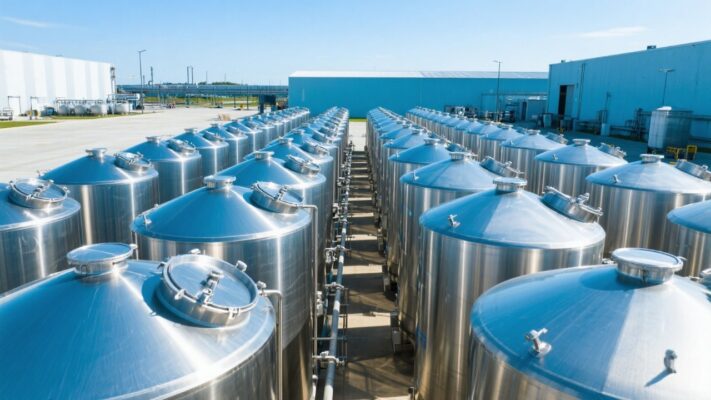
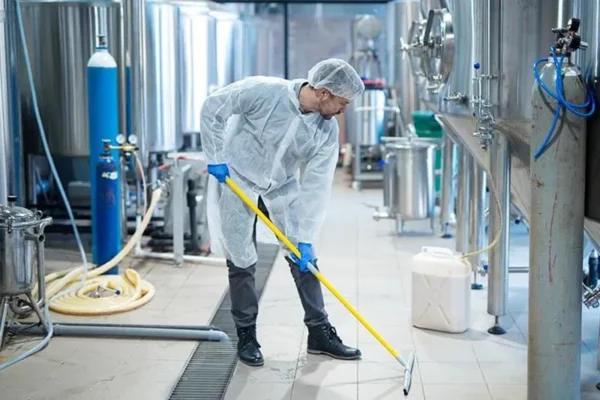
No brewery is complete without a robust cleaning setup. The CIP station includes chemical tanks for caustic, acid, and sanitizer, plus a pump that circulates cleaning solution through vessels and piping. Spray balls inside each vessel direct the cleaning solution across all internal surfaces. CIP manifolds and hoses reach every tank, the heat exchanger, and the packaging line. Seals, gaskets, and clamps must resist the chemicals and temperatures used in cleaning cycles.
A standard CIP cycle runs 60–90 minutes per vessel. For a 2,000-liter brewhouse with 4 fermenters and 2 bright tanks, a brewer might run 3–4 CIP cycles per day. That is 3–6 hours of cleaning time daily. Skipping integrated CIP design is the most common regret among first-time importers. A brewer who buys a “complete” system without a dedicated CIP station ends up cleaning tanks manually with hoses and brushes, which takes longer, uses more water, and leaves surfaces less clean.
The CIP station must handle multiple chemicals. Caustic solution (typically 1–3% sodium hydroxide) removes organic soil. Acid solution (phosphoric or nitric acid) dissolves mineral deposits. Sanitizer (peracetic acid or chlorine dioxide) kills microorganisms at the final stage. Chemical compatibility varies by region—some countries restrict certain concentrations or require specific handling equipment. Buyers should verify that local chemical suppliers stock the recommended formulations.
Controls and Utilities – The Invisible Backbone
Temperature controllers, PLC-based automation, glycol chillers, steam generators, and electrical panels form the invisible backbone of the brewery. The brewery control system monitors and adjusts temperatures, pump speeds, valve positions, and cleaning cycles. Automation level ranges from manual push-button panels to fully programmable PLC with touchscreen interfaces. Most microbreweries start with manual or semi-automatic controls and upgrade later.
A 2,000‑liter brewhouse typically requires a 5-ton glycol chiller, which provides approximately 17.6 kW of cooling capacity. That figure varies by climate. A brewery in tropical Queensland requires a larger chiller than one in temperate Bavaria because the ambient temperature raises the load on the glycol system. The chiller must also handle peak demand during active fermentation, when yeast generates heat and the cooling jacket works hardest.
Electrical standards differ significantly by region. A system designed for 50 Hz may underperform on 60 Hz unless specifically configured. Motors run faster on 60 Hz, which can cause pumps to exceed their rated flow. Control panels wired for one voltage may require rewiring for another. The failure here is a real one: a buyer in the Middle East imported a European system configured for 400V at 50 Hz. Their local grid delivered 480V at 60 Hz. The PLC power supply failed within a week. The glycol chiller compressor cycled too fast and tripped the overloads. The fix involved replacing the control transformer, reprogramming the VFDs, and installing a step-down transformer for the chiller. That added 8 weeks and USD 12,000 to the project.
CE marking is common for European equipment. UL certification is standard for North America. Asian markets may require CCC (China) or EAC (Eurasian Union) marks. A buyer who assumes their supplier’s certification covers their destination will face customs delays or on-site rejection. Request copies of the certificates before shipping.
FAQ
How many fermenters do I need for a 2,000‑liter batch size?
A minimum of 4 fermenters is standard, allowing a weekly brew schedule with time for fermentation, conditioning, and cleaning. Adding a fifth tank provides flexibility for double batches or extended lagering. Bright tank capacity should match—typically 2 tanks of the same volume.
Can a 2-vessel brewhouse handle both ales and lagers?
Yes, but with limitations. A 2-vessel system can produce both ale and lager wort, but temperature control during fermentation depends on the cooling system, not the brewhouse. Lagers require precise temperature ramping during the diacetyl rest and cold conditioning, which the brewhouse does not control. The fermentation block and glycol system handle that.
What certifications should I look for when importing brewing equipment?
The certification depends on your destination market. Europe requires CE marking and pressure equipment directive (PED) compliance. North America needs UL listing for electrical components and ASME for pressure vessels. Asian markets vary—CCC for China, EAC for Eurasian Union members. Request certificates before production begins.
What’s the typical lead time for a complete brewery system shipped overseas?
Lead time runs 12–16 weeks from order to factory completion, plus 4–8 weeks for ocean freight and customs clearance. A “complete” system with custom voltage configuration or special vessel dimensions may extend the timeline. Plan for 6 months from deposit to commissioning.
Is it better to buy a turnkey system or piece together components?
Turnkey systems reduce integration risk because one vendor is responsible for compatibility. Piecemeal purchasing gives more control over individual components but requires the buyer to manage piping interfaces, control wiring, and utility sizing. First-time importers generally fare better with a turnkey approach from a single supplier who validates the entire system before shipping.
