
Starting a commercial brewery requires more than purchasing a few brewing machines. Buyers need to select equipment that matches their expected sales, brewing schedule, beer styles, available space, and investment budget. The best starter brewing system is one that delivers reliable production, maintains beer quality, and supports future expansion without unnecessary initial costs. A well-planned configuration should include a brewhouse, fermentation tanks, cooling equipment, cleaning systems, and suitable beer storage or packaging equipment.
1. What Should Buyers Consider Before Purchasing Brewing Equipment?
Buyers should define their brewery business model and production goals before comparing equipment quotations. A taproom, a small commercial brewery supplying local restaurants, and a wholesale beer producer may have different requirements for brewing capacity, fermentation space, and packaging speed.
Before requesting a proposal, consider:
- Expected monthly and annual beer sales
- Target beer styles and product variety
- Number of brewing batches per week
- Fermentation and maturation time
- Available installation space
- Initial investment and operating budget
A clear production plan makes it easier to avoid purchasing oversized equipment that increases operating costs or undersized equipment that limits future sales.
2. Which Equipment Should a Beginner Commercial Brewery Include?
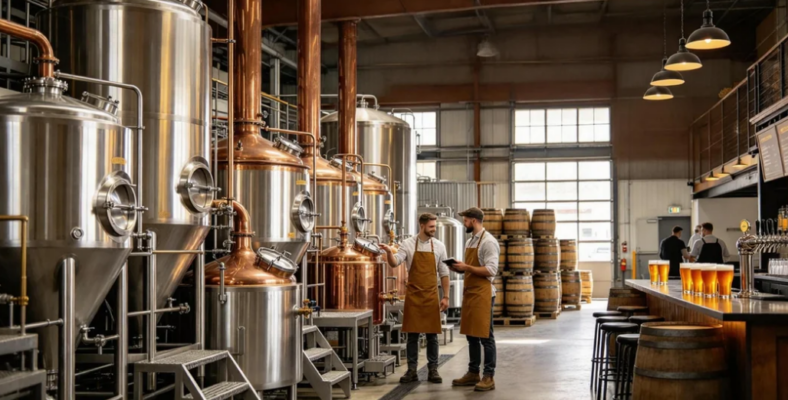
A starter brewery should include the essential equipment required for brewing, fermentation, cooling, cleaning, and finished-beer handling. Purchasing a coordinated system can simplify installation and reduce compatibility problems between individual machines.
Brewhouse System
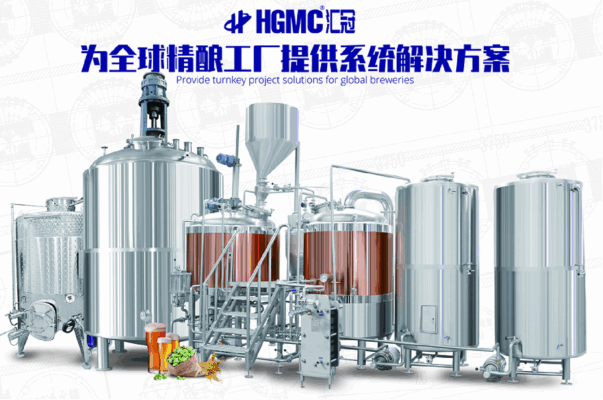
The brewhouse is the core of beer production. A 2-vessel brewing system is often a practical option for smaller commercial breweries because it combines essential brewing functions while saving floor space and initial investment. Buyers with higher production targets or more demanding brewing schedules may consider 3-vessel or 4-vessel configurations.
Fermentation Tanks
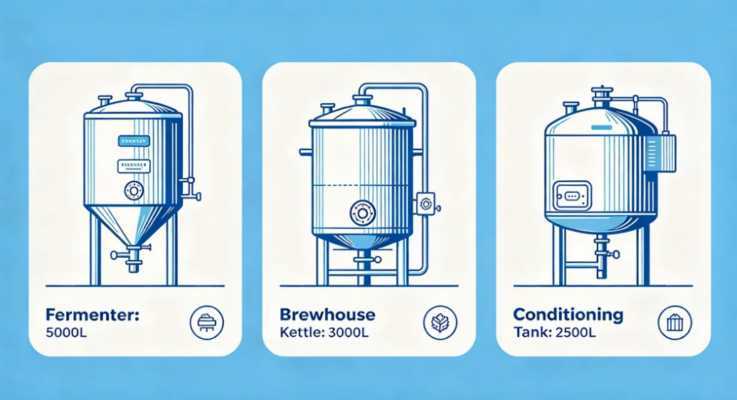
Fermentation tanks determine how much beer can be processed simultaneously. Buyers should calculate tank capacity according to batch size, fermentation duration, cleaning time, and the number of beer styles produced. Adding sufficient fermentation capacity is often more valuable than purchasing an unnecessarily large brewhouse.
Cooling and Cleaning Equipment
A glycol cooling system supports fermentation temperature control, while a CIP system helps clean tanks and pipelines efficiently. These auxiliary systems should be included in the original project plan to ensure consistent operation and reduce manual cleaning requirements.
Beer Storage and Packaging
Bright beer tanks, keg filling equipment, bottling machines, or canning lines should be selected according to the brewery’s sales channels. Taproom-focused breweries may initially prioritize kegging, while retail-oriented breweries generally require suitable packaging equipment.
3. How Do Different Starter Brewery Configurations Compare?
The following configurations are illustrative planning examples rather than fixed industry standards. Actual equipment specifications depend on production targets, tank quantities, automation, utilities, and project requirements.
| Equipment | Starter Setup | Growing Brewery | Expanded Setup |
|---|---|---|---|
| Brewhouse capacity | 300–500L | 500–1000L | 1000–2000L |
| Brewhouse vessels | 2 vessels | 2–3 vessels | 3–4 vessels |
| Fermentation tanks | 2–4 tanks | 4–8 tanks | 8+ tanks |
| Cooling system | Basic glycol system | Sized for multiple tanks | Expanded cooling capacity |
| CIP system | Manual or compact CIP | Semi-automatic CIP | Automated CIP options |
| Packaging | Keg filling | Keg + bottle/can options | Integrated packaging line |
| Suitable business | Taproom startup | Local commercial brewery | Growing regional brewery |
Choosing the right configuration depends on expected demand rather than equipment size alone. Buyers should also compare heating methods, stainless steel grades, insulation thickness, control systems, tank pressure ratings, and cleaning requirements.
4. Is a Complete Brewing System Better Than Buying Individual Machines?
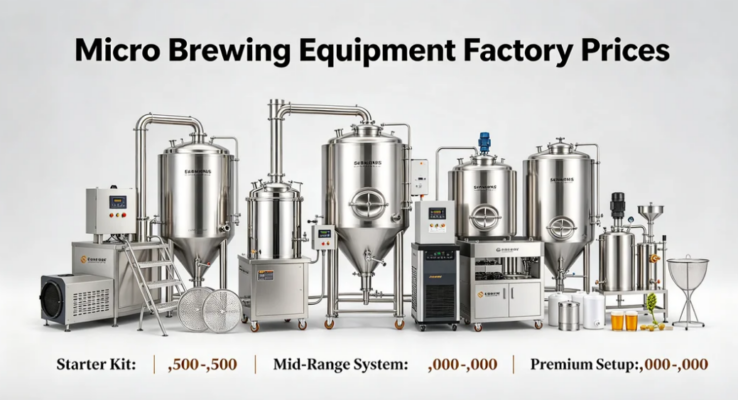
For first-time brewery investors, a complete brewing system is often easier to manage because the main equipment is designed to work together. Brewhouse vessels, fermentation tanks, cooling systems, pipelines, and cleaning equipment can be planned around the same production workflow.
Buying individual machines may be more suitable for existing breweries that need to replace a specific tank, upgrade a filling machine, or increase fermentation capacity without changing the entire production line.
When comparing suppliers, buyers should evaluate the total project scope, equipment compatibility, installation support, and warranty terms instead of focusing only on the quoted machinery price.
5. What Should Buyers Check Before Ordering a Starter Brewery?
Before confirming an order, request detailed technical specifications and a complete equipment list. Confirm the material grade, tank dimensions, working volume, heating method, cooling requirements, electrical specifications, control system, and included accessories.
It is also important to clarify delivery, installation, commissioning, operator training, spare parts availability, and technical support. These details can significantly affect the total investment and the time required to start production.
Planning future expansion is equally important. Reserving floor space, utility connections, and pipeline routes for additional fermentation tanks can make upgrading the brewery easier when sales increase.
6. How Can Buyers Reduce the Initial Brewery Investment?
Buyers can control startup costs by prioritizing equipment that directly supports their first production stage. Instead of purchasing a fully automated packaging line immediately, a brewery may begin with keg filling and add bottling or canning equipment after establishing demand.
However, essential systems such as cooling, fermentation capacity, and sanitary cleaning should not be underestimated. Reducing costs through unsuitable equipment specifications may lead to higher maintenance expenses, production delays, or inconsistent beer quality.
A balanced starter brewery should support current sales targets while allowing practical expansion.
Conclusion
Choosing starter brewing equipment is a business decision as much as a technical one. Buyers should evaluate their expected sales, batch size, fermentation schedule, beer styles, and available investment before selecting a configuration. A properly matched brewing system can help a new brewery operate efficiently, maintain product consistency, and grow without unnecessary equipment replacement.
Explore commercial brewery equipment to compare equipment configurations and plan your brewery project.
Frequently Asked Questions
1. What is the best brewing system size for a new commercial brewery?
A 300L–1000L system may be suitable for many small commercial brewery projects, but the ideal capacity depends on sales forecasts, brewing frequency, and fermentation requirements.
2. How many fermentation tanks should a starter brewery purchase?
Many starter projects begin with 2–4 fermentation tanks, but the required quantity depends on batch frequency, fermentation duration, and the number of beer styles produced.
3. Does a beginner commercial brewery need an automatic bottling line?
Not necessarily. A brewery focused on draft beer may start with keg filling equipment. Bottling or canning equipment can be added when retail distribution becomes a priority.
4. Can starter brewery equipment be expanded in the future?
Yes. Many brewery systems can be expanded with additional fermentation tanks, larger cooling systems, packaging equipment, and automation upgrades, provided the initial layout and utilities are planned accordingly.
