
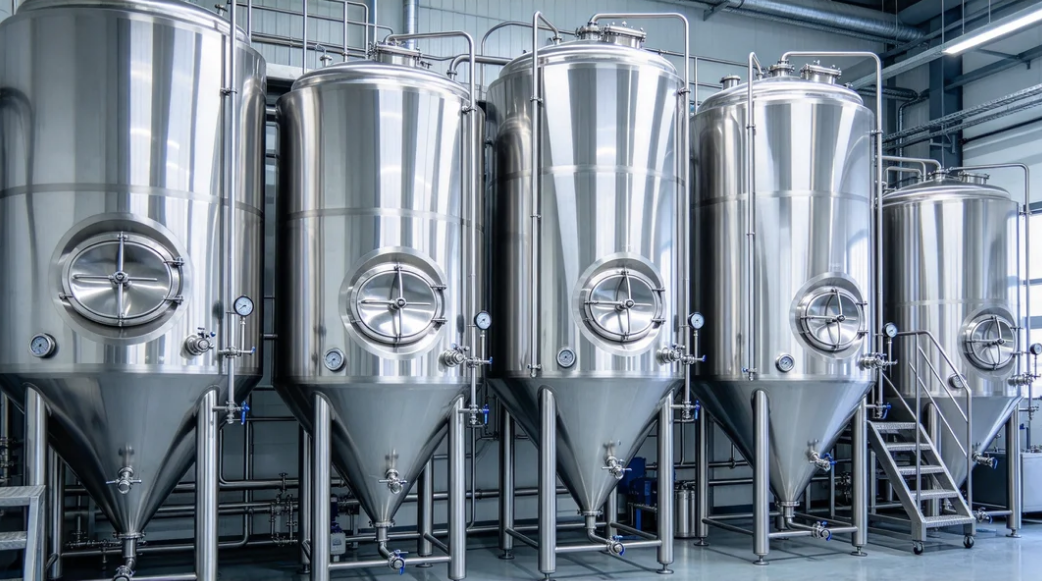
Choosing a reliable stainless steel fermentation tanks supplier is essential for breweries and beverage manufacturers seeking stable production, consistent product quality, and long-term equipment performance. Buyers should evaluate more than the purchase price. Material grade, tank capacity, welding quality, temperature control, hygienic design, customization capabilities, and after-sales service all influence the value of a fermentation tank investment. By comparing these factors carefully, businesses can select a supplier that matches their production requirements and future expansion plans.
Why Should Buyers Choose Stainless Steel Fermentation Tanks?
Stainless steel fermentation tanks offer durability, corrosion resistance, and hygienic performance for commercial fermentation applications. These characteristics make stainless steel a practical choice for breweries that require reliable equipment during repeated production cycles.
A smooth internal surface helps reduce residue accumulation and simplifies cleaning. Properly designed tanks can also integrate cooling jackets, temperature sensors, and automated control systems to maintain suitable fermentation conditions.
For commercial breweries, stainless steel tanks provide several important advantages:
- Hygienic production: Smooth internal surfaces support effective cleaning procedures.
- Corrosion resistance: Suitable stainless steel grades withstand regular contact with beer and cleaning solutions.
- Temperature management: Jacketed structures support controlled fermentation.
- Long-term durability: Proper fabrication and maintenance help extend equipment service life.
However, buyers should confirm that the selected material grade and tank design are appropriate for their specific process.
What Types of Stainless Steel Fermentation Tanks Should Buyers Compare?
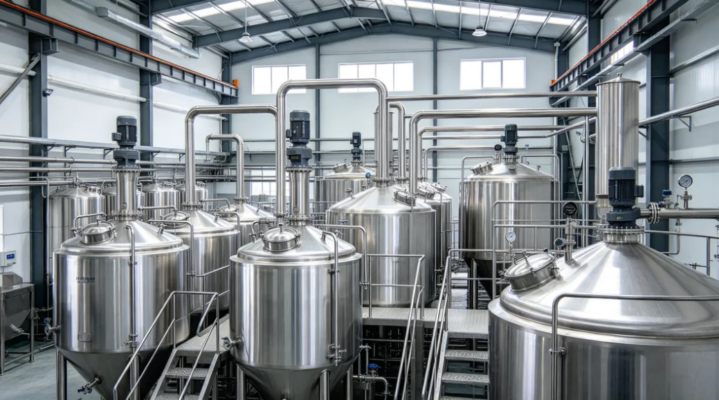
Different tank configurations serve different production requirements. Selecting the correct structure can improve space utilization, process control, and operating efficiency.
Vertical Fermentation Tanks
Vertical fermentation tanks are widely used in commercial breweries because their upright design makes efficient use of floor space. They are suitable for facilities that need multiple fermentation vessels arranged in an organized production area.
Horizontal Fermentation Tanks
Horizontal fermentation tanks are suitable for applications where a lower equipment profile or a particular facility layout is required. Buyers should consider available floor space, installation conditions, and access for maintenance.
Jacketed Fermentation Tanks
Jacketed tanks provide temperature control through the circulation of a cooling or heating medium. The jacket design should match the required fermentation temperature range and cooling demand.
Conical Fermentation Tanks
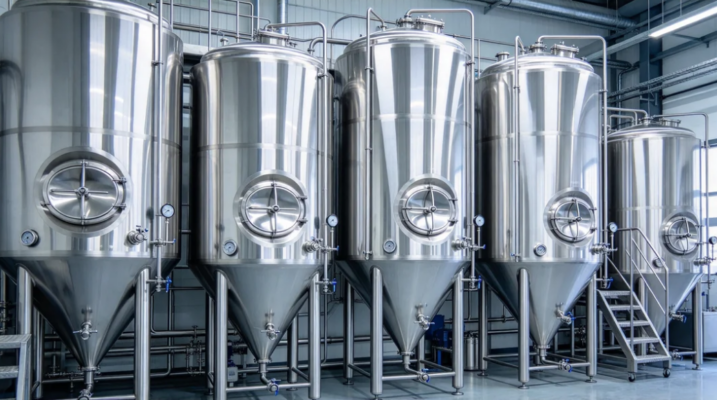
Conical fermentation tanks are commonly used in beer production. Their cone-shaped bottoms help collect yeast and sediment, making separation and discharge more convenient.
Which Technical Parameters Should Buyers Compare Before Ordering?
Comparing technical specifications helps buyers identify whether a tank can meet their production requirements. A supplier should provide detailed specifications instead of relying only on nominal capacity or product descriptions.
| Comparison Parameter | Common Options or Requirements | Buyer Consideration |
|---|---|---|
| Tank Capacity | 300L, 500L, 1,000L, 2,000L, 5,000L and larger | Match batch size and output |
| Stainless Steel Grade | SS304 or SS316L | Consider product and cleaning conditions |
| Tank Structure | Vertical or horizontal | Evaluate facility layout |
| Bottom Design | Conical or customized | Consider yeast collection and discharge |
| Temperature Control | Cooling jacket, sensors, control system | Match fermentation process |
| Surface Finish | Smooth hygienic internal finish | Support cleaning efficiency |
| Automation | Manual, semi-automatic, or automated controls | Evaluate labor and operating needs |
| Customization | Dimensions, ports, insulation, connections | Fit installation and process requirements |
These are comparison categories rather than fixed specifications for every tank. Actual material thickness, working pressure, surface finish, and temperature-control configuration should be confirmed in the supplier’s technical quotation.
How Should Buyers Select the Right Fermentation Tank Capacity?
The correct tank capacity depends on production volume, batch size, fermentation duration, and the number of brewing cycles. Purchasing oversized tanks may increase investment costs without improving production efficiency.
For example, a small craft brewery may consider 300L to 1,000L fermentation tanks for pilot or limited commercial production. A growing microbrewery may require 1,500L to 5,000L vessels, while larger industrial breweries may need tanks exceeding 10,000L.
Buyers should calculate the required fermentation capacity based on the following factors:
- Expected daily or weekly beer production.
- Average fermentation and maturation time.
- Working volume of each tank.
- Cleaning and transfer intervals.
- Number of overlapping production batches.
- Future expansion requirements.
A brewery with longer fermentation cycles may need more tanks than a brewery producing the same volume with shorter cycles.
What Should Buyers Check When Evaluating a Fermentation Tank Supplier?
A reliable stainless steel fermentation tanks supplier should demonstrate manufacturing capability, technical expertise, and dependable service support.
Material and Manufacturing Quality
Buyers should request stainless steel material specifications, material certificates, and information about welding procedures. Tank thickness, structural strength, pressure requirements, and internal weld finishing should also be reviewed.
Customization Capabilities
A professional supplier should be able to adjust tank dimensions, cooling jackets, insulation, sampling ports, product outlets, and control systems according to the customer’s production requirements.
Quality Control and Testing
Ask about material inspection, fabrication procedures, pressure testing where applicable, and equipment inspection before shipment. These procedures help reduce the risk of installation problems.
Installation and After-Sales Support
Installation guidance, commissioning, operator training, spare parts availability, and maintenance support are important considerations. Buyers should clarify which services are included in the quotation and which require additional costs.
Why Should Buyers Consider HGMC for Stainless Steel Fermentation Tanks?
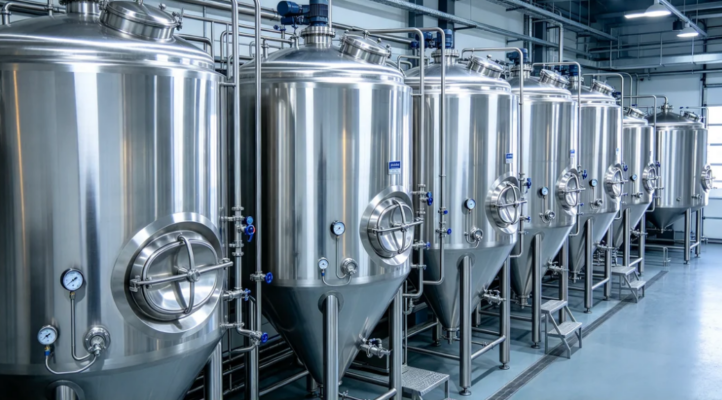
HGMC provides fermentation tanks and commercial brewing equipment for different production scales. Its product range includes 300L, 500L, 1,000L, 2,000L, 5,000L, and larger industrial fermentation tanks.
The company also provides integrated brewing and filling equipment solutions, allowing buyers to coordinate fermentation vessels with brewhouse systems and packaging equipment.
For buyers planning a new brewery or expanding an existing facility, comparing tank specifications with the overall production process can help avoid equipment mismatches.
Explore the Stainless Steel Fermentation Tanks product range to review available configurations.
What Information Should Buyers Prepare Before Requesting a Quote?
Preparing project information allows suppliers to recommend more accurate equipment configurations. Buyers should provide:
- Target beer production capacity.
- Required tank volume and quantity.
- Beer styles and fermentation requirements.
- Available installation space.
- Cooling and automation requirements.
- Preferred stainless steel grade.
- Project budget and delivery expectations.
A detailed inquiry helps suppliers evaluate technical requirements and prepare a quotation that reflects the actual project scope.
Frequently Asked Questions
1. Which stainless steel is best for beer fermentation tanks?
SS304 is commonly used for brewery fermentation tanks. SS316L may be considered for applications involving more demanding corrosion or cleaning conditions. The appropriate grade depends on the production process.
2. How long can stainless steel fermentation tanks last?
Service life depends on material quality, manufacturing standards, cleaning practices, and maintenance. Properly fabricated and maintained tanks can support long-term commercial operation.
3. Can fermentation tanks be customized?
Yes. Manufacturers can customize tank capacity, dimensions, cooling jackets, insulation, connections, pressure requirements, and automation according to project specifications.
4. How can buyers compare fermentation tank suppliers?
Buyers should compare material certificates, manufacturing quality, technical specifications, customization capabilities, inspection procedures, delivery terms, and after-sales support rather than choosing solely by price.
Selecting the right stainless steel fermentation tanks supplier is an important step toward building an efficient and reliable brewery. By evaluating equipment specifications, production requirements, and supplier capabilities, buyers can make informed purchasing decisions and establish a stronger foundation for long-term business growth.
