I’ve spent part of my career in a brewing equipment manufacturing plant, watching teams order shiny tanks and then spend the next six months fighting drains, temperature swings, and cleaning cycles that take twice as long as planned. The failure pattern is consistent enough that I can describe it before the delivery truck arrives.
The most common mistake when buying commercial brewing equipment is not planning the cleaning workflow before picking the tank sizes. Start by documenting your brew schedule, utility specs, and CIP requirements, then select a system that matches your real output needs, not the biggest option you can afford. If you do this upfront, you avoid the majority of operational headaches that turn a brewery opening into a repair shop.
Why Most Breweries Get Their Equipment Wrong
A team I worked with in 2023 had been making award-winning homebrew for five years. They saved $120,000, found a location, and ordered a 10-bbl three-vessel brewhouse from a supplier who promised delivery in twelve weeks. The system arrived on time. The problems started on day three.
The brewhouse required a 3.0 bar steam supply, but the site’s boiler could only deliver 1.8 bar. The kettle took 95 minutes to reach a rolling boil instead of the expected 60. Boil-off dropped to 4% per hour instead of the needed 8–10%. DMS precursors survived the boil, and the first three batches had a cooked-corn off-flavor that confused customers and ruined taproom sales for two months. Replacing the boiler cost $28,000 and required shutting down for ten days.
That failure didn’t happen because the equipment was bad. It happened because nobody verified the utility matchup before signing the purchase order. The supplier had asked for voltage and drain size, but not steam pressure or recovery rate. The team assumed “commercial grade” meant it would work anywhere. It doesn’t.
The same story repeats with fermenter temperature control. A 2025 study of 150 brewery vessels found that tanks with non-argon-shielded welds had a 40% higher risk of developing micro-fissures within three years, providing harborage for wild yeast that can ruin a batch worth over $10,000 in a single week. Most buyers ask about stainless steel grade, but few ask about weld protocol or testing procedures.
The Four Questions That Drive a Realistic Equipment Decision
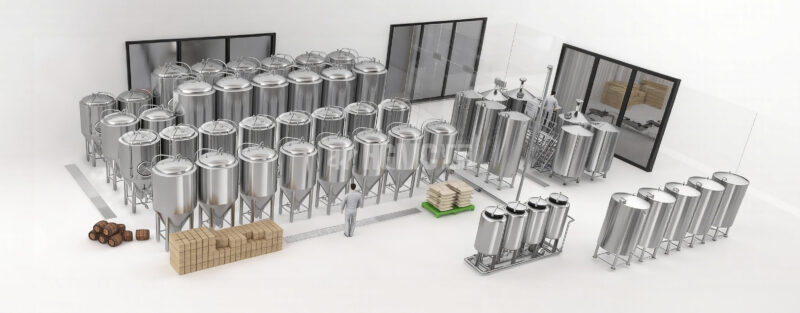
Every equipment purchase should start with four operational questions, not a brochure comparison.
What do you actually brew each week? A core pale ale brewed twice a week plus one seasonal is a different workflow than a taproom that rotates eight styles monthly. The first needs a system optimized for repeatability and quick turnarounds. The second needs flexibility—more vessels, more sensors, more cleaning cycles.
How many people run brew days and cleaning? A two-person team can handle a 7-bbl brewhouse with automated CIP. A single brewer running a 15-bbl system without automation will burn out in three months. The labor math matters more than the batch size.
What is your true weekly volume target? Many teams overestimate. A 10-bbl brewhouse running two turns per week produces 1,040 barrels annually if packaging and fermentation allow. That’s fine for a neighborhood brewpub. If you want 3,000 barrels a year, you need either three turns per week on a 10-bbl system or a larger brewhouse. But larger brewhouses require bigger fermenters, which require more glycol capacity, which requires more electrical load. The cascade is real.
What utilities are actually available at the site? This is the question that kills deals. I’ve seen teams order a 20-bbl system only to discover the floor drains are three-inch PVC that can’t handle the flow rate from a CIP pump. Or that the panel only supports 100 amps when the brewhouse needs 200. Or that the glycol chiller requires a dedicated 30-amp circuit that doesn’t exist. Verifying these numbers before ordering saves months of retrofitting.
Buyers who answer these four questions can evaluate quotes with a clear scope checklist. They can compare systems by throughput and cleaning time, not just vessel volume.
What to Look for in a Brewhouse Beyond the Price Tag
Once the workflow is clear, the focus shifts to engineering details. Not every brewhouse is built to the same standard, and the differences show up in daily operation.
A well-engineered system uses AISI 304 or 316L stainless steel with an interior surface finish of Ra 0.4 μm. That level of polish prevents bacterial adhesion and makes CIP cycles shorter. Tanks with a rougher finish—Ra 0.8 μm or higher—require longer cleaning times and higher chemical concentrations. A 2024 audit found that rotating jet nozzles cleaning at 3.0–5.0 bar covered 99.8% of the tank surface, compared to 85% coverage with static spray balls at 1.5–2.0 bar. That difference cuts cleaning time from 45 minutes to 25 minutes per tank, saving over 100 labor hours annually.
Temperature control is another hidden differentiator. The mashing process requires temperature stability within 0.5°C to maintain enzymatic activity. Systems using Siemens or Allen-Bradley PLCs with RTD probes achieve that tolerance reliably. Cheaper controllers with thermocouple probes drift more, especially during high-volume brew days. A 2025 test across 60 automated systems showed that PLC-controlled hop dosing units reduced bittering variance by 12% across 500 test batches. Consistency in bitterness and aroma is mechanical, not magical.
The heating configuration matters for operating costs. High-efficiency steam jackets designed for 8–10% boil-off reduce gas consumption by 18% compared to standard electric immersion elements in 20-bbl systems, according to 2024 industrial data. Heat exchangers that pre-heat strike water using heat from cooling wort can cut energy usage further. Buyers should ask for thermal recovery specifications, not just tank price.
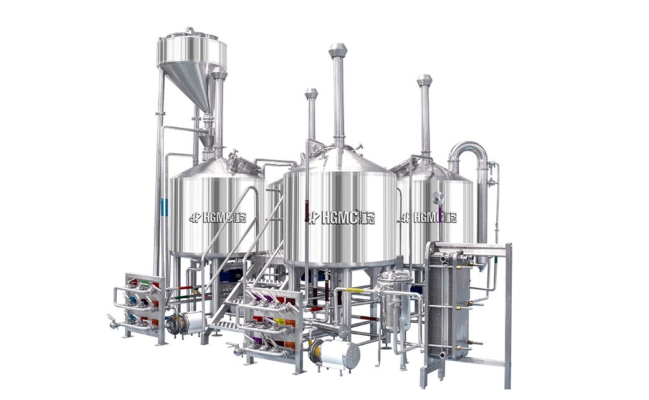
When it comes to vetting suppliers, the documentation package is as important as the hardware. Reputable Beer Brewing Equipment Manufacturers provide AISI 304/316L certification, pressure vessel ratings (ASME or CE), hydro-testing reports at 1.5 times working pressure, dye penetrant test results for welds, and full PID schematics. Without these, you cannot verify that the vessel meets sanitary standards or that replacement parts will fit.
Understanding Utility Constraints Before You Sign
Utility verification is the most skipped step in equipment buying, and it causes the most expensive delays.
Begin with electrical service. A standard 10-bll electric brewhouse may require a 200-amp three-phase panel. A 20-bbl system with direct-fire kettles needs gas piping sized for 500,000 BTUs per hour. Steam systems need a boiler rated for the combined demand of the kettle and the hot liquor tank, plus recovery time between batches. Glycol chillers must be sized for the total heat load of all fermenters, not just one.
Drainage is frequently underestimated. CIP pumps discharge at 30–50 gallons per minute. A floor drain that can handle 5 gallons per minute will flood within seconds. Trench drains with a minimum 4-inch diameter outlet are standard for brewhouses. Some municipalities require a grease trap or pH neutralization pit. Checking local codes before ordering is cheaper than after.
Ventilation is another overlooked constraint. A 10-bbl kettle evaporates 8–10 gallons of water per hour. That steam has to go somewhere. If the hood and exhaust fan are undersized, condensation forms on ceilings, drips into fermentation vessels, and creates sanitation risks. The 2026 edition of the International Mechanical Code specifies minimum ventilation rates for commercial breweries, but many landlords don’t know them. Have an HVAC engineer review the space.
These utility constraints often dictate which equipment sizes are feasible. A team that planned for a 15-bbl system may need to step down to 10-bbl because the electrical panel cannot be upgraded without a transformer that costs $15,000. It’s better to learn that during planning than after delivery.
The Often Overlooked Role of Documentation and Support
I’ve watched breweries buy equipment that was technically sound but operationally impossible to maintain because the supplier didn’t provide a spare parts list or electrical diagram. The first time a sensor fails, the brewer wastes three days identifying the correct part number instead of brewing.
A complete documentation package should include:
- Material certificates for all stainless steel and gaskets
- Pressure test reports for each vessel
- Wiring diagrams with component part numbers
- PLC program backup with annotation
- Cleaning cycle parameters for each vessel type
- Recommended spare parts list with supplier contact details
Some Beer Brewing Equipment Manufacturers include commissioning as a standard service. A technician spends two days on-site verifying that every valve sequences correctly, every temperature probe reads within tolerance, and every CIP cycle actually cleans. Commissioning catches issues that a remote setup cannot—loose fittings, incorrect wiring, mismatched pump curves. It costs extra, but it pays for itself in avoided downtime.
Support availability matters more than the purchase price difference between two quotes. A supplier who answers the phone at 2 a.m. when a transfer pump fails is worth a 10% premium. Check reference calls with breweries that have been running the equipment for at least a year. Ask how long it took to get a replacement part or a service visit. The answers will tell you more than any brochure.
FAQ
How much does a commercial brewhouse cost in 2026?
A 7-bbl electric system with basic automation starts around $80,000. A 15-bbl steam system with full CIP automation can exceed $250,000. Installation, utilities upgrades, and training add 30–50% on top. Budget for commissioning and a spare parts kit.
What is the most overlooked utility requirement for a new brewery?
Drain capacity. Many leases have 2-inch floor drains that cannot handle CIP flow rates. Trench drains with 4-inch outlets are standard. Also verify that the electrical panel has spare breakers for future expansion like a canning line.
How do I know if a supplier is reliable?
Ask for three references from breweries that have been running their equipment for at least eighteen months. Call those references and ask about commissioning time, parts availability, and how quickly technical support responds to a problem. Also request material certifications and weld test reports.
Can I start with a 2-vessel system and upgrade later?
Yes, but plan the upgrade path. A 2-vessel system can be expanded by adding a dedicated lauter tun or a separate whirlpool. Make sure the base frame, piping layout, and control system can accept additional vessels without a full rebuild. Choose a supplier who offers modular systems.
What automation features are worth paying for?
Automated temperature control for mashing and fermentation, automated CIP sequencing, and automated transfer pump control. These features reduce labor hours and improve consistency. Skip automated grain-out or hop dosing unless you produce very high volumes—those add complexity that small teams don’t need.
