
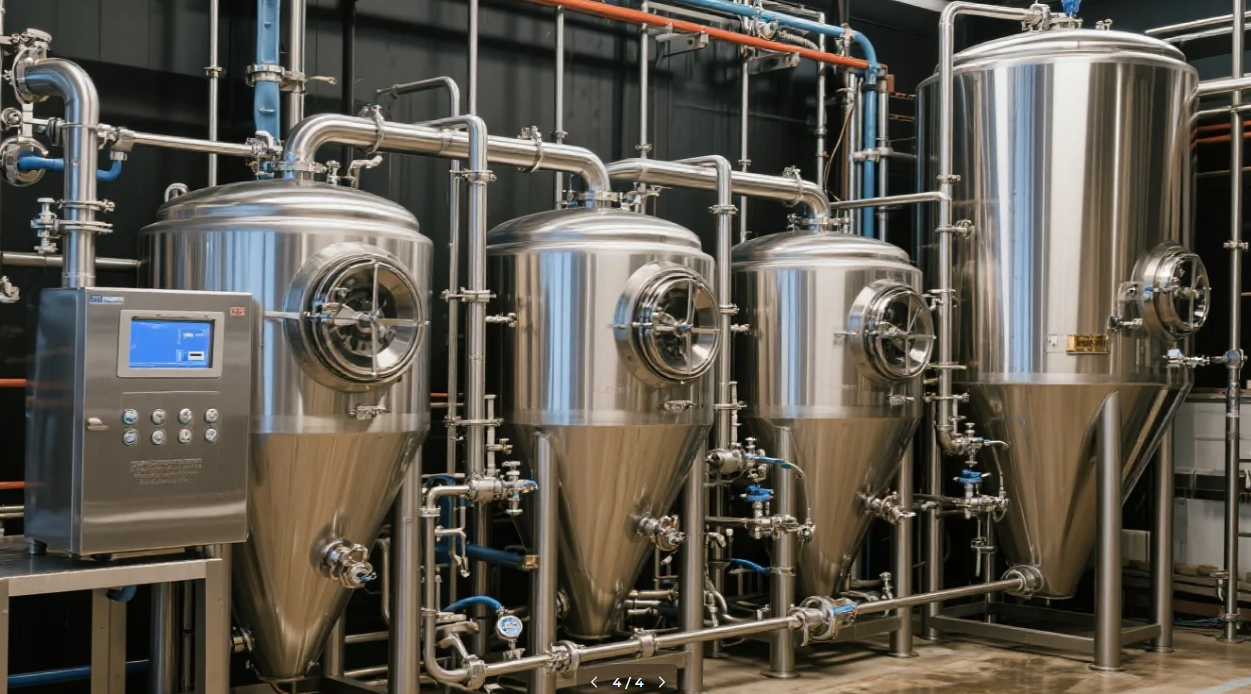
Opening a brewery traditionally means sourcing vessels, chillers, and controls from separate vendors—a process that introduces a 35–45% higher probability of integration failure and unforeseen overhead. The alternative is a turnkey brewery system that consolidates engineering, fabrication, and commissioning under a single framework, reducing lead times by 20–30% and eliminating interface friction between electrical, mechanical, and plumbing subsystems. This article examines how that shift translates into measurable risk reduction, faster time to revenue, and more predictable product quality.
A turnkey brewery system refers to a fully integrated brewing solution where all major components—brewhouse, fermentation vessels, control panels, glycol cooling, and piping—are engineered, fabricated, and tested as a single unit before delivery. Instead of stitching together equipment from five or six different manufacturers and hoping everything fits, the brewery receives a pre-assembled, pre-certified system that arrives ready for installation. For anyone who has watched a startup burn through capital while electricians and plumbers argue over who miswired the control panel, the appeal is obvious.
The Hidden Costs of Fragmented Procurement
Piecemeal assembly looks cheaper on paper until the first integration failure surfaces. When a steam generator from one manufacturer cannot keep pace with the simultaneous demand of a mash-in and a clean-in-place cycle, the entire production schedule stalls. A 2024 survey of 150 independent breweries found that non-integrated setups experience a 35–45% higher probability of such integration failures. The root cause is rarely a single defective component—it is the cumulative mismatch between subsystems that were never designed to work together.
The financial consequences compound quickly. On-site welding and piping adjustments, required when prefabricated connections do not align, add $15,000 to $40,000 in unplanned labor expenses. These costs are almost never budgeted for, because no vendor takes responsibility for another vendor’s tolerances. More damaging is the product loss: approximately 12% of initial batches are ruined in fragmented setups due to localized scorching caused by mismatched kettle jacket and steam generator performance. That is twelve out of every one hundred batches that never make it to the bright tank, representing thousands of dollars in wasted raw materials before the brewery has even generated its first dollar of revenue.
The operational friction extends beyond the brewhouse. PLC controls from one supplier may use different communication protocols than the temperature sensors from another, requiring custom programming that adds weeks to commissioning. Glycol chillers sized independently of the fermentation load create temperature swings that stress yeast and produce off-flavors. Every interface between separately sourced components becomes a potential failure point, and each failure point carries a cost that the initial price comparison never captured.
Installation Efficiency and Regulatory Advantages
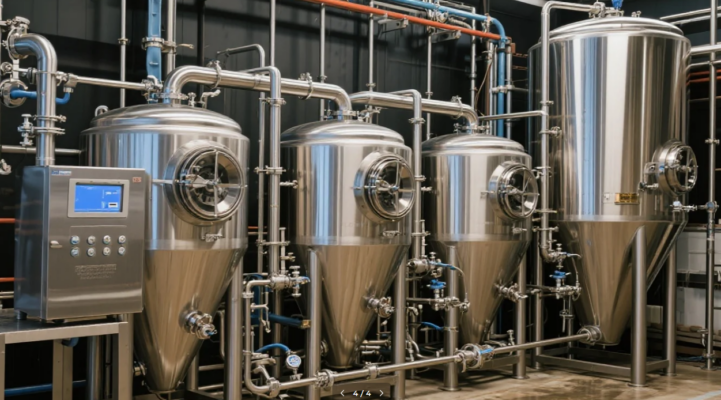
The timeline difference between turnkey and piecemeal installation is stark. A modular turnkey system typically installs in 10 to 15 days, while piecemeal assembly stretches to 45 to 60 days. The gap comes from pre-fabricated manifolds and pre-wired electrical panels that eliminate the need for specialized contractors to measure, cut, and weld on-site. On average, turnkey installations save 18 days of labor by removing these field modifications.
| Metric | Turnkey System (Modular) | Piecemeal Assembly |
|---|---|---|
| Installation Time | 10–15 Days | 45–60 Days |
| Component Compatibility | 100% Factory Certified | 65% (Avg. rework required) |
| Electrical Compliance | Pre-wired UL/CE Panels | Field-wired (High failure risk) |
| Initial Yield Success | 98% First Batch Success | 74% First Batch Success |
The compliance advantage is often overlooked but directly impacts cash flow during the no-revenue phase. A 2023 study of US brewery openings found that permit approvals for plumbing and electrical work were 30% faster for facilities using pre-certified, skid-mounted equipment. Inspectors spend less time verifying individual joints when the entire unit carries a single manufacturer’s pressure test certification. For a mid-sized facility burning $500 to $1,200 per day while the doors remain closed, every week of faster approval translates into thousands of dollars preserved.
The table above also highlights a less obvious risk: electrical compliance. Field-wired panels have a documented high failure risk, and electrical fires or control malfunctions during the first production run can set a brewery back months. Pre-wired UL/CE panels eliminate that variable entirely, because the wiring has already passed factory inspection under controlled conditions.
Technical Precision and Product Consistency
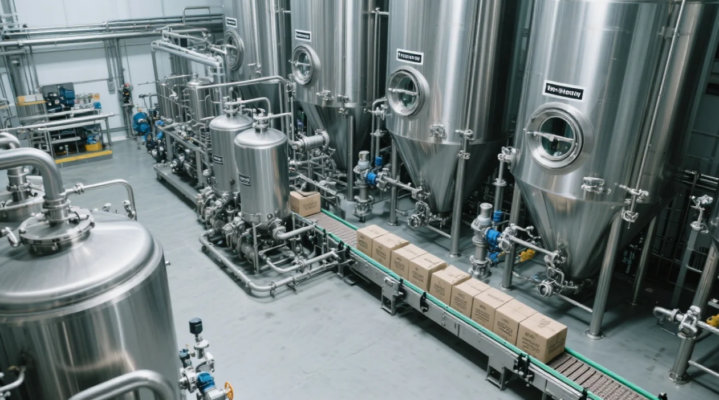
Once the system is operational, the quality gap between integrated and fragmented setups becomes measurable. Dissolved oxygen (DO) levels serve as a clear indicator: mismatched pumps and heat exchangers in piecemeal systems often cause cavitation that introduces DO levels exceeding 50 parts per billion. Integrated systems, using precision-matched piping diameters and sanitary seals, maintain DO below 10 ppb. That difference directly affects shelf stability and flavor preservation, particularly for hop-forward styles where oxidation is the enemy.
Thermal efficiency also diverges. Heat exchangers sized exactly for the kettle volume in turnkey designs save 4,000 to 7,000 gallons of water annually compared to mismatched units in fragmented setups. PLC systems calibrated to specific valve response times reduce grain wastage by 3% per brew—a small percentage that compounds significantly over hundreds of batches. Safety integration is another differentiator: built-in CO2 sensors and pressure relief mechanisms in turnkey systems prevent mechanical failures that cause an average of $5,000 in damages per incident.
The most striking data point comes from flavor profile development. Data from 85 European microbreweries indicates that turnkey users reach their target flavor profile in 2.1 brew cycles, whereas those with fragmented setups require 5.4 cycles. The reduction in discarded beer during commissioning saves a startup upwards of $8,000 in raw material costs. Fermentation temperature fluctuations below 0.5°C, achieved through synchronized glycol cooling loops, prevent the off-flavors caused by yeast stress that plague less stable setups.
The spatial layout of turnkey systems also contributes to consistency. In standard integrated designs, the distance between the hot liquor tank and the mash tun is minimized to prevent temperature drops of 2–3°C during transfer. That optimization ensures enzyme conversion rates remain within the strict parameters required for consistent attenuation and alcohol-by-volume results. A head brewer who does not have to chase temperature drift between vessels can focus on recipe development rather than hardware troubleshooting.
Financial Impact and Faster Return on Investment
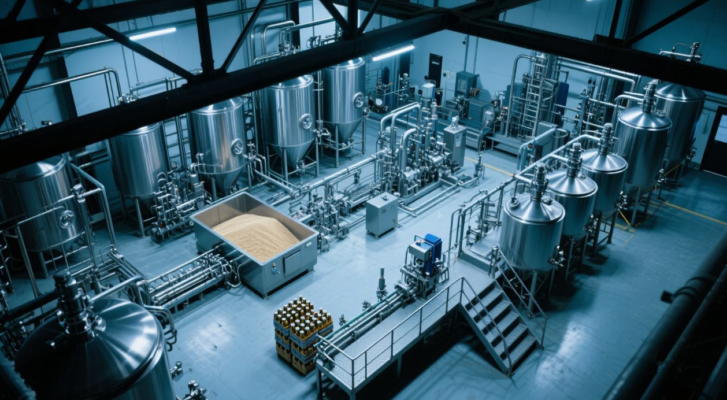
The cumulative financial benefit of turnkey systems is not any single metric but the interaction of multiple cost reductions. Utility costs run 22% lower due to optimized heat recovery during the wort boiling stage, a figure reported by breweries using integrated systems in the 2024 survey. Fewer discarded batches mean raw material costs stay closer to projections. Shorter commissioning and faster permit approvals reduce the open-door-no-revenue phase, preserving capital that would otherwise burn at $500 to $1,200 per day.
The 20–30% lead time reduction affects breakeven calculations significantly. A brewery that opens three weeks earlier than a comparable piecemeal setup gains that many weeks of revenue before the competition even pours its first pint. More importantly, the lower sunk costs from site-specific engineering revisions mean that if the business model needs adjustment, the capital tied up in infrastructure is smaller. A turnkey system can be relocated or reconfigured with less penalty than a bespoke installation welded into place.
The tradeoff, and it is a real one, is that turnkey systems carry a higher upfront price tag. The cost of engineering, factory testing, and pre-certification is baked into the purchase price rather than distributed across separate contractor invoices. But total cost of ownership calculations consistently favor integration when the hidden costs of piecemeal assembly—unplanned labor, discarded batches, extended burn rates, and quality variability—are factored in. A brewery that pays more upfront but achieves first batch success at 98% instead of 74% is not spending more; it is spending differently.
FAQ
What is a turnkey brewery system?
A turnkey brewery system is a fully integrated brewing solution where all major components—brewhouse, fermentation vessels, control panels, cooling systems, and piping—are engineered, fabricated, and tested as a single unit by one manufacturer before delivery. The system arrives pre-assembled and pre-certified, requiring only site connection rather than piecemeal assembly.
How much can a turnkey system reduce installation time compared to piecemeal assembly?
Turnkey systems typically install in 10 to 15 days, while piecemeal assembly takes 45 to 60 days. The 30- to 45-day difference comes from pre-fabricated manifolds, pre-wired electrical panels, and factory-certified pressure testing that eliminates the need for on-site welding and specialized contractor coordination.
Do turnkey systems improve beer quality?
Yes, measurable quality metrics show improvement. Integrated systems maintain dissolved oxygen below 10 ppb compared to 50 ppb or higher in fragmented setups. Fermentation temperature fluctuates by less than 0.5°C, preventing off-flavors. Turnkey users reach their target flavor profile in 2.1 brew cycles versus 5.4 cycles for piecemeal setups.
Are turnkey systems more expensive upfront?
Turnkey systems carry a higher initial purchase price because engineering, factory testing, and pre-certification are included. However, total cost of ownership is typically lower when factoring in reduced installation labor, fewer discarded batches, lower utility costs, and faster time to revenue.
What certifications should a turnkey system have?
Look for UL or CE certification on electrical panels, pressure test certification for the entire skid-mounted unit, and compliance with local plumbing and mechanical codes. Pre-certified equipment speeds permit approvals by approximately 30% compared to field-assembled systems.
