
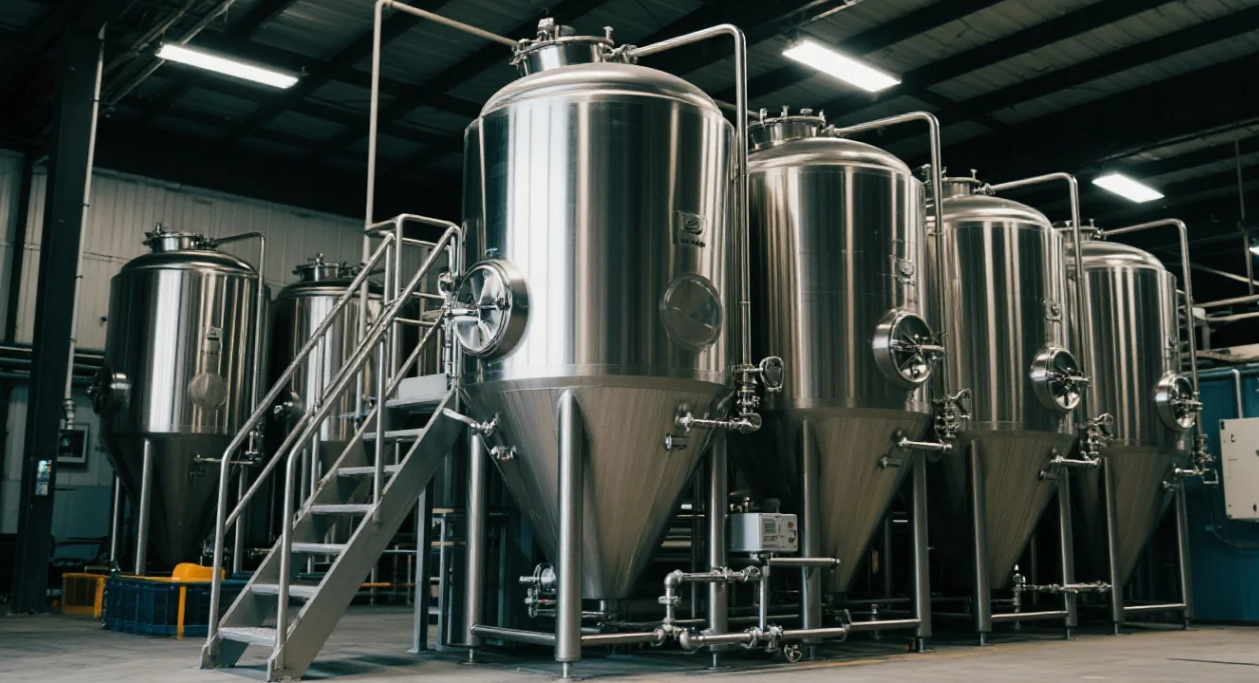
When a brewer starts planning a 500L brewery, the first search is usually for a single price tag. But that number, even if you find one, tells you almost nothing about what your actual project will cost. The gap between buying one tank and assembling a complete, commercially viable production line is where most budget surprises live. I have seen brewers lock in a quote for a brewhouse only to discover six months later that they still need glycol chilling, a CIP system, and twice the fermentation capacity they budgeted for. The real question is not what a 500L tank costs—it is what a full, operational 500L brewery costs, and what equipment you actually need to keep it running consistently.
A well-specified 500L brewery can produce roughly 200 liters of packaged beer per batch, which translates into about 1,000 liters per week with a reasonable brew schedule. But hitting that output requires matching every component—from the mash tun to the bright beer tank—to the same batch volume. A brewhouse alone, sitting in an empty room with no cooling or cleaning system, is just expensive stainless steel. The operational breakdown below covers what drives cost, what equipment you must include, and how to avoid the configuration mistakes that force expensive retrofits within the first year.
What Determines the Cost of a 500L Brewery?
The cost of a 500L brewery varies by a factor of two or three depending on how you configure it. A basic manual 2-vessel system with minimal fermentation capacity can be significantly more economical than a fully automated 4-vessel setup—the difference is often multiples of the base cost. Understanding what drives that spread lets you make tradeoffs that fit your actual production plan rather than overpaying for features you do not yet need.
The four main cost levers are brewhouse vessel count, fermentation tank quantity, automation level, and material finish. Each one interacts with the others, and chasing the lowest quote on any single factor can create problems elsewhere.
| Factor | Low-Config Impact | High-Config Impact |
|---|---|---|
| Brewhouse Vessels | 2-vessel (combi mash/lauter + kettle/whirlpool) reduces fabrication cost and footprint | 4-vessel (separate mash, lauter, kettle, whirlpool) adds redundancy and flexibility for recipe control |
| Fermentation Capacity | Minimum set of 2–3 tanks limits brew frequency to every 2–3 days | Expansion-ready layout with 4–6 tanks enables daily brews and lagered styles |
| Automation | Manual valves and standalone temperature controllers keep upfront cost low | PLC control with automated valve sequencing reduces labor but adds 30–50% to controls budget |
| Material Finish | Standard 304 stainless with mechanical polish meets basic hygiene requirements | 316L stainless with electropolished internal surfaces improves cleanability and corrosion resistance |
The failure mode here is straightforward. A brewer who selects a 2-vessel system with manual controls and only two fermenters will save money upfront. But if that brewery starts running three batches per week, the second fermenter is never empty in time for the next brew. The solution is either buying more tanks sooner than planned—at a premium because the space was not reserved—or dropping to two brews per week, which reduces projected revenue by a third. I have seen this exact scenario play out on a renovation project where the owner had to knock out a wall to fit a third fermenter eight months after opening.
You need to assess not just what you can afford today, but how many fermenters you will need at your target brew frequency. For a 500L brewhouse running three brews per week—roughly 600 liters of fermentable wort—you want a minimum of four conical fermentation tanks at 500L or 1000L each, plus at least one bright beer tank. The brewhouse cost is only half the equipment budget; the fermentation and conditioning side often matches or exceeds it.
The hidden tradeoff in material selection is less obvious. Standard 304 stainless with a 2B finish and manual orbital welding is perfectly acceptable for most craft breweries. Electropolishing and 316L grade matter more if you plan to do extended lagering or if your water chemistry is high in chlorides. Paying for the upgrade on every tank when only two or three need it is a common budgeting error.
Essential 500L Beer Brewing Supplies for a Complete Line
A complete 500L brewery requires seven equipment categories that work as an integrated system. Missing any one of them creates an operational bottleneck that stops production or compromises beer quality.
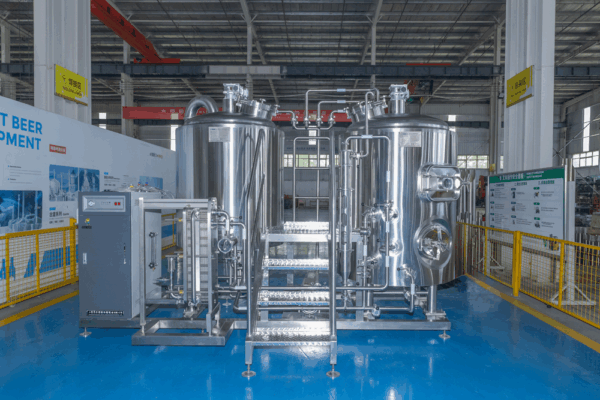
The central piece is the 500L brewhouse itself. For a 500L batch, the most common configuration is a 2-vessel system: a combined mash/lauter tun where mashing and lautering happen sequentially in the same vessel, and a combined kettle/whirlpool where boiling and whirlpool separation occur. A 3-vessel system adds a dedicated lauter tun, which gives you more control over mash profile separation but increases footprint and cost by roughly 20–25%. Either way, your brewhouse must include sanitary pumps, interconnecting piping, and a work platform for grain loading and vessel access.
Your fermentation tank set must include conical fermentation tanks sized to the brewhouse output. A 500L brewhouse typically requires a minimum of 2–3 fermentation tanks of equal or larger volume to maintain a consistent, profitable brew cycle. Each tank needs temperature control zones, sample ports, and pressure relief valves. Many brewers also spec one or two unitanks that can handle both fermentation and conditioning, reducing the need for separate bright beer tanks. If you plan to package carbonated beer, you need at least one dedicated bright beer tank with a carb stone and a cooling jacket.
The cooling backbone is a glycol chiller sized to handle the peak heat load from all fermentation tanks and the bright beer tank simultaneously. An undersized chiller is the most common equipment regret I encounter. For a 500L setup with four fermenters and one BBT, you need a chiller rated for roughly 3–5 tons of cooling capacity. The cost difference between a 3-ton and a 5-ton unit is about 15–20%, but the consequences of an undersized chiller—slow fermentation crashes, temperature drift, stalled yeast—can ruin entire batches.
A dedicated CIP system is non-negotiable for any commercial brewery. A standard CIP unit for a 500L line includes a heated cleaning solution tank, a rinse water tank, a pump rated for the required flow rate, and a control panel that sequences the caustic and acid cycles. You should budget for this as core equipment, not as an optional accessory. Hand-cleaning four conical tanks after every brew is not sustainable at commercial volume.
Your control panel—manual, semi-automatic, or PLC-based—ties everything together. Manual controls work for a one-person operation running two brews per week. Once you add glycol sequencing, automated CIP cycles, and temperature profiling across multiple tanks, a PLC system saves significant labor time and reduces temperature variation.
How to Design a Functional 500L Brewhouse Layout
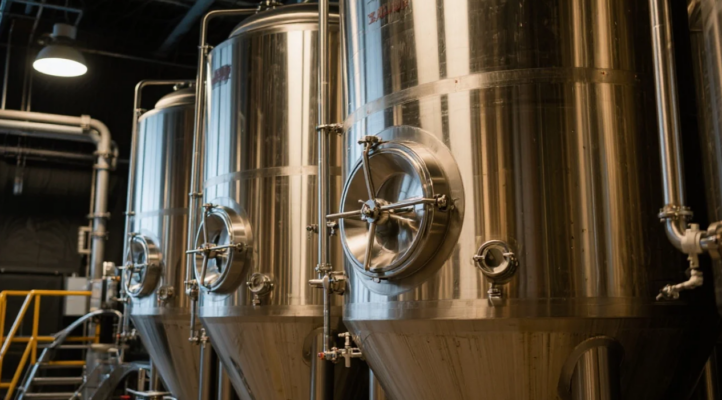
Layout design is the factor most often deferred until after the equipment is ordered, and that sequence creates expensive problems. A 500L brewhouse takes up roughly 30–40 square meters when you include the fermentation area, cooling system, and CIP station. Trying to fit it into a smaller space forces compromises that affect workflow for the life of the brewery.
The first constraint is ceiling height. A 500L system often requires a minimum clear ceiling height of 2.5–3 meters to accommodate the brewhouse vessels on a platform with the fermenters below. The mash/lauter tun typically sits on a raised platform so that gravity can transfer the mash to the lauter tun or directly to the kettle. Below that platform, you place the fermentation tanks, glycol piping, and pump manifolds. A low ceiling eliminates the gravity-transfer advantage and forces you to rely entirely on pumps, which adds equipment cost and maintenance.
You need to assess the material flow path in both directions. Raw ingredients—malt, hops, adjuncts—enter from one side. Spent grain removal exits from the opposite side, ideally through a floor drain or a dedicated chute system. If spent grain removal requires carrying wet grain across the active brewhouse floor, you will have safety and cleaning issues from day one. A simple spent grain chute that drops directly into a collection bin outside the building is inexpensive to include at the design stage and expensive to retrofit.
Utility connection points must be planned for each piece of equipment. Water supply to the brewhouse and CIP system needs adequate flow rate—typically 2–3 bar at 20–30 liters per minute. Floor drains must be sized for the maximum discharge from the CIP system and from tank cleaning. Electrical service must handle the glycol chiller, pumps, and control panel simultaneously. Overlooking any one of these during the build phase means running new lines after the flooring is poured, which costs significantly more.
The non-obvious observation here is that a well-planned layout with room for one additional tank will cost far less in retrofit than expanding a cramped, “just-enough” setup later. Reserve at least one extra tank footprint in the fermentation area, even if you do not buy the tank now. The slab work, glycol piping, and drain line for that bay can be installed during the initial build for a small fraction of what it costs to cut into finished flooring and reposition utility runs later.
Your work platform design matters for daily operations. A platform around the mash/lauter tun and kettle at a height that allows comfortable grain loading and CIP hose management reduces fatigue. Allow at least 1.2 meters of clearance around each tank for cleaning access. Tanks placed too close together are a common design error that forces awkward reaching and incomplete cleaning, which creates biological stability problems.
FAQ
What is the typical price range for a 500L brewery system?
A complete 500L brewery—including the brewhouse, 4–6 fermentation tanks, one bright beer tank, a glycol chiller, a CIP unit, and a manual control panel—ranges from approximately $80,000 to $180,000, depending on automation level and vessel count. A fully automated 4-vessel system with PLC control and electropolished stainless can exceed $200,000. The brewhouse itself accounts for roughly 30–40% of the total equipment cost.
How many fermentation tanks do I need for a 500L brewhouse?
At minimum, 2–3 conical fermentation tanks of 500L or 1000L each, plus one bright beer tank for carbonation and packaging. If you plan to brew three times per week, you need four to six fermentation tanks to maintain the cycle without interrupting fermentation. The fermentation and conditioning side of the brewery often costs as much as the brewhouse.
What does a standard CIP system include for a 500L setup?
A standard CIP system includes a heated caustic tank, a rinse water tank, a pump rated for 30–40 liters per minute at 2–3 bar, and a control panel that sequences the cleaning cycle. The system connects to each fermentation tank and brewhouse vessel through dedicated spray balls and return lines. Total capacity for the CIP tanks is typically 100–200 liters.
Do I need a dedicated glycol chiller for a 500L system?
Yes. A 500L brewery cannot maintain fermentation temperatures or cold-crash beer without a glycol chiller. The required cooling capacity is 3–5 tons, depending on your fermentation tank count and ambient temperature. An undersized chiller causes slow temperature control and batch stability issues that are difficult to diagnose during the first year of operation.
What is the difference between a 2-vessel and a 3-vessel 500L brewhouse?
A 2-vessel system combines mashing and lautering into one tank and boiling and whirlpool into the second. A 3-vessel system separates the mash tun and lauter tun, allowing simultaneous mashing and sparging, which reduces brew day duration by about 30–60 minutes. The 3-vessel setup also provides more flexibility for recipe changes, but it requires about 25% more floor space and increases total equipment cost by roughly 20–25%.
