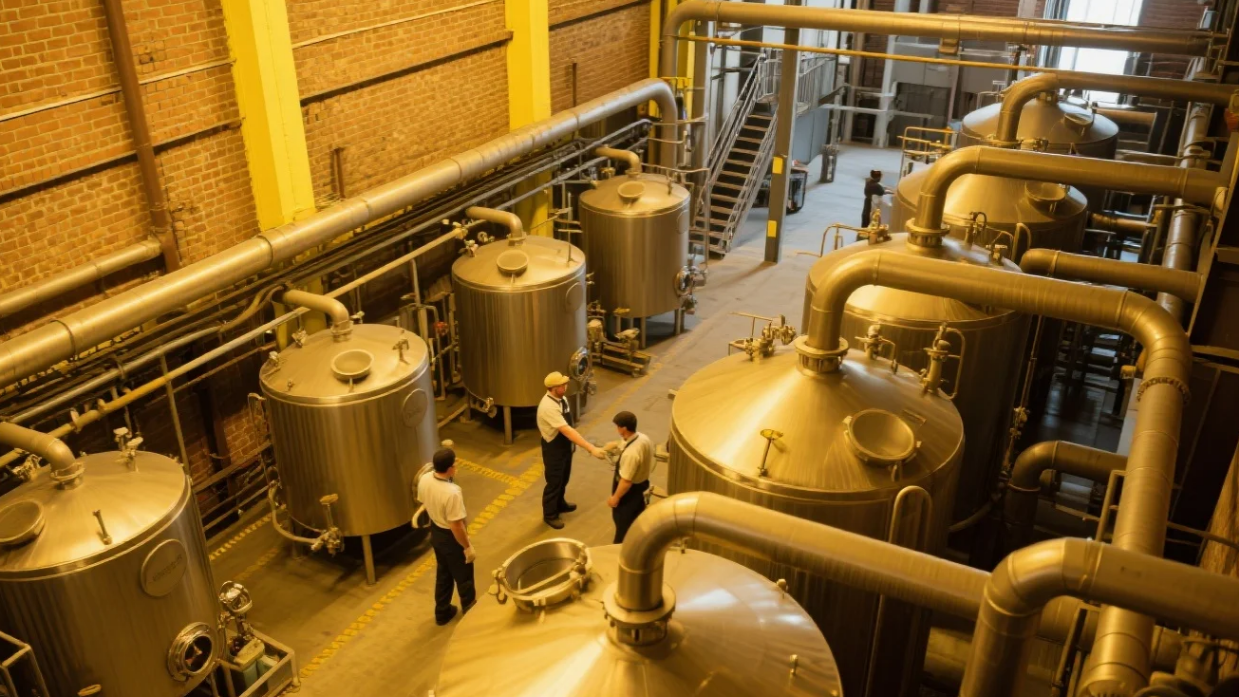
A brewery adding organic beer to an existing production schedule is not simply changing malt and hops. The same brewhouse may still be producing conventional beer on Tuesday, an organic batch on Thursday, and another conventional batch before the weekend. That creates friction around tank allocation, cleaning verification, transfer hoses, production records, and the timing of certification inspections.
Organic beer uses the same six core brewing stages as conventional beer: mashing, boiling, whirlpooling, fermentation, maturation, and packaging. The equipment does not need to perform an entirely different brewing method. It must support more disciplined hygiene, separation, process monitoring, and traceability so the brewery can protect the organic batch and demonstrate how it was produced.
For professional production, organic brewing supplies should be selected as a connected system rather than as isolated tanks. The brewery needs equipment that can control temperature and pressure, clean consistently, limit residue retention, and create reliable process records. Whether the brewery uses dedicated organic equipment or shared vessels, the production plan has to make cross-contamination difficult and undocumented decisions impossible.
How Organic Brewing Changes Equipment Planning
The mashing, boiling, whirlpooling, fermentation, maturation, and packaging stages remain familiar to an experienced brewer. A brewhouse system still needs to heat the mash, separate wort, boil on schedule, and transfer cleanly to fermentation tanks. Fermentation still depends on yeast management, temperature control, pressure handling, and time. Packaging still exposes the beer to oxygen, sanitation risks, and labeling requirements.
The difference appears in how tightly those stages are connected. Organic beer certification places attention on the movement of approved ingredients, the condition of food-contact surfaces, and the records showing what happened before, during, and after production. A tank that produces good beer but cannot be cleaned reliably, inspected internally, or traced through its process history creates a problem beyond flavor consistency.
Food-grade stainless steel is therefore more than a material choice. Smooth internal surfaces reduce places where yeast, hop material, trub, and cleaning residue can remain after a cycle. Weld quality, valve placement, spray-ball coverage, pipe routing, and drainability affect whether the brewery can establish a repeatable CIP routine. Small design compromises become visible when the same vessel is used several times per week.
The six brewing stages should be planned across the entire organic workflow, not only around the brewhouse. For example, a brewery may have a dedicated organic fermentation tank but still share the wort transfer line, bright tank, centrifuge, or packaging filler. That arrangement may be workable, but each shared point becomes part of the separation procedure and certification record.
Space often decides the outcome before the equipment quotation does. A brewery with spare floor area may install dedicated organic fermentation tanks, separate transfer lines, or an isolated packaging route. A smaller facility may have to use shared equipment and schedule organic batches after a fully documented cleaning cycle. The second option reduces initial capital requirements, but it transfers responsibility to production planning, verification, and staff discipline.
Certification requirements also vary by the brewery’s market and certifying body. The equipment supplier can help map hygienic process flow and provide drawings, but the brewery remains responsible for confirming which records, materials, cleaning agents, and handling practices satisfy its certification process. A layout that looks efficient on paper may be difficult to defend if the route of an organic batch cannot be reconstructed afterward.
An unusual problem appears when breweries focus heavily on dedicated tanks. Dedicated vessels can reduce cross-contamination points, but they do not automatically solve contamination from shared hoses, pumps, filters, or packaging equipment. In some installations, a carefully validated shared route is easier to control than a nominally separate tank connected to poorly documented common utilities.
The Core Organic Beer Brewing Supplies a Brewery Needs
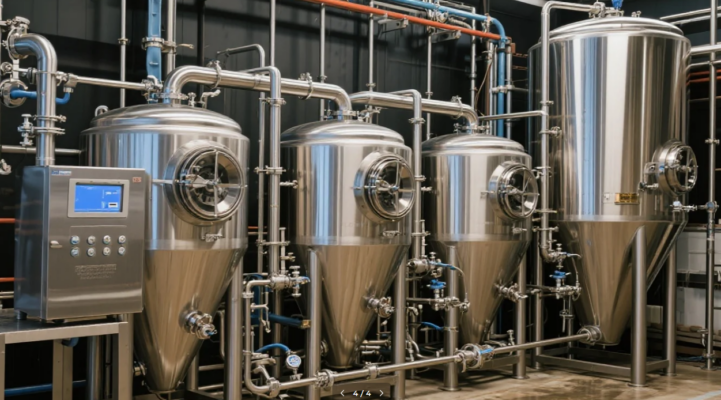
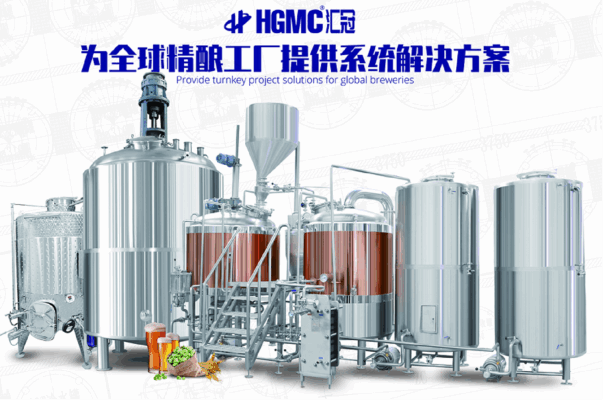
A professional organic brewery should assess five equipment groups as one operating system: the brewhouse, fermentation and conditioning tanks, glycol chilling, CIP, and instrumentation and controls. Each group affects consistency and cleanability, while the control layer determines how much evidence the brewery can retain for troubleshooting and certification records.
The brewhouse system controls the first major source of variation. Mash temperature, rest duration, wort separation, boil intensity, and whirlpool timing all influence extract efficiency, flavor development, and transfer quality. Reliable heating control is useful, but the brewery also needs practical access for inspection and cleaning. A system with complex pipework and inaccessible valves can create more cleaning work than its automation initially saves.
Fermentation tanks and conditioning tanks need suitable insulation, jacket coverage, fittings, pressure ratings, and drainability. Stable fermentation profiles depend on removing heat at the right rate, not merely having a glycol connection on the tank. Cone geometry, sample valves, carbonation fittings, and pressure-relief arrangements affect yeast collection, sampling, maturation, and cleaning access.
The glycol chilling system should be sized around the brewery’s actual production rhythm. A system that can cool one tank adequately may struggle when hot wort enters the schedule while several fermenters are releasing heat. Glycol temperature, pump capacity, reservoir volume, and simultaneous cooling demand should be reviewed together. Otherwise, a brewery may see fermentation temperatures drift precisely when it is trying to produce repeatable organic batches.
CIP tanks and CIP pumps support repeatable cleaning rather than occasional manual washing. The system must deliver the required cleaning solution temperature, concentration, flow, and contact time through the relevant circuit. Return flow and drain behavior matter as much as pump pressure because a strong pump does not compensate for poor spray coverage or a line that cannot drain fully.
Instrumentation determines whether the brewery knows what happened. Temperature sensors support mash, wort, glycol, and fermentation control. Pressure gauges help operators monitor tanks and carbonation conditions. Level indicators reduce transfer errors. A PLC can coordinate recipes, alarms, valve positions, and time-based steps, while manual control panels may be adequate for a smaller installation if operators record actions consistently.
The most useful question is not whether every component is automated. It is whether the system produces stable measurements that operators can understand and act on. A low-automation brewhouse with accessible sensors and disciplined records may be easier to maintain than a highly automated system whose control logic only one technician understands.
A useful equipment review should cover:
- brewhouse heating, mashing, boiling, and wort transfer
- fermentation and conditioning capacity
- glycol chilling under simultaneous demand
- CIP tanks, pumps, circuits, and verification
- sensors, gauges, level indicators, PLCs, and process records
The equipment list also needs to account for the brewery’s cleaning chemicals and approved ingredients. Organic certification may restrict or document certain inputs, but the correct requirements must come from the relevant certifying body. Equipment selection should leave enough flexibility for those requirements without assuming that a stainless-steel tank itself makes a product organic.
Cleaning, Separation, and Process Control in Daily Production
The most expensive organic brewing mistake often happens before the first organic batch is brewed. A brewery may finalize its tank layout, install common pipework, and postpone separation planning until commissioning. Afterward, operators discover that a transfer line cannot be isolated cleanly, a hose must cross the conventional production area, or a CIP return route leaves a residue pocket behind a valve.
One brewery encountered this sequence after expanding its cellar. The layout was fixed in the first month, and organic production was added to the schedule in the third month. The brewery then found that the shared transfer route required several manual hose changes and that the cleaning procedure did not identify who verified the final rinse. During the next certification review, the production team could show that the tank had been cleaned, but could not reconstruct the complete sequence for the shared line. The consequence was a redesign of the cleaning routine, additional staff training, and a costly installation change before the brewery could operate the organic schedule with confidence.
That failure was not caused by a technically unsuitable fermentation tank. It came from treating separation as a paperwork issue after the physical process flow had already been fixed.
Smooth internal surfaces and reduced dead zones make cleaning more predictable. Dead zones can occur around poorly positioned valves, tees, sample ports, instrument pockets, pump seals, and low points in pipework. Residue in these areas may not be visible during a quick inspection, especially when the line is long or partially shielded. A brewery should examine whether the cleaning solution reaches, contacts, and drains from each food-contact surface.
A documented CIP system should specify the circuit, cleaning solution, concentration or conductivity target, temperature, flow condition, contact time, rinse endpoint, and verification method. The exact parameters depend on the equipment and chemistry. What matters operationally is that the procedure can be repeated by different operators and that deviations are recorded rather than silently corrected.
The four control priorities that should be tracked throughout the process are temperature, flow, timing, and pressure. These measurements interact. A cleaning cycle that reaches the target temperature but loses flow at a spray device may not clean the vessel adequately. A fermentation record showing the correct temperature but missing pressure changes may leave the operator unable to explain carbonation or tank behavior later.
Shared equipment and dedicated equipment have different failure patterns. Dedicated organic tanks and lines reduce scheduling conflicts and simplify batch segregation, but they require more floor space, utilities, spare parts, and maintenance attention. Shared equipment uses fewer assets, though it demands strict production sequencing and verification at every shared connection.
A shared system can be practical when the brewery has:
- a defined organic and non-organic production sequence;
- validated cleaning and inspection steps;
- clearly assigned release authority before an organic batch begins; and
- complete process records for tanks, hoses, pumps, and packaging routes.
The hidden tradeoff is that shared equipment makes the calendar part of the quality system. A late conventional batch, an urgent packaging change, or a missing operator can compress the cleaning window. The brewery may then be tempted to treat the scheduled rinse as sufficient even though the actual circuit, chemical concentration, or contact time was different.
This is also where certification audits expose weak assumptions. Inspectors may not only ask whether the brewery owns a CIP system. They may ask how the brewery knows the system completed its intended cycle, how cleaning chemicals are controlled, which records are retained, and how organic materials are separated from conventional inventory. Equipment capable of good hygiene is not the same as a process that proves hygiene.
Another non-obvious observation is that more sensors do not always produce better control. A sensor with poor calibration, an inaccessible display, or no defined response threshold can create a false feeling of precision. Some breweries collect thousands of PLC data points but still lack a simple signed record confirming that the correct line was cleaned before transfer.
Budgeting and Phasing an Organic Brewery Equipment Project
Organic brewery equipment costs are driven mainly by capacity, layout, and automation. Capacity affects tank volume, brewhouse output, glycol demand, pump sizing, utility loads, and packaging throughput. Layout affects pipe length, access, drainage, separation, and the number of shared connections. Automation affects controls, sensors, valve packages, PLC programming, alarms, data storage, and service requirements.
Much of the base hardware is the same as in a conventional brewery. A brewhouse, fermentation tank, conditioning tank, glycol chilling system, transfer pump, and packaging line still perform their normal technical functions. The organic project may require additional investment in dedicated tanks or lines, enhanced CIP capability, quality-control instruments, and data-recording tools.
A brewery should separate those costs during planning. Otherwise, the project may appear to require an entirely different equipment category when the additional expense actually comes from redundancy, hygienic design, monitoring, or documentation. This distinction helps procurement teams compare options without ignoring the operational burden of a cheaper shared system.
The brewery capacity plan should include more than annual volume. It should identify peak brewing days, the number of organic batches per week, fermentation residence time, maturation requirements, packaging frequency, and cleaning windows. A facility producing a small percentage of organic beer may still need substantial dedicated capacity if organic batches cannot be held while conventional beer occupies the available tanks.
A technical consultation is more useful than a generic price estimate when the certification process and production targets are not yet fixed. The consultant or equipment engineer should receive the planned output, product range, building dimensions, utilities, expected automation level, organic and conventional scheduling model, and cleaning requirements. Without that information, a quotation can be accurate for the hardware but wrong for the brewery.
A practical phasing sequence is:
- define the production workflow and target capacity;
- map separation points, shared equipment, and cleaning requirements;
- select the brewhouse, tanks, glycol, CIP, and transfer equipment;
- add automation, sensors, and documentation tools according to operational needs.
This sequence prevents the common mistake of purchasing tanks first and attempting to fit hygiene controls around them afterward. It also allows a brewery to defer some automation without abandoning process control. For example, a manual record system may be acceptable during an initial phase if responsibilities, measurement points, and review procedures are clear. Later, those records can be connected to PLC logic or a digital production platform.
The certification audit should influence the design before purchase orders are issued. That does not mean buying every available instrument or building a fully dedicated organic plant. It means confirming what must be separated, what must be recorded, how records will be stored, and how operators will verify each release step.
Some breweries also underestimate service access. A compact layout may use less building space but make valve replacement, sensor calibration, and tank inspection difficult. Over several years, maintenance time can outweigh the initial floor-space saving. A slightly more open process flow may cost more during installation and less during repeated cleaning and repair.
The procurement decision should therefore be based on the full operating burden, not only on vessel volume or automation features. The least expensive configuration at installation can become the most expensive if it causes longer changeovers, repeated re-cleaning, missed packaging windows, or uncertainty during certification review.
FAQ
Is organic beer brewed with different equipment from conventional beer?
No. Organic beer generally uses the same six stages and the same basic brewing equipment as conventional beer. The difference is the tighter control of approved inputs, hygiene, separation, cleaning records, and traceability across the production cycle.
Which equipment is most important for maintaining consistent organic beer quality?
The brewhouse, fermentation tanks, glycol chilling system, CIP equipment, and instrumentation all matter together. If glycol capacity is insufficient, fermentation temperature may drift; if CIP verification is weak, a clean-looking tank may still create batch risk. The brewery should review performance across the full process rather than choosing one vessel as the quality control point.
Does a brewery need separate tanks for organic and non-organic beer?
Not always. Shared tanks can work when the brewery has documented scheduling, validated cleaning, controlled transfer routes, and a release check before organic production. Dedicated tanks reduce some cross-contamination risks but require more capital, floor space, utilities, and maintenance.
Why is a CIP system important in organic beer production?
A CIP system makes cleaning repeatable across tanks, pipes, pumps, and transfer circuits. The brewery should record solution conditions, temperature, flow, pressure, contact time, and rinse completion for each relevant cycle, then retain those records long enough to support troubleshooting and certification review.
What information is needed to estimate the cost of an organic brewery equipment setup?
The supplier needs the planned brewery capacity, batch size, annual output, tank schedule, building layout, utilities, automation level, packaging requirements, and separation model for organic and conventional beer. The number of organic batches per week and the required cleaning windows often affect the specification more than the target annual volume alone.
