Meta Description: Discover everything about beer brewing systems in 2026: types, features, costs, and maintenance tips. Expert guide with data-driven insights for homebrewers and commercial operations.
The global beer brewing equipment market reached $18.7 billion in 2025 and is projected to grow at a CAGR of 5.8% through 2030, according to Grand View Research. As craft brewing continues its upward trajectory and homebrewing gains popularity worldwide, selecting the right beer brewing system has become more critical than ever for both hobbyists and commercial operations.
Whether you’re a homebrewer looking to upgrade from extract kits or a brewery owner planning to scale production, this comprehensive guide covers everything you need to know about modern beer brewing systems in 2026.
What Is a Beer Brewing System?
A beer brewing system is an integrated set of equipment designed to convert raw ingredients—water, malted grain, hops, and yeast—into finished beer through controlled processes of mashing, lautering, boiling, fermentation, and conditioning.
Modern systems range from compact 5-gallon homebrewing setups to industrial 50+ BBL (barrel) commercial brewhouses, with varying degrees of automation, precision control, and scalability.
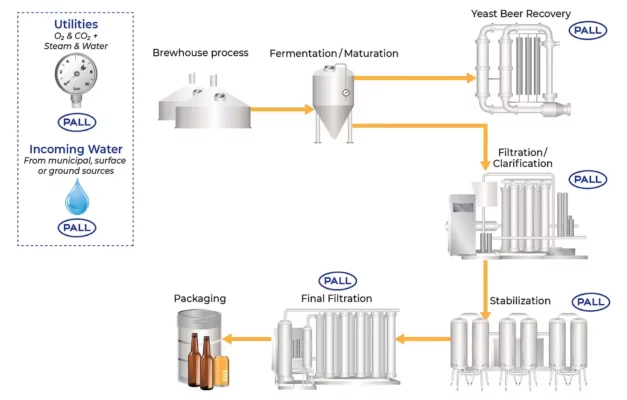
DATA VISUALIZATION SUGGESTION: Include an infographic showing the beer brewing process flow from grain to glass, highlighting where each system component functions.
Benefits of Home Brewing with a Dedicated Beer Brewing System
1. Consistency and Quality Control
Dedicated brewing systems provide temperature precision within ±1°F, critical for enzymatic conversion during mashing and yeast health during fermentation. The Brewers Association reports that temperature consistency can improve batch repeatability by up to 40% compared to improvised setups.
2. Time Efficiency
Integrated systems reduce brew day time by 25-35% through:
- Pre-calibrated volumes and heating elements
- Built-in recirculation (RIMS/HERMS)
- Simultaneous mashing and heating capabilities
- Automated CIP (Clean-in-Place) features in advanced models
3. Scalability
Modular systems allow homebrewers to start with basic 5-10 gallon setups and expand to 15-20 gallon pilot systems without replacing core equipment. This gradual investment approach reduces upfront costs while maintaining upgrade pathways.
4. Cost Savings Over Time
Homebrewing with a dedicated system costs approximately $0.50-1.50 per 12oz serving versus $2-8 for craft beer retail. The Master Brewers Association of the Americas (MBAA) estimates break-even at 50-80 batches depending on system investment.
5. Creative Freedom
Precise control over parameters enables experimentation with:
- Single-hop varieties
- Specialty malts and adjuncts
- Unique yeast strains
- Step mashing profiles for complex Belgian and German styles
DATA VISUALIZATION SUGGESTION: Create a cost comparison chart showing homebrewing vs. retail craft beer costs over 1, 2, and 5 years.
Essential Features to Look for in a Beer Brewing System
1. Material Construction
Stainless steel 304 or 316 is the industry standard, offering:
- Corrosion resistance
- Easy sanitation
- Longevity (20+ year lifespan with proper maintenance)
- No flavor transfer
Verify ASME or 3-A sanitary standards compliance for commercial systems.
2. Heating Capacity
Target heating rate: 4-6°F per minute for 10-gallon systems.
Options include:
- Electric elements (5.5-10kW for homebrew scale)
- Direct-fire burners (propane/natural gas)
- Steam jackets (commercial scale, superior temperature uniformity)
3. Temperature Control
Digital PID controllers maintain setpoints within ±0.5°F, essential for:
- Protein rest (122-131°F)
- Saccharification rest (148-158°F)
- Mash-out (168-170°F)
- Fermentation temperatures (specific to yeast strain)
4. Volume and Batch Size
Homebrewing: 5-15 gallons
Nano-brewing: 1-3 BBL (31-93 gallons)
Microbrewing: 7-15 BBL
Commercial: 15+ BBL
Ensure 30-40% headspace in fermentation vessels to accommodate krausen.
5. Automation Level
Manual systems: Basic valves and thermometers (entry-level)
Semi-automated: PID temperature control, pump automation
Fully automated: PLC/SCADA integration, recipe programming, remote monitoring
The American Society of Brewing Chemists (ASBC) reports that automation reduces batch variance by 50-70% in commercial operations.
6. Cleaning and Sanitation
CIP-compatible designs with:
- Tri-clamp fittings for tool-free disassembly
- Smooth interior surfaces (Ra ≤ 32 μin)
- Sprayballs for 360° coverage
- Automated chemical dosing (advanced systems)
Sanitation is non-negotiable: 90% of brewing defects trace to contamination issues, per MBAA data.
7. Energy Efficiency
Heat recovery systems capture energy from wort cooling:
- Pre-heat strike water
- Reduce energy consumption by 15-25%
- ROI: 12-24 months for commercial systems
Different Types of Beer Brewing Systems
1. All-in-One Electric Brewing Systems
Capacity: 5-20 gallons
Best for: Homebrewers, apartment/indoor brewing
Popular models: Grainfather G30, Brewzilla, Spike Solo
Advantages:
- Compact footprint
- 120V or 240V electric operation
- Built-in pumps and controllers
- Indoor-safe (no open flame)
Limitations:
- Single-vessel design limits simultaneous operations
- Slower heating compared to direct-fire systems
2. Three-Vessel Brewing Systems
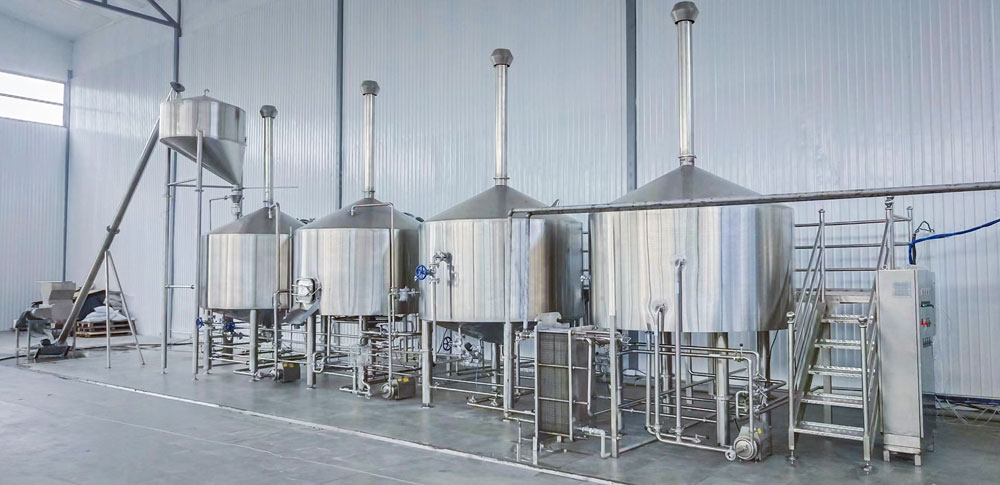
Vessels: Hot Liquor Tank (HLT), Mash Tun, Boil Kettle
Capacity: 10 gallons to 30+ BBL
Best for: Serious homebrewers, commercial breweries
Advantages:
- Simultaneous heating/mashing/boiling
- Faster brew days (4-6 hours)
- Superior temperature control
- Scalable to commercial production
Considerations:
- Requires dedicated brewing space
- Higher upfront investment ($3,000-50,000+)
- More complex plumbing and setup
3. BIAB (Brew-in-a-Bag) Systems
Capacity: 5-15 gallons
Best for: Budget-conscious beginners
Advantages:
- Minimal equipment (single kettle + bag)
- Low cost ($200-800)
- Simplified process
Limitations:
- Lower efficiency (65-75% vs. 75-85% in traditional systems)
- Difficult to scale beyond 15 gallons
- Manual lifting of heavy grain bags
4. Automated Commercial Brewhouses
Capacity: 7-100+ BBL
Best for: Craft breweries, production facilities
Features:
- PLC/SCADA automation
- Recipe management software
- Integrated CIP systems
- Real-time monitoring and alerts
Investment: $50,000-500,000+ depending on capacity and automation
According to the Brewers Association, automated systems improve OEE (Overall Equipment Effectiveness) by 20-30% and reduce labor costs by 40-60% compared to manual operations.
DATA VISUALIZATION SUGGESTION: Visual comparison matrix of the four system types showing capacity range, price range, skill level required, and typical use case.
Cost Considerations When Choosing a Beer Brewing System
Upfront Investment by Tier
| System Type | Capacity | Price Range | Target User |
|---|---|---|---|
| Basic BIAB Kit | 5-10 gal | $200-800 | Beginner homebrewer |
| Electric All-in-One | 5-15 gal | $800-2,500 | Intermediate homebrewer |
| Three-Vessel System | 10-20 gal | $2,000-8,000 | Advanced homebrewer |
| Nano Brewery | 1-3 BBL | $25,000-75,000 | Startup brewery |
| Commercial Brewhouse | 7-30 BBL | $100,000-500,000+ | Production brewery |
Data compiled from industry suppliers and Brewers Association 2025 equipment surveys
Operating Costs
Homebrewing (10-gallon batch):
- Ingredients: $30-60
- Utilities: $3-8
- Cleaning chemicals: $2-5
- Total per batch: $35-73 (~$0.70-1.45/12oz serving)
Commercial brewing (7 BBL batch):
- Ingredients: $400-800
- Utilities: $50-120
- Labor: $100-200
- Cleaning/sanitation: $30-60
- Total per batch: $580-1,180 (~$0.25-0.51/12oz serving)
Hidden Costs to Consider
- Installation: Electrical upgrades (240V circuits), plumbing, ventilation ($500-5,000)
- Fermentation vessels: Often sold separately ($300-3,000 each)
- Glycol chillers: Required for temperature-controlled fermentation ($800-10,000)
- Kegging/bottling equipment: $300-5,000
- Permits and licensing: Commercial operations require TTB, state, and local permits ($1,000-10,000)
Total Cost of Ownership (TCO)
MBAA research shows that TCO over 5 years is:
- Homebrewing: $4,000-12,000 (including equipment, ingredients, utilities)
- Nano-brewery: $75,000-200,000
- 7 BBL commercial: $200,000-600,000
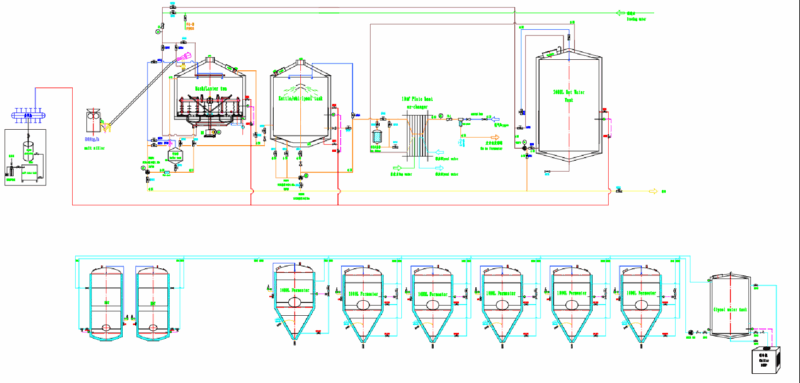
Step-by-Step Guide to Brewing Beer with Your System
Phase 1: Pre-Brew Preparation (Day Before)
1. Water Chemistry
- Test source water pH and mineral content
- Adjust with brewing salts (gypsum, calcium chloride) to match beer style
- Target mash pH: 5.2-5.6
2. Grain Milling
- Crush malt to expose endosperm while keeping husks intact
- Proper crush improves efficiency by 10-15%
3. Yeast Preparation
- Make starter for liquid yeast (1.5-2L for 5-gallon batch)
- Verify cell count: 0.75-1.5 million cells/mL/°Plato
Phase 2: Brew Day (6-8 hours for traditional systems)
Step 1: Mashing (60-90 minutes)
- Heat strike water to 168-172°F
- Mix with crushed grain to achieve mash temperature (148-158°F)
- Maintain temperature for enzyme conversion
- Expected efficiency: 75-85%
Step 2: Lautering (30-60 minutes)
- Recirculate wort until clear (vorlauf)
- Drain sweet wort to boil kettle
- Sparge with 170°F water to rinse remaining sugars
Step 3: Boiling (60-90 minutes)
- Achieve rolling boil
- Add hops according to recipe schedule
- Boil vigor: 5-8% evaporation rate
- Add Irish moss or Whirlfloc for clarity (15 minutes before knockout)
Step 4: Cooling (20-40 minutes)
- Rapidly cool wort to 65-68°F (ales) or 48-55°F (lagers)
- Use immersion chiller, plate chiller, or counterflow chiller
- Target: Cool through 140-80°F danger zone in under 30 minutes
Step 5: Transfer and Pitch
- Transfer cooled wort to sanitized fermenter
- Aerate to 8-10 ppm dissolved oxygen
- Pitch yeast at proper temperature
- Seal fermenter with airlock
Phase 3: Fermentation (1-3 weeks)
Primary fermentation:
- Ales: 65-72°F for 7-10 days
- Lagers: 48-55°F for 10-14 days
- Monitor gravity daily after day 3
Secondary/Conditioning:
- Transfer to secondary vessel or add dry hops
- Condition 3-7 days for clarity and flavor integration
- Final gravity should be stable for 2-3 consecutive days
Phase 4: Packaging
Kegging (recommended):
- Transfer to sanitized keg
- Carbonate to 2.2-2.7 volumes CO₂ (style-dependent)
- Serve after 24-48 hours
Bottling:
- Prime with corn sugar (5 oz per 5 gallons)
- Bottle condition for 2-3 weeks
Common Mistakes to Avoid When Brewing with a System
1. Inadequate Cleaning and Sanitation
Problem: 90% of off-flavors trace to contamination
Solution:
- Clean immediately after each use
- Use PBW or caustic cleaners for organic soil removal
- Sanitize with Star San or iodophor before wort contact
- Never skip this step
2. Poor Temperature Control
Problem: Temperature swings cause off-flavors (fusel alcohols, esters)
Solution:
- Invest in fermentation temperature control
- Use glycol chillers or temperature-controlled chambers
- Monitor with digital thermometers (±0.5°F accuracy)
3. Incorrect Water Chemistry
Problem: Unbalanced minerals affect mash pH and flavor
Solution:
- Test water annually
- Use brewing software (Bru’n Water, BeerSmith)
- Target sulfate:chloride ratio based on style (hoppy beers favor sulfate)
4. Underpitching Yeast
Problem: Stressed yeast produces off-flavors and stuck fermentations
Solution:
- Calculate proper pitch rate: 0.75 million cells/mL/°P (ales), 1.5 million (lagers)
- Use yeast calculators
- Make starters or pitch multiple packs
5. Rushing the Process
Problem: Green beer tastes harsh and unfinished
Solution:
- Allow full fermentation completion (stable gravity readings)
- Condition minimum 3-7 days post-fermentation
- Lagers require 3-8 weeks lagering
6. Neglecting System Calibration
Problem: Inaccurate volume and temperature readings
Solution:
- Calibrate thermometers annually
- Verify volume markings with measured water
- Check pump flow rates and pressure gauges
7. Ignoring Oxygen Exposure Post-Fermentation
Problem: Oxidation causes cardboard/stale flavors
Solution:
- Minimize splashing during transfers
- Purge kegs and bottles with CO₂
- Use closed transfer systems for hoppy beers
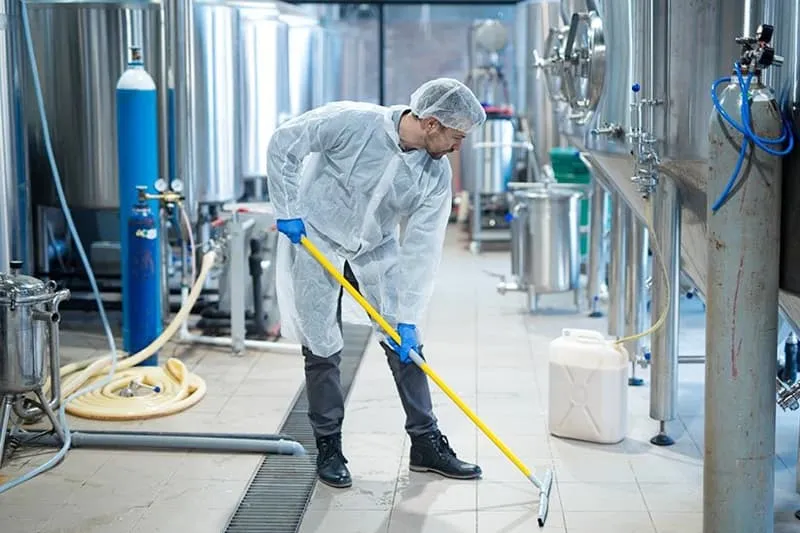
Tips for Maintaining Your Beer Brewing System for Longevity
Daily Maintenance (Brew Days)
Immediate post-brew cleaning:
- Rinse all vessels with hot water within 30 minutes
- Run 165°F water through pumps and lines for 10 minutes
- Apply alkaline cleaner to remove protein and organic deposits
- Rinse thoroughly—residual cleaners cause beer quality issues
Inspection:
- Check gaskets and O-rings for wear
- Verify valve operation
- Test temperature probe accuracy
Weekly Maintenance
Sanitation verification:
- ATP testing on contact surfaces (target: <150 RLU)
- Visual inspection for biofilm
Preventive checks:
- Pump seals (listen for unusual sounds)
- Heating element integrity
- PID controller calibration
Monthly Maintenance
Deep cleaning:
- Disassemble valves, pumps, and fittings
- Passivate stainless steel with citric or nitric acid
- Inspect sight glasses and tri-clamp gaskets
- Clean/replace hop filters and screens
System calibration:
- Verify thermometer accuracy with ice water (32°F) and boiling water (212°F)
- Test hydrometer calibration with distilled water (1.000 SG)
- Confirm volume markings
Annual Maintenance
Professional inspection (commercial systems):
- Pressure vessel certification
- Electrical system inspection
- Glycol chiller service
- Boiler/steam generator maintenance
Component replacement:
- Gaskets and O-rings (12-18 month lifespan)
- Pump seals (as needed)
- Heating elements (monitor efficiency decline)
Storage and Winterization
For seasonal brewing:
- Drain all water from vessels and lines
- Blow out lines with compressed air
- Apply food-grade lubricant to valves
- Store in temperature-controlled environment
Warranty and Documentation
- Maintain service logs for warranty claims
- Document all repairs and part replacements
- Keep original manuals and wiring diagrams
- Register equipment with manufacturers
Industry data: Properly maintained brewing systems last 20-25 years versus 10-15 years for neglected equipment (MBAA maintenance study).
Frequently Asked Questions (FAQ)
1. What size brewing system should I start with?
For homebrewing, 5-10 gallons is ideal for beginners—enough for meaningful batches without overwhelming space/cost requirements. For commercial operations, 7 BBL systems offer the best balance of production capacity and initial investment, with room to scale.
2. Electric vs. gas brewing systems—which is better?
Electric systems are better for indoor/residential brewing (no combustion, precise control, cleaner). Gas systems heat faster and cost less for large commercial operations. For homebrew: electric. For commercial 15+ BBL: gas or steam.
3. How much does it cost to brew beer at home?
After initial equipment investment ($800-5,000), each 5-gallon batch costs $35-60 in ingredients and utilities—roughly $0.70-1.20 per 12oz beer. Break-even versus buying craft beer occurs at 50-80 batches (12-24 months for regular brewers).
4. Do I need a permit for homebrewing?
In the United States, federal law allows 100 gallons/year per adult (200 gal max per household) without permits, per TTB regulations. Commercial operations require TTB, state, and local permits—budget $5,000-15,000 and 3-9 months for approvals.
5. How long does brewing beer take?
Brew day: 6-8 hours (traditional) or 4-5 hours (automated systems)
Fermentation: 7-14 days (ales), 3-6 weeks (lagers)
Conditioning/carbonation: 3-14 days
Total grain-to-glass: 2-8 weeks depending on style
6. What’s the difference between 2-vessel and 3-vessel systems?
3-vessel systems (HLT, Mash Tun, Kettle) allow simultaneous operations—faster brew days and better efficiency. 2-vessel systems combine HLT/Kettle or Mash Tun/Kettle—more compact and affordable but sequential operations add 1-2 hours.
7. Can I upgrade my system later?
Yes—modular systems allow incremental upgrades:
- Add fermentation capacity (most common first upgrade)
- Install automation (PID controllers, pumps)
- Expand from 2-vessel to 3-vessel
- Add glycol cooling systems
Ensure initial purchase supports expansion (compatible fittings, adequate power supply).
8. What certifications should commercial systems have?
Look for:
- ASME pressure vessel certification
- UL/CSA electrical safety (North America)
- CE marking (Europe)
- 3-A Sanitary Standards (food-grade compliance)
- ISO 9001 manufacturing quality
These certifications ensure safety, insurability, and resale value.
Making the Right Choice for Your Brewing Journey
Selecting the right beer brewing system in 2026 depends on your specific goals, budget, and growth trajectory. Whether you’re a homebrewer seeking consistent quality or a brewery owner planning commercial production, the key factors remain the same:
✓ Material quality and construction standards
✓ Appropriate capacity with room for growth
✓ Temperature control precision
✓ Ease of cleaning and maintenance
✓ Total cost of ownership, not just initial price
The craft brewing industry continues to innovate, with smart brewing systems now offering IoT connectivity, remote monitoring, and AI-assisted recipe optimization. As technology advances, even entry-level systems deliver professional-grade consistency.
For homebrewers, the investment in a dedicated system transforms brewing from an inconsistent hobby into a refined craft. For commercial operators, choosing equipment from manufacturers with proven track records—verified through MBAA, ASBC, and Brewers Association networks—ensures reliability and long-term support.
The best brewing system is one that matches your current needs while accommodating future ambitions. Start with solid fundamentals, maintain your equipment diligently, and let your passion for great beer guide your choices.
