
Comprehensive guide to brasserie équipement selection, featuring expert analysis, cost comparisons, and equipment specifications for brewery owners and operators.
Understanding Brasserie Équipement: An Overview
Brasserie équipement represents the backbone of any successful brewing operation, encompassing the complete range of machinery, vessels, and systems required to transform raw ingredients into premium beer products. The global craft beer equipment market reached $14.2 billion in 2025 and is projected to grow at a CAGR of 8.3% through 2030, according to Grand View Research.
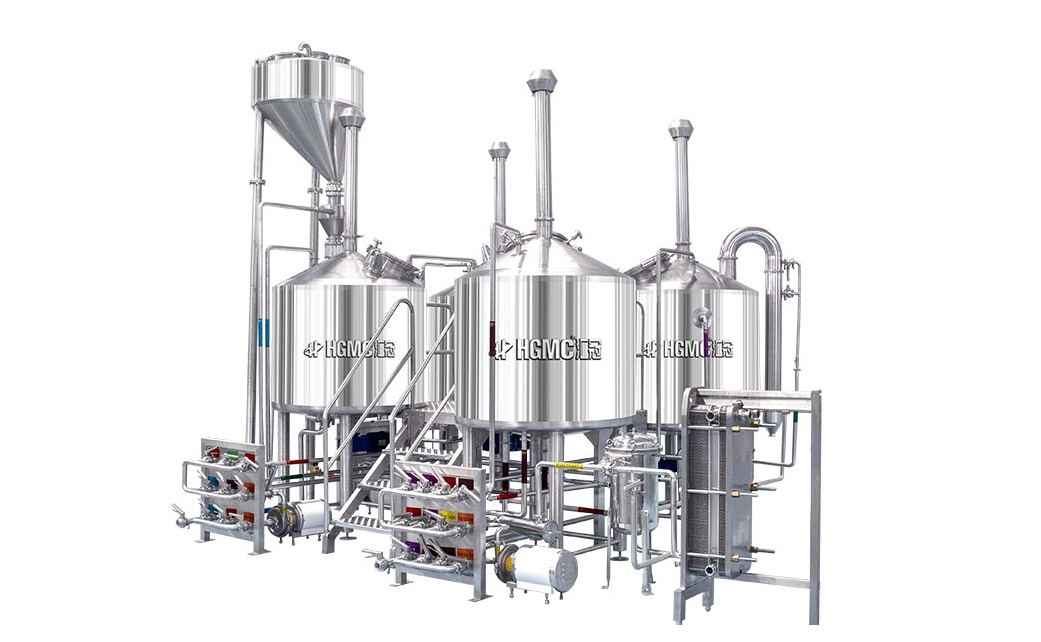
Modern brasserie équipement extends beyond traditional brewing vessels to include sophisticated automation systems, quality control instrumentation, and integrated cleaning solutions. The selection of appropriate equipment directly impacts production capacity, product consistency, operational efficiency, and ultimately, your brewery’s profitability.
The Evolution of Brewery Equipment Technology
The brewing industry has witnessed significant technological advancement over the past decade. Industry data from the Brewers Association indicates that breweries utilizing automated systems report 23-35% higher efficiency compared to manual operations. Key developments include:
- CIP (Clean-In-Place) Systems: Automated cleaning reduces labor costs by 40-60%
- PLC-Based Controls: Programmable logic controllers enable precise temperature and timing management
- Energy Recovery Systems: Modern brewhouses achieve 15-25% energy savings through heat recovery
- IoT Integration: Real-time monitoring systems reduce downtime by up to 30%
Assessing Your Specific Brewery Needs
Before investing in brasserie équipement, conducting a comprehensive needs assessment is essential. According to research published in the Journal of the Institute of Brewing, improper equipment sizing accounts for 42% of brewery startup failures within the first three years.
Production Capacity Analysis
Determine your target production volume based on market analysis and business projections:
Microbrewery Scale (< 15,000 BBL/year)
- Initial investment: $250,000 – $750,000
- Typical brewhouse: 7-15 BBL system
- Fermentation capacity: 3-6 tanks
- Space requirement: 1,500 – 3,000 sq ft
Regional Brewery Scale (15,000 – 500,000 BBL/year)
- Initial investment: $1.5M – $15M
- Typical brewhouse: 30-60 BBL system
- Fermentation capacity: 12-30 tanks
- Space requirement: 10,000 – 50,000 sq ft
Production Brewery Scale (> 500,000 BBL/year)
- Initial investment: $25M+
- Typical brewhouse: 100+ BBL system
- Fermentation capacity: 50+ tanks
- Space requirement: 100,000+ sq ft
Product Portfolio Considerations
Your equipment selection must accommodate your intended beer styles. A study by the Master Brewers Association of the Americas found that breweries producing 5+ beer styles require 35% more versatile equipment configurations.
💡
Expert Insight: “The most successful breweries we’ve worked with invest in flexible equipment that can handle multiple beer styles without major reconfiguration. This adaptability provides crucial competitive advantage in rapidly changing markets.” – Institute of Brewing and Distilling, Technical Journal 2025
Key Features to Consider in Brasserie Équipement
Selecting the right features in your brasserie équipement requires balancing immediate needs with long-term scalability. Industry benchmarking data reveals critical specifications to prioritize.
Material Quality and Construction Standards
Stainless Steel Specifications:
- 304 Stainless Steel: Standard for most brewing applications, adequate corrosion resistance
- 316 Stainless Steel: Superior corrosion resistance, recommended for coastal locations (20% higher cost)
- Dairy-grade finish: 2B or better surface finish prevents bacterial harboring
According to the American Society of Brewing Chemists, vessels constructed with inferior materials experience 3-5x higher maintenance costs over a 10-year operational period.
Heat Exchange Efficiency
Modern brewhouses incorporate advanced heat exchange systems that significantly impact operational costs:
- Basic 2-Vessel Systems: 60-70% heat recovery efficiency
- 3-Vessel Systems with Heat Recovery: 75-85% efficiency
- Advanced 4-Vessel Systems: 85-92% efficiency
Data from the Brewers Association indicates that efficient heat recovery systems reduce energy costs by $8,000-$25,000 annually for a 15 BBL brewhouse operating at full capacity.
Automation and Control Systems
Manual Controls:
- Lowest initial cost
- Higher labor requirements
- Greater variability in product quality
- Suitable for: Nano breweries, pilot systems
Semi-Automated Systems:
- Moderate investment ($15,000-$50,000 additional)
- Reduced labor by 30-40%
- Improved batch consistency
- Suitable for: Small to medium microbreweries
Fully Automated PLC Systems:
- Higher upfront cost ($75,000-$250,000 additional)
- Labor reduction of 50-70%
- Exceptional repeatability and quality control
- Suitable for: Production breweries, quality-focused operations
Research from the Technical Quarterly of the Master Brewers Association demonstrates that automated systems achieve 99.2% batch consistency compared to 87.4% for manual operations.
Comparing Different Types of Brasserie Equipment
Understanding the distinctions between equipment configurations enables informed decision-making aligned with your operational requirements.
Brewhouse Configurations
2-Vessel Systems:
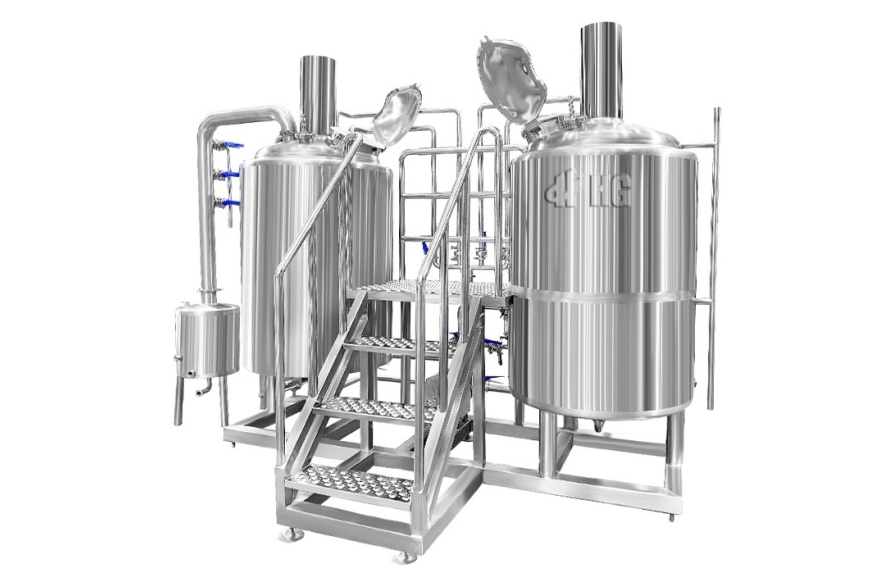
- Configuration: Mash/Lauter Tun + Kettle/Whirlpool combination
- Advantages: Lower capital cost, reduced footprint
- Disadvantages: Longer brew days, limited to single batching
- Best for: Startups with limited capital and space
- Market share: 45% of new microbrewery installations (2025 data)
3-Vessel Systems:
- Configuration: Dedicated Mash Tun + Lauter Tun + Kettle/Whirlpool
- Advantages: Improved efficiency, double-batch capability
- Disadvantages: Higher cost, larger footprint
- Best for: Growing breweries planning capacity expansion
- Market share: 38% of new installations
4-Vessel Systems:
- Configuration: Separate Mash Tun + Lauter Tun + Kettle + Whirlpool
- Advantages: Maximum efficiency, triple-batch capability
- Disadvantages: Highest cost and space requirements
- Best for: Production breweries prioritizing throughput
- Market share: 17% of new installations
Fermentation Tank Options
Cylindroconical Fermenters (CCF):
The industry standard, representing 89% of professional brewery fermentation capacity according to Brewers Association data. Key specifications:
- Aspect ratio: 2:1 to 3:1 (height to diameter)
- Cooling zones: Single-zone (economy) to 4-zone (premium)
- Pressure rating: 15-30 PSI standard
- Capacity range: 5 BBL to 500 BBL
Horizontal Fermenters:
Gaining popularity for specific applications, particularly in German-style lager production:
- Space efficiency: 30% less vertical clearance required
- Temperature uniformity: Superior for lager production
- Market adoption: Growing at 12% annually
Packaging Equipment Comparison
| Equipment Type | Speed (units/hour) | Initial Cost | Labor Requirements | Best Application |
|---|---|---|---|---|
| Manual Bottle Filler | 30-60 | $3,000-$8,000 | 2-3 operators | Nano/startup breweries |
| Semi-Auto Filler | 200-400 | $35,000-$75,000 | 1-2 operators | Small microbreweries |
| Automated Line | 1,200-3,000 | $250,000-$1M+ | 1 operator + maintenance | Production breweries |
| Manual Canning | 15-25 cans/min | $25,000-$45,000 | 2 operators | Limited can production |
| Automated Canning | 60-200 cans/min | $150,000-$500,000 | 1 operator | High-volume operations |
Source: Beverage Industry Magazine Equipment Survey 2025
Budgeting for Your Brasserie Equipment Purchase
Comprehensive financial planning extends beyond initial equipment costs to encompass total cost of ownership over the equipment lifecycle.
Initial Capital Investment Breakdown
Based on industry benchmarking data from the Brewers Association’s 2025 Economic Impact Report:
Complete 15 BBL Microbrewery System:
- Brewhouse (3-vessel): $185,000 – $245,000 (32%)
- Fermentation tanks (6x 15 BBL): $120,000 – $165,000 (23%)
- Glycol cooling system: $35,000 – $55,000 (8%)
- CIP system: $28,000 – $42,000 (6%)
- Hot liquor tank & HLT: $18,000 – $28,000 (4%)
- Pumps, hoses, fittings: $22,000 – $35,000 (5%)
- Control/automation: $25,000 – $65,000 (7%)
- Installation & commissioning: $45,000 – $75,000 (10%)
- Packaging equipment (basic): $30,000 – $50,000 (5%)
Total Investment: $508,000 – $760,000
Operating Cost Considerations
Annual Operating Costs (15 BBL System, 1,000 BBL/year production):
- Energy costs: $18,000 – $28,000
- Natural gas: 60% of energy costs
- Electricity: 40% of energy costs
- Maintenance & repairs: $12,000 – $22,000
- Preventive maintenance: 65%
- Unexpected repairs: 35%
- Cleaning chemicals: $6,000 – $9,000
- Replacement parts: $8,000 – $14,000
Total Annual Operating Costs: $44,000 – $73,000
ROI Analysis
Industry data indicates that well-planned brewery equipment investments achieve ROI within 3.5-5.5 years. Critical factors affecting ROI:
- Capacity utilization: Operations exceeding 75% capacity reach ROI 40% faster
- Equipment efficiency: High-efficiency systems save $15,000-$35,000 annually
- Automation level: Reduces labor costs by $25,000-$75,000 annually
📊
Financial Benchmark: According to the Brewers Association’s 2025 Industry Report, the median equipment cost per barrel of annual capacity is $500-$800 per BBL for microbreweries and $250-$400 per BBL for production breweries due to economies of scale.
Financing Options
Industry survey data shows equipment financing breakdown:
- Bank loans: 42% of breweries (SBA 7(a) loans popular)
- Equipment leasing: 28% of breweries
- Private investment: 18% of breweries
- Personal capital: 12% of breweries
Evaluating Brands and Manufacturers for Quality
Selecting a reputable equipment manufacturer significantly impacts long-term operational success. The Institute of Brewing and Distilling’s 2025 supplier evaluation study provides valuable insights.
Manufacturer Assessment Criteria
1. Industry Experience and Track Record
- Minimum 10+ years in brewing equipment manufacturing
- Verifiable reference installations (request 5-10 contacts)
- Industry certifications (ISO 9001, ASME, CE marking)
2. Engineering Capabilities
- In-house design and engineering team
- Custom fabrication capabilities
- CAD modeling and 3D visualization services
3. Quality Control Standards
Top-tier manufacturers implement:
- Pressure vessel certification: ASME U-Stamp for North America
- Material traceability: Full documentation of stainless steel sourcing
- Weld inspection: 100% visual inspection, X-ray for critical welds
- Hydrostatic testing: All pressure vessels tested at 1.5x working pressure
Geographic Considerations
North American Manufacturers:
- Advantages: Faster support response, familiar regulations, easier communication
- Cost premium: 25-40% higher than Asian manufacturers
- Lead times: 16-24 weeks typical
European Manufacturers:
- Advantages: Advanced technology, proven designs, comprehensive automation
- Cost: 15-30% higher than North American
- Lead times: 20-28 weeks + shipping
Asian Manufacturers:
- Advantages: Competitive pricing, improving quality standards
- Considerations: Longer lead times (24-36 weeks), communication challenges, variable quality
- Cost savings: 30-50% vs. North American manufacturers
Data from the 2025 Master Brewers Association survey indicates that 68% of North American breweries report higher satisfaction with domestically-sourced equipment due to service accessibility.
Warranty and Service Agreements
Industry-standard warranties:
- Structural components: 5-10 years
- Mechanical systems: 2-3 years
- Electrical/control systems: 1-2 years
- Consumable parts: 90 days to 1 year
⚠️
Critical Consideration: Equipment downtime costs production breweries an average of $2,500-$8,000 per day according to Brewers Association data. Prioritize manufacturers offering comprehensive service agreements and rapid parts availability.
Maintenance and Support for Long-term Equipment Use
Proactive maintenance programs extend equipment lifespan by 40-60% while reducing unexpected downtime by up to 75%, according to the Preventive Maintenance Institute’s brewing industry study.
Preventive Maintenance Schedules
Daily Maintenance Tasks:
- Visual inspection of all vessels and connections
- CIP system verification
- Temperature and pressure logging
- Glycol level and temperature checks
Weekly Maintenance:
- Pump seal inspection
- Valve operation verification
- Sight glass cleaning
- Control system backup
Monthly Maintenance:
- Gasket and seal replacement (as needed)
- Thermowell calibration verification
- Pressure relief valve testing
- Glycol system chemical analysis
Quarterly Maintenance:
- Heat exchanger cleaning and inspection
- Pump motor bearing lubrication
- Comprehensive control system testing
- Professional calibration of all sensors
Annual Maintenance:
- Complete pressure vessel inspection
- Boiler/steam system servicing
- Electrical system safety audit
- Comprehensive equipment performance evaluation
Maintenance Cost Planning
Annual Maintenance Budget Guidelines:
- Years 1-3: 1.5-2.5% of equipment value
- Years 4-7: 3-4% of equipment value
- Years 8+: 5-7% of equipment value
For a $500,000 equipment investment:
- Years 1-3: $7,500-$12,500 annually
- Years 4-7: $15,000-$20,000 annually
- Years 8+: $25,000-$35,000 annually
Training and Knowledge Transfer
The Master Brewers Association research indicates that comprehensive operator training reduces equipment incidents by 62%:
Essential Training Programs:
- Initial equipment operation (40-80 hours)
- CIP system management (16-24 hours)
- Preventive maintenance protocols (24-32 hours)
- Troubleshooting and diagnostics (16-24 hours)
- Safety and emergency procedures (8-16 hours)
Spare Parts Inventory
Maintain critical spare parts inventory to minimize downtime:
Essential Spare Parts ($8,000-$15,000 initial investment):
- Gaskets and O-rings (complete set)
- Pump seals and impellers
- Solenoid valves (2-3 spares)
- Temperature sensors (2-3 spares)
- Sample valves and PRVs
- Control relays and contactors

Frequently Asked Questions (FAQ)
What is the typical lifespan of commercial brewery equipment?
With proper maintenance, commercial brasserie équipement typically lasts 15-25 years for pressure vessels and structural components. Mechanical systems (pumps, valves) generally require replacement every 7-12 years, while control systems need updating every 8-15 years. The Institute of Brewing and Distilling reports that breweries following comprehensive preventive maintenance programs achieve equipment lifespans 40-60% longer than industry averages.
How much space do I need for a complete brewing system?
Space requirements vary significantly by production capacity. As a general guideline from the Brewers Association:
- 7 BBL system: 1,200-1,800 sq ft minimum
- 15 BBL system: 2,500-3,500 sq ft minimum
- 30 BBL system: 5,000-8,000 sq ft minimum
- 60 BBL system: 12,000-18,000 sq ft minimum
These calculations include brewhouse, fermentation space, packaging area, and basic storage. Additional space needed for taproom, office, and warehouse operations.
Should I buy new or used brewery equipment?
This depends on your budget, risk tolerance, and technical expertise. New equipment advantages: full warranty, latest technology, customization options, predictable performance. Used equipment advantages: 40-60% cost savings, faster availability, proven operational history.
Industry data shows that 32% of new breweries start with used equipment, with success rates comparable to new equipment installations when purchased from reputable sources and properly inspected by qualified technicians.
What are the most important certifications to look for?
Essential certifications for North American operations:
- ASME U-Stamp: Required for pressure vessels in most jurisdictions
- UL/CSA Listing: Electrical safety certification
- NSF/ANSI Standards: Food safety compliance
- ISO 9001: Quality management system certification
European equipment should carry CE marking and comply with PED (Pressure Equipment Directive) standards.
How can I ensure my equipment is energy-efficient?
Key efficiency features to specify:
- Heat recovery systems: Target 80%+ efficiency
- Variable frequency drives (VFD): On all motors over 2 HP
- High-efficiency burners: 85%+ thermal efficiency
- Insulation: Minimum 3-inch polyurethane foam on all vessels
- Smart controls: Automated scheduling and load management
The Department of Energy reports that optimized brewery systems reduce energy costs by 25-40% compared to basic configurations.
What’s the difference between manual, semi-automated, and fully automated systems?
Manual systems require constant operator attention for valve operations, temperature adjustments, and timing. Suitable for very small operations prioritizing hands-on control.
Semi-automated systems automate temperature control, timing sequences, and basic monitoring while requiring operator intervention for valve switching and key decision points. Represents the sweet spot for microbreweries balancing cost and efficiency.
Fully automated systems manage entire brew cycles with minimal operator input, featuring automated valving, recipe management, and comprehensive data logging. Essential for production breweries requiring consistent quality at scale.
How long does it take to install and commission new equipment?
Typical timelines:
- 7-15 BBL system: 2-4 weeks installation, 1-2 weeks commissioning
- 30 BBL system: 4-6 weeks installation, 2-3 weeks commissioning
- 60+ BBL system: 8-12 weeks installation, 3-4 weeks commissioning
These timelines assume completed facility infrastructure (utilities, drainage, structural support). Add 8-16 weeks for facility preparation if starting from raw space.
What financing options are available for brewery equipment?
Popular financing approaches:
- SBA 7(a) Loans: Up to $5M, terms to 25 years, competitive rates
- Equipment financing: 5-7 year terms, equipment as collateral
- Equipment leasing: Lower upfront cost, tax advantages, upgrade flexibility
- Private investment: Equity or revenue-sharing arrangements
The SBA reports that brewery equipment loans have 94% approval rates for qualified applicants with solid business plans.
How do I calculate the right fermentation capacity?
The industry standard is 4-6 times your brewhouse capacity for ale production, 6-8 times for lager production. For example, a 15 BBL brewhouse should have:
- Ale-focused: 60-90 BBL fermentation capacity (4-6 tanks)
- Lager-focused: 90-120 BBL fermentation capacity (6-8 tanks)
- Mixed production: 75-105 BBL fermentation capacity (5-7 tanks)
Factor in turnover time: ales (14-21 days), lagers (28-42 days), high-gravity beers (21-35 days).
What ongoing support should I expect from my equipment supplier?
Reputable manufacturers provide:
- Technical support hotline: 24/7 emergency support, business hours for general inquiries
- Remote diagnostics: For automated systems
- Spare parts availability: 48-hour shipping for critical components
- Periodic maintenance visits: Annual or semi-annual
- Training updates: As equipment or processes evolve
- Documentation: Comprehensive manuals, maintenance schedules, troubleshooting guides
The Master Brewers Association recommends choosing suppliers offering minimum 5-year comprehensive support agreements.
Conclusion: Making Your Brasserie Équipement Investment
Selecting the right brasserie équipement represents one of the most critical decisions in establishing or expanding your brewing operation. As this comprehensive guide demonstrates, successful equipment selection requires balancing multiple factors: production capacity requirements, budget constraints, quality standards, automation levels, and long-term operational costs.
Key takeaways for your equipment selection process:
Strategic Planning: Begin with thorough needs assessment, considering not only current requirements but also 3-5 year growth projections. Industry data confirms that breweries planning for scalability achieve 35% better ROI on equipment investments.
Quality Over Cost: While initial capital investment is significant, total cost of ownership analysis reveals that premium equipment with superior efficiency and reliability delivers better financial performance over the equipment lifecycle.
Supplier Relationships: Choose manufacturers and suppliers who provide comprehensive support, training, and service capabilities. The equipment purchase represents the beginning of a long-term partnership.
Future-Proofing: Invest in flexible, upgradable systems that can accommodate changing market demands, evolving beer styles, and capacity expansion.
With global craft beer consumption projected to reach 485 million hectoliters by 2030 (IWSR Beverage Market Analysis), the opportunity for well-equipped breweries continues expanding. Your brasserie équipement investment establishes the operational foundation for capturing this growing market.
Whether you’re launching a microbrewery, expanding to regional production, or optimizing an existing operation, applying the principles, benchmarks, and evaluation criteria presented in this guide will help ensure your equipment investment drives sustainable business success.
Ready to discuss your brasserie équipement requirements? Contact our technical team for customized equipment recommendations, detailed specifications, and project planning assistance. HGMC-Our engineering experts bring over 20 combined years of brewing industry experience to help you select the optimal equipment configuration for your operation.
