Introduction
For brewery owners and beverage producers in Europe and North America, purchasing brewery equipment is not only a capital expense. It is a decision that affects beer quality consistency, operating efficiency, energy use, and future capacity expansion.
China has become a major global sourcing option for brewing systems, fermentation tanks, CIP skids, turnkey breweries, and canning/bottling lines. The reasons are increasingly practical: competitive manufacturing costs, strong stainless steel fabrication capability, and a mature export supply chain. At the same time, EU and US buyers often have strict expectations around documentation, quality controls, and compliance planning.
This guide explains how to source brewery machinery from China with a clear framework, including market data, quality standards, supplier reliability, and logistics planning. It also includes an FAQ section to help you capture more long-tail search traffic.
About HGMC
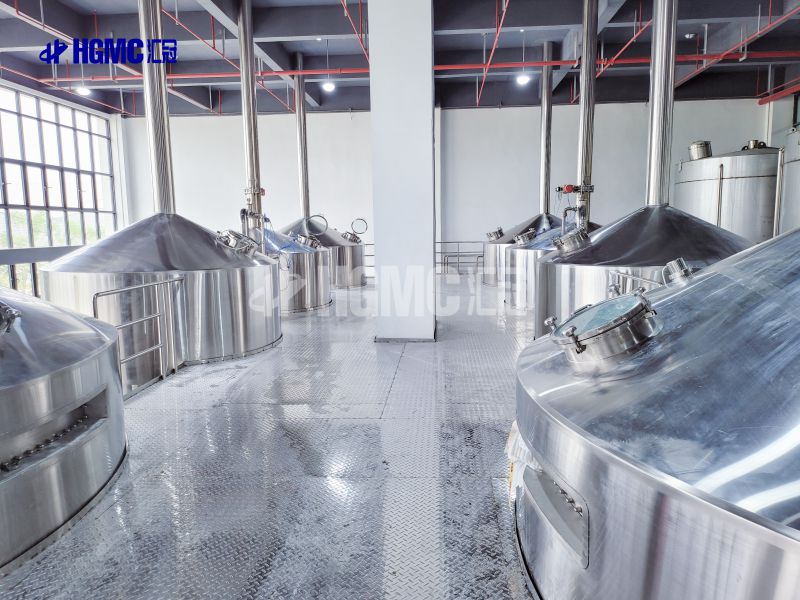
HGMC manufactures brewery equipment, beverage equipment, and canning/bottling lines, with capabilities covering individual machines and turnkey projects. HGMC reports 30+ national authorized patents and 20+ high-tech achievements, operates under an ISO 9001:2015 quality management system, and exports to 120+ countries.
1) Benefits of Sourcing Brewery Machinery from China
Sourcing brewery equipment from China can offer advantages beyond initial purchase price:
- Cost efficiency at scale: Stainless steel vessels and standard process equipment often benefit from China’s mature fabrication ecosystem.
- Broad customization capability: Tank geometry, jacket configuration, port layout, insulation options, and platform design can be customized to match brewhouse recipes and cellar workflow.
- Shorter iteration cycles: Many suppliers can revise drawings quickly and produce modular skids for faster installation and commissioning.
- One-stop project scope: Buyers can reduce supplier coordination by sourcing brewhouse, cellar tanks, CIP, utilities, and packaging equipment through a single project team.
Market demand is also a driver. Grand View Research estimates the global brewery equipment market size at USD 18.45 billion in 2024, and projects 6.1% CAGR from 2025 to 2030.[1] For EU/US buyers, that growth can mean tighter delivery schedules and higher pricing pressure in some local markets—making a structured sourcing approach valuable.
2) Overview of China’s Brewery Machinery Industry
China’s brewing equipment industry benefits from a large network of:
- stainless fabrication workshops
- machining capacity for fittings and manifolds
- electrical/control suppliers (HMI/PLC panels)
- export packaging and logistics providers
This ecosystem matters because modern breweries do not buy a single machine. They buy an integrated process line that must be cleanable, reliable, and serviceable.
For EU and US customers, the most commonly sourced product categories include:
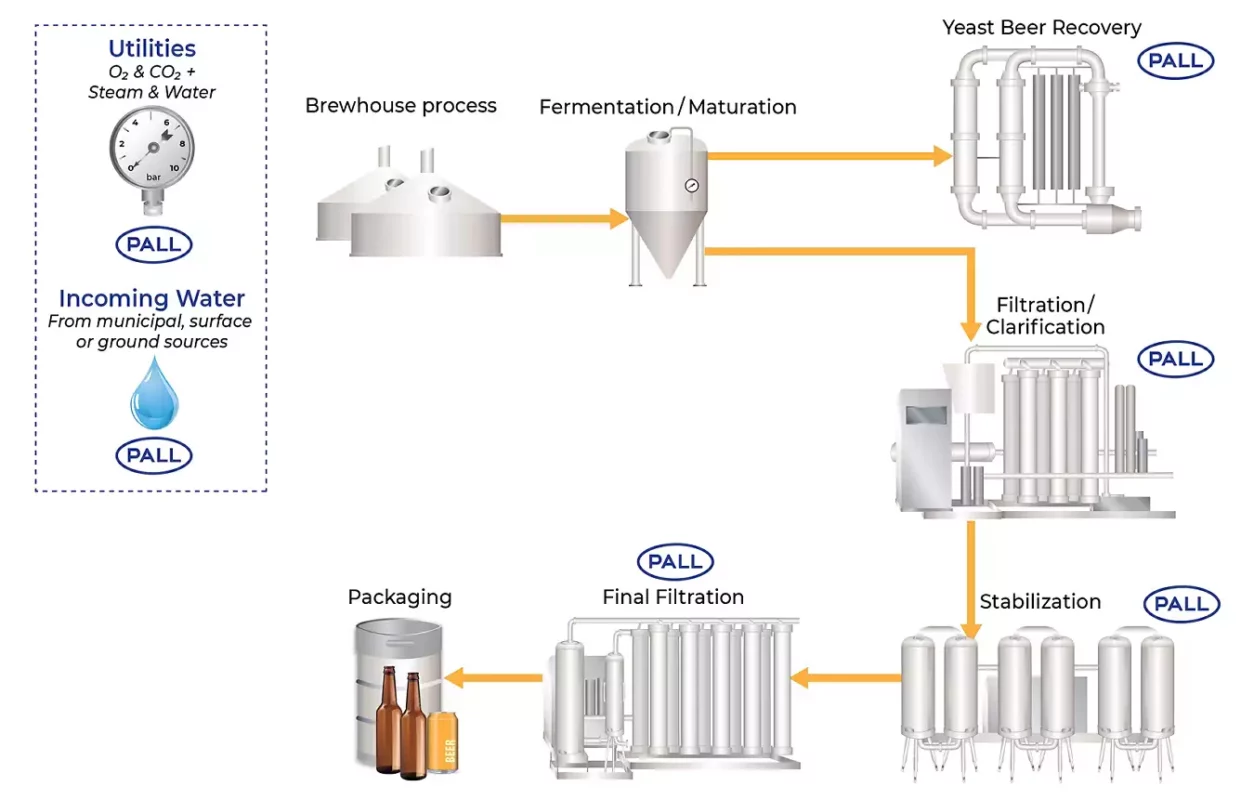
Brewhouse
- Mash tun, lauter tun, kettle/whirlpool
- Hot liquor tank (HLT), cold liquor tank (CLT)
- Wort grant, pumps, plate heat exchanger
- Automated valve clusters (optional) and recipe control options (optional)
Fermentation & Bright Beer Tanks
- Unitanks, brite tanks, serving tanks
- Jacket zoning, glycol piping, pressure capability (as required)
- Platforms, ladders, manways, and sanitary fittings
CIP Systems
- CIP skids with heating, dosing, return control
- Conductivity/flow/temperature instrumentation (as specified)
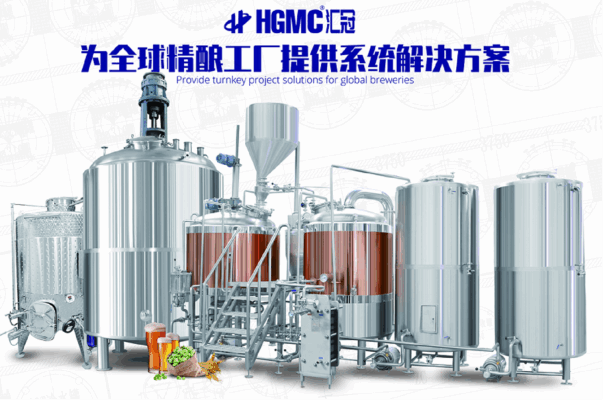
Turnkey Brewery Projects
- Layout design support, utility matching, installation planning
- FAT/SAT planning (factory/site acceptance testing)
Packaging Lines
- Canning lines, bottling lines, depalletizing/conveying integration (scope dependent)
- Compressed air, CO₂, and cleaning integration planning
3) Cost-Effectiveness: What EU/US Buyers Should Measure
For Google SEO and buyer trust, it helps to compare Total Landed Cost rather than ex-works price.
Total Landed Cost (TLC) =
Equipment price + export packing + inland trucking + export clearance + ocean freight + insurance + import duties/taxes + destination handling + inland delivery + installation/commissioning
What usually drives cost differences
- Vessel fabrication and polishing costs
- Local labor and overhead
- Component sourcing (valves, pumps, sensors, control hardware)
- Shipping method and cargo type (containers vs oversize)
Suggested visual:
- Figure 2: “Total Landed Cost Breakdown (example %)”
- Equipment 55–75%
- Freight & handling 10–25%
- Duties & taxes 0–15%
- Installation & commissioning (varies by site readiness)
4) Quality Standards and Certifications: How to Validate “Meets Requirements”
Quality is not determined by geography. It is determined by specification, process control, and verification.
ISO 9001 and what it means in sourcing
ISO describes the ISO Survey as an annual snapshot of valid certificates to management system standards worldwide.[2] For buyers, ISO 9001:2015 is most useful when it is paired with:
- material traceability (MTR/MTC)
- documented inspection plans
- pressure/leak testing records
- final QC reports tied to serial numbers
Pressure-rated equipment (especially relevant to EU/US compliance)
Many breweries require tanks that operate above specific pressures, especially for carbonation, transfers, or certain cellar practices. ASME notes BPVC Section VIII covers pressure vessels operating above 15 psig, with requirements for design, fabrication, inspection, testing, and certification marks.[3]
Practical takeaway: If the project involves pressure-rated vessels, confirm requirements early:
- design pressure and operating pressure
- inspection jurisdiction rules (varies by state/province/country)
- documentation package expectations
5) Technology Advancements: Automation, Efficiency, and Repeatability
Modern breweries want consistent wort quality, stable fermentation temperatures, predictable CIP cycles, and packaging uptime. Buyers increasingly ask for:
- Brewhouse automation: recipe steps, alarms, logging, and traceable batch records (as required)
- Cellar controls: temperature zoning, glycol valve control, trending
- CIP control: controlled time/temperature/flow and repeatable cleaning cycles
- Packaging integration: synchronization, reject handling, basic OEE data (when specified)
6) Supplier Reliability and Reputation: A Buyer’s Vetting Framework
EU/US buyers should treat equipment procurement like an engineering project with “gates.”
Supplier vetting checklist (high-conversion content)
- Engineering & drawings
- GA drawings, P&IDs (if needed), nozzle schedule, utility list
- Manufacturing transparency
- photos/videos, weld and polishing processes, shop floor capacity
- Quality documentation samples
- example MTR, pressure test record, inspection checklist
- Factory acceptance test (FAT)
- witness testing plan (remote or onsite)
- After-sales readiness
- spare parts list, lead time commitment, remote troubleshooting process
This section is a great place to reference HGMC’s capabilities in a factual way (patents, export experience, turnkey support), without sounding like advertising.
7) Logistics and Supply Chain: Lead Times, Incoterms, and Project Scheduling
Logistics can decide whether a brewery opens on time.
Freightos notes that sea freight door-to-door shipments from China to the USA can take around 30–40 days, and that port congestion, customs delays, and weather can affect lead time.[4]
What to plan for (especially turnkey projects)
- design freeze date
- fabrication lead time
- export packing and container plan
- ocean transit
- customs clearance
- inland delivery and rigging schedule
- installation and commissioning window
Incoterms clarity
ISM’s Incoterms overview explains how different terms allocate export/import formalities and responsibilities, which helps reduce border delays and cost surprises.[5]
FAQ: Brewery Equipment Sourcing from China (EU/US Focus)
Q1: Is brewery equipment from China a good fit for EU and US breweries?
It can be, especially for brewhouses, fermentation tanks, CIP skids, and turnkey projects—if the buyer defines specs clearly and confirms documentation, testing, and compliance requirements.
Q2: What documents should I request before shipment?
Common documentation includes material certificates (MTR/MTC), weld records (when applicable), pressure/leak test reports, surface finish checks, electrical drawings, manuals, and spare parts lists.
Q3: Does ISO 9001:2015 guarantee product quality?
ISO 9001 is a quality management system standard. It is most meaningful to buyers when combined with traceability, inspection plans, and test records.[2]
Q4: Do I need ASME certification for fermentation or brite tanks?
It depends on operating pressure and local jurisdiction requirements. ASME notes BPVC Section VIII applies to vessels operating above 15 psig.[3] Always confirm compliance expectations before ordering.
Q5: How long does shipping take from China to the US or Europe?
For the US, Freightos indicates sea freight door-to-door can be about 30–40 days in many cases, with delays possible.[4] Europe can vary by route and port; buyers should plan buffers for customs and inland delivery.
Q6: What is the biggest risk in overseas sourcing?
The biggest risks are unclear specifications, weak quality verification, under-planned installation scope, and optimistic schedules that ignore logistics variability.
