
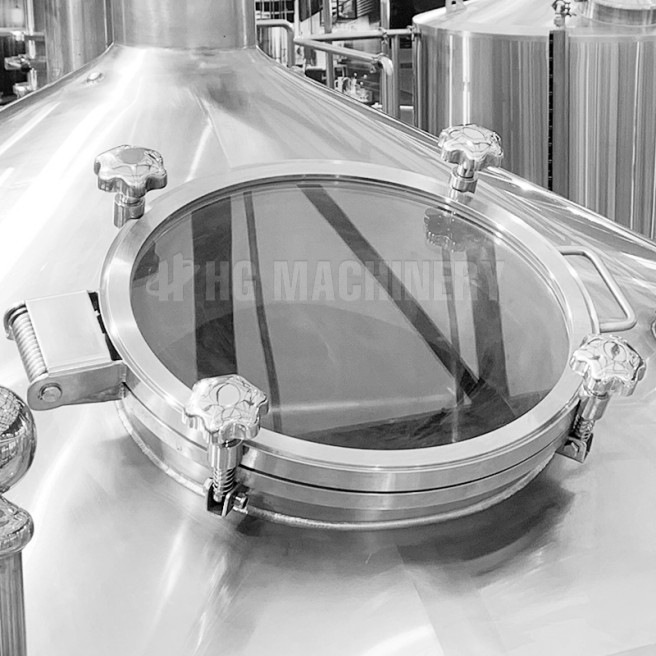
In the past decade, the global beer industry has changed faster than at any other time in modern history. Consumers are not satisfied with simple, low‑cost beers anymore. They are looking for higher quality, unique flavors, and more authentic stories behind each brand. This shift has pushed breweries, restaurants, and beverage factories to invest in commercial brewing equipment that can deliver consistent quality, flexible production, and reliable safety standards.
To succeed in this competitive environment, breweries need more than just tanks and pipes. They need a truly professional brewing system, a well‑designed brewhouse, and a complete beer brewing solution that covers the entire lifecycle of production—from raw materials to packaged product. This article explains what commercial brewing equipment includes, how modern brewing systems work, key factors in brewhouse design, and the elements of a complete, professional beer brewing solution.
1. What Is Commercial Brewing Equipment?
Commercial brewing equipment refers to all the machinery and systems used to produce beer at a professional scale for sale to consumers. Unlike homebrew setups, commercial systems must meet strict food‑grade standards, support continuous production, and comply with local regulations. They are designed to operate safely and efficiently for many years.
A typical set of commercial brewing equipment includes several major sections.
1.1 Malt Handling and Milling
The process starts with malt—usually malted barley, and sometimes wheat, oats, or other grains. Commercial systems often include:
- Malt silos or storage for large‑volume operations
- Malt mill (two‑roller or four‑roller) for precise crushing
- Conveyors or augers that move milled grain to a grist case or directly to the brewhouse
Proper malt crushing is important. If the husk is too damaged, lautering will be slow and inefficient. If the grain is not crushed enough, sugar extraction will be low and yield will suffer.
1.2 The Brewhouse: Heart of the Brewing System
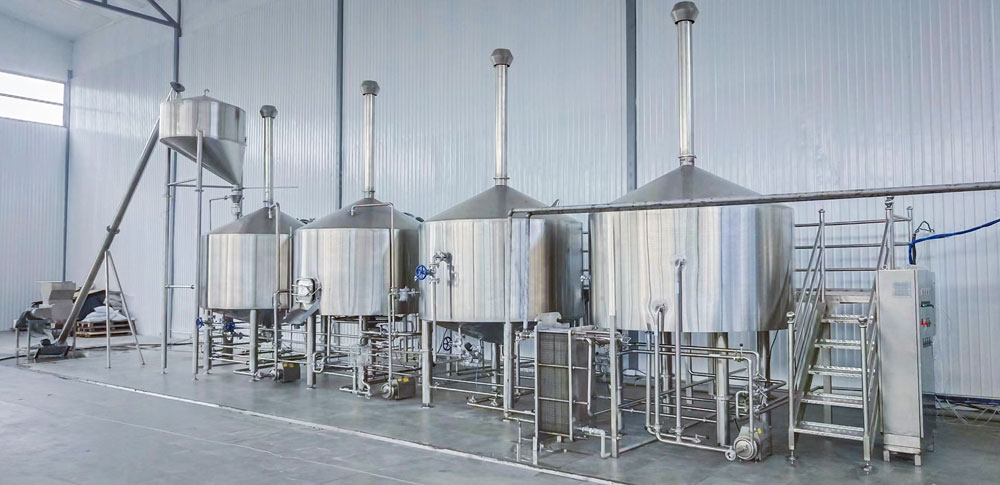
The brewhouse is the center of the professional brewing system. It usually includes:
- Mash tun for mixing milled malt and hot water
- Lauter tun for separating sweet wort from the grain bed
- Kettle for boiling the wort with hops
- Whirlpool for separating hot trub and hop residues
- Hot liquor tank (HLT) for hot process water
- Pumps, heat exchangers, valves, and control systems
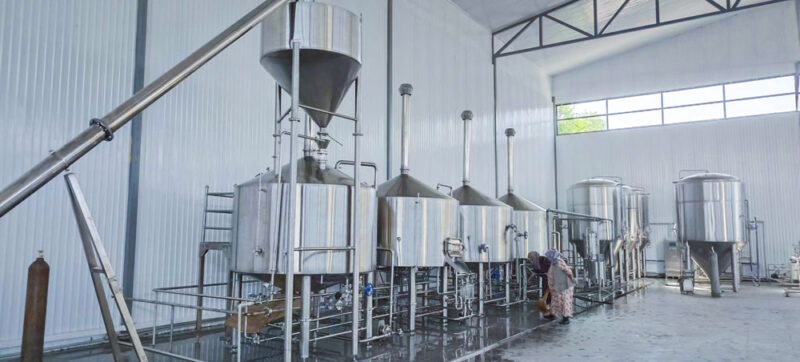
Brewhouses can be configured in two‑vessel, three‑vessel, or four‑vessel designs depending on the required capacity and number of brews per day.
1.3 Fermentation and Cellar Equipment
Once the wort leaves the brewhouse, it enters the “cold side” of the brewery:
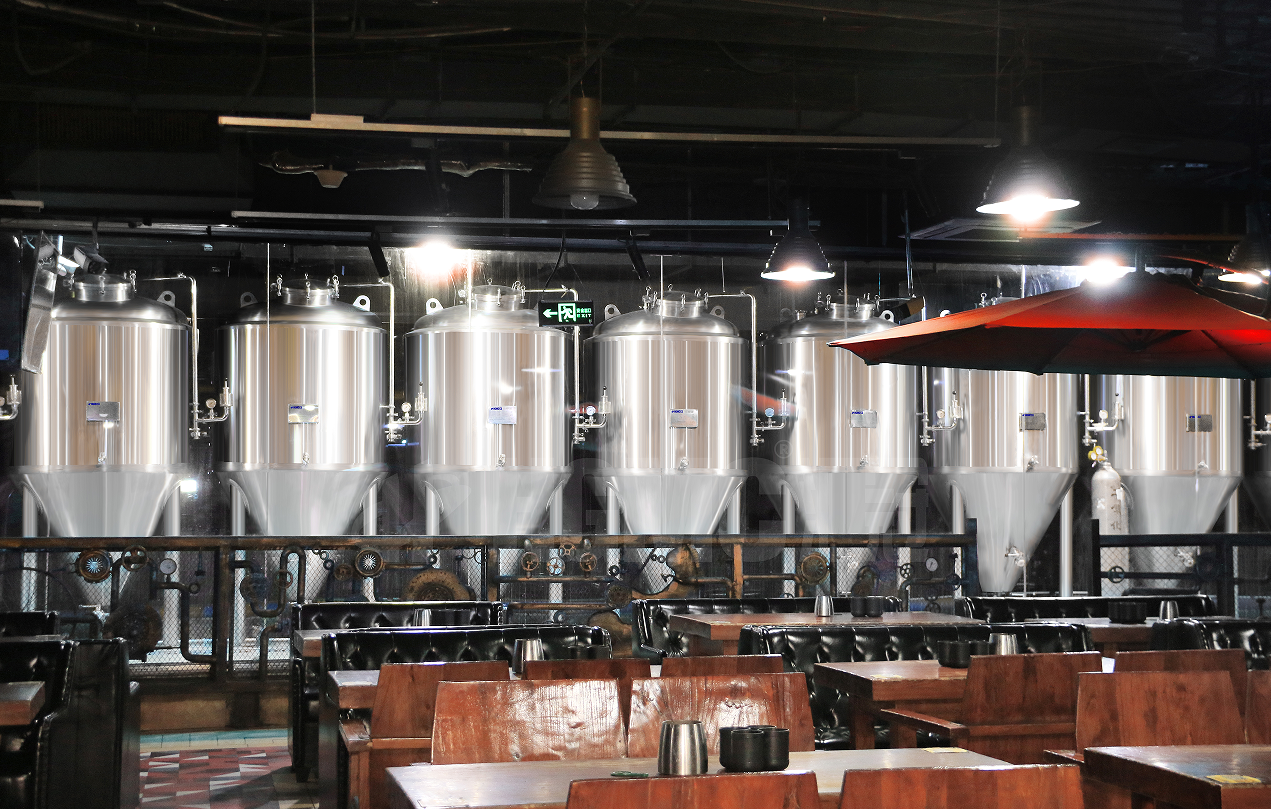
- Cylindroconical fermentation tanks (CCTs) for primary fermentation
- Bright beer tanks (BBTs) for maturation, carbonation, and clarification
- Glycol chiller and cooling system with insulated piping
- Automatic temperature control panels for each tank
High‑quality fermentation equipment allows precise control over temperature, pressure, and time—three critical variables that shape the final beer’s flavor, aroma, and stability.
1.4 Cleaning‑in‑Place (CIP) and Hygiene
Food safety and cleanliness are non‑negotiable in commercial breweries. Modern beer brewing solutions include:
- CIP tanks (for caustic, acid, and hot water)
- CIP pump for high‑flow, high‑temperature cleaning cycles
- Spray balls and dedicated CIP piping in each tank
- Automated CIP programs to ensure repeatable and documented cleaning
A strong CIP system protects both consumers and the brewery’s brand reputation.
1.5 Packaging and Final Beer Handling
At the end of the process, finished beer must be packed safely and efficiently. Commercial brewing equipment usually includes:
- Keg washers and fillers
- Bottling lines or canning lines
- Rinsers, fillers, cappers or seamers, and labellers
- Date coders and conveyors
A complete beer brewing solution ensures that the quality produced in the brewhouse and tanks is preserved during the final packaging steps.
2. How a Professional Brewing System Works: From Grain to Glass
A professional brewing system is not just a collection of tanks. It is a carefully engineered process that turns water, grain, hops, and yeast into a consistent, high‑quality product. Understanding this process helps brewery owners choose the right equipment and configure their brewhouse correctly.
2.1 Mashing: Building the Wort
After malt is milled, it is mixed with hot water in the mash tun. Enzymes inside the malt are activated at specific temperatures and convert starches into fermentable and unfermentable sugars.
Key factors in this stage:
- Mash temperature profile: Different temperatures create different sugar balances and therefore different body and alcohol levels.
- Mixing and uniformity: Good agitator design and proper mash thickness ensure even conversion.
- Automation level: In a professional brewing system, mashing can be manually controlled or programmed via PLC and touch screen.
A well‑designed brewhouse gives the brewer reliable, repeatable mash control for every recipe.
2.2 Lautering: Separating Liquid and Grain
After mashing is complete, the wort is transferred to the lauter tun, where the sweet liquid is separated from the spent grains. Important design features include:
- A false bottom with precise slot size
- Rakes to help cut the grain bed and prevent stuck mash
- Proper wort collection channels and a wort grant
- Ability to control lauter speed and sparge water flow
Efficient lautering increases extract yield and shortens the brew day, which is vital for commercial operations.
2.3 Boiling and Whirlpool: Sterilization and Hop Utilization
The clear wort then moves to the kettle for boiling. During this step:
- Hops are added for bitterness, flavor, and aroma
- Volatile compounds that cause off‑flavors are boiled off
- The wort is sterilized, making it safe for fermentation
The heating method (steam, electric, or gas direct fire) must be even and reliable to avoid scorching. The desired evaporation rate helps concentrate the wort and develop flavor.
After the boil, the wort flows into the whirlpool, where:
- The liquid is set into a circular motion
- Hot trub and hop particles collect in a cone at the center
- Clear wort is drawn off for cooling
This part of the brewing system is critical for good beer clarity and reduced losses.
2.4 Cooling and Fermentation: Creating Alcohol and Flavor
Next, the hot wort passes through a plate heat exchanger, where it is cooled to fermentation temperature using cold water or glycol. Oxygen is carefully managed during this step.
The cooled wort enters fermentation tanks, where yeast is added. Fermentation converts sugars into alcohol and carbon dioxide and generates many flavor compounds. Proper fermentation control includes:
- Stable temperature management using glycol jackets
- Appropriate pressure for the beer style
- Monitoring of gravity, pH, and other parameters
Commercial brewing equipment allows brewers to run multiple fermentations in parallel, each with its own precise control.
After primary fermentation, beer is often transferred to a bright beer tank for maturation, clarification, and carbonation. This stage polishes the beer’s flavor and appearance.
2.5 Filtration, Carbonation, and Packaging
Depending on the brand strategy and target market:
- Beer may be filtered or served as an unfiltered, hazy product
- Carbonation may be achieved naturally or via forced carbonation
- Finished beer is packaged in kegs, bottles, or cans
A reliable packaging line is a key part of a complete beer brewing solution. It must:
- Minimize oxygen pickup
- Ensure accurate filling volumes
- Seal containers safely
- Support efficient cleaning and maintenance
When all stages—from mashing to packaging—are integrated and optimized, the result is a professional brewing system that supports high‑quality, profitable production.
3. Designing the Brewhouse: core of the Beer Brewing Solution
The brewhouse is the core of any commercial brewery. Its design influences beer quality, labor requirements, utility consumption, and long‑term flexibility.
3.1 Brewhouse Configuration Options
Common brewhouse configurations include:
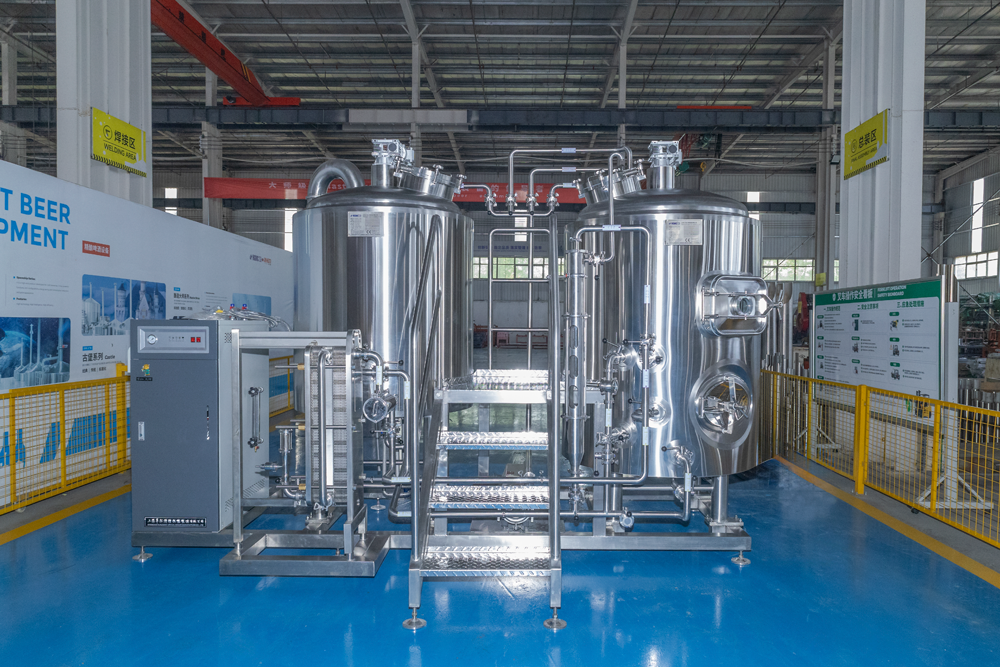
- Two‑vessel brewhouse
- Mash/lauter tun combined
- Kettle/whirlpool combined
- Suited for small craft breweries, brewpubs, and pilot systems
- Three‑vessel brewhouse
- Combined mash/lauter tun
- Separate kettle
- Separate whirlpool (or combined kettle/whirlpool design)
- Increases throughput and efficiency
- Four‑vessel brewhouse
- Mash tun
- Lauter tun
- Kettle
- Whirlpool
- Ideal for mid‑sized to large breweries that need multiple brews per day
Choosing the right configuration depends on batch size, number of daily brews, and budget.
3.2 Heating Method and Energy Efficiency
A professional brewing system may use different heating methods:
- Steam heating via steam jackets or internal calandria
- Electric heating with immersion elements
- Direct gas fire for specific designs
Steam is often preferred in larger breweries due to even heat distribution and better efficiency. Modern brewhouses also integrate heat recovery systems that recover energy from hot wort or condensate, reducing operating costs and environmental impact.
3.3 Automation Level and Control Philosophy
Automation is a key part of a modern beer brewing solution. It can range from manual valve operation to fully automatic systems with recipe management. Benefits include:
- Better batch‑to‑batch consistency
- Reduced human error
- Easier operation for trained staff
- Data records for continuous improvement
Many breweries choose semi‑automatic solutions, which balance flexibility and cost, while larger plants may invest in full PLC‑based automation with remote monitoring.
3.4 Hygiene and Cleaning in the Brewhouse
Brewhouse design must support effective cleaning:
- Smooth, polished stainless steel surfaces
- Sanitary welds and tri‑clamp fittings
- Good access to manways and inspection ports
- Integration with CIP systems for mash tun, lauter tun, kettle, and whirlpool
These elements are essential for a safe, stable beer brewing operation.
4. Key Factors When Choosing a Commercial Beer Brewing Solution
A complete beer brewing solution is more than just equipment. It is a combination of engineering, process design, and service. When selecting a supplier and system, breweries should consider several important factors.
4.1 Capacity Planning and Future Growth
Start by defining:
- Target annual production volume
- Number of core brands, seasonal beers, and experimental batches
- Growth expectations over 3–5 years
A scalable solution allows breweries to add tanks or upgrade components without redesigning the whole plant. Smart layout planning, extra cellar space, and flexible utility lines are all part of a long‑term strategy.
4.2 Layout, Utilities, and Building Conditions
The right commercial brewing equipment must fit your building and utility infrastructure:
- Floor space and height limitations
- Location of drains and floor slope
- Electrical supply and local voltage
- Access for installing large tanks
- Ventilation and exhaust for steam or gas
Professional suppliers provide 2D/3D layout drawings and detailed utility requirements, helping ensure that installation goes smoothly.
4.3 Quality, Materials, and Certifications
Breweries should pay attention to:
- Use of food‑grade stainless steel (commonly SS304 and, where needed, SS316)
- Quality of welds and surface finish
- Pressure ratings for tanks and piping
- Compliance with local pressure vessel and safety standards
High‑quality commercial brewing equipment not only lasts longer but also protects beer quality and safety.
4.4 Service, Training, and After‑Sales Support
A reliable beer brewing solution includes long‑term cooperation:
- Technical guidance before and during installation
- On‑site or remote commissioning support
- Training for brewers and operators
- Fast response for spare parts and troubleshooting
Working with an experienced, service‑oriented supplier reduces risk and shortens the time needed to reach stable, profitable production.
5. HGMC: A Global Leader in Commercial Brewing Equipment and Turnkey Beer Brewing Solutions
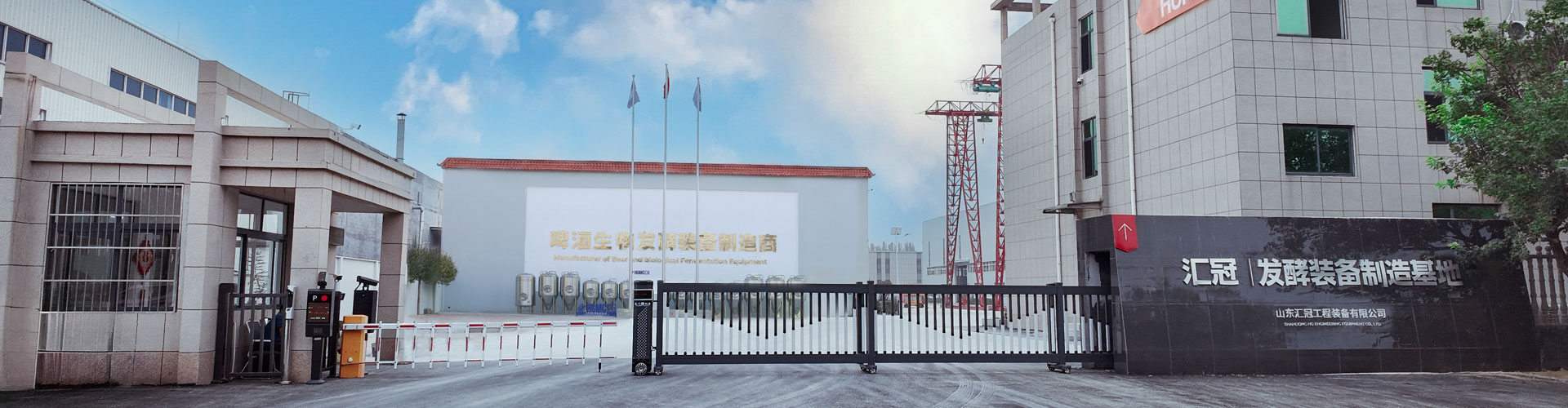
HGMC is the world’s leading manufacturer of beer brewing equipment, trusted by breweries and beverage producers around the globe. The company designs and manufactures complete brewery equipment, beverage equipment, and professional canning and bottling lines, providing customers with both individual machines and fully integrated turnkey projects.
With more than 30 national authorized patents and over 20 high‑tech achievements, HGMC continuously invests in research and development to improve brewhouse efficiency, product quality, and process safety. All products are manufactured in strict compliance with the ISO 9001:2015 quality management system, ensuring consistent quality, traceability, and reliability from design to final inspection.
HGMC’s commercial brewing equipment and complete beer brewing solutions have been exported to more than 120 countries worldwide, where they have won recognition and praise from customers in diverse markets and production environments. This global footprint demonstrates not only technical strength, but also HGMC’s ability to adapt equipment and turnkey services to different regulatory, cultural, and business requirements.
By working with HGMC, breweries gain a long‑term partner who can support them from the first concept and brewery layout, through equipment manufacturing and installation, to training, technical support, and future capacity expansion.
6. Conclusion: Build a Strong Brewery with HGMC Commercial Brewing Equipment
For breweries, restaurants with on‑site brewing, and beverage factories, investing in commercial brewing equipment is a decisive, long‑term commitment. A well‑designed professional brewing system, a reliable brewhouse, and a complete, integrated beer brewing solution are the technical foundation of a successful beer brand.
By partnering with HGMC, the world’s leading manufacturer of beer brewing equipment, breweries gain access to:
- Proven commercial brewing equipment, beverage systems, and canning/bottling lines
- More than 30 national authorized patents and over 20 high‑tech achievements
- Turnkey beer brewing solutions that cover design, manufacturing, installation, and training
- ISO 9001:2015 quality management and a global footprint in more than 120 countries
With HGMC’s experience and technology, breweries can achieve stable, efficient, and flexible production, deliver consistent, high‑quality beer to their markets, and build a strong reputation over time.
