If you manufacture or source craft beer brewing equipment or Beverage Equipment , your long-term success depends on two things: (1) choosing the right equipment stack for your brewery’s size and product mix, and (2) building a maintenance and service strategy that protects uptime, quality, and compliance. This guide is designed for Google SEO around “craft beer brewing equipment” while also covering the full beverage-equipment service lifecycle—from selection and maintenance to troubleshooting and technology trends.
To keep this practical, you’ll also find “image + data” suggestions you can convert into on-page charts/infographics, plus a Q&A section for featured snippets.
Why this topic matters now (data snapshot)
The craft and brewery market is still investing in efficiency, automation, and better process control—especially as labor, energy, and quality risks rise.
- Global brewery equipment market size was estimated at USD 18.45 billion in 2024, with a projected CAGR of 6.1% from 2025 to 2030 (Grand View Research).[1]
- In the U.S., craft beer retail dollar sales increased 3% to $28.8 billion in 2024, representing 24.7% of the total beer market by retail dollars (Brewers Association).[1]
- The Brewers Association reported 9,796 operating U.S. craft breweries in 2024 (with details by segment such as microbreweries, brewpubs, and taprooms).[1]
These numbers matter for equipment decisions because growth (or competitive pressure) typically pushes breweries toward upgrades: faster turns, tighter QC, more SKUs, lower water/energy per hectoliter, and less unplanned downtime.
1) Essential Beverage Equipment: Understanding Various Types and Functions
Below is a structured view of essential craft beer brewing equipment and adjacent beverage equipment commonly used across breweries, taprooms, and beverage plants. Your exact configuration depends on batch size, packaging format, product portfolio (beer, hard seltzer, RTD cocktails, kombucha), and how much process automation you want.
A. Brewhouse (Hot-side production)
- Mash tun / lauter tun (or mash-lauter combination)
- Function: starch conversion + wort separation
- Key selection points: lauter efficiency, rakes, false bottom quality, grist hydration, CIP design
- Brew kettle / whirlpool
- Function: boiling, hop addition, trub separation
- Key selection points: heating method (steam/electric), evaporation rate, whirlpool geometry, safety valves
- Heat exchanger (plate HX)
- Function: rapid wort chilling to pitching temperature
- Key selection points: approach temperature, fouling resistance, CIP accessibility, differential pressure monitoring
B. Cellar (Cold-side fermentation & conditioning)
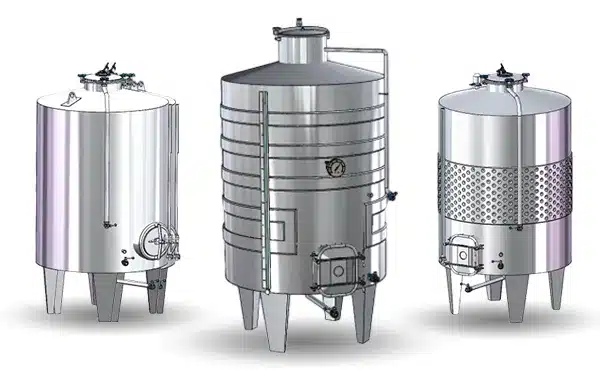
- Fermenters (unitanks, conical fermenters)
- Function: fermentation + optional conditioning
- Key selection points: jacket zoning, insulation, PRV design, surface finish, manway access, spray ball coverage
- Bright beer tanks (BBTs)
- Function: carbonation, clarification, storage before packaging
- Key selection points: carbonation stone design, DO pickup control, pressure rating, temperature stability
- Glycol chiller + distribution
- Function: fermentation temp control
- Key selection points: redundancy, pump sizing, insulation, glycol concentration, expansion capacity
C. Filtration, clarification, and stabilization (optional by brewery style)
- Centrifuge, DE filter, sheet filter, membrane filter
- Selection points: oxygen pickup, beer loss, cleaning complexity, consumable costs
D. Packaging line equipment
- Canning line / bottling line
- Function: filling + seaming/capping
- Key selection points: dissolved oxygen (DO) control, CO2 purging, throughput, changeover time, sanitation cycles
- Kegging system + keg washer
- Function: cleaning + filling kegs
- Key selection points: validated cleaning cycles, chemical dosing, temperature control, rinse verification
E. Cleaning & utilities (often underestimated, but mission-critical)
- CIP skid, chemical tanks, dosing pumps, return pumps, flow meters, conductivity sensors
- Air compressor, steam boiler, water treatment (RO/softener), wastewater handling
2) Maintenance Services for Beverage Equipment: Importance and Best Practices
Why preventive maintenance pays back
Unplanned downtime is rarely “just a repair.” It can cascade into missed production windows, raw material loss, contamination risks, and delayed deliveries. Many industry sources cite very high downtime costs; one commonly referenced benchmark notes unplanned downtime can average $260,000 per hour (often attributed to Aberdeen research, repeated across maintenance-industry publications).[1]
Even if your brewery’s real cost is far lower than that headline figure, the principle stands: preventive maintenance reduces variability and protects quality.
Best-practice maintenance framework (simple and scalable)
- Build a criticality list (A/B/C assets)
- A: stops production or causes safety/quality risk (HX, chiller, transfer pumps, fillers, CIP skid)
- B: reduces efficiency but can run (conveyors, labelers)
- C: convenience items
- Standardize PM intervals and checklists
- Daily/weekly: visual inspections, leak checks, filter checks, lubrication points
- Monthly/quarterly: calibration, sensor verification, seal inspection, valve actuation checks
- Annual: major overhauls, heat exchanger plate inspection, chiller service, PRV testing plan
- Track 5 core maintenance KPIs
- MTBF (mean time between failures)
- MTTR (mean time to repair)
- % planned vs unplanned maintenance
- Spare parts stockouts
- Quality incidents linked to equipment
- Validate cleaning (don’t just “run a timer”)
3) Choosing the Right Beverage Equipment Service Provider: Key Considerations
A service provider (or OEM service team) can be the difference between stable production and constant firefighting. Use these criteria to evaluate objectively:
- Beverage-grade compliance and hygiene design knowledge
- Experience with sanitary standards, hygienic welding, gasket materials, and contamination control
- Response time + spare parts strategy
- Clear SLA options
- Local stock for critical consumables (seals, gaskets, bearings, sensors, valves)
- Documentation and traceability
- Maintenance records, calibration certificates, recommended PM schedules
- Ability to support audits (food safety and internal QA)
- Commissioning and training capability
- Operator training (CIP, changeovers, safe lockout/tagout)
- Maintenance training (seal changes, pump alignment basics)
- Data competence (increasingly important)
- Can they connect sensors, review trends, and recommend predictive actions?
4) Common Beverage Equipment Issues and How to Address Them
Below are frequent failure modes seen in breweries and beverage plants, plus practical actions that reduce recurrence.
A. Pump problems (loss of prime, cavitation, leaks)
Typical causes
- Air leaks on suction side, worn seals, clogged impeller, improper NPSH, incorrect pipe sizing
How to address
- Verify suction line integrity and clamp tightness
- Keep suction lines short and properly sized
- Implement seal inspection intervals and keep seal kits in stock
- Train operators on priming procedures and avoiding dead-head conditions
B. Heat exchanger fouling and performance drift
Symptoms
- Longer knock-out times, higher exit temperature, higher differential pressure
How to address
- Add DP monitoring across HX
- Improve wort filtration before HX (hop screens/whirlpool performance)
- Use validated CIP cycles and periodic plate inspection
C. Inconsistent carbonation / CO2 issues
Symptoms
- Foaming in filler, inconsistent volumes, unstable product in market
How to address
- Check temperature stability and carbonation stone condition
- Verify pressure control valves
- Monitor DO and CO2 pickup during transfers
D. CIP “looks clean” but fails micro/quality checks
Symptoms
- Recurring contamination, off-flavors, biofilm risk
How to address
- Measure and log: chemical concentration (conductivity), temperature, flow rate
- Confirm spray ball sizing and placement
- Validate rinse quality (conductivity or chemical test strips)
- Replace gaskets showing swelling/cracking
5) Innovative Technologies in Beverage Equipment Services: What to Expect
Technology is shifting service from reactive repairs to prevention and optimization.
- Condition monitoring + predictive maintenance
- Vibration sensors on motors/pumps
- Temperature and pressure trend analysis
- Alerts when performance deviates from baseline
- Digital SOPs and connected maintenance (CMMS)
- Work orders, spare parts, scheduled PM, and failure history in one place
- Faster onboarding for new technicians
- Smart CIP systems
- Automated dosing control
- Recipe management with logging for audits
- Better repeatability and less chemical/water waste
- Packaging line oxygen management tools
- Inline DO monitoring
- Smarter purging logic and filler diagnostics
6) Trends Shaping the Future of Beverage Equipment Services Industry
Trend 1: Efficiency upgrades in a competitive craft market
As craft volumes fluctuate, many breweries focus on margins: reducing losses, energy use, and labor minutes per batch. That drives demand for automation-ready equipment and service contracts that guarantee uptime.
The Brewers Association highlighted that craft retail dollars can rise even when volumes decline, which often increases pressure to protect quality and brand reputation.[1]
Trend 2: More data-driven service models
Service providers are increasingly expected to deliver measurable improvements: OEE, downtime reduction, better changeover performance, and documented sanitation validation.
Trend 3: Sustainability and resource optimization
Breweries face cost pressure from water, steam, and refrigeration. Expect continued emphasis on:
- Heat recovery and efficient boiling systems
- Water-saving CIP logic and reuse strategies
- Better insulation and glycol efficiency
Trend 4: Modular expansion and faster installations
As breweries diversify SKUs (seasonals, seltzers, RTDs), flexible equipment and quick-change designs become a differentiator.
7) Cost Factors to Consider When Hiring Beverage Equipment Services
When budgeting for beverage equipment services, avoid focusing only on hourly labor rates. A low rate can be expensive if downtime lasts longer or problems recur.
Key cost drivers:
- Scope of service: preventive only vs full coverage (including emergency callouts)
- Travel and response time: local vs remote team
- Spare parts: included kits vs pay-as-needed
- Compliance documentation: calibration certificates, sanitation validation support
- Downtime risk: the “true” cost is often production loss + quality risk, not just the invoice
- Contract structure: fixed-fee uptime contracts vs time-and-material
Q&A (FAQ) — for featured snippets and conversions
Q1: What is the most essential craft beer brewing equipment for a new brewery?
A: At minimum, most breweries need a brewhouse (mash/lauter + kettle/whirlpool), fermentation tanks, a glycol cooling system, a heat exchanger, a CIP/cleaning setup, and a packaging path (kegs and/or cans/bottles). The “right” configuration depends on batch size, beer styles, and expansion plans.
Q2: How often should brewery equipment be serviced?
A: Critical systems (pumps, valves, glycol, sensors, packaging) should be checked weekly and serviced on a preventive schedule (monthly/quarterly), with annual overhauls for major assets. The best schedule is based on equipment criticality, run hours, and historical failure data.
Q3: Why is preventive maintenance so important in beverage plants?
A: Preventive maintenance reduces unplanned downtime, stabilizes product quality, and lowers the risk of sanitation failures. Unplanned downtime can be extremely costly; some industry references cite averages as high as $260,000 per hour (often attributed to Aberdeen and repeated across maintenance literature).[1]
Q4: What are the most common brewery equipment problems?
A: Common issues include pump cavitation or seal failure, heat exchanger fouling, inconsistent carbonation, packaging oxygen pickup, and CIP coverage problems that lead to contamination risk. A structured troubleshooting approach plus validated cleaning and documented PM reduces repeat failures.
Q5: What should I look for in a beverage equipment service provider?
A: Look for hygienic design expertise, fast response options (SLA), strong spare-parts availability, commissioning/training support, and the ability to provide documentation for audits and continuous improvement.
Q6: What trends are shaping brewery equipment and maintenance services in 2026?
A: The biggest trends are automation, predictive maintenance, connected sensors/CMMS, and sustainability improvements (water/energy savings). Market data continues to show major installed base and investment in equipment.[1]
Conclusion
“Craft beer brewing equipment” is no longer just about tanks and brewhouses—it’s about building a reliable production system supported by professional beverage equipment services. The breweries that win in 2026 and beyond will be those that treat maintenance as a strategic function: validated cleaning, predictable uptime, measurable KPIs, and smart technology adoption.
