
Craft beer is a quality-driven category. As competition increases and distribution expands, packaging becomes one of the most decisive steps in protecting flavor, carbonation, and brand consistency. A modern beer filling machine (and carbonated beverage filling machine) is no longer “just packaging”—it is a process-control system that influences:
- Carbonation retention (CO2 stability)
- Oxygen pickup (freshness and shelf life)
- Foam and product loss (yield, cleanliness, efficiency)
- Throughput and labor requirements (scaling economics)
This article explains what a filling machine is, how beer filling works, why counter-pressure filling matters, what data-driven KPIs to watch, how to choose the right system, realistic cost ranges, and a detailed FAQ section—written for broad readability and Google SEO.
1) What is a filling machine?
A filling machine is equipment designed to dispense a controlled amount of product into a container (bottle, can, keg, pouch, barrel, etc.). In beverage factories, filling is part of the end-of-line packaging process—typically right before capping/seaming, labeling, and case packing.
In practical terms, a filling machine helps manufacturers achieve three outcomes:
- Accurate quantity control
Consistent fills reduce underfill risk, overfill giveaway, and customer complaints.
- Higher efficiency
Automated or semi-automated filling reduces manual handling time, improves throughput, and standardizes operations across shifts.
- Quality protection
For beer and carbonated beverages, controlled filling conditions reduce foam, oxygen pickup, and CO2 loss.
Filling machine categories often include:
- Liquid filling machines (beer, water, juice, soft drinks, wine)
- Paste filling machines (syrups, sauces)
- Powder filling machines (protein powder, flour)
- Granule filling machines (seeds, pellets)
For craft beer, the most relevant systems are bottle and can filling machines designed specifically for carbonated products.
2) Why beer filling is more demanding than “normal” liquid filling
Beer is sensitive during filling for four key reasons:
- Carbonation (CO2) is pressure/temperature dependent
If beer experiences a pressure drop or temperature rise, CO2 can break out of solution, causing foaming and carbonation loss.
- Oxygen is the enemy of freshness
Oxygen pickup during packaging can accelerate staling reactions. Even small amounts can reduce aroma intensity and shorten shelf life—especially in hop-forward styles.
- Foam causes waste and inconsistency
Foaming can lead to underfills, messy operation, and product loss. It also makes stable capping/seaming harder.
- Hygiene requirements are strict
The filler is close to the final product state; sanitation failures here are expensive and brand-damaging.
That’s why many breweries choose counter-pressure (isobaric) filling rather than atmospheric filling—especially when packaging for retail distribution.
3) Craft beer market data: why packaging quality matters
Two widely cited market signals show why “better packaging” remains a growth lever even when some regions mature:
- Global craft beer outlook: Grand View Research estimates the global craft beer market at about USD 92.2 billion (2023) and projects it to reach about USD 178.6 billion by 2030 (9.9% CAGR, 2024–2030).
Source: https://www.grandviewresearch.com/industry-analysis/craft-beer-market
- U.S. craft performance: The Brewers Association reports U.S. craft volume declined while retail dollar sales increased—indicating the segment is increasingly value/quality focused.
Source: https://www.brewersassociation.org/statistics-and-data/national-beer-stats/
What this means for breweries and beverage producers:
- The market rewards brands that stay consistent after packaging and during distribution.
- A beer that tastes perfect in the taproom can disappoint in retail if oxygen pickup and carbonation loss aren’t controlled.
- Packaging technology is often the hidden difference between “good beer” and “great beer that travels.”
4) Working principle of a beer filling machine (bottle example)
A typical beer bottle filling machine in a production line works through a controlled mechanical and pneumatic sequence. While designs vary, the common high-level flow looks like this:
- Infeed and timing
Clean bottles move by conveyor to an infeed screw (timing screw), then a star wheel guides bottles into the rotary carousel.
- Bottle lifting and centering
A bottle lift raises the bottle to the filling valve. A centering device ensures alignment and improves the quality of the seal.
- Sealing
The bottle mouth seals against the filling valve. This seal enables pressurization and stable filling (critical for carbonated products).
- Purging / inerting
CO2 is used to displace air in the bottle, reducing oxygen exposure.
- Pressure equalization (counter-pressure/isobaric stage)
The bottle is pressurized to closely match the bowl/tank pressure so the beer can enter smoothly with minimal foaming.
- Filling
Beer flows into the bottle in a controlled way, often designed to minimize turbulence and foam.
- Fill stop and snift/vent management
When the liquid reaches a target level, filling stops. Some systems use a controlled vent (“snift”) to manage pressure release before discharge.
- Discharge and closing
The bottle exits toward capping/crowning. Fast, consistent closure is part of quality control (protecting CO2 and limiting oxygen ingress).
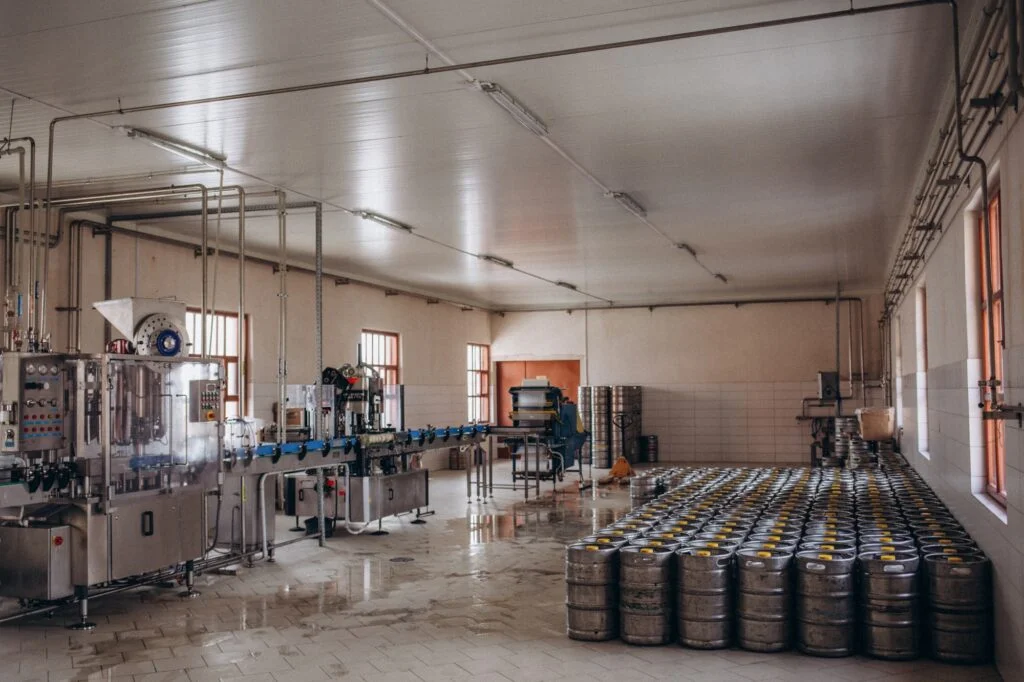
5) How counter-pressure filling helps keep carbonation
Counter-pressure filling (also called isobaric filling) aims to maintain pressure equilibrium while filling. The container is pressurized with CO2 first, then filled under stable pressure. This reduces:
- CO2 breakout (better carbonation retention)
- Foam generation (better yield and consistent fill level)
- Turbulence (smoother filling)
A simple way to explain it to non-engineers:
- Carbonated liquid “wants” to release gas when pressure drops.
- Counter-pressure filling reduces that pressure shock.
- Less shock = less foam = better carbonation + higher efficiency.
For the science background, carbonation behavior is rooted in gas laws and solubility. For example, Henry’s law (commonly referenced in beverage measurement resources) explains that the amount of dissolved gas is proportional to the partial pressure of that gas above the liquid.
Background reading (technical): https://wiki.anton-paar.com/en/carbon-dioxide-in-beverages/
6) Oxygen control: the “freshness KPI” many breweries overlook
For packaged beer, oxygen pickup is one of the most important quality variables. Oxygen can enter through:
- Poor purging/inerting before fill
- Turbulence/foam that traps air
- Slow or inconsistent capping/seaming
- Leaks or unstable valve seals
Technology suppliers and industry discussions increasingly describe oxygen pickup targets in micrograms per liter (µg/L) or ppb-scale thinking. For example, KHS notes modern filling technology can achieve much lower oxygen pickup than older systems, with “as little as 20 µg/L” possible with the right technology and practices.
Even if you don’t publish numbers in marketing, your internal QA team should track oxygen performance because it’s directly linked to shelf life and customer experience.
7) Advantages of installing a beer filling machine (data-informed view)
Advantage A: Higher throughput with fewer labor hours
Automated systems reduce repetitive manual work and increase consistent output per shift.
Advantage B: Better fill accuracy and lower “giveaway”
Stable valves and controlled foam reduce overfill. Overfill seems small but adds up quickly across thousands of units.
Advantage C: Reduced product loss from foam and spills
Less foam generally means:
- More saleable beer per batch
- Cleaner operation
- Less downtime for cleanup
Advantage D: Better quality consistency in distribution
Lower oxygen pickup and stable carbonation support a better “same beer every time” customer experience, which is essential for scaling beyond the taproom.
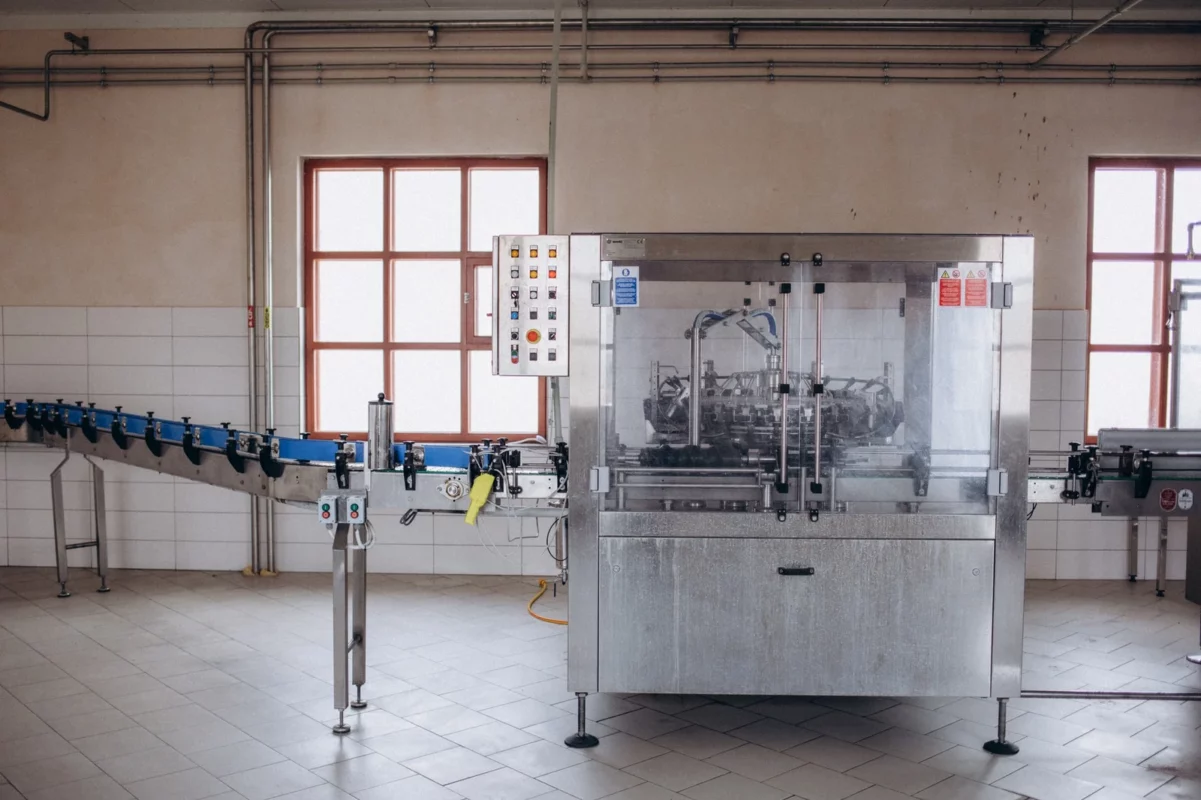
8) How to choose the right beer filling machine (practical checklist)
Choosing a filler is a process-matching decision. Use these factors as a buyer’s checklist:
- Product & filling method fit
- Carbonated beer: usually counter-pressure/isobaric filling is preferred.
- Oxygen-sensitive styles (hazy IPA, dry-hopped beers): prioritize oxygen management features (effective purging, stable sealing, rapid closing integration).
- Capacity that matches your real line—not just filler speed
Your filler must match upstream/downstream equipment:
- Rinser/washer speed
- Capper/crowner or seamer capability
- Labeler and pack-out capacity
Otherwise, you pay for speed you can’t use.
- Automation level vs budget vs staffing model
More automation generally improves stability and reduces labor, but increases capex. Choose based on:
- Your planned packaged volume growth
- Shift schedule
- Labor availability and wage structure
- Quality KPIs: oxygen pickup, foam loss, closure reliability
Ask suppliers how their machines help control:
- Purging effectiveness
- Pressure stability
- Fill valve design for low turbulence
- Seam/cap integration and speed
- Cleanability and service support
- CIP process and cleaning time
- Parts availability
- Remote support and training
9) How much does a beer filling machine cost?
Cost varies widely based on:
- Bottle vs can vs keg
- Semi-automatic vs automatic
- Number of filling heads/valves
- Oxygen control and CO2 management features
- Integration scope (standalone vs turnkey line)
Real-world budgeting guidance:
- Entry-level small systems may start in the low-thousands of USD (often slower, more manual, suitable for small runs).
- Larger systems can range broadly, commonly cited from around $8,000 up to $100,000+ depending on output, automation, and configuration (and beyond when you include full line automation, conveying, labeling, pasteurization, packing, etc.).
FAQ (Q&A): Beer Filling Machines for Craft Breweries
Q1: What is a beer filling machine?
A beer filling machine is equipment that fills beer into bottles, cans, or kegs at controlled volume and conditions—often including CO2 purging and pressure control to protect carbonation and reduce oxygen exposure.
Q2: What is counter-pressure (isobaric) filling?
Counter-pressure filling pressurizes the empty container (usually with CO2) and fills under pressure equilibrium. This reduces foaming and helps preserve carbonation—especially important for beer and sparkling beverages.
Q3: Why is oxygen pickup such a big deal in packaged beer?
Oxygen accelerates staling reactions, reducing freshness and shelf life. Better packaging systems and practices aim to minimize oxygen pickup, and modern filling technology discussions often highlight much lower oxygen pickup as a key performance advantage (example: KHS discussion on improved oxygen pickup performance).
Q4: Bottle filler or can filler—what should I choose?
It depends on your market, brand, and logistics:
- Cans: strong light protection and shipping efficiency, popular for many craft brands.
- Bottles: traditional presentation and some market preferences.
Both formats can deliver excellent quality if oxygen and CO2 control are properly engineered.
Q5: What causes foaming during beer filling?
Common causes include:
- Warm beer or warm bottles
- Pressure imbalance
- Turbulence in the fill path
- Poor venting/snift control
- CO2 breakout due to pressure drop
Q6: How do I decide the right output capacity?
Start with your realistic packaged-volume forecast, then add:
- Peak season demand
- Planned SKU expansion
- Maintenance/downtime assumptions
Also ensure the filler will not exceed what your rinser/capper/labeler can support.
Q7: Can a filling machine increase shelf life?
Yes—by reducing oxygen pickup and helping maintain carbonation and closure quality. Shelf life is multi-factor (beer recipe + cold chain + sanitation), but packaging control is a major lever.
Q8: What market data supports investing in packaging upgrades?
Industry data suggests the craft segment remains economically meaningful and quality-sensitive:
- Global craft beer growth forecast (Grand View Research)
https://www.grandviewresearch.com/industry-analysis/craft-beer-market
- U.S. craft dollar sales trend (Brewers Association)
https://www.brewersassociation.org/statistics-and-data/national-beer-stats/
