
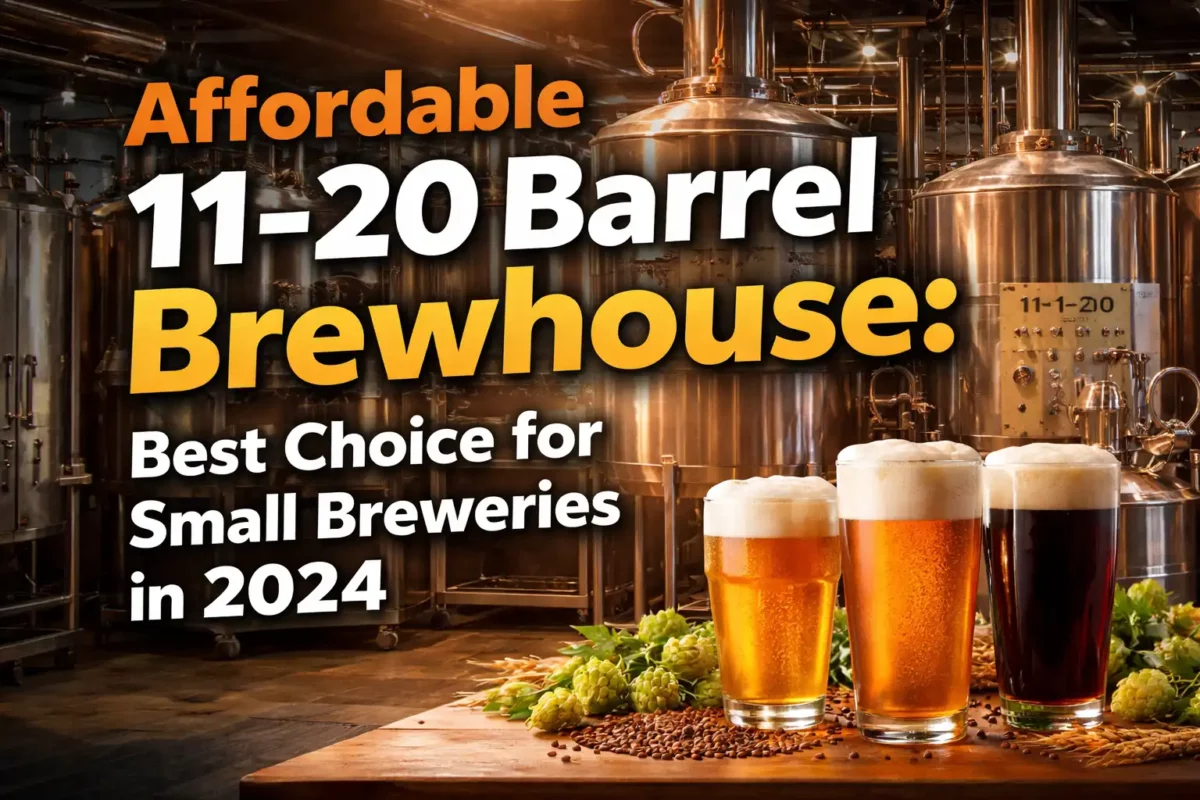
I’ve spent the last decade helping breweries navigate the transition from homebrew setups to production systems, and if there’s one question I hear every quarter, it’s this: What’s the right brewhouse size for a small brewery in 2026? The answer has shifted. Three years ago, most startups leaned toward 7–10 barrels, chasing lower entry costs. Today, after watching dozens of those breweries struggle with capacity within eighteen months, the consensus is landing squarely on 11–20 barrels. The catch is finding one that doesn’t blow the budget.
An 11–20 barrel brewhouse gives a small brewery the capacity to supply a taproom, a modest distribution footprint, and seasonal specials without forcing a major capital upgrade in year two. The equipment cost should reflect that reality — not the inflated pricing that plagued the craft boom. In 2026, affordable options exist, but you have to know where the hidden trade‑offs live.
The Capacity Sweet Spot for 2026
Three years of post‑pandemic adjustments have reshaped brewery economics. Rent is up, distribution margins have tightened, and consumer preference has swung back toward hyper‑local brands. Under those conditions, a 7‑barrel system often forces a brewery into a corner: either brew three times a week to meet demand, or invest in a second system entirely. I’ve seen both paths end badly — the first burns out the brewer, the second hemorrhages cash.
An 11–20 barrel brewhouse, by contrast, lets a team run a single batch per day and still produce 300–600 barrels annually. That’s enough for a busy taproom plus a few local accounts. The sweet spot for most of my clients has been a 15‑barrel system, but only when the vessel geometry and heating configuration are matched to realistic brew schedules. A 15‑barrel kettle on a 10‑barrel mash tun creates bottlenecks that no amount of scheduling can fix.
One client in Portland started with a 7‑barrel system in 2021. By early 2023, they were running two 12‑hour brew days back‑to‑back just to keep their core IPA in stock. The brewer quit. They replaced him, but the real fix was a shift to a 15‑barrel system. Their monthly output went from 80 barrels to 180 barrels without adding shift labor. The upfront cost was higher, but the per‑barrel equipment cost dropped by 37% over two years.
Beyond the Price Tag: What You Actually Need
Affordable doesn’t mean stripped. A budget brewhouse can still deliver consistent wort quality if the design fundamentals are sound. The areas I see most corners cut are insulation thickness, valve quality, and control system integration. Thin insulation means more energy loss during the mash and boil — a cost that adds up quietly. Cheap tri‑clamp gaskets fail after a few hundred cycles, leading to contamination risks that are invisible until a batch goes sour.
I also watch for how the manufacturer handles expansion. A well‑designed 11–20 barrel brewhouse should accept additional fermenters and bright tanks without forcing a complete re‑piping of the glycol loop. One supplier’s system I evaluated in 2023 used a common header design that allowed me to add three 20‑bbl fermenters without touching the brewhouse plumbing. That kind of forethought saves months of downtime later.
A Real‑World Upgrade Experience
Late in 2023, I was consulting for a brewery in Colorado that had outgrown its 10‑barrel system faster than expected. They had already signed distribution agreements that required 500 barrels annually. Their existing setup required four brew days per week, leaving no room for experiments or seasonal releases. The founder told me, “I’m not buying another undersized system. I want something that will last five years without a rebuild.”
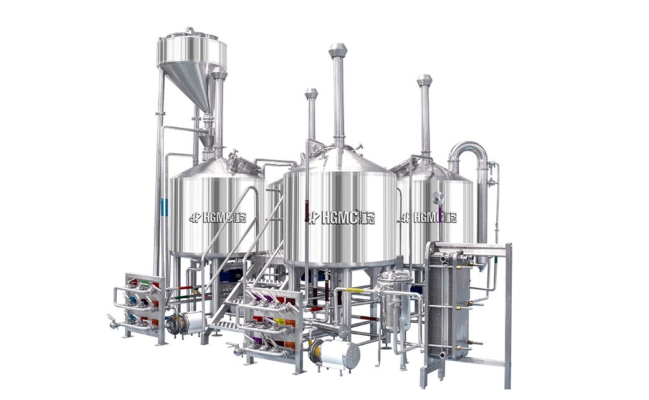
We evaluated half a dozen suppliers. The one that ultimately worked was a manufacturer that built to a standard 15‑barrel frame but allowed custom vessel ratios — a deeper mash tun for high‑gravity recipes, wider kettle for faster evaporation. The total lead time was 16 weeks, which felt long, but the integration process was straightforward. Three months after installation, the brewery was hitting 450 barrels annually with two brew days per week. That system was an 11-20BBL brewhouse from a mid‑tier Chinese manufacturer that had opened a U.S. service center. The key was not the price tag, which was 22% below the nearest domestic competitor, but the fact that every component — pumps, control panel, heat exchanger — was sourced from standard industrial parts. No proprietary chips, no custom gaskets. That made repairs predictable and fast.
I still have mixed feelings about that decision. The stainless steel finish had visible weld lines that a domestic fabricator would have polished out. But the brewery hasn’t had a single failure in 18 months, and the cost savings allowed them to buy a third fermenter sooner.
Hidden Costs That Eat Into Your Budget
The purchase price of a brewhouse is only part of the equation. Installation, freight, utilities, and compliance add 30–50% to the total, depending on the facility. I’ve seen breweries spend $15,000 on floor reinforcement alone to support a 20‑barrel system. Others needed new electrical service because the brewhouse’s heating elements required 400 amps where they only had 200.
Affordable systems often ship with generic documentation that doesn’t account for local code variations. One client in Austin spent three weeks re‑engineering the steam condensate return line because the manufacturer’s schematic assumed a floor drain that didn’t exist. That delay pushed their opening date back by two months.
To avoid these surprises, I now recommend a pre‑purchase site survey by an engineer who has installed commercial brewhouses. The $2,000–$3,000 cost is trivial compared to a retrofit. And when evaluating suppliers, ask for a full bill of materials — not just the vessel list, but every valve, fitting, and sensor. The difference between a 316L and 304 stainless steel heat exchanger may not matter in year one, but it will matter when cleaning chemicals start pitting the cheaper alloy.
Scaling Without Re‑Engineering
One of the strongest arguments for an 11–20 barrel brewhouse is the upgrade path. A 7‑barrel brewery that wants to hit 1,000 barrels a year often needs a new brewhouse, not just more tanks. The mash tun size, lauter depth, and kettle volume are all optimized for smaller batches. Pushing a 7‑barrel system beyond 500 barrels a year requires so many brews that the labor and cleaning chemicals eat the margin.
An 11–20 barrel system, conversely, can scale to 1,000–1,500 barrels by adding fermenters and bright tanks, as long as the brewhouse duty cycle supports it. I’ve seen a 15‑barrel 11-20BBL brewhouse handle 1,200 barrels annually with two brewers working five‑hour shifts. The key was a 1.5‑bbl per hour casting rate and a glycol system sized for peak load. The brewhouse itself never became the bottleneck.
But scaling isn’t automatic. The control system must support programmable mash profiles and automated sparge sequences to maintain consistency at higher throughput. Some affordable systems ship with basic PID controllers that require manual intervention for every step. That works at 300 barrels a year, not at 1,200. I’ve learned to budget an extra $5,000–$8,000 for a PLC upgrade if the stock controller is too rudimentary.

When a Cheaper System Costs More
In 2022, I worked with a brewery that bought a 15‑barrel system from an online marketplace — 40% below market price, no service manual, no support contract. Within six months, the heating element failed. The manufacturer had used a non‑standard flange size, so the replacement required a custom fabrication that took three weeks. The brewery lost $18,000 in revenue from missed production.
That experience taught me to weigh the total cost of ownership, not the sticker price. An affordable 11-20BBL brewhouse should still come with a warranty that covers major components for at least two years, and the supplier should be reachable by phone during business hours. I now ask for references from breweries that have owned the system for at least a year, and I listen for complaints about parts availability.
The best purchase I’ve seen in 2024 was a 20‑barrel system from a company that offered a four‑year parts warranty and had a U.S.‑based warehouse holding common spares. The upfront cost was 15% higher than the cheapest option, but the brewer told me their first year of maintenance costs were zero. Meanwhile, a friend who bought the bargain system spent $7,000 on replacement parts and lost three weeks of brew time.
FAQ
What size brewhouse is best for a startup brewery in 2024?
Most new breweries should target a 15‑barrel system. It provides enough capacity to support a taproom and small distribution without overwhelming the brewer or the budget. A 10‑barrel system often requires expansion within two years, which costs more in the long run.
How much does an affordable 11–20 barrel brewhouse cost?
Prices vary widely by manufacturer, but a turnkey 15‑barrel system typically ranges from $80,000 to $150,000 in 2024. The lower end often requires custom work for utilities and installation, so include a 30% contingency in your total budget.
What should I look for in a low‑cost brewhouse?
Check the valve quality, insulation thickness, and control system. Avoid systems with proprietary parts or non‑standard fittings. Ask for a full bill of materials and verify that the heat exchanger is 316L stainless steel.
Can I expand a 15‑barrel brewhouse later?
Yes, but only if the vessel design and piping layout allow for additional fermenters. Look for systems with a common glycol header and pre‑drilled ports for future tanks. Also ensure the control system can handle additional zones.
Is it worth buying a cheaper system from overseas?
It can be, if the supplier has a local service center and stocks spare parts. Without that support, a single failure can cost more in downtime than the initial savings. Always get references and inspect a unit in person before ordering.
