
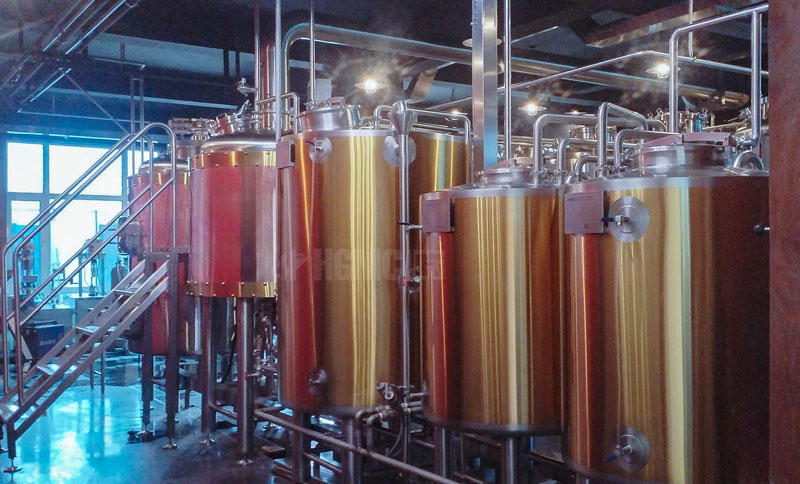
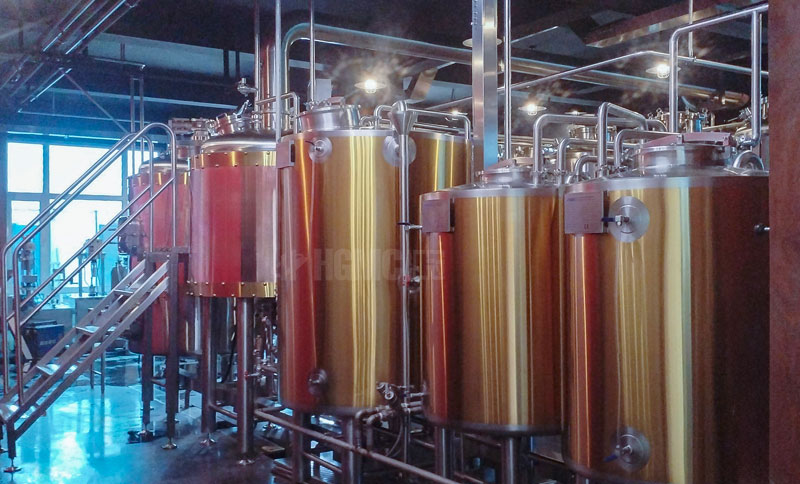
The global craft beer industry has grown rapidly over the past decade, and more breweries are entering the market every year. Whether you are planning a new brewery or upgrading your existing production line, choosing the right beer brewing equipment is one of the most important decisions you will make. The quality, efficiency, and reliability of your equipment directly influence your beer flavor, production capacity, operating cost, and long‑term profitability.
This article explains how to choose the right beer brewing equipment, what to look for in a reliable manufacturer, and why working with an experienced, innovative supplier can significantly reduce your risk and accelerate your success.
1. Understanding Beer Brewing Equipment: What Do You Really Need?
Before you start comparing brands or prices, you need a clear understanding of the core components of beer brewing equipment and how they work together. A typical brewery equipment set includes:
- Malt handling system
- Malt mill
- Conveying system
Proper milling has a direct impact on mash efficiency and wort quality. You need stable, uniform crushing to balance extract yield and filtration speed.
- Brewhouse system
- Mash tun / lauter tun
- Kettle / whirlpool
- Hot liquor tank
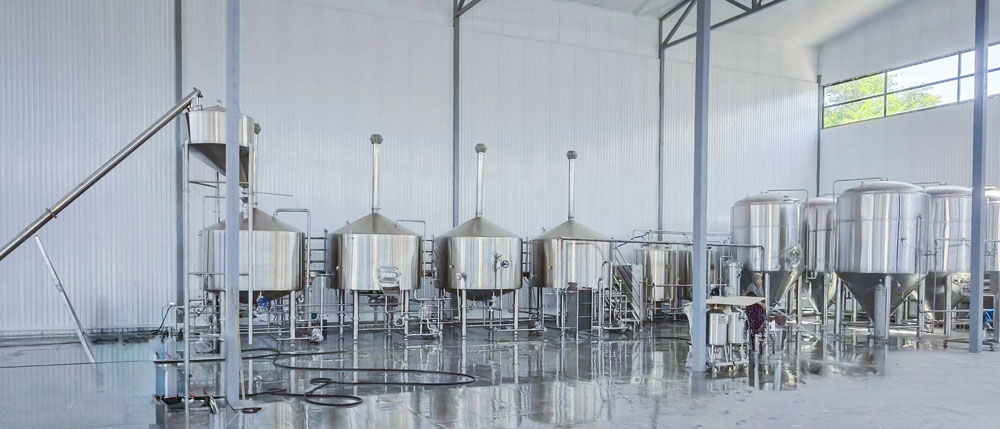
The brewhouse is the heart of your brewery. Its design, heating method, and level of automation determine your brewing efficiency, batch consistency, and energy consumption.
- Fermentation and conditioning tanks
- Fermentation tanks (FV)
- Bright beer tanks (BBT)
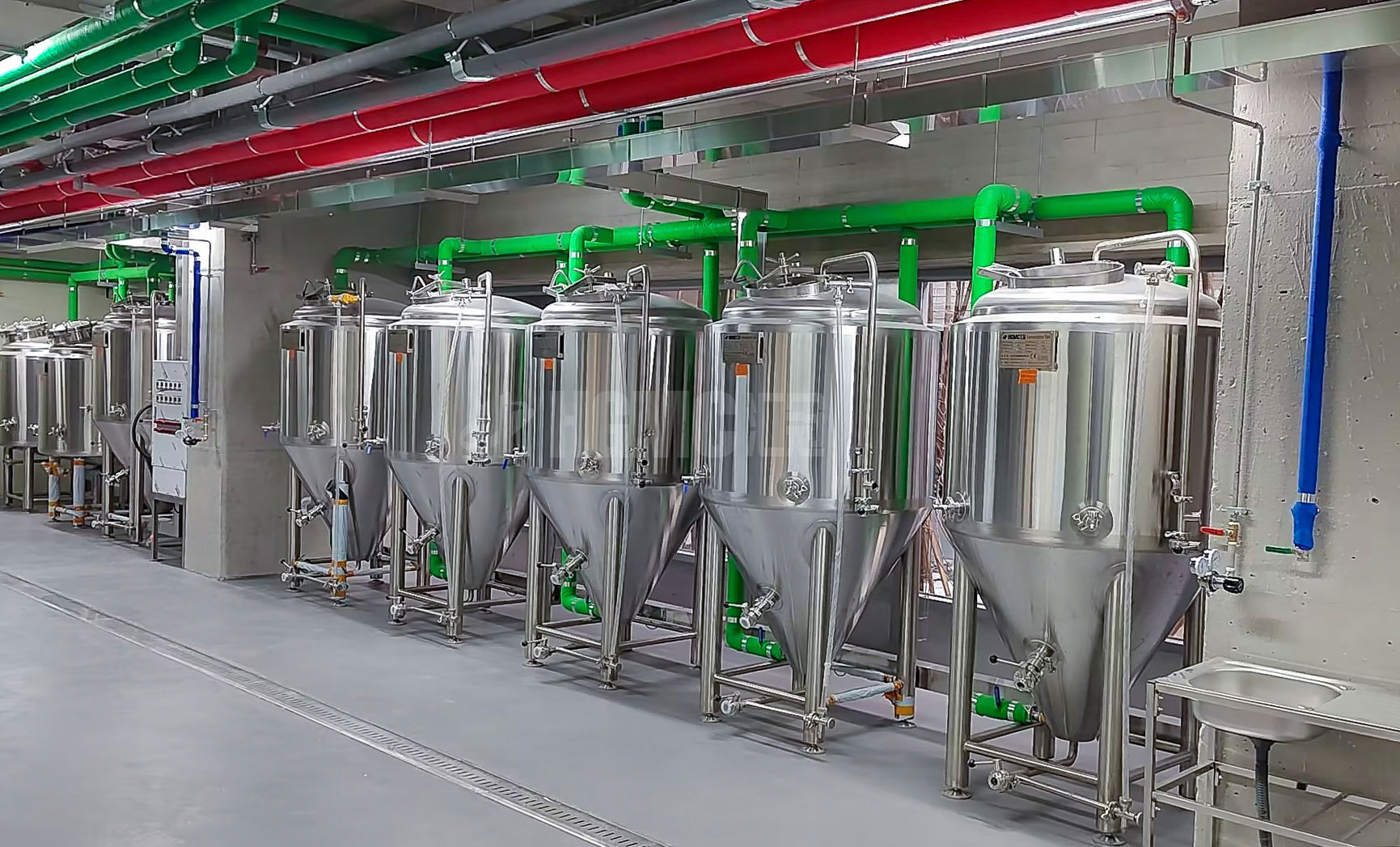
High‑quality tanks with precise temperature control, appropriate pressure rating, and sanitary internal surfaces are essential for clean, stable beer.
- Cooling and temperature control system
- Glycol chiller
- Glycol tank
- Piping and valves
Accurate temperature control is critical during fermentation and maturation. A reliable cooling system protects yeast activity and ensures stable flavor.
- CIP (Cleaning‑in‑Place) system
- CIP tanks (alkali, acid, hot water)
- Pumps and spray balls
Effective CIP guarantees hygiene and helps you comply with food safety and quality standards.
- Packaging equipment
- Canning lines
- Bottling lines
- Keg washing and filling systems
Packaging equipment affects not only efficiency, but also product stability, shelf life, and appearance in the market.
- Auxiliary beverage equipmentMany breweries also need beverage equipment for producing cider, sparkling drinks, RTD beverages, or non‑alcoholic beer. This may include additional blending tanks, filtration systems, and carbonation units.
When a manufacturer can provide a full range of brewery equipment, beverage equipment, and canning/bottling lines, it makes it much easier to design an integrated, efficient, and scalable production system.
2. Key Factors in Choosing Beer Brewing Equipment
When considering how to choose the right beer brewing equipment, think beyond the initial purchase price. A well‑designed system will serve you for many years and reduce your total cost of ownership.
2.1 Capacity and Scalability
First, evaluate your current capacity needs and your growth expectations.
- Are you starting with a 500 L, 1,000 L, or 2,000 L brewhouse?
- What is your target annual output?
- How do you plan to expand in the next 3–5 years?
A professional manufacturer can design a modular system that allows you to add more fermentation tanks, expand the brewhouse, or upgrade packaging lines as your production increases. Choosing scalable equipment now can save you from a complete system replacement later.
2.2 Material and Manufacturing Quality
Beer brewing equipment operates under heat, pressure, chemicals, and frequent cleaning. High‑quality materials and precision manufacturing are essential.
Look for:
- Food‑grade stainless steel (such as SUS304 or SUS316) for all product‑contact surfaces
- Smooth internal welds and polished surfaces to prevent contamination
- Reliable valves, seals, and fittings that can withstand CIP chemicals and frequent use
- Pressure‑rated tanks with proper safety components
Working with a manufacturer that has more than 30 national authorized patents and more than 20 high‑tech achievements is a strong signal that they are committed to innovation and quality engineering rather than simple copying.
2.3 Process Design and Automation Level
A well‑designed beer brewing equipment system should match your brewing process and recipe style.
Key questions:
- Do you need a 2‑vessel, 3‑vessel, or 4‑vessel brewhouse layout?
- Will you use infusion mashing, decoction mashing, or both?
- What is your preferred heating method (steam, electric, or direct fire)?
- How much automation do you need in mashing, lautering, boiling, and whirlpooling?
For many breweries, semi‑automatic control with PLC and touch screen is a good balance between flexibility and efficiency. For larger breweries and turnkey projects, a higher level of automation helps ensure consistency, reduce labor costs, and improve traceability.
2.4 Hygiene, Safety, and Compliance
Your equipment must help you meet international standards and local regulations.
- Does the manufacturer design and produce under an ISO9001:2015 quality management system?
- Are pressure vessels and pipelines designed according to applicable safety codes?
- Is the CIP system effective and easy to use?
- Are electrical components compliant with relevant standards in your region?
Choosing equipment from a manufacturer whose products comply with ISO9001:2015 quality management standards reduces your risk of quality issues, accidents, and regulatory problems.
2.5 Energy Efficiency and Operating Cost
Energy and water are major costs in brewing. Modern beer brewing equipment should help you save resources and protect the environment.
Consider:
- Heat recovery from wort or flue gas
- Insulation of tanks and pipelines
- Efficient pumps and agitators
- Optimized CIP routines to reduce water and chemical consumption
- Accurate control of boil intensity and cooling
An experienced manufacturer can suggest design improvements that lower your long‑term operating cost, even if the initial price is slightly higher.
2.6 After‑Sales Service and Technical Support
Brewing is a complex process, and even the best equipment needs reliable after‑sales service.
When choosing a supplier, ask:
- Do they provide installation, commissioning, and staff training?
- Can they support you remotely for troubleshooting and process optimization?
- Do they keep critical spare parts in stock?
- Do they have experience with turnkey projects, from design to final production?
A manufacturer that has exported equipment to more than 120 countries and earned recognition and praise from customers is likely to have strong global service capabilities and experience with different market requirements.
3. Why Work with a Leading Manufacturer of Beer Brewing Equipment?
In a competitive market, you want to partner with a supplier that can support you from concept to successful operation. Working with a company that is the world’s leading manufacturer of beer brewing equipment offers several clear advantages.
3.1 Comprehensive Product Portfolio
A leading manufacturer can provide:
- Complete brewery equipment solutions, from microbreweries to industrial breweries
- Beverage equipment for diversified product lines
- Integrated canning and bottling lines, as well as keg systems
- Customized solutions for special beer styles or process requirements
This means you can manage all core production equipment with one technical partner, ensuring compatibility, easier communication, and smoother project management.
3.2 Proven Innovation and Technical Strength
A manufacturer with more than 30 national authorized patents and more than 20 high‑tech achievements has a solid foundation in R&D and engineering.
These achievements often translate into:
- More efficient brewhouse designs
- Improved energy‑saving and environmental protection features
- More precise control of the brewing process
- Smart monitoring and data recording systems
- Better safety and reliability
Choosing such a supplier helps you stay ahead of industry trends and benefit from continuous technology updates.
3.3 Turnkey Project Capability
For many breweries, especially new entrants, handling design, procurement, installation, and commissioning by themselves is challenging.
A manufacturer that can provide a full range of services, including individual equipment and turnkey projects, can take responsibility for:
- Process and layout design
- Selection and configuration of all major equipment
- Pre‑assembly and testing
- On‑site installation and commissioning
- Operator training and process guidance
- Documentation and certifications
This integrated approach reduces the complexity of communication, avoids design conflicts between different suppliers, shortens project timelines, and helps you reach stable production faster.
3.4 Stable Quality Management and Global Experience
When a supplier’s products comply with the ISO9001:2015 quality management system, each step—from design and procurement to production and inspection—is controlled and documented.
Combined with exports to more than 120 countries, this demonstrates:
- Familiarity with various regulatory requirements and industry standards
- Experience adapting to different voltage, safety, and certification needs
- A strong track record of long‑term performance in real breweries around the world
For you as a brewery owner or investor, this means lower technical risk and higher confidence in your long‑term investment.
4. Step‑by‑Step Guide: How to Choose the Right Beer Brewing Equipment
To summarize, here is a practical step‑by‑step approach on how to choose the right beer brewing equipment.
Step 1: Define Your Business and Product Goals
- Target annual production volume
- Core beer styles and any future product plans (such as cider, soft drinks, or RTD beverages)
- Market positioning and expected quality level
- Budget range and ROI expectations
The clearer your goals, the easier it is for the manufacturer to design a suitable solution.
Step 2: Determine Capacity and Layout
- Choose brewhouse size (for example, 500 L, 1,000 L, 3,000 L, etc.)
- Decide on the number and size of fermentation and bright beer tanks
- Consider future expansion options
- Plan the layout of brewhouse, cellar, packaging area, cold room, and utility areas
Share your building dimensions and constraints with the equipment supplier so they can propose a practical, efficient layout.
Step 3: Evaluate Technical Specifications
Compare different suppliers on:
- Tank material, thickness, and welding quality
- Heating method and energy efficiency
- Level of automation and control system components
- Cooling capacity and temperature control precision
- CIP system design and ease of operation
- Packaging line speed and flexibility for different formats (cans, bottles, kegs)
Ask for detailed technical documents, drawings, and component lists to ensure transparency.
Step 4: Assess Certifications and Quality Management
Confirm that the manufacturer:
- Operates under ISO9001:2015 or similar quality systems
- Provides necessary certifications for pressure vessels and electrical systems
- Has clear testing and inspection procedures before shipment
- Offers factory acceptance tests (FAT) and site acceptance tests (SAT)
Certified and well‑documented processes help protect your investment and support regulatory compliance.
Step 5: Review Experience and Customer Feedback
A leading manufacturer of beer brewing equipment with a strong global presence should be able to:
- Share reference projects in markets similar to yours
- Provide case studies, photos, or videos of installed breweries
- Connect you, when appropriate, with existing customers for references
Positive feedback and repeat orders from breweries around the world are powerful indicators of reliability and long‑term performance.
Step 6: Consider After‑Sales Service and Long‑Term Cooperation
Finally, look at:
- Warranty terms and service response times
- Availability and lead time for spare parts
- Ability to support process optimization, new product development, or capacity upgrades
- Willingness to customize solutions for your future needs
The best equipment suppliers become long‑term partners, not just one‑time sellers.
5. Conclusion
Choosing the right beer brewing equipment is a strategic decision that shapes the future of your brewery. By carefully evaluating capacity, material quality, process design, energy efficiency, compliance, and after‑sales support, you can significantly reduce your operational risks and ensure stable, high‑quality production.
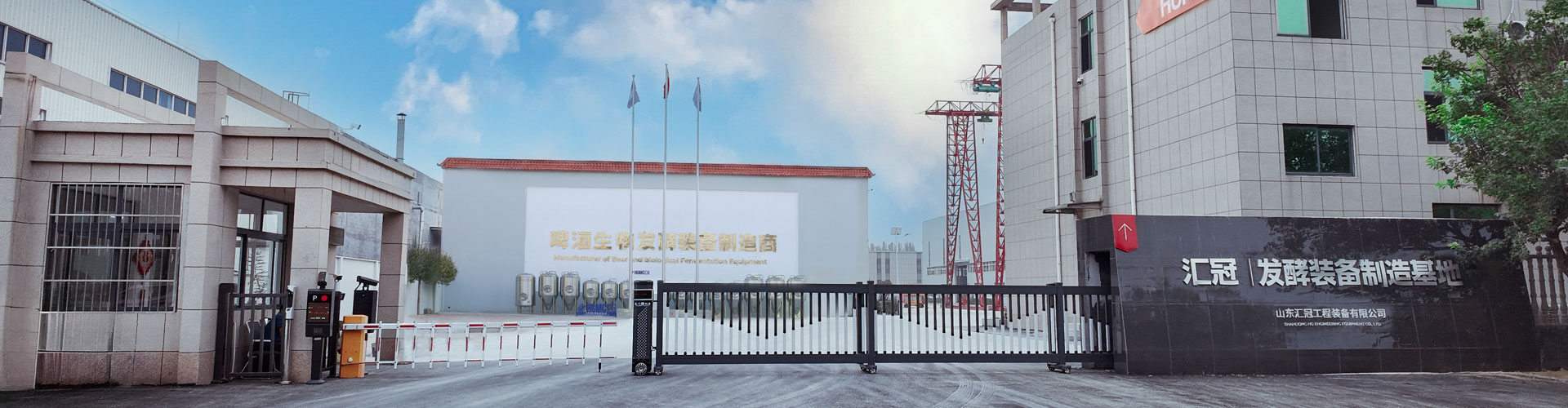
Working with the world’s leading manufacturer of beer brewing equipment, one that produces comprehensive brewery equipment, beverage equipment, and canning/bottling lines, and that holds more than 30 national authorized patents and more than 20 high‑tech achievements, gives you a strong technical foundation. When this manufacturer also provides full‑range services, from individual equipment to turnkey projects, and all products comply with the ISO9001:2015 quality management system and are exported to over 120 countries worldwide, you gain a trusted partner for every stage of your brewery’s development.
If you are planning a new brewery or upgrading your existing facility, now is the time to carefully evaluate your options and choose beer brewing equipment that will support your craft, your brand, and your long‑term success.
