
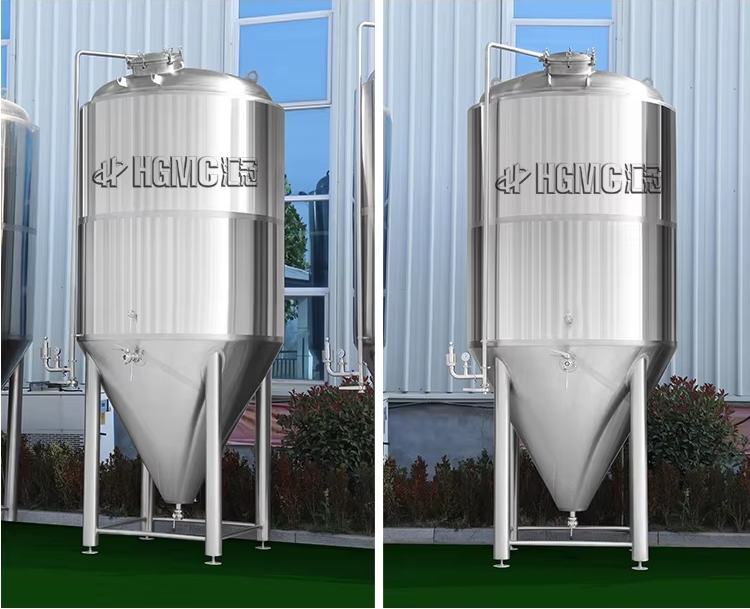
For any craft brewery, brewpub, or production facility, beer quality is decided as much by the cellar as by the brewhouse. Selecting the right beer brewing tanks — fermenters, brite tanks, lagering tanks, and serving tanks — directly affects flavor stability, clarity, and consistency, as well as daily efficiency and safety.
This guide explains the key types of beer brewing tanks, how they work together, and how to choose and size them for your next project. It is written for brewery owners, head brewers, and investors who want practical, technically correct information that also reads clearly for non‑engineers.
1. What Is a Beer Brewing Tank?
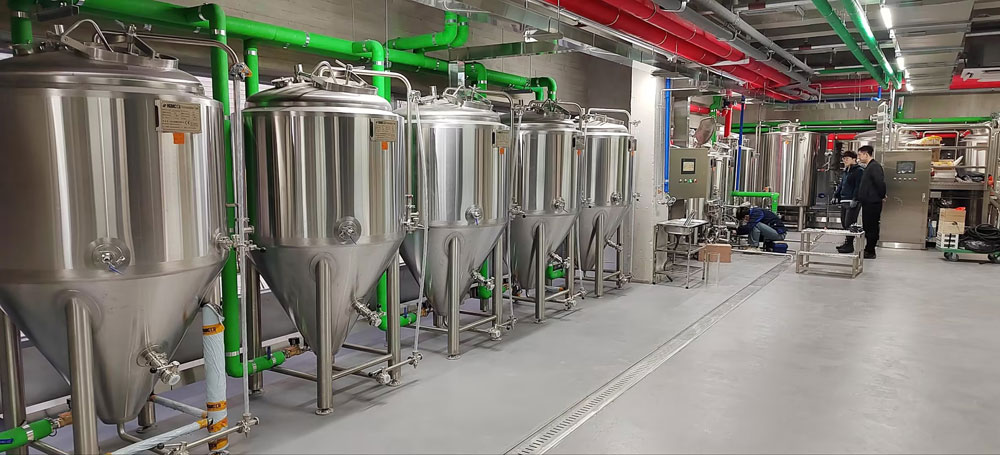
A beer brewing tank is any pressure‑rated or non‑pressure vessel used to ferment, condition, clarify, carbonate, store, or serve beer. While the brewhouse (mash tun, lauter tun, kettle, whirlpool) creates wort, the brewing tanks in the cellar are where wort becomes finished beer.
Common beer brewing tanks include:
- Fermenters (FV) – for primary fermentation and early conditioning.
- Unitanks – pressure‑capable fermenters that can also carbonate and sometimes serve.
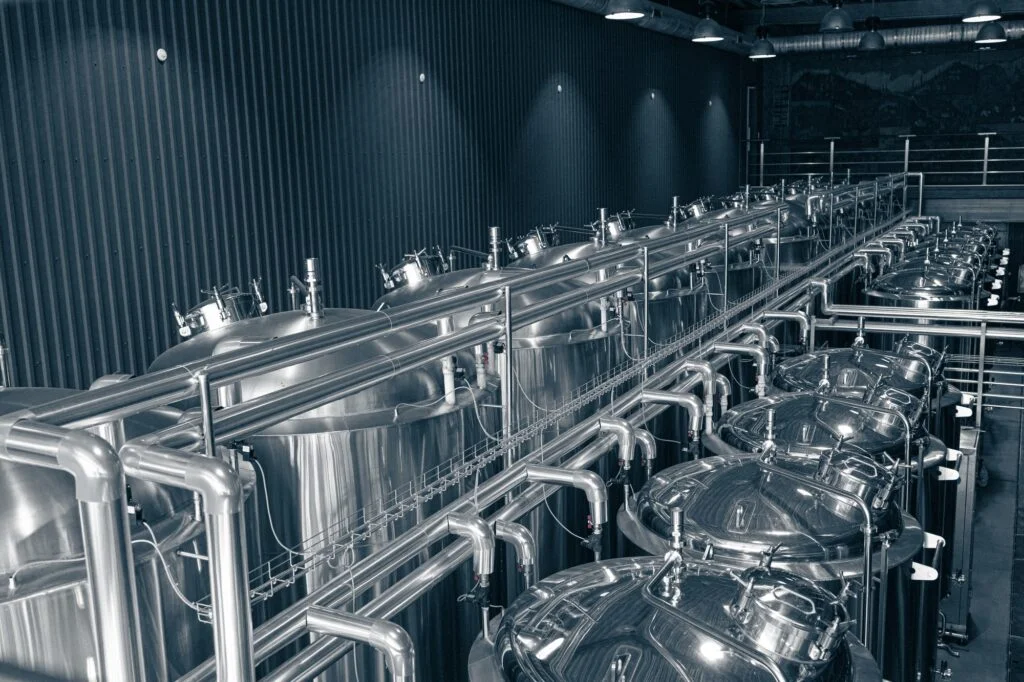
- Brite Tanks (BBT) – for clarification, maturation, and carbonation before packaging or serving.
- Lagering Tanks – for long, cold conditioning of lagers, often horizontal.
- Serving Tanks – for holding finished beer ready to pour or package.
Each tank type has its own geometry, fittings, and pressure rating designed around a specific step in the brewing process.
2. Fermenter vs. Brite Tank: What’s the Real Difference?
What’s the difference between a fermenter and a brite tank?
- Fermenter:A fermenter performs primary fermentation and early conditioning. This is where yeast converts fermentable sugars into alcohol and CO₂, creates esters and phenols, and drops out over time. Fermenters are usually conical, with a steep cone angle to collect yeast and trub for dumping or repitching.
- Brite tank:A brite tank is used to clarify and carbonate beer before packaging or serving. It operates at a higher, controlled pressure so brewers can fine‑tune carbonation and preserve hop aroma and foam stability. The brite tank is pressure‑rated and designed for clean, stable conditioning.
In practice, you might:
- Transfer beer from the fermenter to the brite tank after fermentation and diacetyl rest.
- Chill, clarify (naturally or with finings/filtration), and carbonate in the brite.
- Package into kegs, cans, or bottles, or push directly to a serving line.
Some breweries use a unitank to do both steps in one vessel, but separating fermenters and brite tanks still offers advantages in throughput, clarity, and scheduling.
3. Do You Need a Separate Lagering Tank?
Do I need a separate lagering tank?
- Not always. A well‑designed unitank can handle both primary fermentation and the conditioning (lagering) phase, especially in smaller systems with limited space.
- However, dedicated lagering tanks, particularly horizontal lagering tanks, deliver benefits on long, cold programs:
- Improved clarity from a shorter sedimentation path.
- Better sulfur reduction and flavor smoothing during extended storage.
- More stable foam and finer carbonation texture.
If your portfolio includes classic pilsners, helles, or other long‑lagered beers and you market around purity and tradition, investing in dedicated lagering tanks can be a strong differentiator.
4. Can One Tank Do It All? Understanding Unitanks
Can one tank do it all?
A unitank is a versatile tank designed to:
- Ferment under pressure or at low pressure.
- Hold pressure for conditioning and maturation.
- Carbonate the beer in the same vessel.
Key characteristics of a well‑designed unitank:
- Pressure rating matched to your carbonation targets.
- Carb stone installed at the correct height and angle for efficient gas dispersion.
- PRV (Pressure Relief Valve) calibrated to protect the tank and operators.
- Cone geometry and racking arm layout optimized for yeast harvest and clear beer draw.
For compact breweries, taprooms, or pilot systems, unitanks are often the most cost‑effective solution. When paired with a dedicated brite or serving tank for high‑volume SKUs, they provide both flexibility and efficiency.
5. Is 304 Stainless Steel Enough for Professional Brewing?
Is 304 stainless steel okay for beer?
Yes. 304 stainless steel with a proper polish is the industry standard for professional brewing tanks.
Why 304 stainless steel works so well:
- Corrosion resistance: It holds up against wort acidity, caustic cleaners, and sanitizer when properly maintained.
- Sanitary surface: Polished internal welds and smooth surfaces minimize sites for microbial growth.
- Durability: Long gasket life, stable ferrules, and reliable CIP (clean‑in‑place) cycles.
- Cost‑effective: Offers a strong balance between price and performance compared to higher grades.
Most professional breweries around the world use 304 stainless steel tanks. For specific corrosive environments or special cleaning regimes, 316 stainless may be recommended, but 304 remains the mainstream, proven choice for beer.
6. Typical CO₂ Pressures When Carbonating Beer
What pressures are typical when carbonating?
Carbonation pressure depends on:
- Beer temperature
- Desired volumes of CO₂
- Tank pressure rating and PRV setting
The process in practical terms:
- Chill the beer to the target carbonation temperature.
- Set head pressure according to a CO₂ chart or carbonation table that matches your desired volumes (for example, a pale ale vs. a wheat beer).
- Apply CO₂ gradually through the carb stone while monitoring:
- Tank pressure gauge
- Foam formation
- Sensory checks from zwickel samples
- Avoid over‑carbonation by increasing pressure slowly and allowing equilibrium to stabilize.
The key safety principle: always stay comfortably below the tank’s maximum allowable working pressure and trust your gauges and PRVs.
7. Sizing Your Cellar for Seasonality
How do I size the cellar for seasonality?
Breweries rarely sell at a flat weekly rate. Seasonal peaks (summer, holidays, festivals) and new product launches can put pressure on your cellar capacity. A simple, practical approach is:
- Start from weekly sales and brew length.For example, if you brew 10 bbl batches, calculate how many batches per week you need to support your sales forecast.
- Map out typical fermentation and conditioning times.
- A fast pale ale might move through primary in 5–7 days and conditioning in another 5–7 days.
- A lager may sit in the tank much longer at cold temperatures.
- Add at least one extra tank for peak months.This additional vessel gives you:
- Flexibility to run special releases.
- Buffer for longer fermentations or unexpected delays.
- Insurance against stock‑outs during your highest‑margin period.
- Increase polishing capacity.Larger or additional brite and lagering tanks let you move beer quickly between styles and keep your fermenters turning. This is especially important if you run multiple SKUs with different conditioning requirements.
The result is a cellar that supports both core volume and seasonal creativity without sacrificing quality.
8. Key Types of Beer Brewing Tanks (Overview)
To choose the right configuration, it helps to understand where each tank fits in the process:
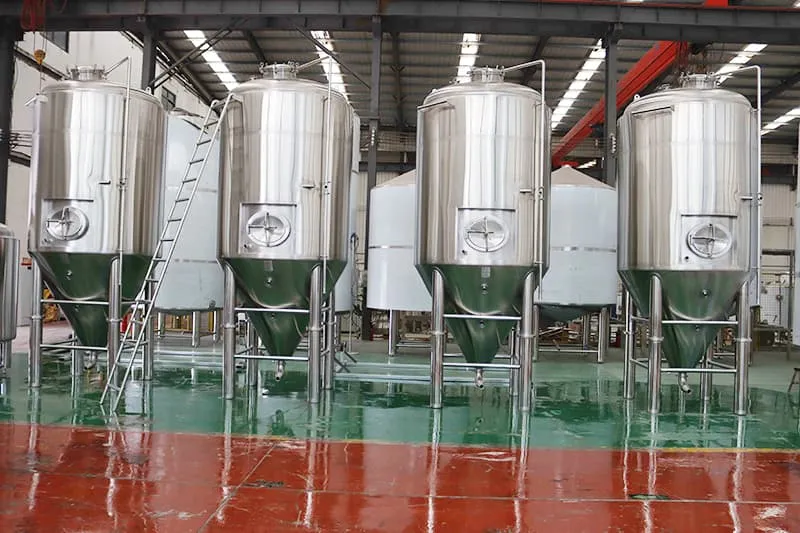
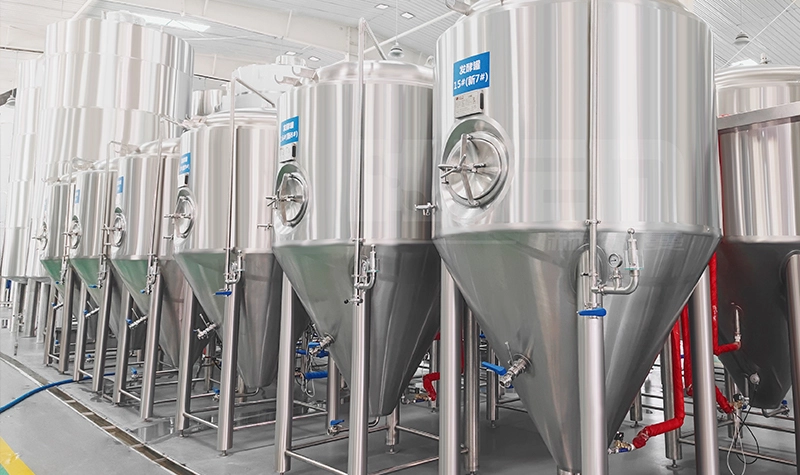
- Cylindroconical Fermenters:
- Steep cone (often 60 degrees) for efficient yeast collection.
- Multiple ports for temperature sensors, sample valves, and CIP.
- May be rated for pressure or operated primarily at low pressure.
- Unitanks:
- Similar geometry to fermenters but with higher pressure ratings.
- Designed for both fermentation and carbonation.
- Excellent for breweries with limited floorspace.
- Brite Tanks (Bright Beer Tanks):
- Used after fermentation for polishing the beer.
- May be vertical or horizontal.
- Focus on clarity, carbonation, and stability before packaging.
- Lagering Tanks:
- Often horizontal to maximize surface area and promote clearer beer.
- Designed for long, cold storage at low temperatures.
- Used for classic lager styles or beers that benefit from extended conditioning.
- Serving Tanks:
- Located near the taproom or directly behind the bar.
- Connected to draft lines for direct service.
- Help reduce handling steps between cellar and glass.
Most modern breweries use a mix of fermenters, unitanks, and brite tanks, tailoring the combination to their volume, style focus, and real estate.
9. Practical Checklist for Your Next Tank Purchase
When you plan your next cellar expansion or greenfield brewery, use the following checklist to evaluate suppliers and specifications.
Capacity
- Confirm target bbl or hl capacity per batch and per tank.
- Ensure tank height fits within your ceiling height with safe clearance for installation and operation.
- Consider future growth: it is often more economical to oversize a little now than to replace equipment later.
Geometry
- Review conical angle for fermenters and unitanks. A proper cone aids yeast harvest and clean blowdown.
- Verify the racking arm location and adjustability for drawing clear beer above sediment.
- Check port layout (sample valves, thermowells, PRVs, manways) for ergonomic and sanitary design.
Thermal Performance
- Confirm that cooling jackets are appropriately sized for your chiller capacity.
- Match the tank’s thermal load to your glycol system to avoid under‑chilling or freezing.
- Verify glycol piping lengths and line diameters from the chiller to the tank farm.
Materials
- Specify 304 stainless steel with appropriate internal and external polish.
- Inspect ferrules, gaskets, and PRV ratings to align with your process pressures and CIP temperatures.
- Review weld quality and passivation procedures to ensure long‑term sanitary performance.
Process Hardware
- Ensure a suitable carb stone is included and correctly positioned for efficient CO₂ dissolution.
- Review clamps, valves, and fittings for compatibility with your existing plant standards.
- Plan flow paths for transfers, CIP, and blowdown to minimize dead legs and reduce oxygen pickup.
Hygiene and Cleaning
- Verify CIP coverage with spray balls or rotating heads sized to your pump and flow rate.
- Check vent routing to safely handle CO₂ and foam during fermentation and cleaning.
- Apply the “no dead‑legs” rule: all process connections should be designed for full drainage and cleaning.
Safety
- Confirm relief valves are properly sized, rated, and accessible for testing and maintenance.
- Review interlocks or procedural safeguards to prevent over‑pressurization and accidental opening under pressure.
- Establish clear SOPs (Standard Operating Procedures) for filling, venting, CIP, and maintenance.
Integration and Installation
- Request detailed MEP drawings (mechanical, electrical, plumbing) for coordination with your architect and contractors.
- Plan the crane path or rigging route for safe delivery and upright placement of tanks.
- Confirm the skid footprint, anchor locations, and floor load requirements for your building structure.
Using this structured checklist ensures you compare tank suppliers on the right technical criteria, not just on price.
10. How to Align Tank Selection with Your Business Goals
Beyond technical details, your tank strategy should reflect your commercial plan:
- Product mix:If your portfolio leans toward hoppy ales with fast turns, prioritize unitanks and brite tanks for high throughput. If lagers and traditional styles define your brand, allocate space and budget for dedicated lagering tanks.
- Space constraints:Urban breweries and taprooms often benefit from vertically oriented tanks and unitanks that combine multiple functions. Larger greenfield sites can use horizontal lagering tanks and dedicated serving tanks.
- Capital budget:A flexible arrangement using unitanks for most products plus a small number of brite tanks can deliver strong ROI while leaving room to add specialty tanks later.
- Expansion roadmap:Think in phases. Start with a core set of tanks sized to your current demand. Ensure that glycol, electrical capacity, and floor space can accommodate the second and third phases of growth without major rework.
11. FAQs: Quick Answers for Buyers and Brewers
Q: What’s the difference between a fermenter and a brite tank?
A fermenter handles primary fermentation and early conditioning. A brite tank is used to clarify and carbonate beer before packaging. The brite tank is pressure‑rated for finer control of carbonation and aroma stability.
Q: Do I need a separate lagering tank?
Not in every case. A unitank can manage conditioning, but dedicated lagering tanks, especially horizontal designs, improve clarity and sulfur reduction on extended programs.
Q: Can one tank do it all?
A unitank can ferment, hold pressure, and carbonate in the same vessel. It is especially useful for compact sites, as long as it is paired with the right carb stone and PRV for safe pressure management.
Q: Is 304 stainless steel okay for beer?
Yes. Polished 304 stainless steel is the global industry standard. It is robust, sanitary, easy to clean, and supports long gasket and ferrule life under proper CIP.
Q: What pressures are typical during carbonation?
Use head pressure that matches your beer temperature and desired CO₂ volumes based on standard carbonation charts. Apply CO₂ carefully, monitor tank gauges, and avoid approaching the tank’s maximum working pressure.
Q: How do I size my tank farm for seasonal demand?
Start with weekly sales and brew length, then add at least one extra tank for peak months to maintain flexibility. Increase polishing capacity so you can move beer quickly and avoid bottlenecks in the brite or lagering stage.
12. Conclusion: Building a Reliable, Efficient Cellar
Beer quality and production efficiency are built on the foundation of well‑designed, correctly sized brewing tanks. Understanding the roles of fermenters, brite tanks, unitanks, lagering tanks, and serving tanks helps you design a cellar that:
- Protects flavor and aroma.
- Supports consistent carbonation and clarity.
- Scales with your sales plan and seasonal peaks.
- Keeps your team working safely and efficiently every day.
By focusing on capacity, geometry, thermal design, materials, process hardware, hygiene, safety, and integration, you can invest in a beer brewing tank system that supports both today’s production targets and tomorrow’s growth.
