
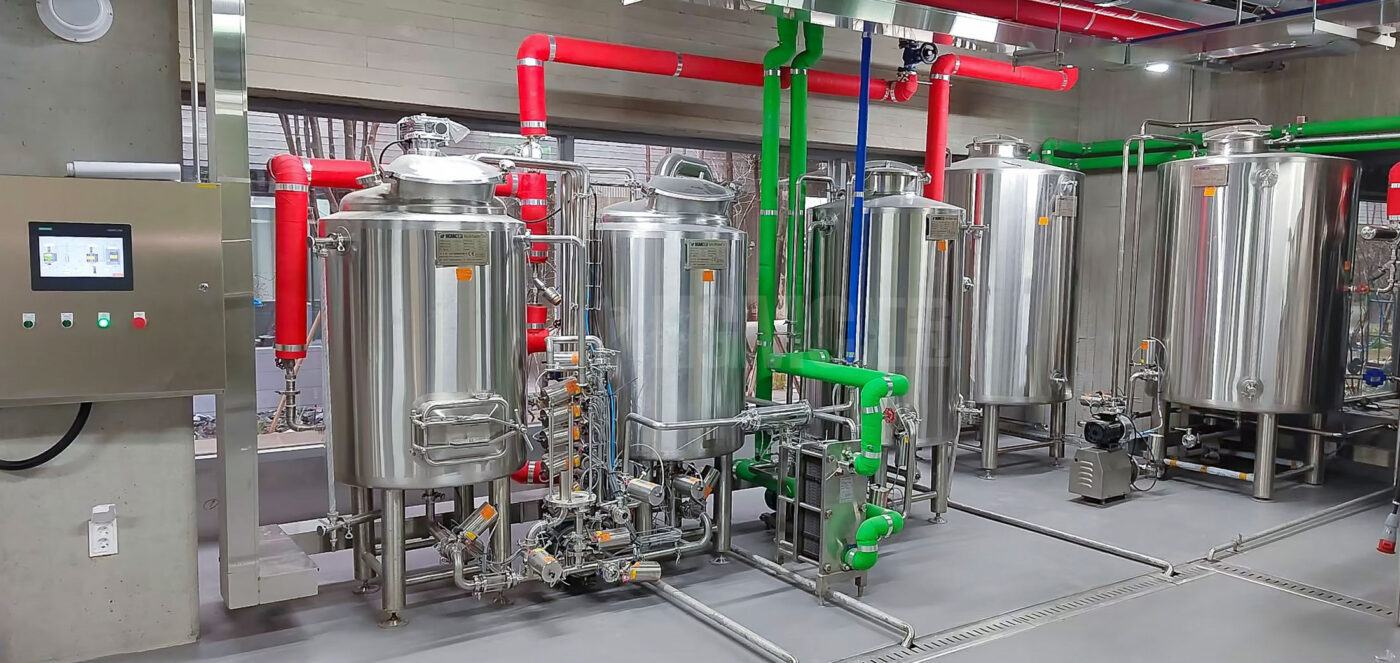
The craft beer industry continues its remarkable growth trajectory, with the global craft beer market projected to reach $554.8 billion by 2028, growing at a CAGR of 9.5% according to Grand View Research. However, traditional brewery setup methods often become bottlenecks for aspiring brewers, consuming excessive time and capital. Enter Turn-Key brewery solutions—a revolutionary approach that’s transforming how modern breweries launch and scale their operations.
What Are Turn-Key Brewery Solutions?
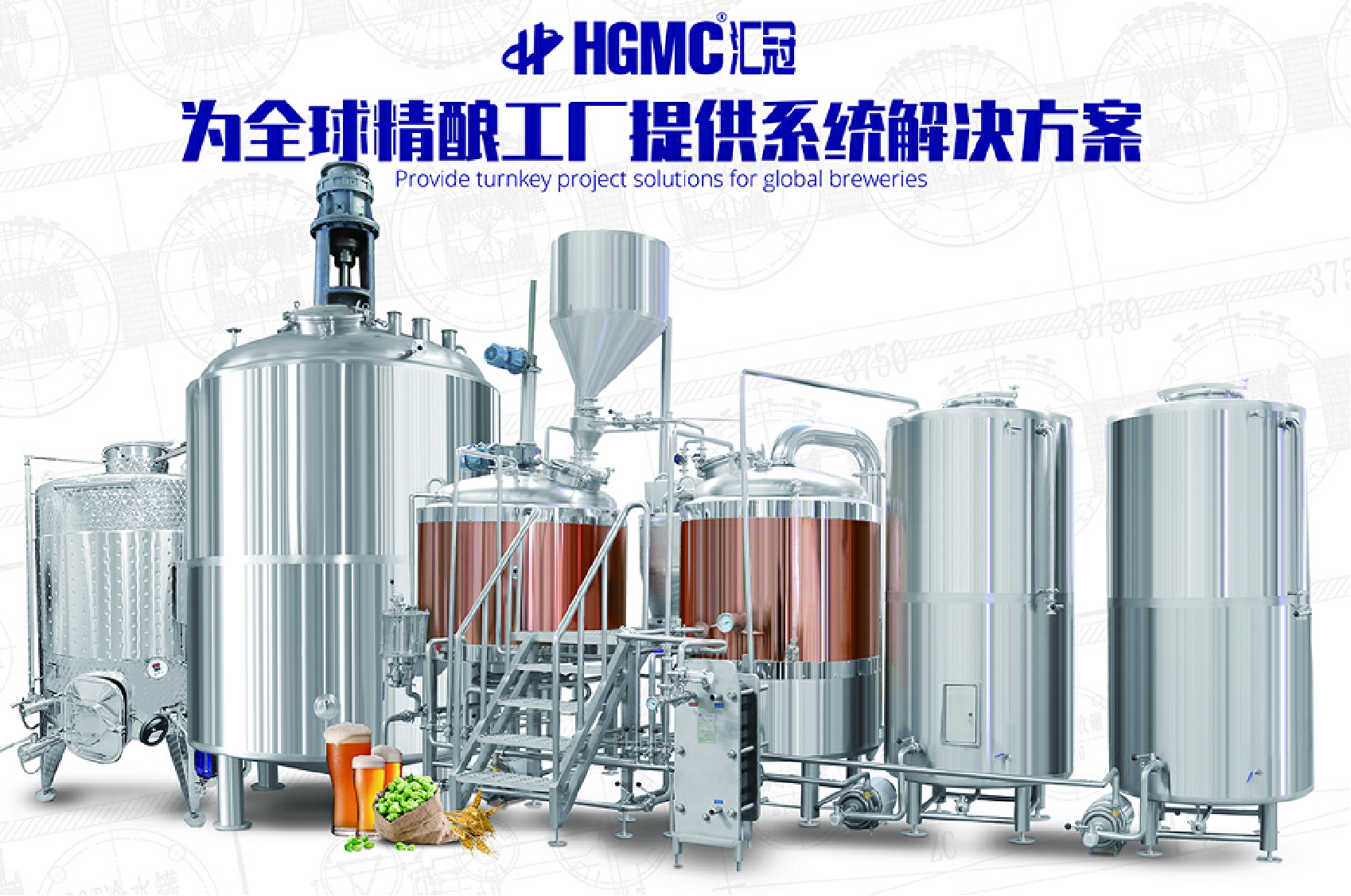
Turn-Key brewery solutions represent a comprehensive, pre-integrated system that delivers a fully operational brewery from concept to first pour. Unlike traditional piecemeal approaches, these solutions function like a sophisticated “Lego” system, where every component—from mashing equipment to fermentation tanks, from control systems to quality assurance protocols—arrives as a harmonized ecosystem.
Imagine that your dream craft brewery could produce your first rich and fragrant beer in just six months, while the traditional self-built model usually takes 18 to 24 months. This is precisely the disruptive efficiency brought by Turn-Key brewery solutions, which can compress the start-up cycle by up to 70%.
The Market Context
According to the Brewers Association’s 2024 Industry Report, there are now over 9,200 craft breweries operating in the United States alone, representing a 4% year-over-year increase. However, the report also indicates that 25% of new breweries fail within their first five years, primarily due to operational inefficiencies, budget overruns, and quality inconsistencies—challenges that Turn-Key solutions directly address.
The Time Advantage: Speed to Market That Matters
Traditional vs. Turn-Key Timeline Comparison
DATA VISUALIZATION SUGGESTION:
Create a horizontal bar chart comparing:
- Traditional Setup: 18-24 months
- Turn-Key Solution: 5-8 months
- Time Savings: Up to 70%
This one-stop solution takes an average of only 5 to 8 months from project initiation to final delivery. For a standard craft beer project with an annual output of 2,000 hectoliters, the timeline breakdown typically includes:
Turn-Key Project Timeline:
- Months 1-2: Design consultation, specifications finalization, and equipment customization
- Months 3-5: Manufacturing, quality control, and pre-shipment testing
- Months 6-7: Installation, integration, and commissioning
- Month 8: Staff training, trial production, and final optimization
Traditional Self-Build Timeline:
- Months 1-6: Equipment research, vendor negotiations, and procurement from multiple suppliers
- Months 7-12: Facility renovation, infrastructure preparation
- Months 13-20: Equipment arrival at different times, installation challenges, and integration issues
- Months 21-24: Commissioning, troubleshooting compatibility issues, and staff training
The Cost of Delay
According to McKinsey’s Operations Practice, every month of delay in market entry can cost a craft brewery $15,000 to $50,000 in lost revenue, depending on production capacity. For a brewery targeting $1 million in annual revenue, a 12-month delay translates to potentially $180,000 to $600,000 in opportunity cost.
If the traditional model of decentralized equipment procurement, workshop renovation, and phased commissioning is adopted, unforeseen engineering delays may lead to cost overruns of more than 20%. A mature turnkey solution, through pre-integrated equipment packages—such as fully automatic production lines including saccharification, fermentation, and filling—can reduce on-site installation and commissioning time from 90 days to 30 days, directly lowering installation labor costs by 30%.
Financial Clarity: Predictable Investment, Measurable ROI
Investment Structure and Budget Certainty
At the financial level, Turn-Key brewery solutions offer unprecedented budget certainty. A standard craft beer turnkey project with an annual production capacity of 5,000 hectoliters typically has a total investment range of between $1 million and $3 million USD.
DATA VISUALIZATION SUGGESTION:
Create a pie chart showing typical Turn-Key solution cost breakdown:
- Brewing equipment (mashing, boiling, whirlpool): 35%
- Fermentation and maturation systems: 25%
- Filling and packaging line: 20%
- Control and automation systems: 10%
- Installation, commissioning, training: 7%
- Contingency and warranty: 3%
The price difference mainly stems from the degree of automation and the configuration of the raw material processing system. This total price package typically covers over 95% of the necessary equipment and initial technical services, avoiding more than 40 sub-item procurement and coordination costs.
Real-World ROI: Case Study Analysis
Case Study: Riverbank Brewing (Germany, 2019)
A well-known craft beer brand, “Riverbank Brewing”, adopted a turnkey solution from the German company Krones in 2019. The results were compelling:
- Initial Investment: 15% higher than basic budget estimate
- Production Efficiency Increase: 25%
- Energy Consumption Reduction: 18% per 100 liters
- Payback Period: Shortened from estimated 5 years to 3.5 years
- Saccharification Yield: Stable at 78%+ (vs. industry average of 73%)
- Annual Profit Increase: Tens of thousands of dollars from yield improvement alone
DATA VISUALIZATION SUGGESTION:
Create a line graph showing ROI comparison over 5 years:
- Traditional setup payback curve
- Turn-Key solution payback curve
- Break-even points highlighted
Hidden Costs Eliminated
According to research by the Institute of Brewing and Distilling, traditional multi-vendor brewery setups typically incur hidden costs that account for 15-25% of the total project budget:
- Coordination Costs: Managing 8-15 different vendors
- Integration Challenges: $50,000-$150,000 in unexpected compatibility fixes
- Extended Downtime: Lost production during troubleshooting
- Multiple Warranty Claims: Time and legal costs managing different suppliers
- Training Inconsistencies: Staff learning multiple systems from different vendors
Turn-Key solutions eliminate these friction points by providing a single point of accountability and pre-integrated systems.
Technical Excellence: Quality, Reliability, and Consistency
Pre-Delivery Testing and Quality Assurance
From the perspectives of technical stability and product quality consistency, the turnkey solution is synonymous with reliability. The entire system will undergo at least 200 hours of interlocking testing and simulated production before leaving the factory to ensure that the equipment failure rate is less than 0.5% upon arrival at the site.
Precision Control Systems
The core control unit adopts a PLC (Programmable Logic Controller) fully automatic control system, which can keep the deviation of mashing temperature within ±0.3°C. This is a key parameter that affects the quality of wort and the stability of beer flavor.
DATA VISUALIZATION SUGGESTION:
Create an infographic showing:
- Temperature precision: ±0.3°C vs. ±2-3°C (manual/semi-automatic)
- Equipment failure rate: <0.5% vs. 3-5% (traditional)
- Batch consistency: 60% improvement in flavor compound deviation
Flavor Consistency: The Competitive Advantage
According to data from the American Society of Brewing Chemists (ASBC), breweries that adopt highly automated turnkey production lines can reduce the standard deviation of concentration fluctuations of key flavor substances (such as ethyl acetate) between different batches by 60%, which greatly guarantees brand reputation and market repurchase rate.
In a market where 78% of craft beer consumers cite “consistent taste” as a key factor in brand loyalty (Brewers Association Consumer Survey, 2024), this technical advantage translates directly to market success.
Risk Transfer Strategy
This complete delivery—from hardware to software, from process to training—is essentially a risk transfer strategy, transferring up to 80% of the initial technical risks to the solution provider. The vendor typically provides:
- Performance Guarantees: Contractual output and efficiency metrics
- Extended Warranties: 2-5 years on major components
- 24/7 Technical Support: Remote diagnostics and on-site emergency service
- Software Updates: Continuous optimization and feature additions
- Spare Parts Availability: Guaranteed inventory for critical components
Scalability and Future-Proofing: Built to Grow
Modular Design Philosophy
Another core advantage of Turn-Key brewery solutions lies in their modular and scalable design, which can flexibly adapt to market growth. A system with an initial design capacity of 10,000 hectoliters per year can increase its capacity to 15,000 hectoliters within 12 months by reserving interfaces and stacking modules, with an investment increase of 30% to 50%.
Case Study: Scaling with Market Demand
Tomorrow Brewing (China, 2021)
The emerging Chinese brand “Tomorrow Brewing” adopted a modular turnkey solution in 2021:
- Initial Capacity: 3,000 liters per batch
- Market Response: IPA series achieved 15% monthly growth rate locally
- Expansion Timeline: Completed fermentation tank expansion in 8 months
- Capacity Increase: Successfully doubled production capacity
- Market Impact: Seized market explosion window, increased market share by 12%
Behind this flexibility lies the precise calculation by the solution provider based on fluid mechanics and process simulation, ensuring that parameters such as pipeline flow velocity, pump head, and flow rate remain within the optimal efficiency range after expansion.
Technology Integration and Industry 4.0
Modern Turn-Key solutions increasingly incorporate Industry 4.0 technologies, according to a 2024 report by Deloitte on Manufacturing Technology:
- IoT Sensors: Real-time monitoring of 50+ process parameters
- Predictive Maintenance: AI-driven analytics reducing downtime by 25%
- Data Analytics Dashboards: Production optimization insights
- Remote Access: Monitor and adjust from anywhere via secure cloud platforms
- Traceability Systems: Complete batch tracking from grain to glass
Environmental and Sustainability Advantages
Resource Efficiency
According to the Water Environment Federation, traditional breweries consume an average of 7-10 liters of water per liter of beer produced. Advanced Turn-Key systems with integrated water recovery can reduce this to 3-4 liters per liter, achieving 40-50% water savings.
DATA VISUALIZATION SUGGESTION:
Create a comparison infographic:
- Water usage: 3-4L vs. 7-10L per liter of beer
- Energy consumption: 18% reduction
- CO2 capture: 30% recovery rate in advanced systems
- Waste reduction: 25% decrease in spent grain moisture
Carbon Footprint Reduction
As referenced in the Riverbank Brewing case study, energy consumption per 100 liters decreased by 18%. When scaled to a 5,000-hectoliter annual production facility, this translates to:
- Annual Energy Savings: 180-250 MWh
- CO2 Emissions Reduction: 90-130 tons annually
- Cost Savings: $18,000-$35,000 per year (depending on energy costs)

Frequently Asked Questions (FAQ)
1. What is the typical payback period for a Turn-Key brewery solution?
The payback period typically ranges from 3 to 5 years, depending on production capacity, market positioning, and operational efficiency. High-efficiency Turn-Key solutions, as demonstrated by the Riverbank Brewing case study, can achieve payback in as little as 3.5 years. Factors influencing payback include:
- Production volume and capacity utilization (aim for 80%+ utilization)
- Product pricing and profit margins
- Market demand and distribution efficiency
- Operational costs and energy efficiency
- Brand positioning (premium vs. mainstream)
2. Can I customize a Turn-Key solution to my specific needs?
Absolutely. Modern Turn-Key solutions are highly customizable. Most reputable manufacturers offer:
- Capacity customization: From micro-breweries (500L batches) to regional breweries (50,000+ hectoliters annually)
- Automation levels: Semi-automatic to fully automated systems
- Style-specific configurations: IPA-focused, lager-focused, mixed production
- Space optimization: Designs for existing facilities or new construction
- Brand integration: Custom control panels, finishes, and branding elements
The consultation phase typically involves detailed discussions about your specific brewing goals, target products, market strategy, and budget constraints.
3. What ongoing support can I expect after installation?
Reputable Turn-Key solution providers typically offer comprehensive post-installation support:
- Technical Training: 1-4 weeks of hands-on training for your brewing and maintenance teams
- Warranty Coverage: 1-5 years depending on components
- Remote Diagnostics: 24/7 monitoring and troubleshooting capabilities
- Preventive Maintenance Programs: Scheduled inspections and optimization
- Spare Parts Availability: Guaranteed inventory with 24-48 hour delivery
- Recipe Development Support: Consultation on new beer styles and formulations
- Software Updates: Continuous improvements to control systems
4. How does a Turn-Key solution compare in quality to custom-built systems?
Turn-Key solutions often equal or exceed custom-built systems in quality for several reasons:
- Integrated Engineering: All components designed to work together optimally
- Factory Testing: 200+ hours of pre-delivery testing ensures reliability
- Proven Designs: Based on thousands of successful installations worldwide
- Quality Control: Single manufacturer accountability vs. multiple vendor coordination
- Precision Manufacturing: Advanced CNC machining and automated welding
The American Society of Brewing Chemists data shows that Turn-Key systems achieve 60% better batch-to-batch consistency compared to systems assembled from multiple vendors.
5. What capacity range is suitable for Turn-Key solutions?
Turn-Key solutions are available for virtually any scale:
- Nano-breweries: 200-500 liters per batch (brewpubs, experimental)
- Microbreweries: 500-2,000 liters per batch (local distribution)
- Regional craft breweries: 2,000-10,000 liters per batch (multi-state distribution)
- Commercial breweries: 10,000+ liters per batch (national distribution)
The sweet spot for Turn-Key solutions is typically 1,000-10,000 hectoliters annual capacity, where the benefits of integration and automation provide maximum ROI.
6. What are the space requirements for a Turn-Key brewery?
Space requirements vary by capacity, but general guidelines include:
- 500 HL/year: 150-250 m² (1,600-2,700 sq ft)
- 2,000 HL/year: 400-600 m² (4,300-6,500 sq ft)
- 5,000 HL/year: 800-1,200 m² (8,600-13,000 sq ft)
- 10,000 HL/year: 1,500-2,500 m² (16,000-27,000 sq ft)
Modern Turn-Key designs maximize vertical space utilization and can be configured for unusual floor plans or existing facilities.
7. How do Turn-Key solutions handle regulatory compliance?
Reputable Turn-Key manufacturers design systems to meet international standards:
- FDA/USDA Compliance: Food-grade materials and sanitary design
- CE Certification: European safety and quality standards
- Local Building Codes: Electrical, plumbing, and structural requirements
- TTB Requirements: U.S. Alcohol and Tobacco Tax and Trade Bureau specifications
- ISO Standards: ISO 9001 (quality), ISO 14001 (environmental)
Many providers also assist with regulatory documentation and approval processes, reducing the administrative burden on brewery owners.
8. What is the typical energy consumption of a Turn-Key brewery?
Energy consumption depends on capacity and automation level. For a 5,000 HL/year facility:
- Thermal Energy: 150-200 kWh per hectoliter (primarily for boiling)
- Electrical Energy: 8-12 kWh per hectoliter (pumps, cooling, control systems)
- Cooling Requirements: 400-600 kW refrigeration capacity
Advanced Turn-Key systems incorporate energy recovery technologies:
- Heat exchangers capturing 60-70% of boiling energy
- Variable frequency drives on pumps and motors (15-25% energy savings)
- Insulated vessels and piping (10-15% heat loss reduction)
Making the Decision: Is a Turn-Key Solution Right for You?
Ideal Candidates for Turn-Key Solutions
Turn-Key brewery solutions are particularly well-suited for:
First-Time Brewery Owners
- Limited technical brewing equipment expertise
- Need for comprehensive training and support
- Desire for predictable budgets and timelines
- Risk-averse approach to capital investment
Existing Breweries Expanding
- Time-sensitive market opportunities
- Need for capacity increase with minimal disruption
- Desire for technology upgrade from older systems
- Interest in automation and consistency improvements
Investors and Entrepreneurs
- Focus on business development rather than technical details
- Multiple location rollout strategies
- Franchise or licensing models requiring standardization
- Emphasis on operational efficiency and ROI
When to Consider Alternative Approaches
While Turn-Key solutions offer numerous advantages, alternative approaches might be preferable if:
- You have extensive brewing equipment expertise and strong vendor relationships
- You’re pursuing a highly experimental or unique brewing process
- Budget is extremely tight and you can source used equipment (noting higher risk)
- You have unlimited time and enjoy the process of custom system building
- You’re starting with an extremely small pilot system (<200L)
Conclusion: The Strategic Advantage of Turn-Key Solutions
In an increasingly competitive craft beer landscape where speed to market, operational efficiency, and product consistency define success, Turn-Key brewery solutions offer a compelling value proposition. By compressing startup timelines by up to 70%, providing budget certainty that eliminates 20%+ cost overruns, and delivering 60% better batch consistency, these integrated systems transform brewery launches from complex, risky undertakings into streamlined, predictable business ventures.
The data speaks clearly: from Riverbank Brewing’s 3.5-year payback to Tomorrow Brewing’s successful 8-month capacity doubling, real-world implementations demonstrate that Turn-Key solutions don’t just promise efficiency—they deliver measurable results. With the craft beer market projected to reach $554.8 billion by 2028, the breweries that succeed will be those that can launch quickly, operate efficiently, and maintain the quality consistency that builds loyal customer bases.
For aspiring brewery owners and expanding operations alike, the question isn’t whether Turn-Key solutions work—the evidence confirms they do. The question is whether you can afford to take the slower, riskier traditional path when a proven, efficient alternative exists.
About Brewery Equipment Manufacturers
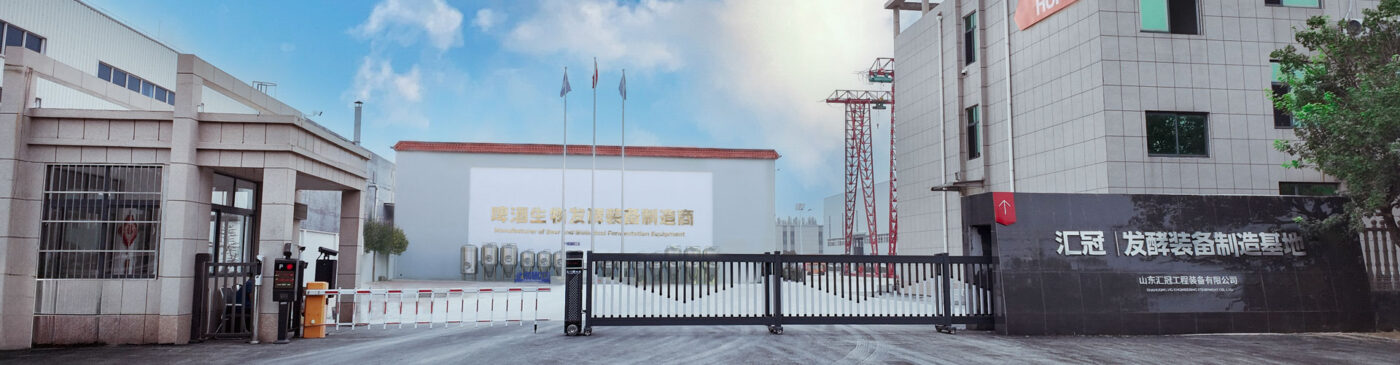
Professional Beer Brewing Equipment Manufacturer – We specialize in designing and manufacturing comprehensive Turn-Key brewery solutions for craft breweries worldwide. With over 23 years of experience and 5000 successful installations across 120 countries, we deliver integrated brewing systems that combine German engineering precision with modern automation technology.
Our solutions range from 500-liter microbrewery systems to 50,000+ hectoliter commercial installations, all backed by comprehensive training, warranty coverage, and 24/7 technical support. Contact us today to discuss how our Turn-Key brewery solutions can bring your brewing vision to life in just 5-8 months.
References and Data Sources:
- Grand View Research: Global Craft Beer Market Report 2024-2028
- Brewers Association: 2024 Industry Analysis and Craft Beer Statistics
- American Society of Brewing Chemists (ASBC): Technical Data on Brewing Automation
- Institute of Brewing and Distilling: Brewery Setup Cost Analysis
- McKinsey & Company: Operations Practice – Manufacturing Efficiency Studies
- Deloitte: 2024 Manufacturing Technology and Industry 4.0 Report
- Water Environment Federation: Brewery Water Usage and Conservation Standards
- TTB (Alcohol and Tobacco Tax and Trade Bureau): Regulatory Compliance Guidelines
