
Breweries win (or lose) repeat customers on one thing: consistency. A seasonal release can be experimental, but your flagship lager, pale ale, or IPA must taste the same week after week—on draft, in cans, and after time on the shelf. As breweries scale, the hidden enemy is often not recipe design, but process drift caused by aging equipment, manual variability, and limited measurement/control.
Upgrading brewery equipment is not just a “bigger tanks” decision. The highest-return upgrades usually target the variables that most strongly affect flavor stability and batch-to-batch repeatability: temperature, oxygen pickup, sanitation effectiveness, separation/clarity, and real-time data.
This guide is written for broad readers (owners, head brewers, production managers) and is structured around the key topics you listed: equipment age, 2025 upgrade priorities, fermentation vessels, filtration, temperature control, ROI analysis, and a practical comparison of modern equipment vs. traditional/manual approaches.
Why “equipment age” impacts beer consistency and quality
Aging brewhouse and cellar equipment doesn’t automatically make beer worse—but it increases the probability of quality drift because mechanical wear and outdated design reduce your control margin.
1) Heat transfer changes over time
Older jackets, fouled heat exchanger plates, scale buildup, and inefficient insulation can shift heating/cooling performance. That shows up as:
- Less predictable mash temperature stability
- Longer knockout times and higher contamination risk windows
- More variation in fermentation ramp profiles
Even small temperature differences can change ester formation, fusel alcohol expression, and attenuation behavior—especially in warmer climates or seasonal swings. Fermentation temperature is widely recognized as a primary driver of yeast byproduct formation (esters/fusels) and therefore flavor outcomes; controlling it tightly is a core pathway to repeatability.
2) Oxygen pickup becomes harder to manage
Oxygen is helpful early (wort aeration) but becomes “enemy #1” after fermentation. As equipment ages, you often see:
- Micro-leaks in pump seals, gaskets, and fittings
- Worn valve seats and imperfect closures
- Inconsistent purge effectiveness due to outdated packaging or transfer design
A practical benchmark from an instrumentation guide used in breweries shows oxygen targets through the process in the parts-per-billion (ppb) range post-fermentation, with packaging numbers often discussed at tens of ppb (and many breweries aiming lower with best practices). One example reference lists “beer at the filler” at roughly 10–30 ppb and package dissolved O₂ in the tens of ppb range, while noting many breweries can achieve in-package DO < 0.025 ppm (25 ppb). This is not a universal standard for every brewery and style, but it illustrates the order of magnitude modern quality programs work toward.
3) Sanitation and CIP reliability degrades
Older systems can have:
- Dead legs or poor drainability
- Rougher internal surfaces (scratches, repairs)
- Less consistent CIP flow/coverage due to pump wear or poor sprayball performance
That means higher micro risk, more sporadic off-flavors, and “mystery” shelf-life problems.
4) Measurement gaps create “invisible variability”
Manual brewing can produce excellent beer—until production volume rises and staff workload changes. Without reliable sensors, automation, and logging, the process depends on constant human attention. Modern systems reduce variability by making quality measurable, not assumed.
Investing in technology: key brewery upgrades for 2025
The best 2025 upgrade roadmap is usually staged—start with the upgrades that protect quality, then expand capacity.
Upgrade Priority A: Fermentation monitoring + temperature control
If you only upgrade one area for consistency, start here.
- Modern glycol systems with stable supply temperature
- Accurate tank probes and calibrated sensors
- Automated fermentation profiles (ramps, diacetyl rest, cold crash schedules)
- Optional: gravity/fermentation progress monitoring to reduce manual sampling
Outcome: tighter flavor control, fewer over/under-attenuation issues, improved tank utilization through predictable cycle times.
Upgrade Priority B: Low-oxygen transfers and packaging oxygen control
If your beer tastes great in the cellar but fades quickly in package, oxygen is a top suspect.
- CO₂ purging best practices and verification
- Improved filler design and controls
- DO/TPO measurement program (not just occasional checks)
A peer-reviewed study on dry-hopped beer aroma stability found that dissolved oxygen had a significant impact on sensory and hop volatile outcomes during storage when DO was in the range of roughly 40–250 µg/L (ppb), with higher oxygen contributing to loss of desirable hop character and more stale/cardboard descriptors—especially at higher storage temperatures. This supports the practical reality: oxygen control is quality control.
Upgrade Priority C: Filtration / clarification strategy aligned with your brand
Filtration isn’t “mandatory” for craft beer, but clarity management is always a quality decision (even if haze is intentionally part of a style).
- Better separation can reduce yeast carryover and improve flavor stability
- Stable haze programs require measurement (turbidity) and repeatable separation steps
Upgrade Priority D: Energy efficiency upgrades that also stabilize process performance
Energy upgrades can be ROI-positive while improving process control.
For example, industry energy-efficiency references for breweries note that energy costs can be a meaningful portion of production costs (often discussed in the single-digit percent range), and that process and utility upgrades can have short paybacks. Energy-recovery systems (e.g., wort vapor condensation/heat recovery) are frequently discussed as ways to reduce thermal energy demand and may also support more stable heating profiles.
Understanding the role of fermentation vessels in flavor profiles
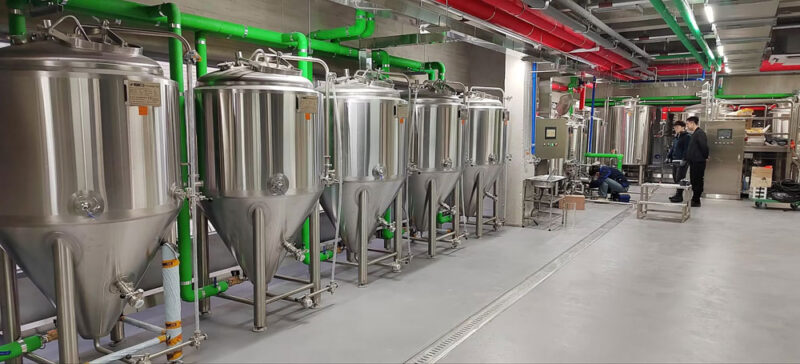
Fermentation vessels don’t “add flavor” in the way oak barrels do in wine—but they strongly influence the conditions that create flavor:
- Pressure capability (spunding, closed transfers)
- Heat removal capacity (jacket area, insulation)
- Yeast management (cone geometry, dumping, harvesting)
- Cleanability (surface finish, fittings, spray devices)
Vessel geometry and process control
A well-designed unitank or conical fermenter supports:
- Consistent yeast settling and harvesting
- Reduced oxygen exposure through closed dry-hopping and closed transfers
- Repeatable temperature control across the full tank volume
If you’re upgrading, evaluate vessels not only by volume (BBL/HL) but by:
- Jacket design (coverage and cooling power)
- Pressure rating and safety devices
- Manway ergonomics + CIP coverage
- Instrumentation ports (temp, sample, carb stone, DO, etc.)
The importance of filtration systems in craft beer purity (and stability)
“Purity” in craft beer usually means:
- Freedom from spoilage microbes
- Controlled yeast content (to match the brand promise)
- Stable appearance (clear, intentionally hazy, or somewhere in between)
- Fewer flavor stability issues over time
A scientific review on haze formation explains that haze can shorten shelf life and affect flavor stability, with protein–polyphenol interactions being a key mechanism, and that stabilization/clarification approaches can reduce haze at the cost of process complexity or potential flavor changes. The takeaway for equipment decisions is practical: filtration (or other stabilization) is not just visual—it’s tied to shelf-life strategy.
Turbidity measurement makes filtration decisions data-driven
Instead of debating “filter or not,” measure:
- Turbidity before/after clarification steps
- Dissolved oxygen before/after filtration (because filtration can be an oxygen pickup risk if poorly designed)
- Sensory outcomes over shelf-life time points
How temperature control equipment enhances brewing precision
Temperature is one of the few variables that impacts multiple stages at once:
- Mash enzyme activity and fermentability
- Knockout stability and contamination risk windows
- Yeast metabolism and flavor byproducts
- Cold-side clarity and CO₂ absorption behavior
Modern temperature control improvements typically include:
- Stable glycol supply temperature and sufficient capacity
- Properly sized jacket surface area and flow control
- Automated setpoints + ramp profiles
- Alarms and data logging (to catch drift early)
Even for traditional breweries that prefer a hands-on approach, temperature automation doesn’t remove craft—it removes preventable variance.
Analyzing ROI: how to model the payback of upgrading brewing equipment
ROI for brewery equipment upgrades is often strongest when you quantify “losses you don’t see on a spreadsheet”:
ROI drivers (common and measurable)
- Reduced product loss / dump rate
- Fewer oxidation events
- Fewer contamination incidents
- Fewer out-of-spec batches
- Higher brewhouse yield and lower variability
- More consistent extract efficiency
- Less rework and fewer schedule disruptions
- Labor savings and throughput improvements
- Shorter CIP cycles
- Less manual monitoring and fewer midnight interventions
- More predictable tank turns (capacity without adding tanks)
- Utilities savings (especially in heating/cooling)

Comparative studies: new equipment vs. traditional brewing methods
Traditional methods can make exceptional beer—no question. The practical difference is not “taste vs. no taste,” but:
- Consistency at scale
- Shelf-life stability across distribution
- Ability to document and repeat exact process conditions
- Safety, sanitation repeatability, and compliance
Modern systems improve outcomes by reducing uncontrolled variability:
- Automated controls reduce human error in timing, temperatures, and transfers
- Better sealing + closed transfers reduce oxygen pickup
- Better CIP design reduces contamination risk
- Better sensors turn quality into measurable KPIs, not just sensory intuition
Q&A (FAQ)
Q1: What is the best first equipment upgrade for beer consistency?
For most breweries, the best first upgrade is fermentation temperature control and monitoring—because yeast metabolism drives many flavor outcomes, and temperature control is the most direct lever to reduce batch-to-batch variance.
Q2: Does newer equipment automatically make beer taste better?
Not automatically. New equipment improves your ability to repeat the same process conditions (temperature, oxygen exposure, sanitation). That typically improves consistency and shelf-life stability, which customers experience as “better” because the beer stays closer to the brewer’s intended flavor.
Q3: Is filtration necessary for craft beer quality?
No—many styles are intentionally unfiltered. But clarity and stability must still be controlled. A filtration (or alternative stabilization) strategy can reduce haze instability and microbial risk, but it should match your brand and flavor goals.
Q4: Why does dissolved oxygen matter so much after fermentation?
Post-fermentation oxygen drives oxidation reactions that can create stale, papery/cardboard notes and reduce hop aroma—especially in hop-forward beers. Research on dry-hopped beer shows that higher dissolved oxygen can significantly shift sensory outcomes during storage, particularly at higher temperatures.
Q5: How do I calculate ROI for upgrading brewery equipment?
Use a simple model: estimate annual savings from reduced dumps, labor hours saved, utilities saved, and increased throughput (more sellable beer per year). Then divide the total upgrade cost by annual benefit to estimate payback period.
Q6: What’s the difference between “DO” and “TPO”?
DO is dissolved oxygen in the liquid. TPO (total packaged oxygen) includes both dissolved oxygen and oxygen in the headspace. Packaging performance is often evaluated using TPO because headspace oxygen can dissolve over time and contribute to staling.
Q7: What equipment upgrades help the most with shelf-life?
Low-oxygen transfers, packaging oxygen control (purging, filling technology, verification), and stable cold-side temperature management are usually top contributors to shelf-life improvements.
Conclusion: modern upgrades protect your brand promise
“Upgrade Your Brewery Equipment” isn’t just a headline—it’s a strategy to protect the most valuable asset a brewery has: customer trust that the beer will taste the way they remember it. Aging equipment increases process drift and risk; targeted upgrades reduce oxygen pickup, stabilize fermentation, improve sanitation repeatability, and turn quality into measurable data. When done in the right order, modernization can improve beer consistency and provide a defensible ROI.
