
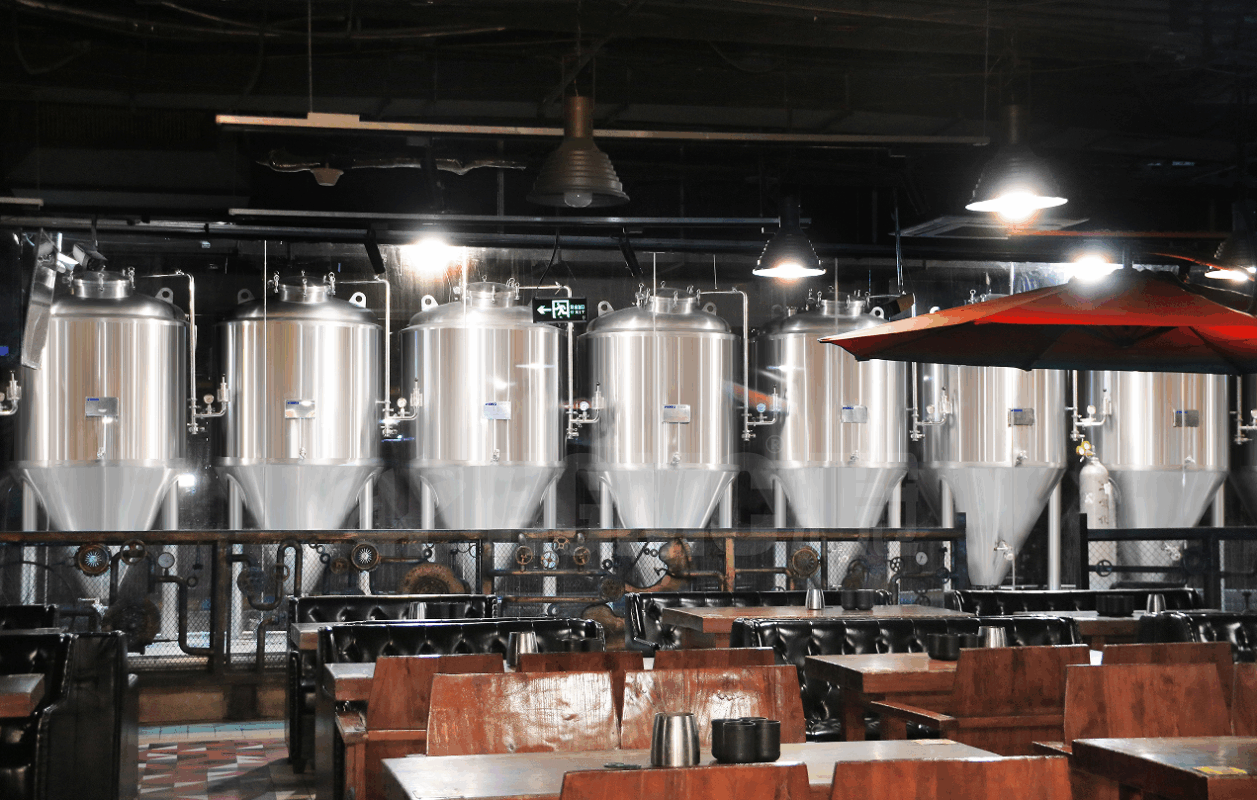
When a mid-sized restaurant in Austin decided to add in-house brewing, the first debate wasn’t about recipes—it was about scale. The owner had seen too many microbreweries overcapitalize on 1000L Brewery System only to struggle with utilization. After three months of vetting equipment suppliers, they settled on a 1000L Brewery System. Not because it was the cheapest option, but because it matched their projected throughput more precisely than anything in the next tier. That decision cost them roughly $14,000 delivered, avoided a six-month debt cycle, and let them start selling house beer within eight weeks of installation.
A 1000L Brewery System balances production volume with restaurant demand. It allows operators to serve house-made beer without overcommitting floor space or capital. For most full-service restaurants, this capacity covers 40–60 seats’ weekly consumption while leaving room for seasonal brews and limited releases.
1. Capacity That Fits Restaurant Velocity, Not Brewery Aspiration
The most common mistake restaurants make when buying brewing equipment is matching the system to the brewer’s dream rather than the dining room’s reality. A 1000L Brewery System produces roughly 260 gallons per batch. At a typical 12-ounce pour, that’s about 2,770 pints per batch. A busy restaurant with 50 seats, two turns a night, and a 30% beer order rate will move through roughly 60–80 gallons per week. That means one batch covers three to four weeks of taproom consumption.
Owners who overshoot—say, a 2000-liter system—often discover that their beer sits in bright tanks longer than ideal. The craft market’s demand for freshness punishes slow turnover. A 1000-liter system, by contrast, keeps the tank rotation tight. The Austin restaurant mentioned earlier found that their first eight batches all sold out within 18 days. They never had a keg go stale.
But capacity alignment isn’t just about avoiding waste. It’s about cash flow predictability. A 1000-liter system consumes roughly 350–400 kg of malt per batch. At current grain prices (around $0.80/kg for base malt), that’s about $300–$320 in raw ingredients. With overhead and labor, total cost per batch lands near $600–$700. Sold at $5 per pint wholesale or $6.50 retail, that batch generates $13,850–$18,000 in revenue. Even at conservative margins, the equipment pays for itself within four to six months of consistent production.
One operator in Portland learned this the hard way. They bought a 1500-liter system thinking more volume would let them sell to nearby bars. But the permitting and distribution logistics ate six months of profit. They ended up running the system at 60% utilization for its first year. Had they started with 1000 liters, they could have deferred the expansion until the distribution channel was proven.
2. Cost Per Liter That Makes Sense for a Single-Site Operation
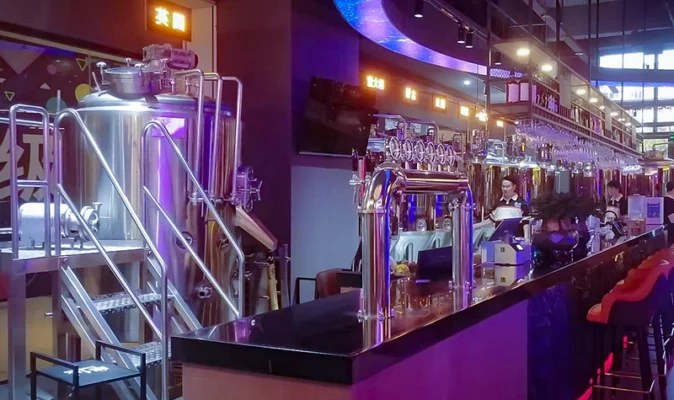
Comparing equipment prices across suppliers reveals a wide band, but the consistent pattern is that 1000-liter systems occupy a sweet spot where quality and cost converge. Stainless steel 304, tri-clamp fittings, two or three vessels, a control panel with programmable logic—these features are standard in the $12,000–$20,000 range. Dropping to 500 liters saves only about $4,000 but halves production capacity. Moving to 1500 liters doubles the cost to over $30,000 without a proportional increase in efficiency (the brewhouse itself is only incrementally larger; the real jump is in fermentation and serving tank expense).
The cost per liter of installed capacity is lower for 1000 liters than any size below it because the vessel fabrication uses similar labor and material gauge. For restaurants on tight construction budgets, the delta between a 1000-liter system and a 1500-liter system can be the difference between financing equipment and buying it outright. One Chicago brewpub owner recounted that paying cash for the 1000-liter system allowed them to avoid the 8% interest on a small business loan—saving over $1,200 in the first year alone.
Operators should also factor in installation costs. A 1000-liter system fits through a standard commercial doorframe in most restaurants. Floor loading for a full brewhouse (with water and grain) tops out around 800 kg per square meter, which is within code for most ground-level concrete slabs. The operator in Brooklyn who had to reinforce a basement floor had chosen a 2000-liter system; the 1000-liter alternative would have avoided that $3,200 engineering cost entirely.
3. Space Efficiency That Doesn’t Require a Second Lease
Restaurant real estate is measured in dollars per square foot. A 1000-liter brewhouse typically occupies 20–30 square feet for the brewhouse itself, plus another 50–70 square feet for fermentation and serving tanks (depending on the number of unitanks). That footprint fits comfortably in a 200-square-foot back room or a corner of the kitchen.
Some operators have retrofitted a 1000-liter system into a former walk-in cooler space by removing the refrigeration unit and installing floor drains. The ceiling height required is between 8 and 10 feet for most three-vessel systems with overhead agitators. If the restaurant has a drop ceiling, a 1000-liter system can still be placed under a soffit or in an area where tiles can be removed temporarily during installation.
A notable tradeoff: vertical systems (conical fermenters) save floor space but require a higher ceiling or a mezzanine for cleaning. The restaurant in Austin installed two 1000-liter unitanks side by side, each 1.8 meters in diameter and 2.5 meters tall, leaving a 90-centimeter aisle for cleaning. That layout consumed about 80 square feet total. Compare that to a 2000-liter system, which would require at least 50% more floor space for the same batch count—and likely a second row of tanks.
One Seattle gastropub tried to squeeze a 2000-liter system into a 150-square-foot brew room. The result was a cramped workspace that slowed grain-out and cleaning by 40%. After six months, they relocated the brewhouse to a basement storage area, incurring $7,000 in plumbing and electrical work. A 1000-liter system would have fit the original space with room for a keg rack.

4. Recipe Flexibility Without Financial Overhang
Restaurant breweries thrive on variety. A 1000-liter batch size allows the brewer to produce four distinct styles per month if they run one batch per week. That’s enough to keep regulars curious and accommodate seasonal ingredients.
The financial safety net is real. Failed batches on a 1000-liter system cost $600–$700 in ingredients and labor. On a 2000-liter system, the same failure burns $1,200–$1,400. The risk profile shapes behavior. A brewer who knows they can dump a batch without catastrophic loss is more likely to experiment with a hazy IPA or a sour. The Chicago brewpub ran a test batch of a passion fruit wheat ale that ended up with diacetyl. It cost them $650. They dumped it, tried again, and the second version became a top seller for nine months.
Another restaurant chain that operates across three locations found that a 1000-liter system let each location develop its own house beer without centralized recipe approval. The system’s size meant that a single brewer could produce a batch, keg it, and have it on tap within two weeks. The feedback loop from customer to brewer was fast enough that they could adjust hop additions or yeast strains within a single production cycle.
The catch: smaller batches require more frequent brewing if sales exceed projections. One operator in Denver underestimated demand for their lager and had to run the system three times in two weeks, leaving no time for recipe development. They solved it by dedicating one fermenter to a constant rotation of the core lager and using the other for experiments. That required an extra tank, but the cost ($2,400 for a 500-liter unitank) was manageable.
5. Staffing That Leverages Existing Kitchen Talent
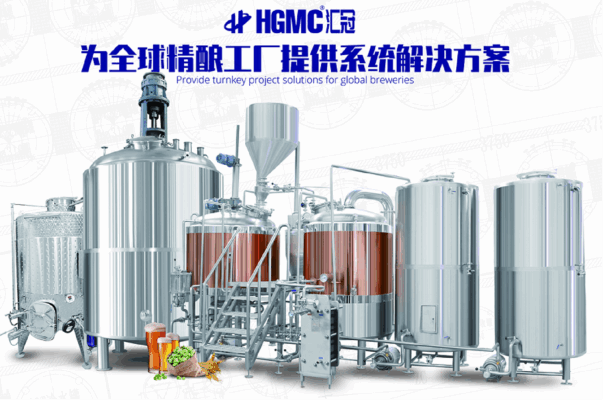
A 1000-liter brewhouse is a one-person operation for mashing, boiling, and fermentation management. The most time-consuming tasks are cleaning and grain disposal, which can be handled by a line cook during downtime. Many restaurants have trained a sous chef to manage the brewing cycle, freeing the head brewer (or brewmaster) to focus on recipe formulation and quality control.
The learning curve is real but manageable. The Austin restaurant’s sous chef took roughly three months to produce consistent beer without supervision. The first five batches had minor variations in final gravity and bitterness, but within that period, the chef developed enough intuition to adjust mash temperatures for different malt bills. The equipment’s automated control panel helped: programmable mash steps, automatic sparge water heating, and a digital log kept the process repeatable.
Compare that to larger systems. A 2000-liter brewhouse requires at least two people for grain-out and cleaning because the mash tun and kettle are heavy enough to need two operators for safe handling. The additional labor cost over a year can eat up the margin advantage of the larger capacity. One operator in San Francisco calculated that their 2000-liter system required an extra 20 hours of paid labor per week compared to a 1000-liter system—about $18,000 annually.
Training costs also differ. A 1000-liter system’s simpler workflow means that a replacement brewer can be trained in two weeks instead of six. For a restaurant that may have high staff turnover, that resilience matters. The chain with three locations experimented with cross-training kitchen managers to run the brewhouse as backup. Within a month, two of them could produce beer that passed their tasting panel.
FAQ
How much beer can a 1000-liter brewery system produce per month?
At a standard brew schedule of one batch per week, a 1000-liter system produces roughly 260 gallons (2,770 pints) per batch, or about 1,040 gallons per month. With faster fermentation and additional tank capacity, an operator can push to two batches per week, yielding around 2,080 gallons monthly.
What is the actual ROI for a restaurant installing a 1000-liter system?
Most restaurants recover the equipment cost within four to eight months if they sell beer at $5–$6.50 per pint and achieve a 60–70% gross margin. The payback period shortens if the beer replaces purchased kegs, which often cost $150–$200 each.
Do I need special licensing to operate a 1000-liter brewery system in a restaurant?
Yes. Most jurisdictions require a federal brewer’s notice (TTB) and a state-specific manufacturer license. The process takes 60–120 days and costs $1,000–$3,000 in fees. Some states require a separate tasting room permit if beer is sold on-site.
Can I brew different styles on a 1000-liter system?
Absolutely. The system is flexible enough for ales, lagers, stouts, and IPAs. The main constraint is fermentation temperature control—lager strains need a chiller that can hold 48–52°F consistently. Most 1000-liter packages include a glycol chiller as standard.
How much space does a 1000-liter brewhouse require?
The brewhouse itself (mash tun, lauter tun, kettle) fits in about 25 square feet. Fermentation and serving tanks add another 50–70 square feet depending on the number of unitanks. Allow for a ceiling height of 8–10 feet and a floor drain rated for hot liquids.
