
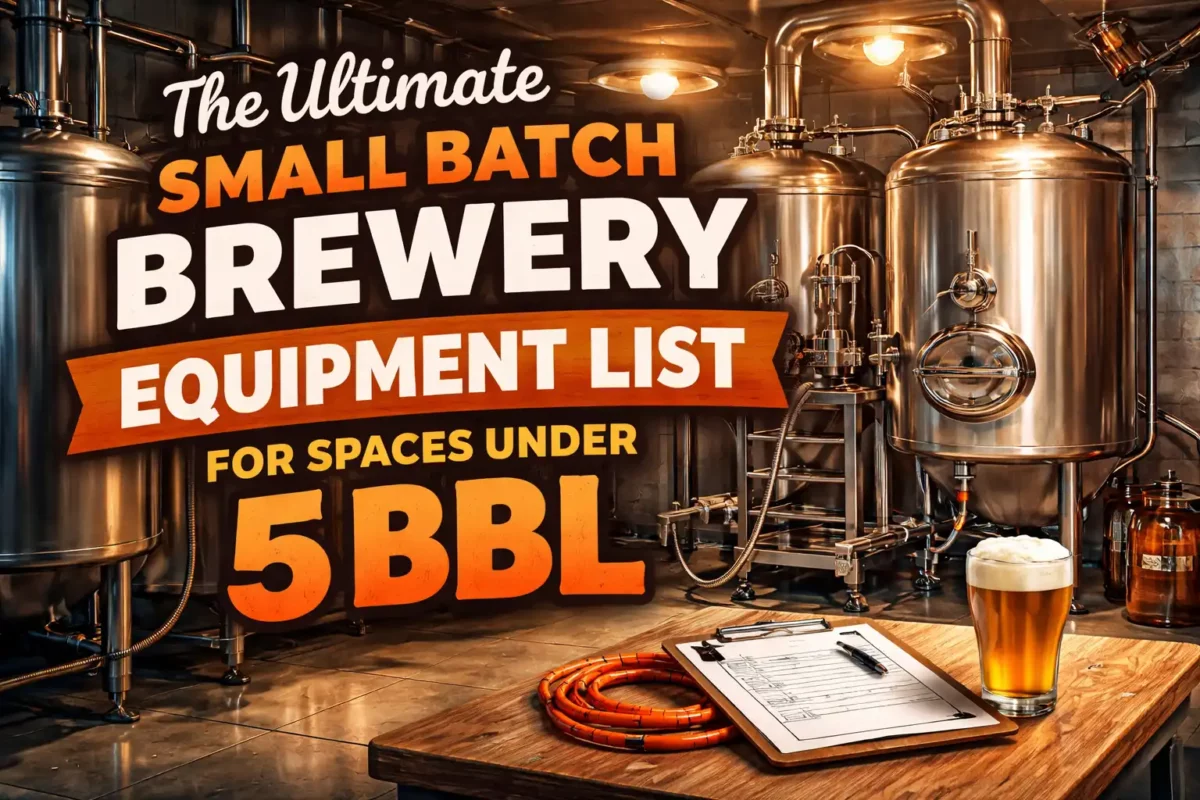
he dream of opening a brewery often starts with a passion for craft, not a passion for industrial real estate. For many aspiring brewers, the initial vision involves a cozy taproom, a local following, and the agility to experiment—not a cavernous production facility. This is where the sub-5 BBL (barrel) brewery model has found its powerful niche. small batch brewery equipment represents a viable entry point, but the path from concept to first pour is paved with critical equipment decisions. Selecting the right compact system isn’t just about buying tanks; it’s about understanding the operational cadence, spatial constraints, and hidden infrastructural demands that will define your daily workflow for years to come.
Beyond the Barrel Count: What “Compact” Really Demands
When brewers search for “compact small batch brewery equipment under 5 bbl,” the primary focus is often physical footprint. A 500L system sounds manageable, and the listed 55m² floor space requirement seems straightforward. However, compactness is a three-dimensional puzzle. The often-overlooked variable is vertical clearance. A standard 8.5ft (2.6m) ceiling height requirement, as noted for many systems, is a minimum. In practice, you need additional space above the tanks for cleaning, installing spray balls, and managing venting. Fitting a 3-meter tall fermenter into a space with 10.5ft ceilings leaves almost no room for overhead utilities. One brewer recounted the costly lesson of having to lower a concrete floor after delivery because the glycol line connections on top of the unit couldn’t be accessed.
Furthermore, small batch brewery equipment must be evaluated for its process efficiency within a small space. A 2-vessel system (combining mash and boil) saves significant square footage compared to a traditional 3-vessel setup, which is a common offering in this category. This trade-off is acceptable for many beer styles but can become a bottleneck for brewers aiming for high-efficiency lauter separation or specific decoction processes. The compactness of the brewhouse can simply shift the spatial challenge to other areas, like grain handling, chemical storage, or packaging.
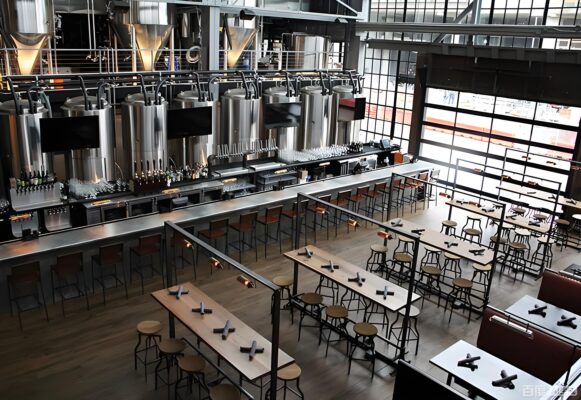
The Hidden Infrastructure: More Than Just Plugging In
A common pitfall for new entrants is underestimating the site requirements that accompany even the smallest professional system. The product specifications list electrical needs—3 phase power, specific voltages—but rarely convey the real-world implications. Securing 3-phase power in an older, repurposed building can be a prohibitive upfront cost, sometimes rivaling the price of the brewing equipment itself. This has pushed many towards electric heating systems, which are simpler to install but come with their own operational cost calculus versus direct-fire or steam.
Drainage is another silent partner in the compact brewery. The recommendation for a 4-inch floor drain is not a suggestion; it’s a necessity. During cleanup or tank blow-down, the volume of liquid moving across a small floor is immense. Inadequate slope or undersized drains lead to persistent pooling, a major safety and sanitation hazard. One operator in a converted garage space had to install a secondary sump pump system because the single existing drain couldn’t handle the simultaneous discharge from the Clean-in-Place (CIP) cycle and a tank cleaning.
Control Systems: The Brain of Your Compact Operation
The level of automation in a small batch system is a critical scaling decision. Options typically range from manual PID panels to semi-automatic PLC touchscreens. For a solo brewer or a very small team, the allure of full automation is strong, promising consistency and reducing manual labor. However, in a compact space, a fully automated system with its attendant network of sensors, actuators, and wiring can become complex to service. When a sensor fails on a Saturday during a brew, the simplicity of a semi-automatic system where you can manually override a valve becomes a feature, not a drawback.
The mention of “remote access” in specifications is increasingly relevant. The ability to monitor fermentation temperatures or receive alerts from a smartphone provides operational flexibility crucial for a small team managing both production and front-of-house duties. It turns the compact brewery from a place you must be physically present to monitor into a system you can manage.
Integrating the Full Process Flow
A brewhouse is just the beginning. The true test of a compact setup is how it integrates the entire pipeline: fermentation, conditioning, and packaging. A 5 BBL brew day produces 5 BBLs of wort that needs tank space for 2-4 weeks. Therefore, your footprint planning must account for at least 3-4 times your brew batch in fermenter and brite tank capacity. This is where a modular approach from a single supplier can prevent integration headaches. For instance, a brewer configuring their initial setup might select a Small batch Brewery Equipment package that includes matching fermenters with standardized fittings, ensuring their CIP system, glycol connections, and control panels speak the same language. This coherence saves countless hours during installation and daily operations compared to piecing together vessels from different manufacturers.
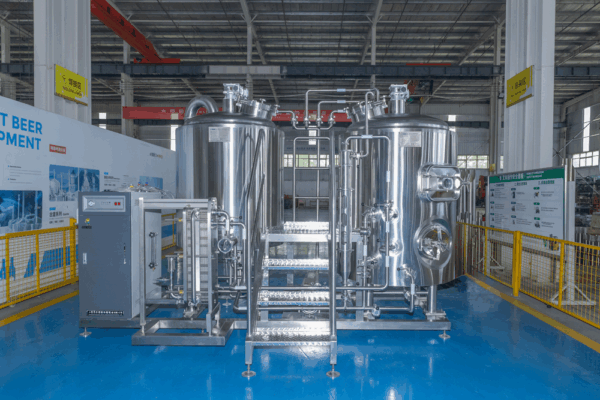
Image: A 300L system, ideal for a brewpub or hotel, demonstrating a compact, integrated vessel layout.
The Packaging Conundrum in Limited Space
Perhaps the most significant operational shift for a small batch brewery equipment is packaging. Bottling or canning lines, even small semi-automatic ones, consume a surprising amount of space and require a different type of workflow—linear and staged. For many under-5 BBL operations, kegging is the default and most space-efficient solution. But if distribution or direct-to-consumer sales are goals, packaging must be planned for from day one. Some compact breweries opt for mobile canning services, but this introduces scheduling dependencies and per-unit costs that impact margins. Allocating even a 10′ x 10′ area for a manual can seamer, labeler, and packaging station must be part of the initial layout.
The Reality of Output and Business Model Alignment
Finally, it’s vital to temper expectations with the realistic output of a sub-5 BBL system. Specifications often state “1-2 brews per day.” In reality, achieving two full, high-quality brews in a single 8-10 hour shift in a compact space is an intense logistical dance. It requires impeccable preparation, rapid cooling, and efficient cleanup. Most operators find a sustainable pace is one brew day, followed by a day for cellaring, packaging, and administrative tasks. This output directly dictates your business model. A 3 BBL system producing 6 BBLs a week can comfortably supply a busy taproom but leaves very little volume for wholesale without significant expansion of tank space.
Choosing small batch brewery equipment is the first major commitment in a long journey. The most successful compact breweries are those that view their equipment not as a collection of vessels, but as a tightly integrated production ecosystem designed for the specific rhythms and constraints of a small space. The right list isn’t just a catalog of items; it’s a blueprint for a viable business.
FAQ
Q: Is 3-phase power absolutely necessary for a brewery under 5 BBL?
A: While many professional systems are designed for 3-phase due to its efficiency for heating elements and motors, it is not always an absolute requirement. Some manufacturers offer configurations for robust single-phase power, particularly for electric systems under 3 BBL. However, single-phase may limit your heating speed and future expansion options. The key is to discuss your available electrical service with your equipment supplier during the design phase.
Q: How much should I budget for installation and ancillary costs beyond the equipment price?
A: Experienced operators often cite a rule of thumb: the total cost to get operational (including equipment delivery, rigging, electrical/plumbing hookup, glycol system, cold room, and initial chemicals/raw materials) can be 1.5 to 2 times the cost of the brewhouse equipment itself. For a compact system, site-specific challenges like reinforcing floors or installing drainage can disproportionately affect this ratio.
Q: Can I really run a 5 BBL brewery by myself?
A: It is physically possible but exceptionally demanding. A solo brewer can manage the brew day, but the overlapping demands of fermentation management, packaging, cleaning, sales, and taproom service (if applicable) quickly become unsustainable. Most successful sub-5 BBL operations have at least 2-3 dedicated individuals sharing production and business duties.
Q: Is a 2-vessel system a significant compromise over a 3-vessel system?
A: For the vast majority of ale-focused breweries, a well-designed 2-vessel system (mash/lauter tun combined with a boil kettle/whirlpool) is not a compromise but a smart space-saving choice. It may slightly reduce lauter efficiency or extend your brew day by an hour due to sequential vessel use, but for the space-constrained brewer, the trade-off is usually worthwhile. It becomes a limitation only if you plan to produce very high-adjunct beers or specific lager styles requiring complex step mashes as a core part of your lineup.
Q: How important is polish quality (e.g., ≤0.4µm) on the interior of tanks?
A: Extremely important. A smoother interior surface finish (measured in micrometers) provides far fewer microscopic niches for bacteria and biofilms to hide. This makes cleaning and sanitation more effective and reliable, which is the cornerstone of consistent beer quality. In a small brewery where you might be re-pitching yeast or have less redundancy in your tank lineup, superior sanitary design is a critical investment in preventing costly infections.
