
Choosing the right commercial brewery equipment is essential for maintaining beer quality, controlling production costs, and meeting customer demand. Buyers should evaluate the complete brewing process, from raw material preparation and wort production to fermentation, cleaning, and packaging. The best equipment configuration depends on production targets, beer styles, available space, automation requirements, and future expansion plans. Comparing technical specifications and supplier capabilities before purchasing helps brewery owners avoid production bottlenecks and build a reliable, cost-effective brewing operation.
What Equipment Does a Commercial Brewery Need?
A commercial brewery requires an integrated equipment system in which every production stage supports the next. Selecting individual machines without considering their compatibility can increase operating costs and limit overall output.
1. Brewhouse System
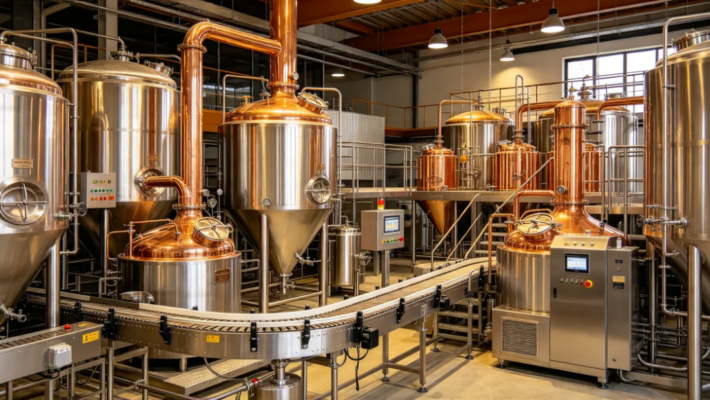
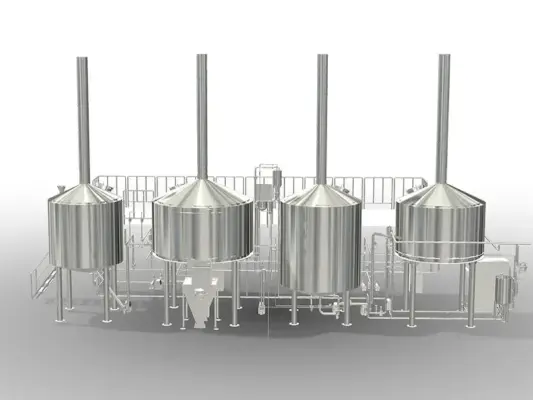
The brewhouse determines how efficiently raw ingredients are converted into wort. Typical equipment includes mash tuns, lauter tuns, brew kettles, and whirlpool vessels, depending on the selected configuration.
Buyers should compare batch capacity, heating methods, vessel arrangement, and automation options. A two-vessel system may suit projects with limited space, while a three- or four-vessel configuration can provide greater process flexibility for more demanding production schedules.
2. Fermentation and Storage Tanks
Fermentation tanks directly influence production capacity, scheduling, and beer consistency. Their total working volume must accommodate the expected number of batches and the time required for fermentation and maturation.
Bright beer tanks provide additional capacity for conditioning and temporary storage before packaging. Buyers should also check stainless steel grade, insulation, cooling jackets, pressure ratings, and cleaning requirements before placing an order.
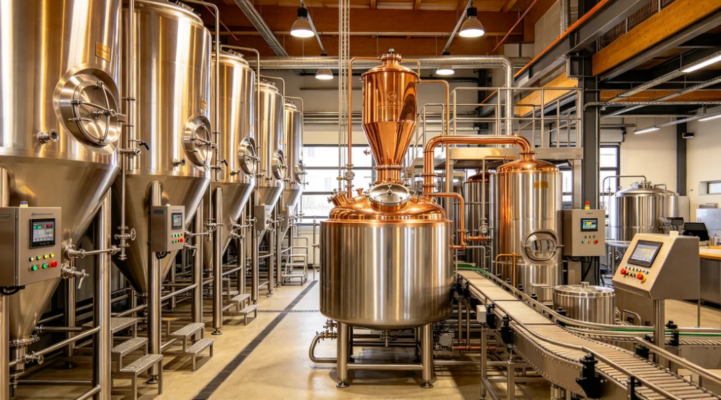
3. Cooling, Cleaning, and Packaging Equipment
Cooling and cleaning systems are essential for maintaining stable operations and hygienic production conditions. Glycol chillers support fermentation temperature control, while clean-in-place (CIP) equipment helps simplify sanitation.
Packaging equipment should match the brewery’s distribution strategy. Bottling, canning, and keg-filling systems have different space, labor, and throughput requirements. An undersized packaging line can delay production even when the brewhouse and fermentation cellar have sufficient capacity.
How Should Buyers Compare Commercial Brewery Equipment Specifications?
The best purchasing decision comes from comparing technical specifications against actual production requirements rather than choosing equipment based on price alone.
The following table provides an illustrative comparison framework. Final specifications should be confirmed with the equipment manufacture
These are indicative planning ranges, not a fixed equipment package. Actual capacity, pressure ratings, materials, and configuration depend on the project.
Which Type of Commercial Brewery Is Right for Your Business?
The right brewery configuration depends on the target market, expected sales volume, and product portfolio. Defining the business model first helps buyers avoid unnecessary equipment investment.
Production Brewery
A production brewery supplies beer to distributors, retailers, bars, and restaurants. It generally prioritizes repeatable output, adequate fermentation capacity, efficient packaging, and consistent quality control.
Brewpub or Hospitality Brewery
A brewpub produces beer primarily for its own restaurant, bar, or hospitality venue. Flexible batch sizes, straightforward operation, and the ability to produce different beer styles may be more important than maximum output.
Craft and Specialty Brewery
A craft brewery may need flexible equipment for seasonal recipes, limited releases, and frequent product changes. Additional fermentation tanks and adaptable controls can help accommodate a varied production schedule.
How Can Buyers Select a Reliable Brewery Equipment Manufacturer?
A reliable manufacturer should provide more than individual tanks; it should help coordinate equipment, technical requirements, and project implementation.
Before purchasing, buyers should review the supplier’s manufacturing capabilities, equipment specifications, relevant compliance documentation, and experience with similar projects. Requesting detailed drawings and a complete equipment list makes it easier to assess whether the proposed system meets production requirements.
Installation, commissioning, operator training, spare parts, warranty coverage, and after-sales support should also be discussed. For overseas projects, clarify shipping arrangements, technical communication, and the scope of on-site services before signing the contract.
How Can Buyers Control Commercial Brewery Investment?
Careful project planning helps reduce avoidable expenses without compromising essential production requirements. Buyers should calculate the complete project budget rather than comparing the purchase price of the brewhouse alone.
The budget may include fermentation tanks, cooling equipment, CIP systems, packaging machinery, utilities, transportation, installation, and commissioning. Factory modifications, drainage, electrical work, and water treatment may also affect the total investment.
Before requesting a quotation, prepare the expected production volume, beer styles, packaging formats, available factory space, utility conditions, and expansion plans. These details allow the manufacturer to recommend a suitable configuration and provide a more meaningful cost comparison.
Frequently Asked Questions
1. What is included in commercial brewery equipment?
A typical system includes a brewhouse, fermentation tanks, bright beer tanks, cooling equipment, cleaning systems, process pipelines, controls, and packaging machinery. The final equipment list depends on production capacity and project requirements.
2. How do I calculate the required brewery capacity?
Start with expected sales, target annual output, batch size, and the number of production days. Then account for fermentation time, cleaning schedules, tank availability, and packaging speed to identify potential bottlenecks.
3. Which stainless steel is suitable for commercial brewery equipment?
SS304 is widely used for brewing vessels because of its corrosion resistance and suitability for food processing. SS316 may be appropriate for applications requiring greater resistance to certain corrosive conditions. Buyers should confirm material specifications with the manufacturer.
4. What should I check before ordering from a brewery equipment supplier?
Review equipment specifications, manufacturing quality, applicable compliance documents, delivery schedules, installation arrangements, warranty terms, and technical support. Compare complete project quotations to ensure that the suppliers are offering equivalent equipment and services.
