
Choosing the right micro brewing equipment requires more than comparing factory prices. Buyers need to consider business type, brewing capacity, fermentation requirements, packaging methods, and future expansion plans. A restaurant brewery, taproom, and small commercial brewery may need different equipment configurations even when their production targets are similar. Understanding these differences helps buyers control initial investment, avoid unnecessary purchases, and obtain accurate quotations from manufacturers. The best solution is a properly matched brewing system that supports daily operations while leaving room for business growth.
What Factors Determine Micro Brewing Equipment Factory Price?
The factory price of micro brewing equipment depends primarily on system configuration, production capacity, materials, automation, and auxiliary equipment. Comparing prices without checking the included components can lead to misleading purchasing decisions.
How Does Brewhouse Capacity Affect the Price?
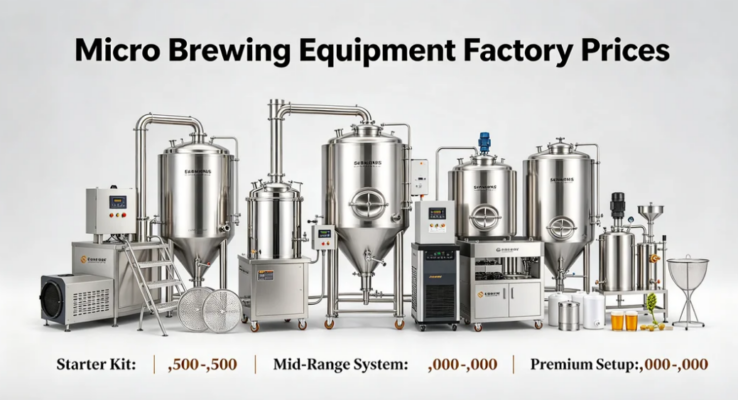
Brewhouse capacity directly affects equipment dimensions, vessel requirements, heating systems, and production flexibility. A 300L system may suit a small restaurant, while a 500L or 1,000L system may be more appropriate for businesses with higher sales volumes.
The number of vessels also influences the investment. A two-vessel brewhouse generally combines certain brewing operations, while three-vessel and four-vessel systems separate more processes. Buyers should compare batch frequency, available space, and labor requirements before choosing a configuration.
How Do Fermentation Tanks Affect the Total Cost?
Fermentation tanks are a major part of the overall equipment budget because their quantity, working volume, cooling configuration, and accessories affect the final quotation. A brewery producing several beer styles may require multiple tanks even when its brewhouse capacity is relatively small.
Buyers should calculate fermentation capacity according to brewing frequency, fermentation duration, maturation time, and expected sales. Purchasing too few tanks can restrict production, while buying unnecessary capacity increases the initial investment.
Which Micro Brewing Equipment Is Suitable for Different Businesses?
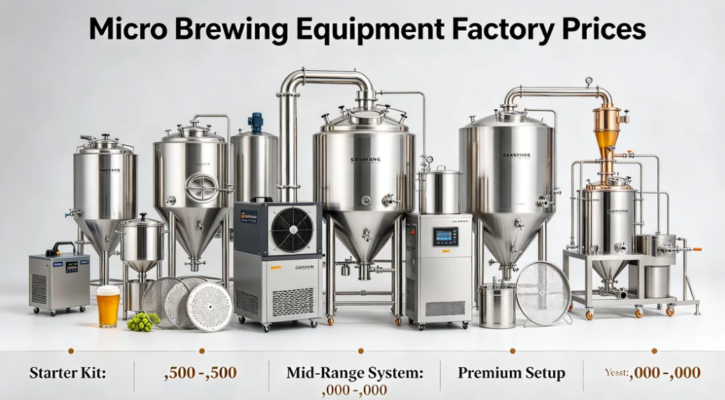
The most cost-effective configuration depends on how the business produces, serves, and distributes beer. Buyers should identify their main sales channel before requesting a factory price.
What Equipment Does a Restaurant Brewery Need?
A restaurant brewery generally benefits from a compact brewhouse, appropriately sized fermentation tanks, a cooling system, and essential cleaning equipment. Space efficiency and straightforward operation are especially important because brewing areas must coexist with kitchens, dining rooms, and customer facilities.
A 300L or 500L brewhouse may be worth evaluating for a restaurant with limited demand. The final choice should reflect expected beer sales, available installation space, and the planned number of brewing days.
What Should a Taproom Include in Its Equipment Package?
A taproom needs enough fermentation and storage capacity to maintain a reliable supply of different beer styles. Multiple fermentation tanks allow separate batches to follow different production schedules, reducing the risk of running out of popular products.
Bright beer tanks may also be useful when the serving and conditioning process requires them. Buyers should balance equipment investment against realistic sales forecasts rather than purchasing capacity that the business cannot use efficiently.
Which Configuration Works for a Small Commercial Brewery?
A small commercial brewery supplying bars, restaurants, or retailers needs equipment that supports repeatable production and reliable delivery schedules. In addition to the brewhouse and fermentation tanks, the system may require keg-filling, bottling, or canning equipment.
Packaging should be planned early because its capacity can limit the entire operation. A brewery with sufficient fermentation capacity may still struggle to fulfill orders if its filling equipment cannot keep pace with production.
How Do Different Equipment Capacities Compare?
Comparing indicative equipment sizes helps buyers establish a starting point for discussions with manufacturers. The following specifications are planning references rather than fixed packages or guaranteed factory prices.
| Equipment option | Typical application | Main purchasing consideration |
|---|---|---|
| 300L brewhouse | Small restaurant or specialty brewing project | Space, batch frequency, and limited demand |
| 500L brewhouse | Restaurant brewery, bar, or growing microbrewery | Production flexibility and available cellar space |
| 1,000L brewhouse | Higher-volume microbrewery or small commercial brewery | Sales forecasts and production scheduling |
| 300L–500L fermentation tanks | Small batches and specialty beers | Number of recipes and simultaneous batches |
| 1,000L–2,000L fermentation tanks | Larger batches and growing production demand | Fermentation duration and total working capacity |
| Kegging or bottling line | Draft beer or packaged beer distribution | Required filling speed and sales channels |
Actual equipment prices depend on vessel design, stainless steel specifications, heating methods, automation, accessories, and the scope of supply. Buyers should request itemized quotations for equivalent configurations instead of comparing equipment capacity alone.
How Can Buyers Get an Accurate Factory Price?
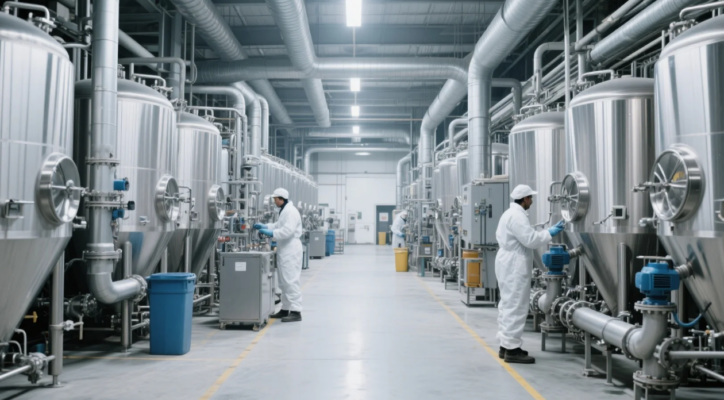
An accurate quotation starts with clear production and project information. Manufacturers need to understand the intended application before recommending equipment and calculating costs.
Before contacting a supplier, prepare the following details:
- Business type and target customers.
- Expected batch volume and monthly beer production.
- Planned beer styles and fermentation schedule.
- Packaging formats, including kegs, bottles, or cans.
- Available factory space and utility conditions.
- Preferred automation level and future expansion plans.
Buyers should also confirm whether the quotation includes cooling equipment, CIP cleaning systems, pumps, pipelines, electrical controls, transportation, installation, and commissioning. Clarifying these items helps prevent unexpected expenses after the initial order.
How Can Buyers Reduce Equipment Investment Without Sacrificing Quality?
The best way to control costs is to prioritize essential equipment and match system capacity to realistic demand. Choosing the cheapest quotation may create additional expenses if important components or technical services are excluded.
Buyers can compare two-vessel and three-vessel brewhouses, evaluate manual versus automated controls, and plan packaging upgrades according to their business model. A modular design may also allow additional fermentation tanks or packaging equipment to be installed as sales grow.
Equipment quality, cleaning accessibility, spare parts availability, warranty coverage, and manufacturer support should remain part of the purchasing decision. A balanced system can offer better long-term value than a low-cost package that requires frequent modifications.
Frequently Asked Questions
1. What is the factory price of micro brewing equipment?
The factory price varies according to brewhouse capacity, vessel configuration, fermentation tanks, automation, auxiliary systems, and packaging requirements. Requesting an itemized quotation based on your production plan is the most reliable way to compare costs.
2. Is 500L micro brewing equipment suitable for a restaurant?
A 500L system may suit a restaurant with sufficient demand, installation space, and a suitable brewing schedule. Buyers should calculate expected sales and fermentation capacity before confirming the final configuration.
3. Does micro brewing equipment include fermentation tanks?
Not necessarily. Some quotations cover only the brewhouse, while others include fermentation tanks, cooling, cleaning, and packaging equipment. Always check the equipment list and confirm which components are included.
4. What information is needed to request a micro brewing equipment quotation?
Provide your target batch size, expected production volume, beer styles, packaging requirements, factory dimensions, utility conditions, and preferred automation level. These details help the manufacturer recommend a suitable configuration and calculate a more accurate price.
