
Brewery equipment prices vary according to production capacity, equipment configuration, stainless steel specifications, automation level, and project requirements. Buyers should not compare quotations based on total price alone. A cost-effective brewery system must balance production efficiency, equipment quality, operating expenses, and future expansion. Understanding what each machine does and how its specifications affect investment helps buyers select the right brewing equipment without paying for unnecessary capacity or features.
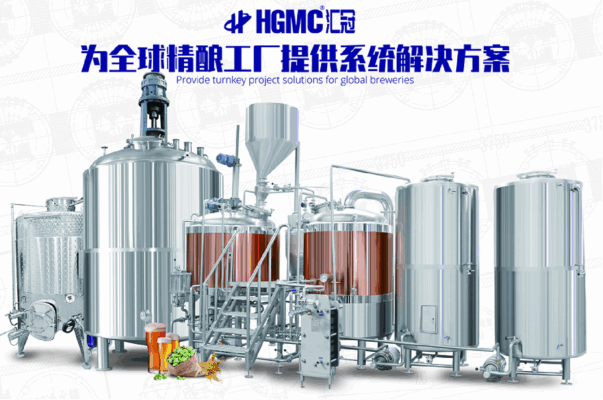
What Equipment Is Included in a Complete Commercial Brewery System?
A complete commercial brewery system requires multiple equipment units working together throughout the brewing process. The actual configuration depends on production capacity, beer styles, packaging methods, and the brewery’s operating plan.
| Equipment | Main Function | Key Price Factors |
|---|---|---|
| Brewhouse system | Mashing, lautering, boiling, and whirlpooling | Vessel configuration, heating method, capacity |
| Fermentation tanks | Fermentation and maturation | Tank quantity, volume, pressure, cooling jackets |
| Bright beer tanks | Beer storage and preparation for packaging | Capacity, pressure, temperature control |
| Cooling system | Wort and fermentation temperature control | Cooling capacity, energy efficiency |
| CIP system | Cleaning tanks and pipelines | Cleaning capacity, automation, pump configuration |
| Filling and packaging equipment | Bottling, canning, or kegging | Filling speed, format, automation |
A draft beer brewery may prioritize fermentation tanks and keg filling, while a brewery producing retail beer may require a complete bottling or canning line. Defining the production process before purchasing equipment helps avoid unnecessary investment.
How Does Brewhouse Configuration Affect Equipment Price?
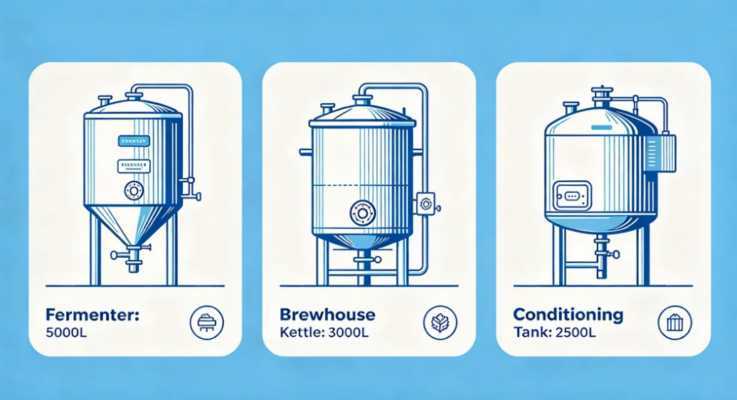
The brewhouse configuration directly influences equipment cost, brewing efficiency, and the number of batches that can be produced within a working day. Different vessel arrangements provide different levels of process flexibility and operational efficiency.
| Brewhouse Type | Configuration | Suitable Application |
|---|---|---|
| 2-vessel system | Combined brewing functions | Small breweries and limited production schedules |
| 3-vessel system | Separate key brewing processes | Commercial breweries with regular production |
| 4-vessel system | More independent process operations | Higher output and demanding brewing schedules |
A two-vessel system is often a practical choice for projects with limited space and investment. Three-vessel and four-vessel systems can provide greater process flexibility and support more intensive production schedules.
Buyers should also compare electric, steam, and direct-fire heating options, as well as manual, semi-automatic, and PLC control systems. The best configuration is the one that matches production demand rather than simply having the most equipment.
How Should Buyers Compare Fermentation Tank Specifications?
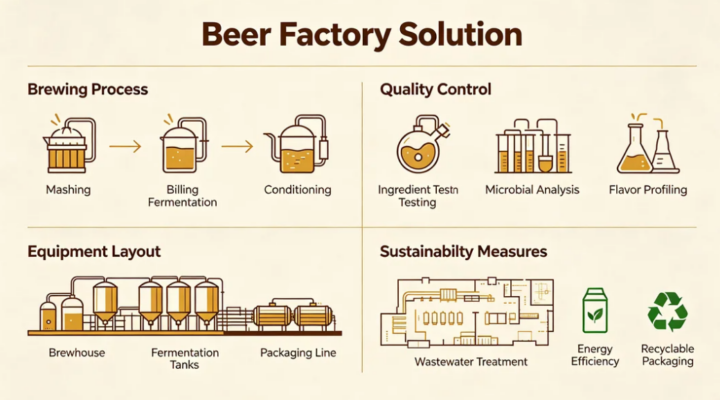
Fermentation tanks represent a substantial part of brewery investment because their capacity, quantity, construction, and temperature-control requirements directly affect production planning.
| Technical Parameter | What Buyers Should Check | Why It Matters |
|---|---|---|
| Tank capacity | 500L, 1,000L, 2,000L, 5,000L, etc. | Matches batch size and output |
| Stainless steel | Grade and material specifications | Durability and hygiene |
| Cooling jacket | Jacket zones and cooling coverage | Stable fermentation temperature |
| Working pressure | Pressure rating and design requirements | Process suitability and safety |
| Internal finish | Surface finish and welding quality | Cleaning and sanitation |
| Insulation | Thickness and insulation material | Thermal efficiency |
Buyers should calculate fermentation capacity according to batch frequency and fermentation duration. Purchasing too few tanks may limit production, while excessive tank capacity can increase investment and reduce equipment utilization.
When comparing tank quotations, make sure the material grade, plate thickness, cooling structure, fittings, and pressure specifications are equivalent.
Which Auxiliary Equipment Should Be Included in the Budget?
Auxiliary equipment is essential for stable brewery operation, even though it may not directly produce beer. Missing utility or cleaning equipment can lead to additional costs after the main machines have been delivered.
Important supporting equipment includes chillers, glycol tanks, pumps, valves, pipelines, CIP cleaning units, steam boilers, water treatment systems, and electrical control cabinets.
Buyers should confirm whether these components are included in the supplier’s quotation or listed as optional equipment. A detailed quotation should clearly identify the equipment scope, technical specifications, installation requirements, and excluded items.
How Do Automation and Material Quality Affect Brewery Equipment Costs?
Automation and manufacturing quality can create significant price differences between brewery equipment with similar capacities. Automated systems may include temperature sensors, programmable controls, pumps, valves, and integrated process management functions.
Higher automation can reduce repetitive manual operations and improve process consistency, but the additional investment should be justified by labor requirements, production volume, and operating complexity.
Material quality is equally important. Buyers should compare stainless steel grades, thickness, internal surface finish, welding quality, insulation, and the specifications of pumps and valves. A lower quotation may reflect differences in construction or component quality rather than a better purchasing opportunity.
What Additional Costs Should Buyers Consider Before Ordering?
The purchase price is only one part of the total brewery project budget. Transportation, installation, utilities, commissioning, and operator training may affect the final investment.
| Cost Item | Budget Consideration |
|---|---|
| Transportation | Freight, shipping method, destination charges |
| Installation | Equipment positioning, assembly, commissioning |
| Utilities | Water, electricity, steam, cooling, compressed air |
| Pipeline connections | Product, water, glycol, and cleaning lines |
| Training | Operator training and technical guidance |
| Maintenance | Spare parts, seals, pumps, and routine service |
Before signing a contract, buyers should request a clear breakdown of included services and additional expenses. This makes supplier quotations easier to compare and reduces the risk of unexpected project costs.
Is New Brewery Equipment Worth the Investment?
New brewery equipment is generally suitable for buyers who need specific capacities, customized configurations, reliable technical support, and consistent production standards. It also allows equipment selection to match the brewery’s planned process from the beginning.
Used equipment may reduce the initial purchase cost, but buyers should inspect its operating history, tank condition, welds, valves, pumps, electrical components, pressure-related parts, and maintenance records.
The final decision should consider not only purchase price but also installation costs, repair requirements, equipment compatibility, and expected service life.
How Can Buyers Reduce Brewery Equipment Costs?
The most effective way to reduce brewery equipment costs is to optimize the system configuration before placing an order. Buyers should determine the target batch size, daily brewing schedule, annual production, fermentation cycle, and packaging requirements.
A practical purchasing strategy includes selecting an appropriate brewhouse configuration, calculating fermentation capacity carefully, avoiding unnecessary automation, comparing equivalent technical specifications, and planning future expansion.
Working with an integrated brewery equipment manufacturer can also simplify equipment coordination and reduce compatibility problems between brewing, fermentation, cooling, cleaning, and packaging systems.
How Can Buyers Get an Accurate Brewery Equipment Quotation?
A detailed project brief helps manufacturers recommend equipment that fits the brewery’s actual needs. Buyers should prepare the following information:
- Target brewing capacity per batch
- Expected daily or annual beer production
- Beer styles and brewing process
- Fermentation tank capacities and quantities
- Preferred brewhouse configuration
- Bottle, can, or keg packaging requirements
- Available factory space and utility conditions
- Investment budget and future expansion plans
With these details, a brewery equipment manufacturer can evaluate the project, recommend suitable equipment, and provide a more accurate quotation.
For commercial brewing projects, HGMC offers customized brewery equipment configurations, including brewhouses, fermentation tanks, bright beer tanks, cooling systems, and auxiliary equipment. Buyers can explore commercial brewery equipment solutions to compare available systems and request a configuration based on their production requirements.
Frequently Asked Questions About Brewery Equipment Prices
1. Why do brewery equipment prices vary so much between suppliers?
Price differences usually come from equipment capacity, vessel configuration, stainless steel specifications, automation, components, manufacturing quality, and included services. Buyers should compare technical details rather than quotations based on different equipment scopes.
2. Which equipment has the greatest impact on a brewery’s total investment?
The brewhouse and fermentation systems are generally major investment components. However, packaging equipment, utility systems, automation, and project installation can also significantly affect the overall budget.
3. Is a two-vessel brewhouse cheaper than a three-vessel system?
A two-vessel system generally requires fewer vessels and may have a lower initial equipment cost. A three-vessel system offers greater process separation and flexibility. The appropriate choice depends on production frequency, workflow, available space, and labor requirements.
4. What information is needed to receive an accurate brewery equipment quotation?
Buyers should provide batch capacity, expected output, beer styles, fermentation requirements, packaging format, equipment preferences, factory conditions, and budget. More detailed information helps manufacturers recommend suitable configurations and avoid unnecessary equipment costs.
