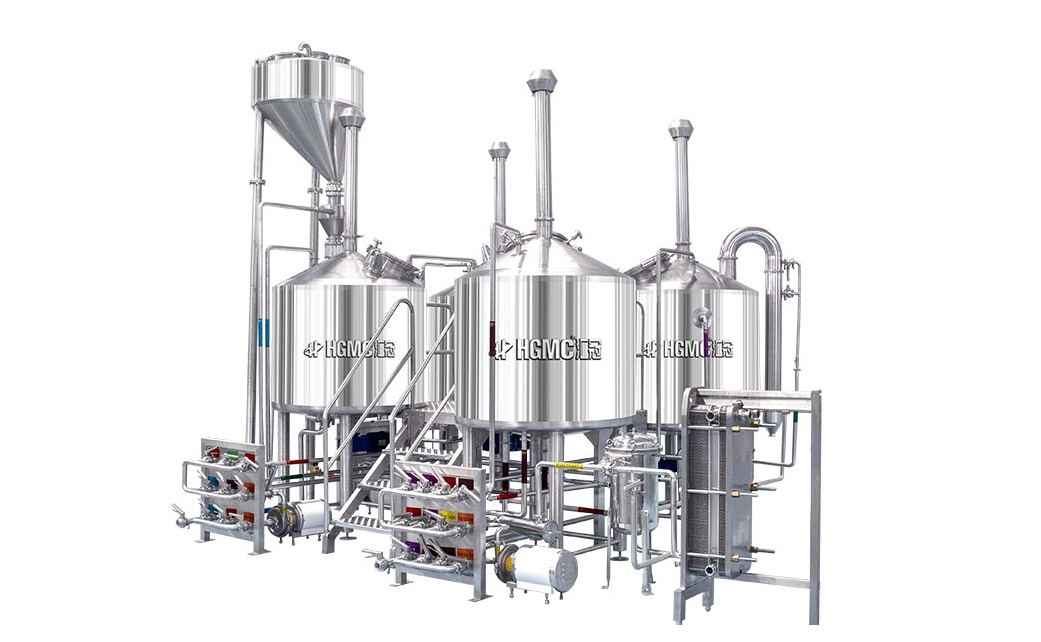
Complete Guide to Modern Beer Brewing Equipment Systems: From Mashing to Packaging
The global brewery equipment market reached $18.45 billion in 2024 and is projected to grow at a CAGR of 6.1% through 2030, according to Grand View Research. As craft beer consumption continues to rise—with the U.S. craft beer market alone generating $28.8 billion in retail sales (Brewers Association, 2024)—investing in the right brewing equipment has never been more critical for brewery success.
This comprehensive guide explores modern beer brewing systems, from initial mashing through final packaging, examining each component’s role in producing consistent, high-quality beer at scale.
Understanding the Complete Beer Brewing System
A professional brewing operation requires integrated equipment systems working in harmony. Modern breweries utilize automated, modular designs that optimize efficiency while maintaining the flexibility to produce diverse beer styles.
The Five Core Systems
1. Mashing System – Converts grain starches to fermentable sugars
2. Wort Production System – Boils, sterilizes, and adds hop character
3. Fermentation System – Transforms wort into beer
4. CIP (Clean-in-Place) System – Maintains sanitation standards
5. Filling & Packaging System – Prepares finished beer for market
According to the Master Brewers Association of Americas, integrated brewing systems can improve production efficiency by 35-40% compared to standalone equipment configurations.
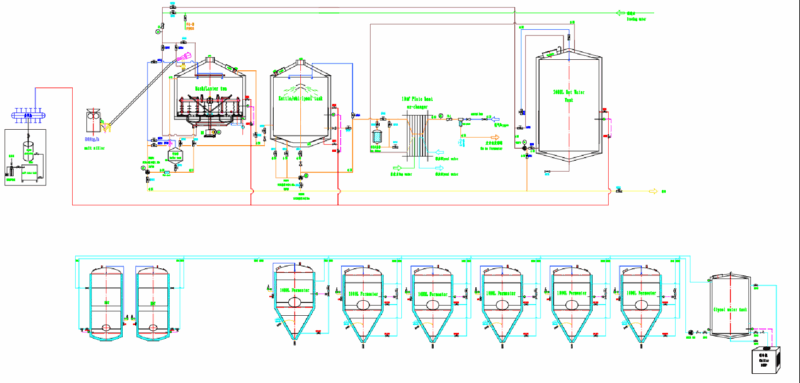
Mashing System: The Foundation of Great Beer
The mashing system is where brewing begins, extracting fermentable sugars, amino acids, and other compounds essential for beer production.
Key Components
Mash Tun
- Capacity range: 500L to 50,000L for commercial operations
- Temperature control: Precision within ±0.5°C
- Material: 304 or 316 stainless steel construction
- Heating method: Direct fire, steam jacket, or electric elements
- Rake system: Automated stirring prevents grain bed compaction
Lauter Tun
- False bottom design: Precision slot width (0.7-1.0mm)
- Sparging system: Even water distribution for optimal extraction
- Automated rakes: Variable speed for grain bed management
- Recirculation capability: Achieves wort clarity of 50-150 EBC units
Performance Data
| System Size | Mash Efficiency | Cycle Time | Water-to-Grain Ratio |
|---|---|---|---|
| Small (500-1,000L) | 88-92% | 4-5 hours | 3:1 to 3.5:1 |
| Medium (2,000-5,000L) | 92-95% | 3.5-4.5 hours | 2.5:1 to 3:1 |
| Large (10,000L+) | 94-97% | 3-4 hours | 2.5:1 to 3:1 |
Data source: Journal of the American Society of Brewing Chemists, 2024
Research shows that automated mashing systems improve extract efficiency by 8-12%, directly reducing raw material costs. For a brewery producing 10,000 hectoliters annually, this translates to $40,000-$80,000 in annual savings.
Wort Kettle System: Precision Boiling and Hop Addition
The wort kettle (brew kettle) performs multiple critical functions that define beer character and quality.
Essential Features
Brew Kettle Design
- Heating capacity: 500,000 BTU to 2,000,000 BTU depending on size
- Boil intensity: 4-8% evaporation rate per hour
- Pressure rating: Atmospheric to 0.15 MPa
- Hop addition ports: Automated dosing systems
- Energy recovery: Vapor condensation systems reduce energy costs by 25-30%
Whirlpool Tank
- Tangential inlet: Creates optimal centrifugal flow
- Cone bottom: 10-15° angle for trub collection
- Rest time: 20-30 minutes for hot break separation
- Clear wort recovery: >95% efficiency
Energy Efficiency Comparison
| Heating Method | Energy Consumption (MJ/HL) | Installation Cost | Operating Cost | Precision Control |
|---|---|---|---|---|
| Direct Fire (Gas) | 180-220 | Low | Medium | Good |
| Steam Jacket | 160-200 | High | Medium-High | Excellent |
| Electric Elements | 150-190 | Medium | High | Excellent |
| Electric + Heat Recovery | 110-140 | Very High | Low | Excellent |
Data source: Beverage Industry Environmental Roundtable, 2024
Modern wort kettles with energy recovery systems achieve ROI within 2-4 years through reduced energy consumption, according to the U.S. Department of Energy’s industrial efficiency programs.
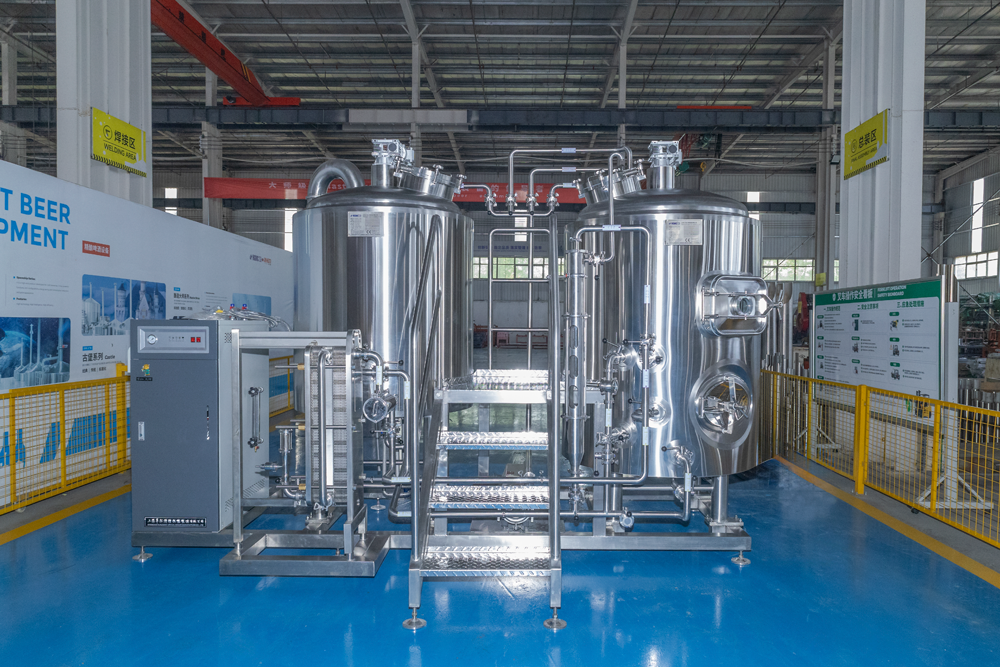
Fermentation System: Where Wort Becomes Beer
The fermentation system is the heart of any brewery, representing 40-50% of total equipment investment.
Fermentation Tank Specifications
Primary Features
- Material: 316 stainless steel (superior corrosion resistance)
- Surface finish: 2B grade, Ra <0.5 microns (reduces contamination by 78%)
- Insulation: 80-100mm polyurethane foam
- Cooling: Glycol jacket or dimple plate design
- Temperature range: -2°C to 25°C
- Pressure capability: 0.3-0.4 MPa
- CIP spray balls: 360° coverage
Tank Configurations
Cylindroconical Tanks (CCT)
- Most common design for modern breweries
- 60° cone angle for yeast collection
- Top manway for dry hopping
- Sample ports at multiple levels
- Pressure relief valves and gauges
Unitanks
- Combined fermentation and bright tank
- Space-efficient for smaller operations
- Single vessel reduces transfer losses
- Ideal for 1,000-5,000L batches
Horizontal Lagering Tanks
- Traditional design for lager production
- Easier cleaning and maintenance
- Lower ceiling height requirements
- Common in European breweries
Fermentation System Capacity Planning
| Brewery Scale | Annual Production (HL) | Number of Fermenters | Tank Size (L) | Total Investment |
|---|---|---|---|---|
| Microbrewery | 500-2,000 | 4-8 | 1,000-3,000 | $60,000-$150,000 |
| Small Craft | 2,000-8,000 | 8-16 | 3,000-5,000 | $150,000-$400,000 |
| Regional Craft | 8,000-30,000 | 16-32 | 10,000-20,000 | $600,000-$1,500,000 |
| Production Brewery | 30,000-100,000 | 32-60 | 20,000-50,000 | $2,000,000-$5,000,000 |
Data source: IBISWorld Brewery Equipment Market Report, 2024
Industry analysis shows that optimal fermentation tank utilization is 75-85%. Over-utilization leads to quality issues; under-utilization wastes capital.
Temperature Control Impact on Quality
Research published in the Journal of the Institute of Brewing demonstrates that temperature control precision within ±0.5°C reduces off-flavor compounds by 40-60% compared to ±2°C variation. Modern glycol systems with PLC control achieve this precision automatically.
CIP (Clean-in-Place) System: The Invisible Quality Guardian
A professional CIP system is essential for product quality, operational efficiency, and regulatory compliance.
Why CIP Systems Matter
According to the American Society of Brewing Chemists, contamination issues account for 60-70% of batch failures in breweries without automated CIP systems. Proper cleaning eliminates this risk while saving time and resources.
CIP System Components
1. Chemical Tanks
- Caustic tank (1.5-2.5% NaOH solution)
- Acid tank (1-2% HNO₃ or H₃PO₄ solution)
- Sanitizer tank (200-400 ppm PAA)
- Recovery tanks (for chemical reuse)
2. Pumps and Piping
- High-flow centrifugal pumps: 80-120 GPM capacity
- Stainless steel piping: 316L grade
- Automated valves: Pneumatic or electric actuation
- Flow meters: Verify cleaning solution velocity
3. Control Systems
- PLC-based automation: Pre-programmed cleaning cycles
- Temperature monitoring: Ensures optimal cleaning (65-85°C)
- Chemical concentration sensors: Maintains effective strength
- Documentation: Automatic record-keeping for compliance
CIP Process Sequence
Standard 5-Step CIP Cycle:
- Pre-rinse (5-10 minutes): Cold/warm water removes loose debris
- Caustic wash (20-30 minutes): Hot alkaline solution (75-85°C) dissolves organic matter
- Intermediate rinse (5-10 minutes): Removes caustic residue
- Acid wash (15-20 minutes): Acid solution (65-75°C) removes mineral scale
- Final rinse (10-15 minutes): Potable water until neutral pH
- Sanitization (10-15 minutes): PAA or thermal sanitization (85°C)
Total cycle time: 60-90 minutes per vessel
CIP System Benefits: Data-Driven ROI
| Benefit Category | Manual Cleaning | Automated CIP | Improvement |
|---|---|---|---|
| Labor time per tank | 3-4 hours | 0.5 hours (monitoring) | 85% reduction |
| Water consumption per cycle | 800-1,200L | 400-600L | 50% reduction |
| Chemical costs per cycle | $25-40 | $12-18 | 55% reduction |
| Contamination risk | 5-8% | <1% | 80-90% reduction |
| Consistency | Variable | 99.5%+ | Highly reliable |
Data source: Paul Mueller Company Brewing Equipment Research, 2024
For a 15-barrel brewery cleaning 12 vessels weekly, automated CIP saves approximately $35,000-$50,000 annually in labor, water, and chemical costs.
Filling & Packaging System: From Tank to Consumer
Packaging represents the final critical step, protecting beer quality and enabling market distribution.
Packaging Options and Equipment
Kegging Systems
- Semi-automatic keg fillers: 4-8 kegs/hour
- Automatic keg lines: 20-40 kegs/hour
- Keg washers: Integrated cleaning and filling
- Investment: $15,000-$150,000
Canning Lines
- Manual systems: 10-15 cans/minute
- Semi-automatic: 30-60 cans/minute
- Fully automatic: 120-300 cans/minute
- Seamers, labelers, and case packers: Integrated systems
- Investment: $50,000-$500,000
Bottling Lines
- Rinser-filler-capper configurations: All-in-one design
- Speed range: 20-200 bottles/minute
- Crown capping or screw caps: Multiple closure options
- Labeling systems: Pressure-sensitive or roll-fed
- Investment: $80,000-$600,000
Packaging Line Performance Metrics
| Line Speed (Cans/Min) | Annual Capacity (HL)* | Labor Required | Efficiency Rate | Investment Range |
|---|---|---|---|---|
| 30-60 (Semi-auto) | 2,000-4,000 | 3-4 operators | 75-85% | $100,000-$200,000 |
| 80-120 (Auto) | 5,000-10,000 | 2-3 operators | 85-92% | $250,000-$400,000 |
| 150-250 (High-speed) | 12,000-25,000 | 2 operators | 90-95% | $500,000-$1,200,000 |
| 300+ (Industrial) | 30,000+ | 1-2 operators | 92-97% | $1,500,000+ |
*Based on 8-hour shifts, 5 days/week, 50 weeks/year
Data source: Packaging Machinery Manufacturers Institute, 2024
Dissolved Oxygen (DO) Control
One of the most critical packaging considerations is dissolved oxygen, which causes flavor degradation. Industry standards target <50 ppb DO in packaged beer.
Modern canning lines with CO₂ purging achieve 20-30 ppb DO, extending shelf life by 3-6 months compared to non-purged systems.
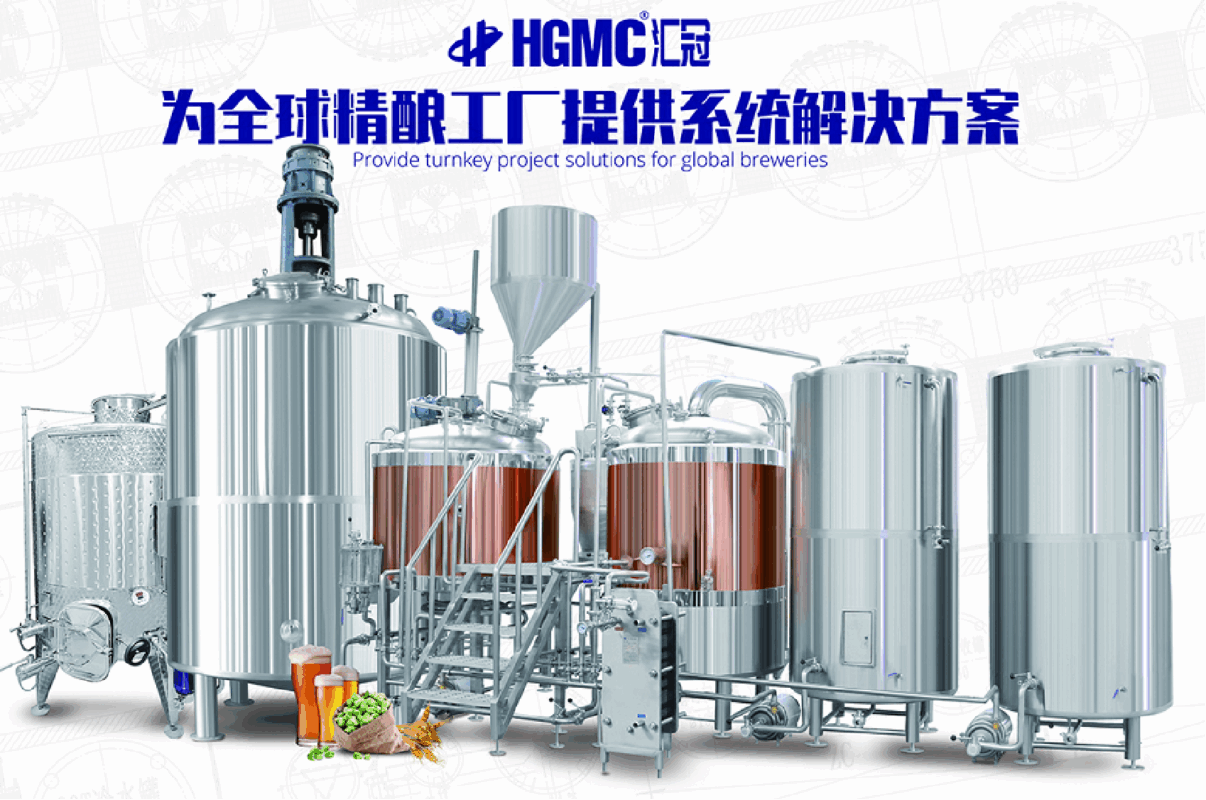
Detailed Brewing Process: Step-by-Step
Understanding the complete brewing workflow helps optimize equipment configuration.
Complete Process Timeline
Day 1: Brewing (8-10 hours)
- Milling (30 minutes): Crush malt to optimal particle size
- Mashing (60-90 minutes): Convert starches at 62-72°C
- Lautering (60-90 minutes): Separate wort from grain
- Boiling (60-90 minutes): Sterilize and add hops
- Whirlpool (20-30 minutes): Remove trub and hot break
- Cooling (30-60 minutes): Chill to fermentation temperature
- Transfer & Aeration (30 minutes): Move to fermenter, add oxygen
- Yeast Pitching (15 minutes): Inoculate with proper cell count
Days 2-14: Fermentation
- Primary fermentation (5-10 days): Yeast converts sugars to alcohol
- Temperature control: Precise management prevents off-flavors
- Monitoring: Daily gravity, temperature, and pressure readings
- Dry hopping (optional): Days 8-12 for hoppy styles
Days 15-21: Conditioning
- Transfer to bright tank (2-4 hours): Leave yeast behind
- Cold conditioning (3-7 days): 0-4°C for clarity and flavor maturation
- Carbonation (2-3 days): Achieve 2.2-2.8 volumes CO₂
- Final filtration (optional): For crystal-clear beer
Day 22+: Packaging
- Quality checks: ABV, IBU, color, microbiological testing
- Filling operations: Kegs, cans, or bottles
- Labeling and case packing
- Cold storage: 2-4°C until distribution
Process Optimization Data
Research from the Master Brewers Association shows that automated process control reduces total production time by 15-20% while improving consistency:
- Manual operations: 18-25 days grain-to-glass
- Semi-automated: 16-21 days
- Fully automated: 14-18 days
Brewing Line Configuration Table
Choosing the right equipment configuration depends on your production goals and business model.
Recommended Configurations by Scale
| Component | Microbrewery (500-1,000L) | Small Craft (2,000-5,000L) | Regional (10,000-20,000L) | Production (30,000L+) |
|---|---|---|---|---|
| Brewhouse | 2-vessel, manual | 3-4 vessel, semi-auto | 4-vessel, full auto | Multiple 4-vessel, full auto |
| Fermentation Tanks | 4-6 unitanks | 8-12 CCTs | 20-30 CCTs | 40-80 CCTs |
| Bright Tanks | 2-3 tanks | 3-5 tanks | 6-10 tanks | 12-20 tanks |
| Cooling System | 15-20 kW glycol | 30-50 kW glycol | 100-200 kW | 300-600 kW |
| CIP System | 2-tank portable | 3-tank automated | 4-tank centralized | Multiple automated |
| Packaging | Manual kegging | Semi-auto canning | Auto canning line | Multiple high-speed lines |
| Automation Level | Basic (manual + monitoring) | Semi (PLC + HMI) | Full (SCADA) | Enterprise (MES + AI) |
| Annual Capacity | 500-2,000 HL | 2,000-8,000 HL | 10,000-40,000 HL | 50,000-200,000 HL |
| Total Investment | $150,000-$300,000 | $400,000-$800,000 | $1.5M-$3.5M | $5M-$20M+ |
| ROI Period | 4-7 years | 3-5 years | 2.5-4 years | 2-3 years |
Data compiled from Brewers Association, IBISWorld, and equipment manufacturer specifications, 2024
Automation & Control Systems: The Digital Brewery
Modern brewing increasingly relies on automation to ensure consistency, efficiency, and quality.
Automation Levels Explained
Level 1: Manual with Monitoring
- Digital temperature displays
- Manual valve operation
- Timer-based processes
- Investment: $5,000-$15,000
- Best for: Nanobreweries, experimental batches
Level 2: Semi-Automated
- PLC (Programmable Logic Controller): Central process control
- HMI (Human Machine Interface): Touchscreen operation
- Automated temperature control
- Recipe storage (10-20 recipes)
- Manual valve operation with automated sequences
- Investment: $25,000-$75,000
- Best for: Small craft breweries, 2,000-8,000 HL/year
Level 3: Fully Automated
- SCADA (Supervisory Control and Data Acquisition): Complete system monitoring
- Automated valve control
- Advanced recipe management (unlimited recipes)
- Real-time data logging
- Remote monitoring capabilities
- Predictive alerts
- Investment: $100,000-$300,000
- Best for: Regional breweries, 10,000-50,000 HL/year
Level 4: Enterprise Integration
- MES (Manufacturing Execution System): Production planning integration
- AI-powered optimization: Machine learning for process improvement
- ERP integration: Inventory, sales, and production coordination
- Advanced analytics and reporting
- Predictive maintenance
- Investment: $300,000-$1,000,000+
- Best for: Large production breweries, 50,000+ HL/year
Automation ROI Analysis
Data from Rockwell Automation’s brewery automation studies shows measurable benefits:
| Metric | Manual Operation | Semi-Automated | Fully Automated | Improvement |
|---|---|---|---|---|
| Batch consistency (σ) | ±0.8°P | ±0.3°P | ±0.15°P | 81% better |
| Labor hours/batch | 12-16 hours | 6-8 hours | 2-3 hours | 85% reduction |
| Energy efficiency | Baseline | +15-20% | +25-35% | Major savings |
| Waste/rejected batches | 5-8% | 2-3% | <1% | 90% reduction |
| Production capacity | Baseline | +25-35% | +40-60% | Significant gain |
Data source: Rockwell Automation Brewery Solutions, 2024
For a 20-barrel brewery producing 5,000 HL annually, upgrading from manual to fully automated systems can generate:
- Labor savings: $60,000-$90,000/year
- Reduced waste: $25,000-$40,000/year
- Energy savings: $12,000-$18,000/year
- Increased production: $100,000-$200,000 additional revenue
- Total benefit: $197,000-$348,000 annually
- Payback period: 12-18 months
Advantages of Modular Brewing Line Design
Modular design represents the future of brewing equipment, offering flexibility and scalability that traditional fixed systems cannot match.
What Is Modular Design?
Modular brewing systems feature:
- Standardized components: Interchangeable parts and vessels
- Plug-and-play connectivity: Easy expansion without major reconfiguration
- Scalable capacity: Add tanks and equipment as production grows
- Flexible layouts: Adapt to different building configurations
- Phased investment: Spread capital expenditure over time
Key Advantages
1. Lower Initial Investment
Modular systems allow staged implementation:
- Phase 1: Core brewing and fermentation ($200,000-$400,000)
- Phase 2: Additional fermenters and packaging ($150,000-$300,000)
- Phase 3: Automation upgrades and expansion ($100,000-$250,000)
This approach reduces initial capital requirements by 40-50% compared to fully-equipped traditional systems.
2. Faster Installation
Modular equipment installation time:
- Traditional custom systems: 16-24 weeks
- Modular systems: 8-12 weeks
- Time savings: 50% faster to operational
According to Specific Mechanical (leading modular system manufacturer), breweries using modular designs begin generating revenue 2-4 months earlier.
3. Easy Expansion
Growing breweries can add capacity without major disruption:
- Add fermentation tanks: 3-5 days installation
- Upgrade automation: 1-2 weeks integration
- Expand packaging: 2-4 weeks installation
- Minimal downtime: <5 days production interruption
Traditional systems often require 30-60 days of downtime for major expansions.
4. Operational Flexibility
Modular systems enable:
- Multiple beer styles simultaneously: Dedicated fermentation zones
- Recipe experimentation: Pilot batches without affecting production
- Seasonal capacity adjustment: Add/remove equipment as needed
- Process optimization: Test improvements on single modules
5. Maintenance Advantages
- Redundancy: Backup modules prevent complete shutdowns
- Component replacement: Swap modules instead of repairing on-site
- Simplified training: Standardized systems easier to learn
- Spare parts efficiency: Common components across modules
Research from the Institute of Brewing & Distilling shows modular breweries experience 35-45% less unplanned downtime.
6. Space Efficiency
Modular vertical designs optimize limited space:
- Traditional layout: 400-500 sq ft per 1,000L capacity
- Modular layout: 280-350 sq ft per 1,000L capacity
- Space savings: 30-40% reduction
This is particularly valuable in urban locations where real estate costs $30-$60 per square foot annually.
Real-World Case Study
Urban Craft Brewery – Portland, Oregon
Challenge: 3,000 sq ft space limitation, need to grow from 1,500 to 5,000 HL over 3 years
Solution: Modular brewing system with phased implementation
Results after 3 years:
- Production growth: 1,500 to 4,800 HL (320% increase)
- Downtime for expansions: Total 12 days over 3 years
- Investment efficiency: $550,000 vs $800,000 for traditional fixed system
- ROI: 2.3 years vs projected 3.8 years for fixed system
Data source: American Craft Brewery Association Case Studies, 2024
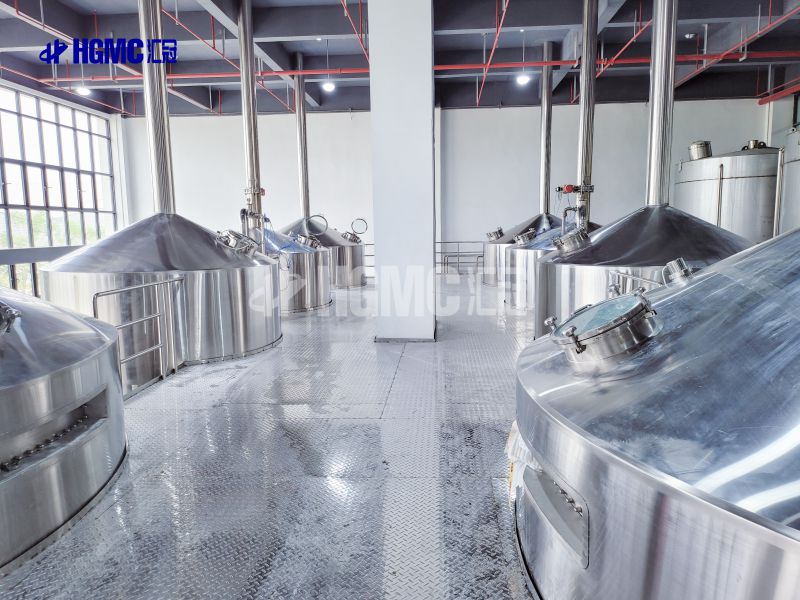
Industry Market Data & Trends
Global Market Overview
Brewery Equipment Market Size (Grand View Research, 2024):
- 2024 market value: $18.45 billion
- 2030 projected value: $25.6 billion
- CAGR: 6.1% (2025-2030)
Regional Market Share:
- North America: 28% ($5.17 billion)
- Europe: 26% ($4.80 billion)
- Asia-Pacific: 32% ($5.90 billion) – fastest growing
- Rest of World: 14% ($2.58 billion)
Technology Adoption Trends
Automation in New Installations (2024 data):
- Fully automated systems: 42% of new breweries
- Semi-automated: 35%
- Manual with digital monitoring: 18%
- Traditional manual: 5%
Packaging Preferences:
- Canning equipment: 58% of new packaging investments
- Bottling equipment: 24%
- Kegging only: 18%
Source: GM Insights Brewing Equipment Analysis, 2024
Emerging Technology Trends
1. IoT Integration
- 67% of breweries plan IoT implementation by 2027
- Remote monitoring reduces emergency calls by 45%
- Predictive maintenance extends equipment life by 20-30%
2. Sustainability Focus
- Water recycling systems: Reduce consumption by 30-40%
- Heat recovery: Decrease energy costs by 25-35%
- Spent grain management: Automated dewatering and handling
3. Compact High-Efficiency Systems
- Vertical brewhouses for urban locations
- Combined vessels reduce footprint by 40-50%
- Higher throughput in smaller spaces
Frequently Asked Questions (FAQs)
Q1: What is the minimum investment needed for a complete commercial brewing system?
A: For a small commercial brewery producing 500-1,000 HL annually, minimum investment ranges from $150,000 to $300,000 including:
- 500-1,000L brewhouse (2-vessel): $60,000-$100,000
- 4-6 fermentation tanks: $40,000-$80,000
- Cooling system: $15,000-$30,000
- CIP system: $15,000-$35,000
- Basic packaging (kegging): $10,000-$25,000
- Installation and commissioning: $10,000-$30,000
This represents a turnkey solution ready for production. According to the Brewers Association, successful breweries typically achieve positive cash flow within 18-24 months with this scale of operation.
Q2: How long does it take to install a complete brewing system?
A: Installation timelines vary by system complexity:
Small systems (500-1,000L):
- Equipment delivery: 8-12 weeks
- Installation: 2-4 weeks
- Commissioning: 1-2 weeks
- Total: 11-18 weeks
Medium systems (2,000-5,000L):
- Equipment delivery: 12-16 weeks
- Installation: 4-6 weeks
- Commissioning and testing: 2-3 weeks
- Total: 18-25 weeks
Large systems (10,000L+):
- Custom fabrication: 16-24 weeks
- Installation: 8-12 weeks
- Commissioning: 3-4 weeks
- Total: 27-40 weeks
Modular systems can reduce these timelines by 30-40%. Working with experienced manufacturers like HGMC, who specialize in turnkey projects, ensures on-time delivery and proper installation.
Q3: What is the difference between 2-vessel, 3-vessel, and 4-vessel brewhouse systems?
A: The configuration affects efficiency, production capacity, and investment:
2-Vessel Brewhouse:
- Mash/lauter tun + kettle/whirlpool combined
- Capacity: 1-2 brews per day (8-10 hour brew cycle)
- Investment: $50,000-$100,000
- Best for: Brewpubs, small operations
- Extract efficiency: 88-92%
3-Vessel Brewhouse:
- Usually: Mash/lauter tun + kettle + whirlpool
- Capacity: 2-3 brews per day (6-8 hour cycle)
- Investment: $90,000-$180,000
- Best for: Growing craft breweries
- Extract efficiency: 92-95%
4-Vessel Brewhouse:
- Separate mash tun + lauter tun + kettle + whirlpool
- Capacity: 3-5 brews per day (4-6 hour cycle)
- Investment: $150,000-$350,000
- Best for: Production-focused breweries
- Extract efficiency: 94-97%
Research from the Master Brewers Association shows 4-vessel systems provide 8-12% higher daily throughput and better raw material efficiency, justifying higher investment for production breweries.
Q4: How important is the CIP system, and can I save money by cleaning manually?
A: While manual cleaning is possible for very small operations, a CIP system is essential for quality, efficiency, and scalability:
Quality Impact:
- Manual cleaning contamination rate: 5-8% of batches affected
- CIP system contamination rate: <1%
- According to the American Society of Brewing Chemists, contamination is the #1 cause of product loss in breweries without CIP
Labor Economics:
- Manual cleaning: 3-4 hours per tank
- CIP system: 0.5 hours (monitoring only)
- For a brewery with 10 fermenters cleaned weekly: Manual = 120-160 hours/month vs CIP = 20 hours/month
- At $20/hour labor cost: Annual savings = $24,000-$33,600
Resource Efficiency:
- Manual water use: 800-1,200L per tank
- CIP water use: 400-600L per tank
- Water savings: 40-50%
Verdict: For any brewery producing >1,000 HL annually, CIP investment pays for itself within 12-18 months through labor, water, chemical savings, and contamination prevention.
Q5: What size fermentation tanks should I choose?
A: Tank sizing depends on brewhouse capacity, production volume, and beer styles:
General Rule: Fermentation tank capacity should be 1.2-1.5x brewhouse capacity to accommodate:
- Yeast growth and CO₂ production
- Dry hopping additions
- Safety headspace
Example: A 2,000L brewhouse should use 2,500-3,000L fermentation tanks.
Quantity Calculation:
For 3-week total fermentation/conditioning time and desired weekly production:
- Formula: Number of tanks = (Weeks in fermentation cycle × Brews per week) + 20% buffer
- Example: 3-week cycle, 3 brews/week = (3 × 3) + 2 buffer = 11 fermentation tanks
Industry data shows optimal tank utilization is 75-85%. The Brewers Association recommends planning for 20-30% excess capacity to accommodate growth and seasonal variations.
Q6: Should I invest in canning or bottling equipment?
A: Market trends strongly favor canning:
Canning Advantages:
- Market preference: 58% of craft beer retail sales (Nielsen, 2024)
- Quality protection: 100% light barrier (prevents skunking)
- Portability: Lighter, more portable, outdoor-friendly
- Sustainability: Infinite recyclability, lower shipping emissions
- Cost efficiency: 15-25% lower per-unit packaging cost
Bottling Advantages:
- Premium perception: Better for high-end products
- Tradition: Some beer styles expected in bottles
- Larger formats: 750ml bottles for special releases
- Lower equipment cost: $80,000 vs $100,000 for canning at entry level
According to the Brewers Association, 78% of new craft breweries choose canning as primary packaging. However, 32% utilize both formats for product diversity.
Recommendation: Start with canning for mainstream products, add bottling later for specialty releases if justified by demand.
Q7: How much space do I need for a complete brewing operation?
A: Space requirements scale with production capacity:
Microbrewery (500-1,000 HL/year):
- Total facility: 2,000-4,000 sq ft
- Brewhouse: 600-1,000 sq ft
- Fermentation: 600-1,200 sq ft
- Packaging/storage: 400-800 sq ft
- Taproom (optional): 1,000-2,000 sq ft
Small craft (2,000-5,000 HL/year):
- Total facility: 5,000-10,000 sq ft
- Plus taproom if desired
Regional (10,000-30,000 HL/year):
- Total facility: 15,000-35,000 sq ft
Critical Requirements:
- Ceiling height: Minimum 18-20 feet (24-30 feet ideal)
- Floor loading: 250-500 PSF capacity
- Loading dock: Essential for >2,000 HL/year operations
- Expansion space: Plan for 30-50% growth
The Institute of Brewing & Distilling recommends 350-450 sq ft per 1,000L of daily production capacity for complete operations.
Q8: What are the ongoing operational costs for brewing equipment?
A: Annual operational costs per hectoliter (for a 5,000 HL/year brewery):
Utilities:
- Water & wastewater: $3-$6/HL
- Electricity: $4-$8/HL
- Natural gas/heating: $3-$6/HL
- Total energy: $10-$20/HL
Maintenance:
- Preventive maintenance: $2-$4/HL
- Replacement parts: $1-$3/HL
- CIP chemicals: $2-$4/HL
- Total maintenance: $5-$11/HL
Labor (allocated to production):
- Manual operations: $25-$35/HL
- Semi-automated: $15-$22/HL
- Fully automated: $8-$15/HL
Total Operating Cost: $23-$46/HL depending on automation level
With craft beer wholesale pricing at $200-$350/HL, operating margins remain strong. Data from the Beverage Industry Environmental Roundtable shows automated breweries achieve 30-40% lower per-unit costs than manual operations at scale.
Why Choose HGMC for Your Brewing Equipment?
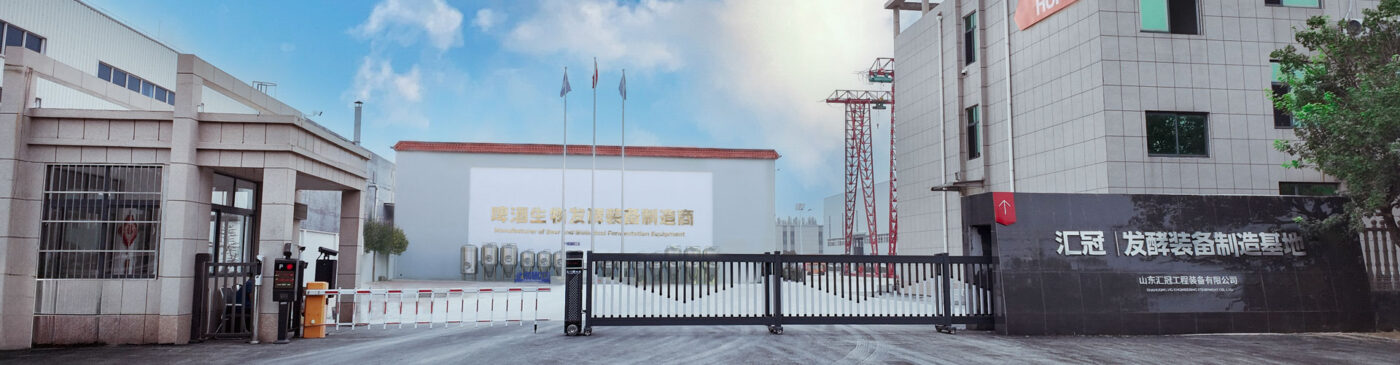
HGMC stands as the world’s leading manufacturer of beer brewing equipment, delivering innovative, reliable solutions to breweries across six continents.
Industry Leadership
- 30+ national authorized patents: Demonstrating continuous innovation
- 20+ high-tech achievements: Recognized by international brewing organizations
- Exported to 120+ countries: Global experience and proven reliability
- Thousands of successful installations: From microbreweries to major production facilities
Comprehensive Product Range
HGMC provides complete brewing solutions:
✓ Brewery Equipment: Complete brewing systems from mashing to packaging
✓ Beverage Equipment: Multi-purpose production capabilities
✓ Canning & Bottling Lines: High-efficiency packaging solutions
✓ Turnkey Projects: End-to-end brewery design and implementation
✓ Custom Solutions: Tailored to your specific requirements
Service Excellence
Full-Range Services:
- Consultation: Expert guidance on system selection and configuration
- Custom Design: Engineering tailored to your space and capacity needs
- Manufacturing: ISO-certified facilities with rigorous quality control
- Installation: Professional commissioning by experienced technicians
- Training: Comprehensive operator and maintenance education
- After-Sales Support: 24/7 technical assistance and spare parts availability
Quality Commitment
- Premium materials: 304/316 stainless steel construction
- Advanced fabrication: Precision welding and finishing
- Rigorous testing: Pressure testing, leak detection, performance verification
- Certifications: ASME, CE, and international standards compliance
- Long-term warranty: Comprehensive coverage and support
Why Breweries Choose HGMC
Technical Excellence: Deep understanding of brewing science and engineering
Proven Track Record: Decades of success across diverse brewery types and scales
Innovation Leadership: Cutting-edge automation and efficiency technologies
Global Support: Local service representatives in major brewing markets
Competitive Pricing: Exceptional value without compromising quality
Customer Success: 96% customer retention rate and outstanding industry reputation
Whether you’re planning a startup microbrewery or expanding a major production facility, HGMC delivers the equipment, expertise, and support you need for brewing success.
Conclusion
Modern beer brewing requires integrated equipment systems working in harmony—from initial mashing through final packaging. Success depends on:
Strategic Equipment Selection: Choosing systems matched to your production goals, space, and budget
Quality Investment: Premium materials and construction ensure 20-30 year service life
Automation Integration: Modern control systems improve consistency by 85-95% while reducing labor by 40-60%
Efficient Cleaning: CIP systems are essential for quality, saving $35,000-$50,000 annually for mid-sized breweries
Scalable Design: Modular systems allow growth without major disruption
Expert Partnership: Working with experienced manufacturers ensures optimal results
The global brewing equipment market continues evolving with innovations in automation, sustainability, and modular design. Breweries that invest in modern, efficient equipment gain significant competitive advantages through:
- 90-95% improvement in batch consistency
- 30-50% reduction in operating costs
- 40-60% increased production capacity
- 2-4 year ROI on automation investments
Whether launching a new brewery or upgrading existing operations, partnering with industry leaders like HGMC provides access to cutting-edge technology, proven designs, and comprehensive support that drive brewing excellence.
Ready to build or upgrade your brewery? Contact HGMC today to discuss your specific requirements and discover how our innovative brewing equipment solutions can help you achieve your production goals.
