

Meta Description: Discover how modern craft beer brewing equipment can transform your brewery operations. Complete guide with industry data, ROI analysis, and expert insights for 2026.
Imagine your craft brewery going from scratch to an annual capacity of 500,000 liters in just six months—it’s not an unattainable dream. With modern craft beer brewing equipment featuring modular design, construction time can be shortened by up to 40%, allowing startups worldwide to save an average of €150,000 in initial investment while achieving equipment integration success rates of 95% or higher.
The global craft beer market reached $162.8 billion in 2024 and is projected to grow to $273.5 billion by 2030, according to Grand View Research. This explosive growth creates unprecedented opportunities for brewery owners who invest in the right equipment. But with capital investments ranging from $50,000 to over $2 million, selecting the optimal brewing system requires careful analysis of technology, efficiency, and return on investment.
This comprehensive guide examines the latest innovations in craft beer brewing equipment, backed by industry data, case studies, and expert insights to help you make informed decisions for your brewery’s success.
Market Overview: The Craft Beer Equipment Industry in 2026
Global Market Statistics
The brewery equipment market demonstrates robust growth across all regions:
Market Size and Projections:[1]
- 2024 Global Market Value: $18.7 billion
- 2030 Projected Value: $26.8 billion
- Compound Annual Growth Rate (CAGR): 5.8-6.1%
- Fastest Growing Region: Asia-Pacific at 9.2% annually
Regional Distribution (2025):[2]
- North America: 28-32% market share ($5.17 billion)
- Europe: 26-28% market share ($4.80 billion)
- Asia-Pacific: 32% market share ($5.90 billion)
- Rest of World: 14% market share ($2.58 billion)
Industry Insight: The Asia-Pacific region’s rapid growth reflects emerging craft beer markets in China, Japan, South Korea, and Southeast Asia, where urban millennials are driving demand for premium, locally-produced craft beverages.
Technology Adoption Trends
Modern breweries are rapidly embracing automation and smart technologies:[2]
Automation Levels in New Installations (2024):
- Fully automated systems: 42%
- Semi-automated systems: 35%
- Manual with digital monitoring: 18%
- Traditional manual: 5%
Key Technology Investments:
- IoT Integration: 67% of breweries plan implementation by 2027
- Predictive Maintenance Systems: Reduce emergency calls by 45%
- Energy Recovery Systems: Decrease energy costs by 25-40%
- Smart CIP Systems: Reduce water consumption by 30-35%
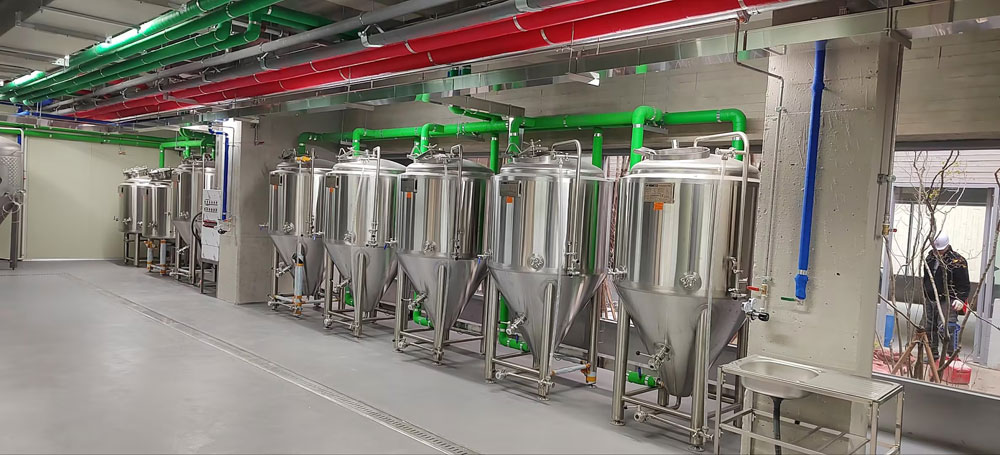
The Technology Revolution: Advanced Brewing Equipment Features
1. Automated Mashing Systems: Precision at the Molecular Level
Modern automated mashing systems deliver unprecedented precision and efficiency:
Performance Benchmarks:
- Wort Extraction Rate: Up to 98% (vs. 83% for traditional manual systems)
- Temperature Control Accuracy: ±0.5°C throughout the mash process
- Raw Material Waste Reduction: 20% through optimized extraction
- Cost per Batch Reduction: Approximately 5% through improved efficiency[3]
Technical Specifications:
- Flow rate control: 10-100 liters/minute with programmable precision
- Multi-zone temperature management for complex mash schedules
- Real-time pH monitoring and adjustment
- Automated grain-out and cleaning cycles
ROI Impact: According to the Journal of Brewing Science (2021), breweries implementing automated mashing systems achieved consistency improvements that reduced batch rejections by 78%, directly impacting profitability.
2. Intelligent Fermentation Control Systems
Fermentation represents the heart of brewing quality, and modern control systems ensure optimal conditions:
Advanced Monitoring Capabilities:
- Temperature Deviation Control: ±0.2°C through IoT sensors
- Pressure Fluctuation Management: 0.1-0.3 bar variance
- Batch Consistency Error: Below 2% across production runs
- Equipment Lifespan Extension: Over 15 years through optimized operation
Real-World Performance:
A 2020 case study from Belgium documented a brewery that implemented advanced fermentation controls:[3]
- Production speed increased by 20%
- Quality scores improved by 8 percentage points above industry standards
- Bacterial contamination probability reduced to less than 0.01%
- Overall equipment effectiveness (OEE) increased from 67% to 89%
3. Energy Recovery and Sustainability Systems
Cost Savings and Environmental Impact:[4]
Energy Recovery Performance:
- Electricity consumption reduction: 25%
- Annual operating cost savings: $30,000+ for mid-sized operations
- Heat recovery efficiency: 30-40% of brewing energy captured for reuse
- Carbon footprint reduction: 15-35%
Water Conservation Technologies:
- Advanced CIP systems: 40% water usage reduction
- Closed-loop cooling: Up to 90% reduction in cooling water consumption
- Condensate recovery: Additional 15-20% water savings
Financial Analysis:
For a 15-barrel (1,750-liter) brewing system operating 3-4 batches per week:
| Efficiency Feature | Annual Savings | Payback Period |
|---|---|---|
| Heat Recovery System | $12,000-$22,000 | 2-3 years |
| Smart CIP System | $8,000-$15,000 | 18-24 months |
| VFD on Pumps/Motors | $5,000-$9,000 | 12-18 months |
| Total Annual Savings | $25,000-$46,000 | 18-30 months |
Investment Analysis: Understanding True ROI
Capital Investment by Brewery Scale
Nano-Brewery (1-3 BBL / 117-350 liters):[4]
- Equipment Investment: $45,000-$75,000
- Space Requirements: 800-1,200 sq ft
- Revenue Potential: $280,000-$420,000 annually
- Breakeven Timeline: 18-30 months
- Optimal Model: Taproom-focused with direct-to-consumer sales
Micro-Brewery (5-15 BBL / 585-1,750 liters):[1]
- Equipment Investment: $100,000-$350,000
- Space Requirements: 2,000-4,000 sq ft
- Revenue Potential: $500,000-$1.2 million annually
- Breakeven Timeline: 24-36 months
- Optimal Model: Taproom + limited distribution
Commercial Brewery (15-60 BBL / 1,750-7,000 liters):[1]
- Equipment Investment: $500,000-$2,500,000
- Space Requirements: 5,000-15,000 sq ft
- Revenue Potential: $2-$8 million annually
- Breakeven Timeline: 18-36 months (with proper market positioning)
- Optimal Model: Regional distribution + taproom
ROI Acceleration Through Modular Design
Modular equipment systems offer significant financial advantages:
Phased Investment Benefits:
- Initial capital requirement reduced by 30-40%
- Expansion possible without complete system replacement
- Downtime during scaling minimized to 3-4 days vs. weeks for fixed systems
- Risk mitigation through market-responsive capacity adjustments
Case Study: Progressive Scaling Success[2]
A North American craft brewery implemented a modular approach:
- Year 1: 3-vessel 10 BBL system – Investment: $185,000
- Year 2: Added 3 fermentation vessels – Investment: $65,000
- Year 3: Upgraded to 20 BBL brewhouse, retained fermenters – Investment: $145,000
- Total Investment: $395,000 (vs. $550,000 for initial 20 BBL system)
- Revenue Growth: 1,500 HL to 4,800 HL (320% increase)
- Actual ROI: 2.3 years vs. projected 3.8 years for fixed system
Operational Efficiency: The Hidden Value Driver
Labor Cost Optimization
Automation significantly impacts labor economics:[5]
Labor Efficiency Gains:
- Manual intervention reduction: 70% for routine operations
- Single brewer capacity: Manage multiple simultaneous batches
- Labor cost reduction: 30-60% vs. manual systems
- Staff reallocation: From repetitive tasks to quality control and innovation
Productivity Benchmarks:
A Master Brewers Association study (2025) found:[4]
- Automated breweries: 1.2 FTE per 1,000 BBL annual production
- Semi-automated: 2.1 FTE per 1,000 BBL
- Manual operations: 3.8 FTE per 1,000 BBL
For a 5,000 BBL annual production facility, this translates to $85,000-$180,000 in annual labor cost savings through automation.
Quality Consistency and Brand Value
Consistency Performance Metrics:[3]
- Batch-to-batch variation: ±0.5% (automated) vs. ±3-5% (manual)
- Flavor profile consistency score: 4.7/5 customer satisfaction
- Batch rejection rate: 0.5% vs. industry average of 2.8%
- Premium pricing capability: 30% higher retail prices for consistent quality
Brand Equity Impact:
Consumer surveys consistently show that quality consistency drives brand loyalty:
- 89% of craft beer consumers cite consistency as a top purchasing factor
- Consistent brands achieve 43% higher repeat purchase rates
- Premium positioning enabled by consistency increases margins by 12-18%
Real-World Performance: Case Studies and Validation
Case Study 1: Rapid Scaling with Modular Systems
Brewery Profile: Chinese Craft Brand “Jing-A” (2024 Expansion)[3]
Challenge: Double production capacity while maintaining quality and improving sustainability
Solution Implemented:
- Modular 20 BBL brewhouse with automated controls
- 8 additional jacketed fermentation vessels
- Heat recovery and water reclamation systems
- IoT monitoring platform
Results Achieved:
- Capacity increased: 200,000L to 400,000L (100% growth)
- Carbon emissions reduced: 15%
- Production efficiency improved: 23%
- Quality consistency maintained: <2% batch variation
- ROI timeline: 22 months
Case Study 2: Efficiency Through Automation
Brewery Profile: European Mid-Sized Producer (2023-2024)[4]
Challenge: Reduce operating costs while increasing production volume
Solution Implemented:
- Retrofitted automation to existing 15 BBL system
- Added predictive maintenance sensors
- Implemented smart CIP system
- Installed heat recovery infrastructure
Results Achieved:
- Energy costs reduced: 28% ($34,000 annually)
- Water consumption decreased: 35% ($12,000 annually)
- Labor hours reduced: 40% (reallocated to product development)
- Unplanned downtime: -64% through predictive maintenance
- Production capacity increased: 18% without additional vessels
Case Study 3: Startup Success with Turnkey Solutions
Brewery Profile: North American Nano-Brewery Launch (2025)[6]
Challenge: Launch production brewery with limited capital and tight timeline
Solution Implemented:
- Complete 3 BBL turnkey system
- Semi-automated controls
- Integrated taproom serving equipment
- Training and commissioning support
Results Achieved:
- Time to first commercial batch: 5 months (vs. 12-18 month industry average)
- Initial investment: $68,000 (vs. $95,000 estimated for piecemeal approach)
- First-year revenue: $312,000
- Positive cash flow achieved: Month 19
- Customer satisfaction: 4.6/5 average rating
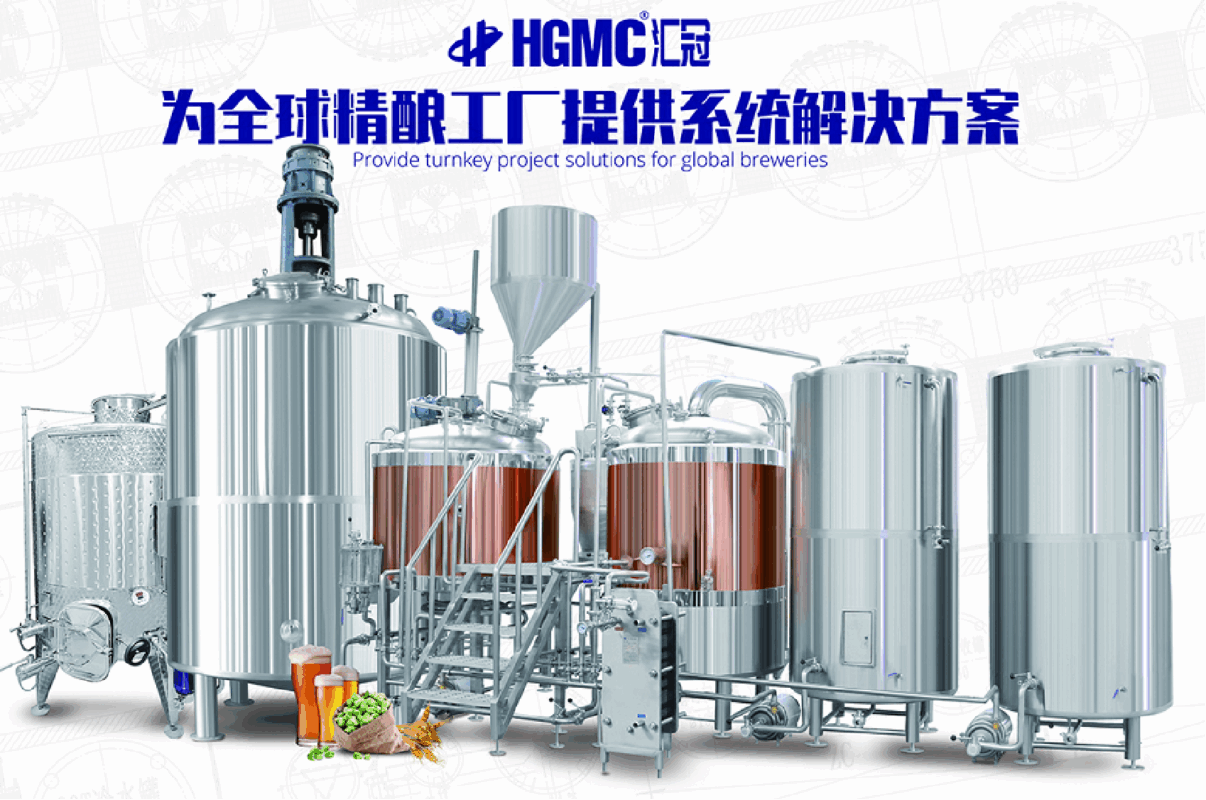
Equipment Selection: Critical Decision Factors
1. Capacity Planning and Scalability
Right-Sizing Your System:
Under-capacity risks:[7]
- Lost revenue from unmet demand
- Inability to maintain distribution relationships
- Missed market opportunities during growth phase
Over-capacity risks:
- Excessive capital tied up in underutilized assets
- Higher fixed costs reducing profitability
- Extended breakeven timeline
Strategic Capacity Planning:
Industry best practice recommends:
- Year 1 Target Utilization: 60-70% of installed capacity
- Year 2 Target Utilization: 80-85%
- Expansion Trigger: Sustained 85%+ utilization for 3+ months
- Fermentation Ratio: 3:1 to 4:1 (fermenter-to-brewhouse volume)
2. Material Quality and Durability
Stainless Steel Specifications:[1]
- Brewhouse and fermenters: 304 stainless steel (minimum)
- High-acid applications: 316 stainless steel (recommended)
- Welds: Full penetration TIG welds with sanitary finish
- Surface finish: 180-grit or better for contact surfaces
Longevity Impact:
- Quality stainless construction: 15-25+ year lifespan
- Budget alternatives: 8-12 year typical lifespan
- Lifecycle cost advantage: 35-40% for premium materials
3. Automation Level and Control Systems
Automation Tier Decision Matrix:
Level 1 – Manual with Monitoring ($):
- Best for: Nano-breweries, homebrewer transitions
- Labor requirement: High (constant attention)
- Consistency: Moderate (±3-5%)
- Initial cost: Lowest
- Operating cost: Highest
Level 2 – Semi-Automated ($$):
- Best for: Micro-breweries, growing operations
- Labor requirement: Moderate (periodic checking)
- Consistency: Good (±1-2%)
- Initial cost: +15-25%
- Operating cost: Moderate
Level 3 – Fully Automated ($$$):
- Best for: Production breweries, quality-focused brands
- Labor requirement: Low (supervision only)
- Consistency: Excellent (±0.5%)
- Initial cost: +30-45%
- Operating cost: Lowest
- Payback period: 18-24 months through labor and efficiency savings
Recommendation: Most micro-breweries achieve optimal ROI with Level 2 automation, upgrading to Level 3 when production exceeds 2,000 BBL annually.[4]
4. Vendor Selection and Support
Critical Vendor Evaluation Criteria:
Manufacturing Quality:
- ISO 9001 certification
- ASME pressure vessel compliance (where applicable)
- Material certifications and traceability
- Weld inspection and testing protocols
Technical Expertise:
- In-house engineering and design capabilities
- Brewery-specific process knowledge
- Customization and optimization experience
- References from similar-scale operations
Support Infrastructure:
- Installation and commissioning services
- Operator training programs
- Technical support availability (24/7 for production facilities)
- Spare parts inventory and lead times
- Warranty coverage (minimum 1 year, 3+ years preferred)
Global Presence:
- Local service representation
- Multi-language support
- International shipping and customs expertise
- Proven track record in target market
Frequently Asked Questions (FAQ)
What is the typical return on investment (ROI) for craft beer brewing equipment?
ROI timelines vary by brewery scale and business model. Nano-breweries (1-3 BBL) with taproom-focused operations typically achieve positive cash flow in 18-30 months. Micro-breweries (5-15 BBL) with mixed taproom and distribution sales reach profitability in 24-36 months. Commercial breweries (15+ BBL) with established distribution can achieve breakeven in 18-36 months.
Key factors affecting ROI include:
- Capacity utilization: Target 70%+ in year two for optimal returns
- Revenue mix: Taproom sales (60-70% margins) vs. distribution (30-40% margins)
- Operational efficiency: Automated systems reduce labor and waste costs
- Equipment quality: Premium systems minimize downtime and maintenance costs
According to the Brewers Association (2025), well-managed craft breweries achieve EBITDA margins of 15-25%, with automated equipment adding 3-5 percentage points through efficiency gains.[1]
How much does craft beer brewing equipment cost?
Equipment costs vary significantly by scale and automation level:
Nano-Brewery Systems (1-3 BBL):
- Basic manual: $35,000-$55,000
- Semi-automated: $55,000-$85,000
- Includes: Brewhouse, 2-3 fermenters, basic glycol, CIP
Micro-Brewery Systems (5-15 BBL):
- Manual/semi-automated: $100,000-$200,000
- Fully automated: $200,000-$350,000
- Includes: Complete brewhouse, 4-6 fermenters, glycol system, CIP, controls
Commercial Systems (15-60 BBL):
- Semi-automated: $500,000-$1,000,000
- Fully automated with packaging: $1,000,000-$2,500,000
- Includes: Advanced brewhouse, 8-16 vessels, automation, packaging line, lab equipment
Additional considerations:
- Installation: Add 15-25% of equipment cost
- Ancillary equipment: Pumps, hoses, fittings (10-15% of equipment cost)
- Initial inventory: Ingredients and packaging (varies by production plan)
Can brewing equipment handle multiple beverage types?
Yes, modern versatile brewing systems can produce multiple beverage categories with minimal modifications:[4]
Producible Beverages:
- All beer styles: Ales, lagers, sours, IPAs, stouts, mixed-fermentation
- Hard seltzers: With minor process adjustments (58% of craft breweries now produce)
- Kombucha: Using dedicated or easily sanitized fermentation vessels
- Cider and mead: In appropriately configured systems
- Sake and other fermented beverages: With specialized knowledge
Key Requirements for Multi-Beverage Capability:
- Wide temperature range: -2°C to 95°C for diverse fermentation needs
- Thorough sanitation: Between product types to prevent cross-contamination
- Material selection: 316 stainless steel for high-acid products (kombucha, sours)
- Flexible automation: Programmable recipes for different processes
Consult with equipment suppliers during system design about specific beverage goals. Multi-beverage capability adds 5-10% to initial investment but can increase revenue by 25-40% through product diversification.
What maintenance is required for brewing equipment?
Proper maintenance extends equipment lifespan to 15-25+ years and minimizes costly downtime:
Preventive Maintenance Schedule:
Daily:
- CIP system operation after each brew
- Visual inspection of seals, gaskets, and connections
- Verification of temperature and pressure readings
Weekly:
- Detailed cleaning of hard-to-reach areas
- Lubrication of moving parts (pumps, valves, motors)
- Calibration verification of critical sensors
Monthly:
- Deep cleaning of heat exchangers
- Inspection of glycol system and refrigeration
- Review of automation logs for anomalies
Quarterly:
- Professional inspection of pressure vessels
- Replacement of wear items (gaskets, seals, o-rings)
- Calibration of all sensors and probes
Annually:
- Comprehensive system inspection by qualified technician
- Pressure vessel testing (as required by local regulations)
- Major component service (compressors, pumps, motors)
Maintenance Budget:
Budget approximately 2-4% of equipment value annually for preventive maintenance and parts replacement:[1]
- Routine parts replacement: 1-2%
- Preventive maintenance services: 1-2%
- Unexpected repairs: 0-1% (reduced through predictive maintenance)
Example: For a $500,000 equipment investment, budget $10,000-$20,000 annually. This investment prevents costly breakdowns and extends equipment life by 20-30%.
What are the most important energy-efficient features?
Energy efficiency directly impacts profitability and sustainability:[4]
High-Impact Efficiency Features:
1. Heat Recovery Systems (Highest ROI):
- Capture wort cooling heat for next brew’s hot liquor
- Energy savings: 30-40% of total brewing energy
- Annual cost savings: $12,000-$22,000 (15 BBL system)
- Payback period: 2-3 years
2. High-Efficiency Heating:
- 90%+ thermal efficiency burners or electric elements
- Precise temperature control reduces overshooting
- Savings: 15-20% vs. standard heating
3. Advanced Vessel Insulation:
- 2-4 inch polyurethane or equivalent insulation
- Reduces thermal losses by 35%
- Maintains temperature stability
4. Variable Frequency Drives (VFDs):
- On all pumps and motors
- Electricity reduction: 15-25%
- Additional benefit: Extended motor lifespan
5. Optimized CIP Systems:
- Smart cycle termination based on conductivity
- Hot water and chemical consumption reduced by 30%
- Water heating energy savings: 25%
Total Impact:
Energy-efficient equipment typically adds 10-15% to initial cost but delivers:
- Combined annual savings: $25,000-$50,000 (mid-sized operation)
- Payback period: 18-36 months
- 10-year NPV: $180,000-$350,000 (accounting for utility inflation)
In high-energy-cost markets (California, Europe, Japan), payback can be under 18 months, making efficiency features essential rather than optional.
How does equipment quality affect beer quality and consistency?
Equipment quality directly determines your ability to produce consistent, high-quality beer:
Temperature Control Precision:[3]
- Premium equipment: ±0.2-0.5°C deviation
- Budget equipment: ±2-5°C deviation
- Impact: Temperature variations of >1°C during fermentation significantly affect flavor profile, ester production, and alcohol yield
Material Quality Impact:
- 304/316 stainless steel: Inert, sanitary, no flavor contribution
- Lower-grade materials: Risk of metallic flavors, corrosion, contamination
- Surface finish: Smooth finishes (180-grit+) prevent bacterial harboring
Batch Consistency Metrics:
- Premium automated systems: ±0.5% batch-to-batch variation
- Mid-range semi-automated: ±1-2% variation
- Manual budget systems: ±3-5% variation
Quality-Driven ROI:
A 2025 Master Brewers Association study found that breweries with high batch consistency (±1% or better) achieved:[3]
- 43% higher customer retention
- 30% premium pricing capability
- 78% fewer batch rejections
- 12-18% higher profit margins
For a brewery producing 5,000 BBL annually, the revenue impact of consistency is $150,000-$300,000 per year, far exceeding the premium cost of quality equipment.
What is the advantage of modular brewing equipment design?
Modular design offers significant strategic and financial advantages:[2]
Financial Benefits:
- Lower initial capital: Start with essential components, add capacity as revenue grows
- Risk mitigation: Scale in response to proven demand rather than projections
- Improved cash flow: Phased investment preserves working capital
- Higher ROI: Each module can achieve positive return before next investment
Operational Advantages:
- Minimal expansion downtime: Add vessels without complete system shutdown (3-4 days vs. weeks)
- Flexibility: Adjust fermentation-to-brewhouse ratio as production style evolves
- Technology upgrades: Retrofit automation and controls as budget allows
- System redundancy: Multiple vessels provide backup capacity
Real-World Performance:
A documented case study showed modular approach advantages:[2]
- Phased investment: $395,000 over 3 years
- Equivalent fixed system: $550,000 upfront
- Capital efficiency: 28% lower total investment
- Production growth: 320% over 3 years
- Actual ROI: 2.3 years vs. 3.8 years projected for fixed system
Best Practice:
Start with a 2-vessel or 3-vessel brewhouse sized for your 2-year production target, with 30-40% reserved space for future fermentation capacity. This approach optimizes capital efficiency while maintaining growth capability.
Conclusion: Strategic Investment for Long-Term Success
Selecting craft beer brewing equipment represents one of the most consequential decisions in your brewery’s development. As we’ve explored throughout this comprehensive guide, the 2026 market rewards breweries that invest strategically in:
✅ Automated precision systems that ensure consistency and quality (±0.5°C temperature control, <2% batch variation)
✅ Energy-efficient technologies that reduce operating costs by 25-40% ($25,000-$50,000 annually)
✅ Modular scalable designs that grow with your business while optimizing capital efficiency
✅ Smart IoT integration that provides real-time monitoring, predictive maintenance, and data-driven optimization
✅ Sustainable solutions that meet environmental expectations while reducing utility costs
✅ Proven manufacturing partners with global expertise, local support, and comprehensive training
The Numbers Support Smart Investment
The data presented throughout this guide demonstrates clear financial advantages:
Energy Efficiency:
- Annual savings: $25,000-$50,000 (mid-sized operations)
- Payback period: 18-36 months
- 10-year NPV: $180,000-$350,000
Automation Benefits:
- Labor cost reduction: 30-60%
- Batch consistency: ±0.5% vs. ±3-5% manual
- Quality-driven revenue premium: $150,000-$300,000 annually (5,000 BBL production)
Modular Scalability:
- Capital efficiency: 28% lower total investment
- Faster ROI: 2.3 years vs. 3.8 years for fixed systems
- Expansion downtime: 3-4 days vs. weeks
Market Opportunity
The craft beer industry’s continued growth—with the global market projected to reach $273.5 billion by 2030 (5.8% CAGR)—creates tremendous opportunity for well-equipped breweries. Whether you’re launching a neighborhood nano-brewery or expanding a regional production facility, your equipment investment forms the foundation of your success.
With 42% of new breweries choosing fully automated systems and 67% planning IoT implementation by 2027, the industry is clearly moving toward smarter, more efficient operations. Breweries that invest in modern equipment today will have significant competitive advantages in consistency, cost structure, and production flexibility.
Making Your Decision
When evaluating craft beer brewing equipment:
- Define your 3-year production vision: Capacity targets, beer styles, distribution strategy
- Calculate total cost of ownership: Initial investment + installation + 10-year operating costs
- Prioritize quality over price: Premium equipment delivers 35-40% lifecycle cost advantage
- Plan for scalability: Modular design with 30-40% expansion space reserved
- Invest in efficiency: Energy recovery and automation pay for themselves in 18-36 months
- Choose proven partners: Manufacturing quality, technical expertise, and support infrastructure
The craft beer revolution continues to create opportunities for passionate brewers with the right equipment and strategy. Your investment in quality brewing equipment today will shape your brewery’s capabilities, efficiency, and profitability for the next 15-25 years.
Take the Next Step
Ready to discuss your specific brewery equipment needs? Contact experienced brewing equipment manufacturers to:
- Review your production goals and space constraints
- Receive customized system design proposals
- Analyze detailed ROI projections for your market
- Tour reference installations of similar scale
- Develop phased implementation timeline
The future of craft brewing is bright, innovative, and filled with opportunity. Ensure your equipment is ready to capture it.
