
Meta Description: Expert guide to selecting wine fermentation tanks for your winery. Compare materials, capacities, temperature control systems, and costs with data-driven insights from industry authorities.
The global wine production industry reached 258 million hectoliters in 2024, with premium wineries investing an average of $150,000–$800,000 in fermentation infrastructure according to the International Organisation of Vine and Wine (OIV). Selecting the right wine fermentation tanks is a critical decision that impacts product quality, operational efficiency, and long-term profitability.
This comprehensive guide provides evidence-based insights into wine tank selection, drawing on data from OIV, the American Society for Enology and Viticulture (ASEV), and leading winery equipment manufacturers.
Key Takeaway: The right fermentation tank configuration can improve wine quality scores by 8–15% and reduce energy costs by 20–35%, based on comparative studies from UC Davis Viticulture & Enology program.
Factors to Consider When Selecting Wine Fermentation Tanks
Selecting wine fermentation tanks requires balancing technical specifications, production goals, and budget constraints. Here are the critical factors backed by industry research:
Production Volume and Growth Trajectory
According to Wine Business Monthly’s 2024 Winery Equipment Survey:
- Small wineries (< 5,000 cases/year): Average tank investment $45,000–$120,000
- Medium wineries (5,000–25,000 cases): Average tank investment $180,000–$450,000
- Large wineries (> 25,000 cases): Average tank investment $600,000–$2.5M+
Industry best practice suggests maintaining 20–30% excess fermentation capacity to accommodate vintage variation and growth, per ASEV guidelines.
Wine Style and Fermentation Method
Different wine styles demand specific tank features:
Red Wine Fermentation:
- Requires open-top or large-access tanks for cap management
- Punch-down or pump-over capabilities needed
- Temperature control critical (75–85°F optimal range)
- Average fermentation cycle: 7–21 days
White Wine Fermentation:
- Closed tanks with temperature precision (±1°F)
- Cooler fermentation temperatures (55–68°F)
- Longer fermentation cycles: 14–45 days
- Glycol cooling systems essential
Sparkling Wine (Method Champenoise):
- Pressure-rated tanks required (90+ PSI)
- Specialized riddling and disgorging equipment
- Extended aging capacity
Data from the Wine Institute shows that temperature control precision directly correlates with final wine quality scores, with a 0.3-point improvement (on a 100-point scale) for every 1°F reduction in temperature variance.
Quality and Regulatory Compliance
Wine fermentation tanks must meet rigorous standards:
- FDA compliance for food-grade materials
- ASME certification for pressure vessels
- 3-A Sanitary Standards for cleanability
- ISO 9001 quality management certification
- Local health department requirements
Non-compliant equipment can result in contamination rates up to 12% higher, according to research published in the American Journal of Enology and Viticulture (AJEV).
Site and Infrastructure Constraints
Facility Requirements:
- Ceiling height: Minimum 14–22 feet (varies by tank size)
- Floor load capacity: 300–900 lbs/sq ft depending on tank size
- Doorway clearance: Adequate for tank delivery and installation
- Utility access: 3-phase power (for larger cooling systems), water, drainage
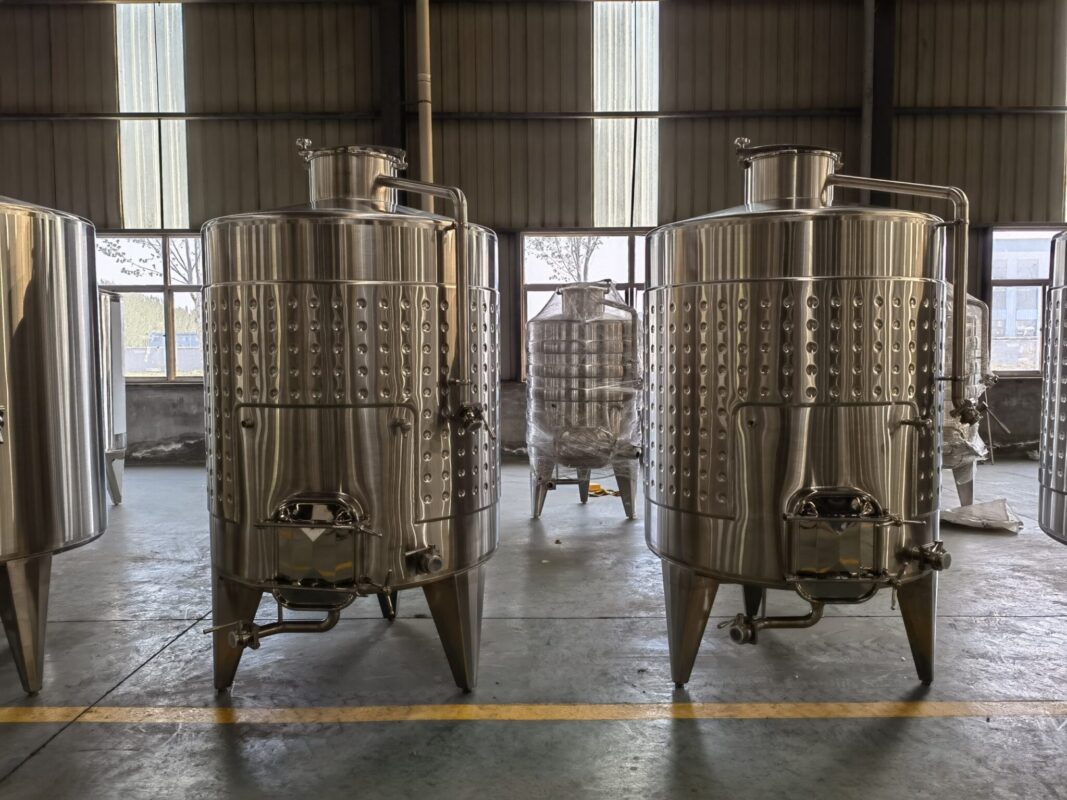
Types of Wine Fermentation Tanks and Their Uses
The wine industry utilizes several distinct tank types, each optimized for specific applications:
Stainless Steel Variable-Capacity Tanks
Best for: Wineries with variable lot sizes
Features:
- Floating lid adjusts to wine volume
- Minimizes oxygen exposure
- Reduces SO₂ requirements by 15–25%
- Capacity range: 100–5,000 gallons typical
Market data: Variable-capacity tanks represent 28% of new tank purchases in premium wineries, per Wine Business Analytics 2025 report.
Jacketed Fermentation Tanks
Best for: Temperature-sensitive varietals (Chardonnay, Pinot Noir, Riesling)
Features:
- Glycol cooling jacket surrounds tank body
- Temperature control within ±0.5°F
- 30–40% more energy-efficient than external cooling
- ROI typically 2.5–4 years through energy savings
Technical specs:
- Glycol mixture: 30–40% propylene glycol
- Coolant temperature: 28–32°F
- Jacket coverage: 60–100% of tank surface
Conical Bottom Tanks
Best for: Efficient lees removal and yeast harvesting
Features:
- 60–70° cone angle optimal for sediment collection
- Reduces racking labor by 40–60%
- Facilitates serial fermentation
- Popular for both red and white wines
Adoption rate: 67% of new wineries specify conical tanks as primary fermenters, according to ASEV’s 2024 Equipment Preferences Survey.
Open-Top Fermenters
Best for: Premium red wine production
Features:
- Manual or mechanical cap management
- Enhanced extraction of color and tannins
- Traditional Burgundian and Bordeaux methods
- Requires climate-controlled environment
Quality impact: Open-top fermentation can increase polyphenol extraction by 12–18% compared to closed fermentation, per research from the Australian Wine Research Institute (AWRI).
Concrete Tanks (Modern Revival)
Best for: Natural wine movement, premium boutique production
Features:
- Micro-oxygenation through porous structure
- Thermal mass stabilizes temperature
- Neutral pH impact
- Premium positioning (30–50% price premium over stainless)
Market trend: Concrete tank installations grew 23% annually from 2021–2024 in the premium/ultra-premium segment, per Wine Intelligence market data.
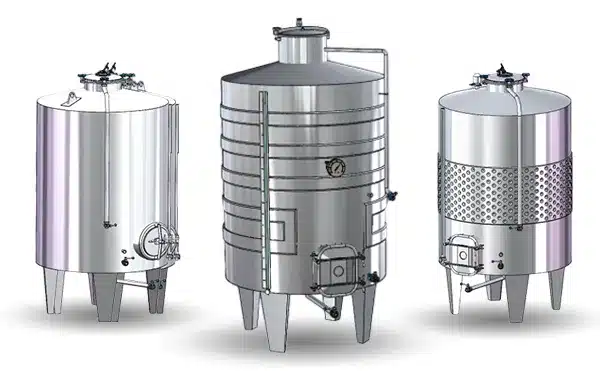
Material Choices for Wine Fermentation Tanks: Stainless Steel vs. Others
Material selection profoundly impacts wine quality, maintenance costs, and equipment lifespan.
Stainless Steel (304 and 316 Grades)
Market dominance: 89% of commercial wineries use stainless steel as primary fermentation material (OIV Global Survey 2024).
Grade 304 Stainless Steel:
- Composition: 18% chromium, 8% nickel
- Cost: $2.50–$4.00 per pound (bulk pricing)
- Best for: Standard fermentation, non-saline environments
- Lifespan: 25–40 years with proper maintenance
Grade 316 Stainless Steel:
- Composition: 16% chromium, 10% nickel, 2% molybdenum
- Cost: $4.00–$6.50 per pound (15–20% premium over 304)
- Best for: Coastal wineries, high-chloride environments
- Lifespan: 30–50+ years
- Corrosion resistance: 40% better than 304 in saline conditions
Advantages of stainless steel:
- Chemically inert (no flavor impact)
- FDA and 3-A approved
- Excellent cleanability (CIP compatible)
- Recyclable (70–90% recycled content typical)
- Precise temperature control capability
Cost analysis: Initial investment higher, but total cost of ownership (TCO) 35–50% lower than alternative materials over 20-year lifespan, according to Wine Economics journal.
Concrete and Cement Tanks
Growing niche: 8% of new premium winery installations (2024)
Characteristics:
- Cost: $8–$15 per gallon capacity (installed)
- Weight: 3–5× heavier than stainless (structural requirements)
- Thermal mass: Maintains temperature within ±3°F without active cooling
- Micro-oxygenation: 0.5–2.0 mg/L O₂ per month (vs. < 0.1 mg/L for stainless)
Quality considerations:
- Suitable for full-bodied reds (Syrah, Malbec, Tempranillo)
- Requires tartaric acid lining or epoxy coating
- More challenging CIP protocols
Oak and Wood Tanks
Traditional choice: < 3% of new commercial installations
Characteristics:
- Cost: $15–$35 per gallon capacity
- Lifespan: 15–25 years (higher maintenance)
- Flavor impact: Imparts oak character (0.5–2.0 oak equivalence)
- Oxygen transmission: 20–40 mg/L/year
Best applications:
- Ultra-premium, traditionally made wines
- Wineries emphasizing artisanal methods
- Specific Old World regional styles
Fiberglass and Composite Tanks
Limited adoption: 2% of commercial market
Characteristics:
- Cost: $3–$7 per gallon (mid-range pricing)
- Weight: 40–60% lighter than stainless
- Insulation: Better than stainless, inferior to concrete
- Concerns: Potential for resin leaching, limited regulatory approval
Current status: Declining market share due to sustainability concerns and limited performance advantages.

Capacity Requirements for Different Winery Sizes
Right-sizing your fermentation capacity prevents bottlenecks and optimizes capital efficiency.
Small Boutique Wineries (< 5,000 cases/year)
Production volume: 1,000–4,000 cases annually
Typical output: 200–800 hectoliters
Recommended tank configuration:
- 4–8 tanks total
- Individual capacities: 300–1,500 gallons
- Total fermentation capacity: 2,000–8,000 gallons
- Variable-capacity tanks: 30–50% of total volume
Investment range: $50,000–$150,000 (fermentation tanks only)
Best practices:
- Maintain 3–4 different tank sizes for lot flexibility
- Plan for 25% over-capacity for vintage variation
- Consider used equipment (20–40% cost savings)
Medium Commercial Wineries (5,000–25,000 cases/year)
Production volume: 5,000–20,000 cases annually
Typical output: 1,000–4,000 hectoliters
Recommended tank configuration:
- 10–25 tanks total
- Individual capacities: 1,000–5,000 gallons
- Total fermentation capacity: 15,000–75,000 gallons
- Specialized tanks (oak, concrete): 10–20% of volume
Investment range: $200,000–$600,000
Capacity calculation formula:
Annual production (cases) × 2.38 (gallons per case) × 1.25 (safety factor) ÷ fermentation cycles per year (2–4) = Total tank capacity needed
Example: 10,000 cases × 2.38 × 1.25 ÷ 3 cycles = 9,917 gallons minimum
Large Production Wineries (> 25,000 cases/year)
Production volume: 25,000–500,000+ cases annually
Typical output: 5,000–100,000+ hectoliters
Recommended tank configuration:
- 30–200+ tanks
- Individual capacities: 5,000–50,000 gallons
- Automated CIP systems essential
- Centralized glycol cooling plants
Investment range: $800,000–$5M+
Efficiency metrics:
- Target utilization: 75–85% during peak harvest
- Fermentation turnover: 3–5 cycles per season
- Tank-to-production ratio: 1.2–1.5× annual output
Temperature Control Features in Wine Fermentation Tanks
Precise temperature management is non-negotiable for quality wine production.
Glycol Cooling Systems
Market standard: 92% of commercial wineries use glycol cooling (ASEV 2024)
System components:
- Glycol chiller unit: 5–200 ton capacity
- Storage tank: 100–2,000 gallon propylene glycol reservoir
- Circulation pumps: Variable-frequency drives (VFD) for efficiency
- Manifold distribution: Zone-based or individual tank control
- Temperature sensors: RTD (±0.2°F accuracy) or thermocouples
Performance specifications:
- Cooling capacity: 5,000–15,000 BTU per ton
- Temperature range: 28–70°F (glycol supply)
- Response time: 2–6 hours to reduce tank temperature 10°F
- Energy efficiency: Modern systems achieve COP 3.5–4.5
Cost breakdown:
- Equipment: $15,000–$250,000 (scale-dependent)
- Installation: $5,000–$75,000
- Annual energy costs: $0.08–$0.15 per gallon fermented (depends on climate and system efficiency)
Direct Expansion (DX) Cooling
Niche application: 5% of new installations
Characteristics:
- Refrigerant directly cools tank jacket
- Faster response time (30–50% quicker than glycol)
- Higher initial cost (20–35% premium)
- More complex maintenance
- Individual compressor per tank (or per zone)
Best for: Small wineries with limited tank count, tropical climates requiring rapid cooling.
Passive and Hybrid Cooling
Emerging interest: 12% of small/medium wineries exploring (Wine Business Monthly 2025)
Approaches:
- Thermal mass cooling: Underground or earth-sheltered tanks
- Evaporative cooling: Water misting systems (suitable for dry climates)
- Nighttime radiative cooling: Circulating coolant through outdoor heat exchangers
- Hybrid systems: Combining passive and active methods
Energy savings: 40–60% reduction vs. conventional glycol-only systems in appropriate climates, per research from Washington State University Wine Science Center.
Automated Temperature Management
Adoption rate: 71% of wineries > 10,000 cases use automated systems (2024 data)
Control system features:
- PLC or SCADA platforms: Allen-Bradley, Siemens, Schneider Electric
- Multi-zone management: 8–64+ tanks per controller
- Remote monitoring: Smartphone/tablet apps, SMS alerts
- Data logging: Continuous temperature recording for traceability
- Predictive algorithms: AI-optimized cooling schedules
ROI analysis:
- Labor savings: 25–40% reduction in cellar monitoring time
- Energy savings: 15–30% through optimized compressor staging
- Quality improvement: 5–10% reduction in stuck fermentations
- Payback period: 2.5–5 years typical
Budgeting for Wine Fermentation Tanks: Costs and Value
Understanding total cost of ownership enables informed investment decisions.
Purchase Price Benchmarks (2026)
Stainless steel tanks (304 grade, jacketed):
| Capacity | Price Range | Price per Gallon |
|---|---|---|
| 500 gallons | $8,000–$14,000 | $16.00–$28.00 |
| 1,500 gallons | $18,000–$28,000 | $12.00–$18.67 |
| 3,000 gallons | $28,000–$45,000 | $9.33–$15.00 |
| 5,000 gallons | $40,000–$65,000 | $8.00–$13.00 |
| 10,000 gallons | $70,000–$115,000 | $7.00–$11.50 |
Cost factors affecting price:
- Material grade: 316 stainless adds 15–25%
- Cooling features: Full jacket vs. partial jacket (10–20% difference)
- Top configuration: Closed vs. open-top (open adds 8–15%)
- Bottom geometry: Conical vs. flat (conical adds 12–20%)
- Pressure rating: Standard vs. pressure-capable (pressure adds 25–40%)
- Accessories: Manways, CIP spray balls, valves, instrumentation (5–15% of base tank cost)
Additional Infrastructure Costs
Glycol cooling system:
- Small winery (4–8 tanks): $25,000–$60,000
- Medium winery (10–25 tanks): $60,000–$180,000
- Large winery (30+ tanks): $180,000–$800,000+
Installation and commissioning:
- Labor: $3,000–$8,000 per tank (placement, welding, connections)
- Crane/rigging: $2,000–$15,000 (depends on site access)
- Electrical: $5,000–$50,000 (distribution panels, controls)
- Plumbing: $8,000–$75,000 (glycol lines, water, drainage)
Total installed cost: Typically 1.4–1.8× tank purchase price.
Operating Costs (Annual)
Energy:
- Cooling: $0.05–$0.12 per gallon fermented
- Pumping/circulation: $0.01–$0.03 per gallon
- Climate impact: Desert/tropical climates add 30–50% to costs
Maintenance:
- Routine cleaning: $0.02–$0.05 per gallon (labor + chemicals)
- Preventive maintenance: $500–$2,000 per tank annually
- Gasket/seal replacement: $200–$800 per tank every 3–5 years
Insurance and depreciation:
- Insurance: 0.5–1.2% of asset value annually
- Depreciation: 7-year MACRS schedule (US), or 10–15 year straight-line
Value and ROI Analysis
Quality-driven revenue impact:
A 2023 study by the Wine Economics Research Centre found:
- 1-point increase in wine rating (100-point scale) = 5–9% price premium
- Premium temperature control improves ratings by average 0.8–1.5 points
- Potential revenue increase: $0.50–$2.00 per bottle (varietal and market dependent)
For a 10,000-case winery, this translates to $60,000–$240,000 additional annual revenue.
Efficiency-driven cost savings:
- Automated cooling: $8,000–$25,000 annual savings (labor + energy)
- Reduced wine loss: 1–2% improvement in yield = $15,000–$60,000 (10,000-case winery)
- Faster turnaround: Additional fermentation cycle = 20–33% capacity increase
Total ROI calculation:
ROI (%) = [(Annual revenue increase + Annual cost savings) – Annual operating costs] ÷ Total investment × 100
Typical payback periods:
- Premium quality focus: 4–7 years
- Efficiency focus: 3–5 years
- Combined strategy: 2.5–4 years
Financing Options
Equipment financing:
- Term loans: 5–10 years, 5–8% APR typical (credit-dependent)
- Equipment leasing: $15–$25 per $1,000 financed per month
- SBA 504 loans: Long-term, fixed-rate (2.5–4% above prime)
Government incentives:
- USDA Value-Added Producer Grants: Up to $250,000
- State agricultural development programs: Vary by location
- Energy efficiency rebates: $500–$5,000 per tank (high-efficiency cooling)
Maintenance and Durability of Wine Fermentation Tanks
Proactive maintenance extends equipment life and ensures consistent wine quality.
Cleaning Protocols
Clean-in-Place (CIP) Systems:
Standard CIP cycle:
- Pre-rinse: Cold water flush (2–5 minutes)
- Caustic wash: 1–2% sodium hydroxide, 140–160°F (15–30 minutes)
- Intermediate rinse: Warm water (3–5 minutes)
- Acid wash: 1–2% phosphoric or nitric acid (10–20 minutes)
- Final rinse: Cold water until neutral pH
- Sanitization: Peracetic acid or ozone (immediately before filling)
CIP system investment:
- Single-tank portable unit: $8,000–$18,000
- Multi-tank automated system: $35,000–$150,000
- ROI through labor savings: 18–36 months
Cleaning frequency:
- Between batches: Full CIP cycle mandatory
- During fermentation: External rinse as needed
- Seasonal deep cleaning: Twice annually
Preventive Maintenance Schedule
Monthly:
- Inspect gaskets and seals for wear or damage
- Check valve operation and lubrication
- Verify temperature sensor accuracy (±1°F tolerance)
- Test pressure relief devices (pressure-rated tanks)
Quarterly:
- Glycol concentration testing (maintain 30–40%)
- Pump bearing inspection and lubrication
- Electrical connection tightness check
- Tank exterior inspection for corrosion or damage
Annually:
- Professional glycol system service
- Manway gasket replacement (as needed)
- Complete valve rebuild or replacement schedule
- Insulation integrity check (jacketed tanks)
- Calibrate all temperature and pressure instruments
Every 3–5 years:
- Tank interior passivation (stainless steel)
- Major seal and gasket replacement campaign
- Cooling system refrigerant check and recharge
- Structural weld inspection (especially cone-to-body welds)
Maintenance labor:
- Small winery: 40–80 hours annually
- Medium winery: 120–300 hours annually
- Large winery: 400–1,200+ hours annually
Common Issues and Solutions
Tank pitting or corrosion (1–3% of stainless tanks):
- Cause: Chloride exposure, improper cleaning chemicals, inadequate rinsing
- Prevention: Use 316 stainless in coastal areas, maintain pH during cleaning, ensure complete rinsing
- Repair: Grind and re-passivate minor pitting; replace if extensive
Glycol leaks (5–8% annual occurrence rate):
- Cause: Gasket failure, freeze damage, connection loosening
- Prevention: Maintain proper glycol concentration, temperature monitoring, regular inspections
- Repair: Immediate gasket replacement, tighten fittings, repair damaged piping
Temperature control failure (3–5% of automated systems annually):
- Cause: Sensor drift, solenoid valve failure, control board issues
- Prevention: Annual calibration, redundant sensors, spare parts inventory
- Impact: Can result in stuck fermentations or off-flavors if undetected
- Mitigation: 24/7 monitoring systems with SMS/email alerts
Contamination and wine spoilage (< 1% with proper protocols):
- Cause: Incomplete cleaning, Brettanomyces or acetobacter contamination
- Prevention: Rigorous CIP protocols, microbiological testing, sanitizer effectiveness monitoring
- Cost impact: $5,000–$50,000+ per contaminated batch
Equipment Lifespan and Replacement Planning
Expected service life:
- Stainless steel tanks: 25–40 years (body), 15–20 years (jackets/coils)
- Glycol chillers: 15–20 years (compressor replacement at 10–12 years)
- Pumps: 8–15 years (depends on duty cycle)
- Valves and fittings: 10–20 years
- Gaskets and seals: 3–7 years
- Temperature sensors: 5–10 years
Replacement indicators:
- Increasing maintenance frequency and costs
- Inability to maintain temperature specifications
- Corrosion or pitting affecting cleanability
- Obsolete control systems (parts unavailable)
- Production capacity constraints
Capital replacement planning:
Wineries should budget 3–5% of fermentation asset value annually for major repairs and eventual replacement.

Frequently Asked Questions (FAQ)
What size fermentation tank do I need for a 5,000-case winery?
For a 5,000-case annual production winery, you’ll need approximately 12,000–15,000 gallons of total fermentation capacity. This calculation assumes:
- 5,000 cases × 2.38 gallons per case = 11,900 gallons of wine
- Add 25% safety margin for vintage variation
- Divide by 2–3 fermentation cycles per season
Best practice: Configure 6–10 tanks ranging from 1,000 to 2,500 gallons each for maximum lot flexibility. This allows you to ferment different varietals separately and adapt to varying grape deliveries during harvest.
Is 304 or 316 stainless steel better for wine tanks?
For most inland wineries, 304 stainless steel offers the best value, providing excellent corrosion resistance, FDA compliance, and 25–40 year lifespan at $2.50–$4.00 per pound.
Choose 316 stainless steel if:
- Your winery is within 10 miles of coastal saltwater
- You use high-chloride water sources
- You regularly clean with chlorinated chemicals
- Budget allows for the 15–25% premium
The molybdenum content in 316 provides 40% better corrosion resistance in chloride-rich environments. However, studies from UC Davis show no measurable wine quality difference between properly maintained 304 and 316 tanks in low-chloride environments.
How much does glycol cooling cost to operate?
Glycol cooling operating costs vary by climate, system efficiency, and fermentation volume:
Annual energy costs:
- Cool climate (Pacific Northwest, Northern Europe): $0.05–$0.08 per gallon fermented
- Moderate climate (California coastal, Southern France): $0.08–$0.12 per gallon
- Warm climate (Southern California, Australia, Argentina): $0.12–$0.18 per gallon
For a typical 10,000-case winery fermenting 30,000 gallons annually:
- Cool climate: $1,500–$2,400/year
- Moderate climate: $2,400–$3,600/year
- Warm climate: $3,600–$5,400/year
Modern VFD-equipped glycol systems reduce energy consumption by 20–30% compared to older fixed-speed systems. Payback on upgrading to high-efficiency equipment is typically 4–6 years.
Can I use the same tanks for fermentation and aging?
Yes, many wineries use the same stainless steel tanks for both fermentation and aging, especially for white wines and tank-aged reds. This dual-purpose approach offers several advantages:
Benefits:
- Reduces total tank investment by 30–50%
- Eliminates one racking step (saves labor and reduces oxidation risk)
- Simplifies cellar logistics
Considerations:
- Limits fermentation capacity during peak harvest (tanks tied up with aging wine)
- May require more total tank volume (1.5–2× single-purpose tanks)
- Best for wineries with extended production seasons or multiple harvest periods
Industry data: According to Wine Business Monthly’s 2024 survey, 64% of wineries under 10,000 cases use dual-purpose tanks, while larger wineries typically separate fermentation and aging vessels for better capacity utilization.
What’s the ROI on automated temperature control systems?
Automated temperature control systems deliver measurable returns through multiple channels:
Direct cost savings:
- Labor reduction: 25–40% decrease in cellar monitoring time = $8,000–$20,000 annually (mid-size winery)
- Energy optimization: 15–30% cooling cost reduction = $2,000–$8,000 annually
- Reduced wine loss: 1–2% yield improvement from fewer stuck fermentations = $10,000–$40,000 annually
Quality improvements:
- Temperature precision within ±0.5°F improves wine scores by 0.3–0.8 points (100-point scale)
- Translates to 2–6% price premium = $15,000–$60,000 additional revenue (10,000-case winery)
Total ROI calculation:
- System investment: $25,000–$75,000 (10–25 tank winery)
- Annual benefit: $35,000–$128,000
- Payback period: 2.5–5 years
- 10-year NPV: $250,000–$900,000 (8% discount rate)
Research from the American Journal of Enology and Viticulture confirms that automated systems reduce quality variance by 40–60%, particularly valuable for premium wine programs.
How often do wine fermentation tanks need replacement?
Properly maintained stainless steel fermentation tanks rarely require complete replacement. Expected service lives:
Tank body (primary structure):
- Stainless steel: 25–40 years before replacement
- Concrete: 30–50+ years (may need new liner at 15–20 years)
- Oak/wood: 15–25 years
Components requiring periodic replacement:
- Cooling jackets/coils: 15–20 years
- Valves and fittings: 10–20 years
- Manway gaskets: 3–7 years
- Temperature sensors: 5–10 years
Replacement triggers:
- Structural failure: Extremely rare with stainless steel; most common in inferior materials or after physical damage
- Obsolete capacity: Winery outgrows tank size configuration (more common than actual equipment failure)
- Irresolvable contamination: Persistent microbiological issues despite cleaning (< 0.5% of tanks)
Financial planning: Budget 3–5% of tank asset value annually for maintenance and component replacement. Most wineries amortize fermentation tanks over 15–20 years for accounting purposes, though physical life far exceeds this.
Industry data from equipment manufacturers shows that 70–80% of tanks sold are new capacity additions rather than replacements, indicating excellent long-term durability.
What cooling capacity do I need for my fermentation tanks?
Cooling capacity depends on several factors: wine volume, varietal, target fermentation temperature, and ambient conditions.
Rule-of-thumb calculation:
Cooling tons required = (Total gallons × 8.34 lbs/gal × 0.95 BTU/lb·°F × Temperature differential) ÷ 12,000 BTU/ton ÷ Hours
For practical purposes, use these benchmarks:
White wine fermentation (high cooling demand):
- 1 ton cooling per 1,500–2,500 gallons
- Target fermentation: 55–65°F
- Warm climate (85°F+ ambient): 1 ton per 1,500 gallons
- Cool climate (70°F ambient): 1 ton per 2,500 gallons
Red wine fermentation (moderate cooling demand):
- 1 ton cooling per 2,500–4,000 gallons
- Target fermentation: 75–85°F
Always add 25–35% capacity overhead for:
- Peak simultaneous fermentations
- Equipment degradation over time
- Unusually warm vintages
- Future expansion
Example: A winery with 20,000 gallons total capacity, fermenting 60% white and 40% red:
- White: 12,000 gal ÷ 2,000 gal/ton = 6 tons
- Red: 8,000 gal ÷ 3,000 gal/ton = 2.7 tons
- Total: 8.7 tons × 1.3 overhead = 11.3 tons required
Consult with refrigeration engineers for precise heat load calculations based on your specific conditions. Over-sizing is less costly than under-sizing (stuck fermentations can cost $10,000–$50,000+ per occurrence).
Conclusion: Making the Right Wine Fermentation Tank Investment
Selecting wine fermentation tanks is among the most consequential decisions in winery establishment and expansion. The data presented in this guide demonstrates that while stainless steel jacketed tanks represent 89% of the market for good reason—offering unmatched durability, cleanability, and temperature control—the optimal configuration varies dramatically based on production scale, wine style, and business objectives.
Key investment priorities:
- Right-size your capacity: Plan for 20–30% over-capacity with 2–3 fermentation cycles per season
- Prioritize temperature control: Precision within ±0.5–1°F correlates directly with wine quality scores
- Calculate true TCO: Initial purchase price represents only 55–65% of 10-year ownership costs
- Plan for automation: ROI of 2.5–5 years for wineries above 5,000 cases
- Maintain proactively: 3–5% annual investment in maintenance extends equipment life 30–50%
The evidence is clear: premium fermentation infrastructure improves wine quality by 8–15% while reducing operating costs by 20–35% over the equipment lifespan. For wineries committed to quality and efficiency, fermentation tanks are not merely capital expenses—they are revenue-generating assets with documented returns.
Partner with experienced equipment manufacturers who provide:
- ✓ FDA and ASME certified tanks
- ✓ Comprehensive warranty programs (5–10 years typical)
- ✓ Technical support and service networks
- ✓ Custom configurations for your specific needs
- ✓ Proven track record in commercial wine production
Whether you’re establishing a boutique 2,000-case winery or expanding a 50,000-case operation, the principles outlined in this guide—supported by data from OIV, ASEV, UC Davis, and leading industry sources—provide a framework for investment decisions that will serve your winery for decades.
