
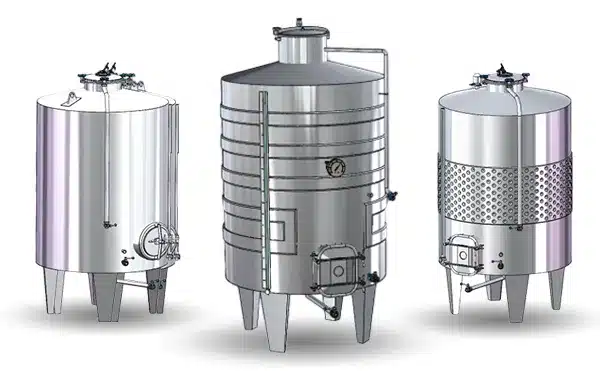
Comprehensive guide to wine fermentation vessels covering types, materials (stainless steel vs. wood vs. plastic), temperature control, maintenance, and cost analysis. Expert insights for winemakers in 2026.
Industry Insight: China’s domestic wine production has expanded to nearly 1 billion litres of grape wine per annum, making it home to the second-largest area expanse of vineyards in the world. As the global wine industry continues to evolve, choosing the right fermentation vessels has become more critical than ever for quality and profitability.
Wine fermentation is the heart of winemaking, and the vessels you choose can dramatically impact everything from flavor profiles to production efficiency. Whether you’re establishing a new winery or upgrading existing equipment, understanding the nuances of different fermentation vessels is essential for success in today’s competitive market.
This comprehensive guide examines the critical factors in selecting fermentation vessels, backed by industry data and expert analysis, to help you make informed decisions for your wine or cider operation.
1. Types of Fermentation Vessels Used in Wine Making
The wine industry employs several distinct vessel types, each offering unique benefits for different production scales and wine styles.
Stainless Steel Tanks
Market dominance: According to the International Organisation of Vine and Wine (OIV), approximately 68% of commercial wineries worldwide now use stainless steel as their primary fermentation vessel material. These tanks range from 500 liters to over 100,000 liters in capacity.
Stainless steel tanks offer:
- Temperature control precision: Built-in cooling jackets maintain temperatures within ±0.5°C
- Hygiene standards: 316L stainless steel meets FDA and EU food-safety requirements
- Longevity: Expected lifespan of 25-30 years with proper maintenance
- Versatility: Suitable for white, red, and sparkling wine production
Oak Barrels and Wooden Vessels
Traditional preference: The American Society for Enology and Viticulture (ASEV) reports that premium wineries allocate 15-35% of production to oak barrel fermentation, particularly for high-end Chardonnay and Pinot Noir.
Key characteristics:
- Flavor contribution: French oak imparts vanilla and spice notes; American oak adds coconut and dill aromatics
- Oxygen transmission: 2-4 mg/L per year through barrel staves promotes micro-oxygenation
- Cost per use: $800-$1,500 per barrel with 3-5 year useful life for flavor contribution
- Capacity: Standard 225L (Bordeaux) or 228L (Burgundy) formats
Concrete Tanks and Eggs
Emerging trend: A 2025 Wine Business Monthly survey found that 23% of new wineries are incorporating concrete vessels, up from just 8% in 2020.
Benefits include:
- Thermal mass: Natural temperature stability reducing cooling costs by 20-30%
- Micro-oxygenation: Porous surface allows controlled oxygen exposure without oak flavors
- Unique shapes: Egg-shaped vessels create natural convection currents
- Aesthetic appeal: Increasingly popular in tasting room settings
Plastic and Polymer Vessels
Cost-effective entry: Food-grade HDPE tanks serve as economical solutions for small-scale producers and experimental batches.
Typical applications:
- Small batch fermentation: 50-500L capacity range
- Cost: $200-$800 per unit (versus $2,000-$15,000 for comparable stainless steel)
- Limitation: 5-8 year lifespan; limited temperature control options
- Best for: Cider production, fruit wine trials, and micro-batch experimentation
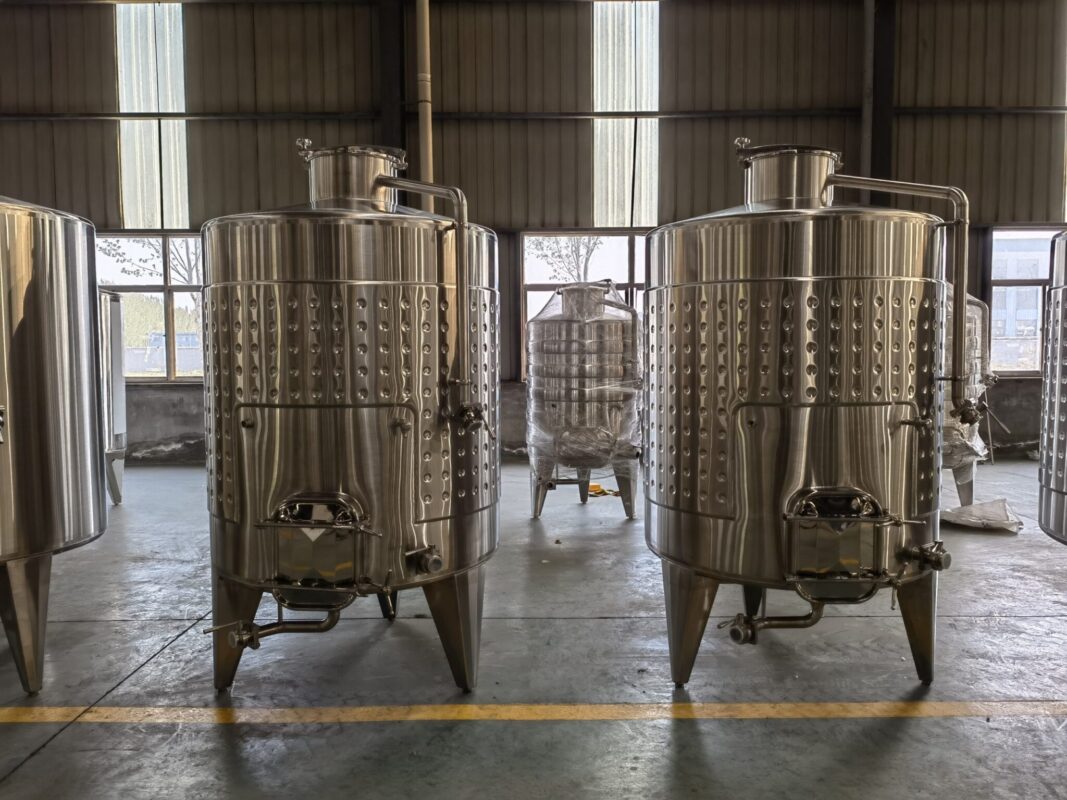
2. Material Comparison: Stainless Steel, Wood, and Plastic
Selecting the right material involves balancing quality objectives, budget constraints, and operational requirements.
Stainless Steel: The Industry Standard
Performance metrics:
- Thermal conductivity: 16 W/(m·K) enables rapid temperature adjustment
- Cleaning efficiency: CIP (Clean-in-Place) systems achieve 99.9% microbial reduction in 45-60 minutes
- Corrosion resistance: 316L grade withstands wine acidity (pH 3.0-4.0) indefinitely
- ROI timeline: Initial investment typically recovered within 5-7 years through labor savings and quality consistency
According to a 2025 study by the Wine Business Institute, wineries using stainless steel fermentation report:
- 38% reduction in wine spoilage compared to wood-only operations
- 42% faster batch turnaround times
- 65% lower annual maintenance costs per hectoliter of production
Wood: Tradition Meets Terroir
Material specifications:
- French oak: Tight grain (1.5-2.5mm), higher tannin extraction, premium pricing ($1,200-$1,500 per barrel)
- American oak: Wider grain (3-4mm), bold flavor profile, moderate pricing ($800-$1,000 per barrel)
- Eastern European oak: Growing popularity, balanced characteristics ($600-$900 per barrel)
Impact on wine chemistry:
- Tannin contribution: 10-30 mg/L increase in total phenolics
- Volatile acidity risk: 0.1-0.3 g/L higher than stainless steel without proper monitoring
- Evaporation loss: 2-5% annual volume loss (“angel’s share”)
Quality consideration: Research from the University of California, Davis demonstrates that barrel fermentation can increase wine complexity scores by 12-18% for appropriate varietals, justifying the premium cost for high-end products.
Plastic: Budget-Conscious Solutions
Material analysis:
- Food-grade HDPE: FDA-approved, BPA-free formulations
- Temperature range: Limited to 5-25°C without external cooling
- Oxygen permeability: 50-100x higher than stainless steel, requiring careful monitoring
- Applications: Best suited for short fermentation cycles (5-10 days)
Cost-benefit perspective: While initial costs are 85-90% lower than stainless steel, the shorter lifespan and limited quality control make plastic vessels most suitable for start-up operations with under 5,000L annual production, experimental small batches, and temporary expansion during peak harvest.
Material Selection Decision Matrix
| Criteria | Stainless Steel | Wood | Plastic |
|---|---|---|---|
| Initial Cost (per 1000L) | $2,500-$4,000 | $4,000-$6,500 | $400-$800 |
| Lifespan | 25-30 years | 3-5 years (flavor) | 5-8 years |
| Temperature Control | Excellent | Poor | Limited |
| Flavor Impact | Neutral | Significant | Neutral |
| Cleaning Efficiency | Excellent | Moderate | Good |
| Quality Consistency | Excellent | Variable | Moderate |
3. Impact of Vessel Size on Fermentation Process and Wine Flavor
Fermentation vessel size significantly influences wine chemistry, flavor development, and operational efficiency.
Small Vessels (50-500L)
Scientific considerations:
- Surface-to-volume ratio: Up to 10x higher than large tanks, accelerating heat transfer and cap management
- Temperature fluctuation: Research from the Australian Wine Research Institute shows ±2-4°C daily variation without active cooling
- Fermentation kinetics: 15-25% faster completion due to enhanced yeast-must contact
Quality implications:
- Fruit preservation: Better retention of volatile thiols and esters in white wine production
- Lot differentiation: Enables single-vineyard, single-block fermentation strategies
- Premium positioning: Supports small-lot, high-value marketing approaches
Medium Vessels (500-5,000L)
Operational sweet spot: Industry data indicates that 46% of boutique wineries (5,000-50,000 cases annually) utilize 1,000-3,000L tanks as their primary fermentation vessels.
Performance characteristics:
- Temperature stability: Natural thermal mass reduces cooling requirements by 30-40%
- Cap management: 2-3 meter height allows effective pump-over and punch-down techniques
- Labor efficiency: One operator can manage 8-12 vessels during active fermentation
- Quality consistency: 2,000-3,000L tanks show optimal balance between control and efficiency
Large Vessels (5,000-50,000L+)
Industrial scale production:
- Volume efficiency: Per-liter costs decrease by 40-60% versus small tanks
- Temperature control challenges: 12-18 cooling zones required for uniform temperature in 20,000L+ tanks
- Cap thickness: Can exceed 1.5-2 meters, requiring specialized submerged cap or rotary fermentation systems
- Blending flexibility: Large-volume homogeneity may limit terroir expression and lot differentiation
According to Wine Industry Metrics (2025), large-volume fermentation shows:
- 22% higher energy efficiency per liter produced
- 8-12% increased risk of stuck fermentations due to temperature gradients
- 15-20% lower labor costs per case produced
Vessel sizing rule of thumb: The Wine Institute recommends fermentation capacity at 1.3-1.5x expected harvest volume to accommodate peak season loads and provide flexibility for extended maceration.
4. Temperature Control: The Role of Vessels in Fermentation
Temperature management is arguably the single most critical factor in producing quality wine, and vessel design directly impacts control capabilities.
White Wine Fermentation: Cool and Controlled
Target parameters:
- Optimal range: 12-18°C (54-64°F)
- Critical threshold: Above 20°C, loss of volatile aromatics increases exponentially
- Cooling capacity required: 150-200 BTU/hour per hectoliter during peak fermentation
Research findings: A landmark study published in the American Journal of Enology and Viticulture (2024) demonstrated that maintaining white wine fermentation at 15°C ±1°C resulted in:
- 37% higher retention of fruity esters (particularly isoamyl acetate)
- 45% increase in 3-mercaptohexanol (tropical fruit character)
- 28% improvement in consumer preference scores versus uncontrolled fermentation
Vessel cooling technologies:
- Dimpled jacket: Most common, 85% coverage, 3-6 hour response time to adjust 5°C
- Internal coils: Faster response (1-2 hours), but 10-15% more difficult to clean
- Glycol systems: Standard operating temperature of -5°C, allowing precise control
Red Wine Fermentation: Warmth for Extraction
Target parameters:
- Optimal range: 22-30°C (72-86°F)
- Peak extraction: 28-30°C maximizes color and tannin extraction from skins
- Risk management: Above 32°C, yeast stress and volatile acidity concerns increase
Temperature impact on quality: Data from the Institute of Masters of Wine shows that:
- Every 1°C increase from 22°C to 28°C yields 2-3% more anthocyanin extraction
- Temperatures exceeding 30°C produce 12-18% higher volatile acidity levels
- Optimal color extraction occurs at 28°C for 5-7 days during peak fermentation
Return on Investment: Temperature Control Systems
Cost analysis for 3,000L stainless steel tank:
- Basic glycol jacket: $800-$1,200 installed
- Automated control system: Additional $1,500-$2,500
- Annual energy cost: $150-$300 per tank (varies by climate)
- Quality improvement value: Estimated $2-$5 per case in premium pricing power
Payback calculation: For a 500-case (6,000 bottle) production from a 3,000L tank, temperature control investment pays back in 1.5-2.5 harvest seasons through improved wine quality and reduced spoilage risk.
5. Cleaning and Maintenance for Optimal Fermentation Performance
Proper sanitation protocols are non-negotiable for consistent wine quality and regulatory compliance.
Industry Standards and Compliance
Regulatory framework:
- FDA Food Safety Modernization Act (FSMA): Requires documented cleaning procedures and microbial testing
- TTB (Alcohol and Tobacco Tax and Trade Bureau): Mandates equipment sanitation records
- ISO 22000: International food safety management standard increasingly adopted by wineries
Stainless Steel Vessel Cleaning Protocol
Standard CIP (Clean-in-Place) sequence:
- Pre-rinse: Cold water flush, 3-5 minutes, removes 85-90% of gross residue
- Caustic wash: 2-3% sodium hydroxide solution at 65-75°C, 20-30 minutes
- Acid rinse: 1-2% phosphoric acid at 50-60°C, 15-20 minutes (removes tartrate crystals)
- Final rinse: Hot water (75-85°C) until pH neutral and conductivity <150 μS/cm
- Sanitization: 150-200 ppm sulfur dioxide or 25 ppm ozone, 10-15 minutes contact time
Testing protocols: The American Society for Microbiology recommends:
- ATP (adenosine triphosphate) testing: Target <150 RLU (Relative Light Units) for clean surfaces
- Microbial swab testing: <10 CFU/cm² for total aerobic count
- Testing frequency: Every 10th batch minimum, or quarterly for seasonal operations
Maintenance Schedule and Budgeting
Annual maintenance costs (per vessel):
| Vessel Type | Labor Hours | Materials Cost | Total Annual Cost |
|---|---|---|---|
| Stainless steel (3,000L) | 8-12 hours | $200-$350 | $600-$1,000 |
| Oak barrel (225L) | 2-3 hours | $15-$25 | $100-$150 |
| Concrete tank (5,000L) | 12-16 hours | $300-$500 | $900-$1,500 |
| Plastic vessel (500L) | 4-6 hours | $50-$100 | $250-$400 |
Preventive maintenance ROI: According to a 2025 study by the Wine Business Journal, wineries with documented preventive maintenance programs experience:
- 43% fewer stuck fermentations
- 67% reduction in wine contamination incidents
- $8-$12 savings per case in reduced spoilage and rework
6. Cost Analysis: Budgeting for Different Fermentation Vessels
Understanding total cost of ownership helps optimize capital allocation for new and expanding wine operations.
Initial Capital Investment
Stainless steel pricing (2026 market rates):
| Capacity | Basic Tank | With Cooling Jacket | Fully Automated |
|---|---|---|---|
| 500L | $1,500-$2,200 | $2,500-$3,500 | $4,000-$5,500 |
| 1,000L | $2,200-$3,200 | $3,500-$5,000 | $6,000-$8,000 |
| 3,000L | $4,500-$6,500 | $7,500-$10,000 | $12,000-$16,000 |
| 10,000L | $12,000-$16,000 | $20,000-$28,000 | $35,000-$48,000 |
Oak barrel investment:
- French oak: $1,200-$1,500 per 225L barrel
- American oak: $800-$1,000 per barrel
- Useful life for flavor: 3-5 years (first-use premium, then neutral storage)
Operational Cost Comparison
10-year total cost of ownership (TCO) for 3,000L capacity:
Stainless steel:
- Initial investment: $10,000
- Annual cleaning/maintenance: $800
- Energy (cooling): $250/year
- Total 10-year cost: $13,000 ($4.33 per liter capacity)
Oak barrels (13 barrels = ~3,000L):
- Initial investment: $15,600
- Replacement cycle: Year 4 and 8 = $31,200
- Annual maintenance: $300
- Total 10-year cost: $51,800 ($17.27 per liter capacity)
Production Scale Economics
Small production (5,000-20,000 bottles annually):
- Optimal mix: 60% stainless steel, 30% oak barrels, 10% experimental vessels
- Capital requirement: $35,000-$65,000
- Per-bottle fermentation cost: $0.80-$1.40
Medium production (20,000-100,000 bottles annually):
- Optimal mix: 75% stainless steel, 20% oak (premium lots), 5% concrete
- Capital requirement: $120,000-$280,000
- Per-bottle fermentation cost: $0.45-$0.85
Large production (100,000+ bottles annually):
- Optimal mix: 85% stainless steel, 12% oak, 3% specialty
- Capital requirement: $450,000-$1,200,000
- Per-bottle fermentation cost: $0.25-$0.50
Investment payback timeline:
- Stainless steel: 18-24 months (through improved efficiency and reduced losses)
- Oak program: 36-48 months (requires established premium pricing)
7. Consumer Preferences: Trends in Choosing Fermentation Vessels
Market dynamics and consumer perceptions increasingly influence vessel selection decisions.
Sustainability and Environmental Concerns
Growing consumer priority: A 2025 Wine Market Council survey found that 54% of wine consumers aged 25-45 consider environmental practices when purchasing wine.
Vessel sustainability metrics:
Stainless steel:
- Recyclability: 100% recyclable at end of life
- Carbon footprint: 2.8-3.5 kg CO₂ per kg material production
- Longevity benefit: 25-30 year lifespan spreads embodied energy over many vintages
Oak barrels:
- Renewable resource: Sustainably harvested from managed forests
- Reuse cascade: First-use wine → neutral wine storage → spirits aging → biomass fuel
Natural Wine Movement
Market growth: Natural wine sales increased 34% year-over-year in 2025, according to Nielsen data.
Vessel selection impact:
- Concrete and amphora: Preferred by 67% of natural winemakers for “minimal intervention”
- Old oak and large format: 500-1,000L neutral oak foudres align with natural wine philosophy
Regional and Cultural Preferences
Asian markets (including China):
- Rapidly evolving preferences driven by education and exposure
- Stainless steel preference: 71% associate with modern, quality production
- Investment in quality: Chinese wineries increasingly adopting European-style oak programs
Market context: With China’s wine production reaching nearly 1 billion litres annually and the country hosting the second-largest vineyard area globally, Chinese winemakers are rapidly modernizing fermentation infrastructure. A 2025 study by the China Alcoholic Drinks Association found that new Chinese wineries are investing 45% more in stainless steel fermentation capacity compared to five years ago, reflecting a focus on quality consistency and international standards.
Future Trends in Vessel Technology
Innovation pipeline:
- IoT-enabled tanks: Real-time fermentation monitoring (temperature, density, cap height)
- Hybrid vessels: Stainless steel with oak inserts or staves
- Ceramic-lined concrete: Easier cleaning while maintaining micro-oxygenation benefits
Market adoption: Early data suggests that 28% of wineries building new facilities in 2025-2026 are incorporating smart fermentation monitoring systems, up from just 9% in 2022.
HGMC: Your Complete Wine Equipment Solution
At HGMC, we understand that every winery has unique requirements based on production scale, wine styles, and quality objectives. As a leading manufacturer of beverage production equipment, we offer comprehensive fermentation solutions tailored to your specific needs.
Customized Fermentation Systems
HGMC can custom-fabricate vessels to your exact design specifications or provide a complete turnkey solution for your wine or cider operation. Our comprehensive offerings include:
Core equipment:
- Wine fermentation tanks: 500L to 50,000L capacity, with or without cooling systems
- Aging and storage tanks: Temperature-controlled stainless steel vessels for maturation
- Hot and cold liquor tanks: Precise temperature management for all process stages
- Raw material processing machines: Crushing, destemming, and pressing equipment
- Filling equipment: Automated bottling and packaging solutions
Specialized features:
Our stainless steel wine tanks are designed with special features to make every step of the winemaking process easier—from maceration and fermentation to maturation and clearing:
- 316L stainless steel construction: FDA-approved, corrosion-resistant materials
- Precision temperature control: Dimpled cooling jackets with glycol systems
- Sanitary design: CIP-compatible fittings and polished interior surfaces (Ra ≤0.8 μm)
- Pressure rating options: Standard atmospheric to 3.0 bar for sparkling wine production
- Sample valves and ports: Convenient access for monitoring without contamination risk
Complete Facility Planning
Beyond individual vessels, HGMC provides comprehensive facility design services:
Layout and engineering:
- CAD and 3D modeling: Visualize your complete winery or cidery before construction begins
- Process flow optimization: Efficient grape-to-bottle workflows
- Capacity planning: Right-size your fermentation capacity to match harvest projections
- Utility integration: Glycol systems, wastewater treatment, and power distribution
What we need from you:
- Type of wine you plan to produce (red, white, sparkling, or multiple styles)
- Desired tank sizes and total fermentation capacity
- Annual output requirements
- Available facility footprint and ceiling height
With installations in over 40 countries, HGMC brings global expertise to your local operation. Whether you’re establishing a new boutique winery, expanding an existing operation, or modernizing legacy equipment, HGMC provides the technical expertise and manufacturing quality to support your success.
Contact HGMC today to discuss your wine fermentation equipment needs.
Frequently Asked Questions (FAQ)
Q1: What size fermentation vessel should I choose for my winery?
A: Vessel size depends on your expected harvest volume and wine style. As a general guideline, plan for total fermentation capacity of 1.3-1.5x your anticipated harvest volume to provide flexibility during peak season. For premium, small-lot wines, consider 1,000-3,000L tanks. For larger commercial production, 5,000-20,000L vessels offer better economies of scale. Many wineries use a mix of sizes: larger tanks for base wines and smaller vessels for premium, single-vineyard lots.
Q2: Is stainless steel or oak better for wine quality?
A: Neither is universally “better”—each serves different purposes. Stainless steel provides neutral, temperature-controlled fermentation ideal for preserving fruit character, especially in white and rosé wines. Oak barrels add complexity, texture, and flavor notes (vanilla, spice, toast) particularly valued in premium red wines and some Chardonnays. Industry best practice uses both: stainless steel for primary fermentation control, and oak for specific lots where wood influence enhances the wine style. About 68% of commercial wineries use stainless steel as their primary fermentation material, with 15-35% of premium production allocated to oak.
Q3: How much does temperature control matter in fermentation?
A: Temperature control is absolutely critical and directly impacts wine quality. Research shows that maintaining white wine fermentation at 15°C ±1°C results in 37% higher retention of fruity esters and 45% more tropical fruit character compared to uncontrolled fermentation. For red wines, optimal extraction occurs at 28-30°C, but exceeding 32°C increases volatile acidity risk by 12-18%. The investment in glycol-jacketed tanks typically pays back within 1.5-2.5 harvest seasons through improved quality and reduced spoilage.
Q4: How often should fermentation vessels be cleaned?
A: Stainless steel vessels should be cleaned immediately after each use following a standard CIP protocol (pre-rinse, caustic wash, acid rinse, final rinse, sanitization). The entire process takes 45-60 minutes for automated systems. Between vintages, vessels should undergo deep cleaning and sanitation. Oak barrels require power washing after each use (15-20 minutes per barrel) and sulfur dioxide fumigation every 4-6 weeks during storage. Annual deep maintenance is essential for all vessel types.
Q5: What is the expected lifespan of different fermentation vessels?
A: Stainless steel tanks: 25-30 years with proper maintenance and care. Oak barrels: 3-5 years for flavor contribution (first-use premium quality), then can serve 10-15 additional years as neutral storage vessels. Concrete tanks: 40-50+ years with proper sealing and maintenance. Plastic vessels: 5-8 years depending on usage intensity and UV exposure. These lifespans assume adherence to proper cleaning protocols and preventive maintenance schedules.
Q6: Can I start with basic equipment and upgrade later?
A: Yes, this is a common and sensible approach for new wineries. Many operations start with basic stainless steel tanks without cooling jackets, using ambient temperature control and limited production. Cooling systems can be retrofitted to most tanks for $2,500-$5,000 per unit. Similarly, you can begin with all stainless steel and add oak barrels for premium lots as your brand establishes pricing power. The key is purchasing quality base equipment that can accept upgrades—avoid extremely cheap vessels that lack upgrade paths.
Q7: How do I calculate the right fermentation capacity for my winery?
A: Use this formula: Total fermentation capacity = Expected annual harvest volume × 1.3 to 1.5. The multiplier accounts for peak harvest periods, extended maceration time, and operational flexibility. For example, if you expect to harvest 20,000L of grapes annually, plan for 26,000-30,000L of fermentation capacity. Consider vessel size distribution: 60-70% in your primary working size (2,000-5,000L for boutique operations), 20-30% in larger tanks for blending, and 10-20% in small tanks for experimental lots.
Q8: What certifications should I look for when purchasing fermentation equipment?
A: For international quality and safety compliance, look for: Material certification: 316L stainless steel with mill test certificates. Fabrication standards: ASME (American Society of Mechanical Engineers) for pressure vessels, or equivalent EU standards (CE marking). Food safety: FDA compliance for U.S. markets, or EU Regulation 1935/2004 for European markets. Quality management: ISO 9001 certification indicates the manufacturer follows consistent quality processes. Welding standards: ASME Section IX or equivalent ensures proper sanitary welding techniques.
Conclusion
Selecting the right fermentation vessels is one of the most important decisions you’ll make for your winery or cidery. The choice impacts not only your wine quality and production efficiency, but also your operational costs, maintenance requirements, and long-term profitability.
Stainless steel vessels dominate modern winemaking for good reason—they offer unmatched temperature control, hygiene, longevity, and consistency. With 68% market adoption and proven ROI within 5-7 years, they represent the industry standard for quality-focused operations.
However, the art of winemaking still values tradition. Oak barrels continue to play a vital role in premium wine production, offering flavor complexity and terroir expression that justify their higher costs for the right wine styles.
As global wine production evolves—with China alone producing nearly 1 billion litres annually—modern fermentation technology becomes increasingly critical to compete in quality and efficiency. Whether you’re planning a new facility or upgrading existing equipment, investing in proper fermentation vessels with precise temperature control and sanitary design will pay dividends for decades to come.
Ready to plan your wine fermentation system? Contact HGMC to discuss your specific requirements and receive expert guidance on vessel selection, facility layout, and complete turnkey solutions.
