
Introduction
The global craft beer market has experienced remarkable growth, with the industry valued at $117.24 billion in 2025 and projected to reach $186.59 billion by 2030, according to Grand View Research. This surge has created unprecedented demand for quality beer brewing equipment across home brewers, craft breweries, and industrial-scale operations.
Whether you’re a homebrewing enthusiast taking your first steps into beer crafting, a restaurant owner looking to differentiate your venue with on-site brewing, or an entrepreneur planning to launch a commercial brewery, selecting the right beer brewing equipment is crucial to your success. This comprehensive guide will walk you through everything you need to know about beer brewing equipment selection, configuration, and investment optimization.
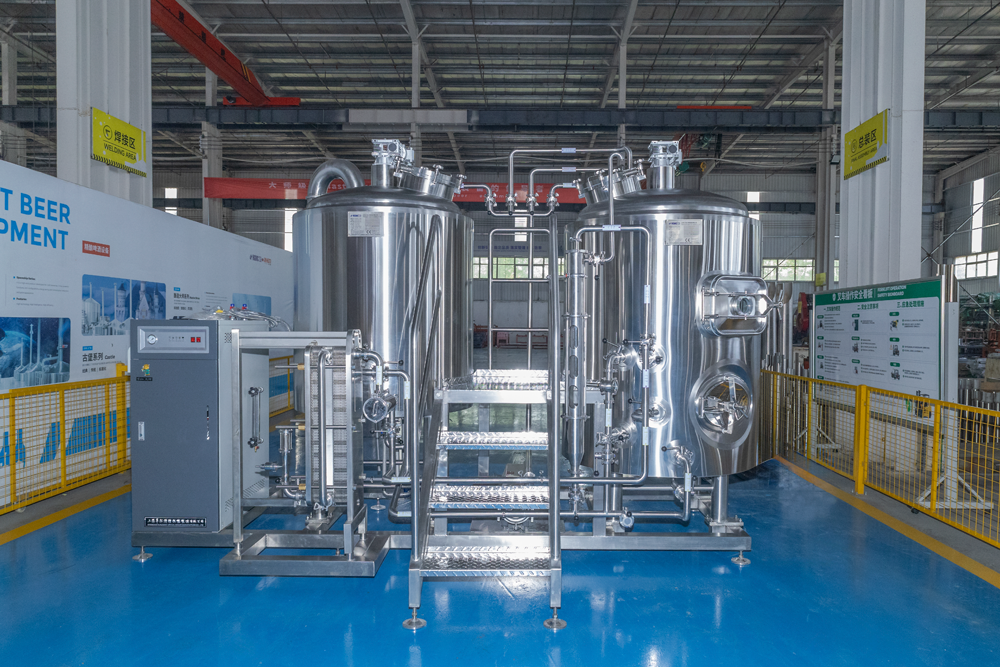
Main Components of Beer Brewing Equipment
Understanding the core components of a brewing system is essential before making any purchase decision. Modern beer brewing equipment consists of several integrated systems:
1. Mashing System
The mashing system is where the brewing process begins. It converts grain starches into fermentable sugars:
- Mash Tun: Vessel where crushed malt mixes with hot water
- Lauter Tun: Separates liquid wort from grain husks
- Brew Kettle: Boils wort and adds hops for flavor and preservation
- Whirlpool: Removes solid particles after boiling
2. Fermentation System
The heart of beer production where yeast converts sugars into alcohol:
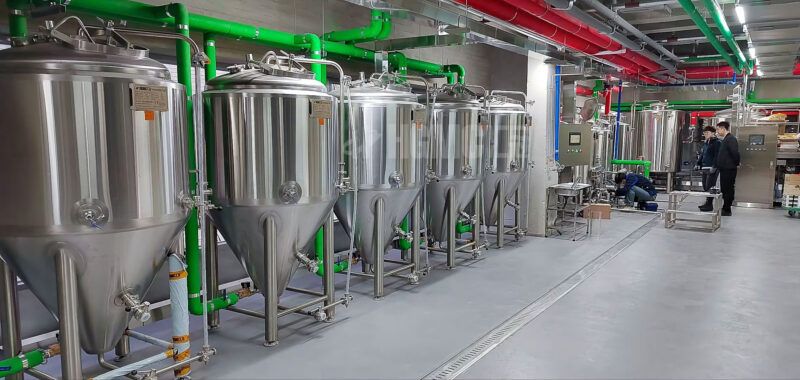
- Conical Fermentation Tanks: Industry-standard vessels with temperature control
- Cooling Jackets: Maintain precise fermentation temperatures (typically 10-20°C for lagers, 18-22°C for ales)
- Pressure Relief Valves: Safely release CO2 during fermentation
3. Cooling and Glycol System
- Heat Exchangers: Rapidly cool wort from 100°C to fermentation temperature
- Glycol Chillers: Circulate cooling fluid through fermentation tank jackets
- Ice Water Tanks: Backup cooling for large-scale operations
4. CIP (Clean-In-Place) System
Automated cleaning system essential for commercial operations:
- Reduces manual labor by 70-80% according to brewing industry studies
- Ensures consistent sanitation standards
- Extends equipment lifespan through proper maintenance
5. Filtration and Packaging
- Diatomaceous Earth Filters: Remove yeast and particulates for clarity
- Membrane Filtration: Modern alternative for cold-stabilization
- Filling Lines: From manual bottle fillers to automated canning systems
Key Factors to Consider When Choosing Beer Brewing Equipment
1. Define Your Usage Scenario
Different brewing contexts require vastly different equipment specifications:
Home Brewing
- Capacity: 10-50 liters per batch
- Investment: $300-$3,000
- Space: Kitchen countertop to garage setup
- Ideal for: Hobbyists, recipe experimentation, personal consumption
According to the American Homebrewers Association, over 1.2 million Americans actively homebrew, with 47% brewing at least once per month.
Bars and Restaurants
- Capacity: 200-1,000 liters per batch
- Investment: $15,000-$100,000
- Space: Dedicated brewing area (50-200 sq ft)
- ROI Timeline: Typically 18-36 months
A 2025 study by the Brewers Association found that brewpubs generate 28% higher profit margins on house-brewed beer compared to wholesale craft beer.
Industrial Production
- Capacity: 1,000-50,000+ liters per batch
- Investment: $250,000-$5,000,000+
- Space: Full facility (5,000-50,000+ sq ft)
- Production: 500-100,000+ barrels annually
2. Material and Craftsmanship Quality
The material composition of your beer brewing equipment directly impacts:
- Beer quality and flavor consistency
- Equipment longevity (15-25 years for quality stainless steel)
- Maintenance costs and cleaning efficiency
- Health and safety compliance
Material Standards
304 Stainless Steel (Industry Standard)
- Corrosion resistance: Excellent for most brewing applications
- Cost: Moderate
- Typical use: Fermentation tanks, bright tanks, serving vessels
316 Stainless Steel (Premium Grade)
- Enhanced corrosion resistance with molybdenum addition
- Cost: 20-30% premium over 304
- Typical use: Coastal breweries, facilities with high chloride exposure, CIP systems
Critical Quality Indicators:
- Welding Quality: TIG welding with sanitary finish (RA < 0.8 μm)
- Surface Finish: Electropolished interior surfaces prevent bacterial adhesion
- Pressure Rating: Minimum 3 bar for fermentation vessels
- Insulation: Polyurethane foam insulation (minimum 80mm thickness)
3. Operational Efficiency and Automation
Modern beer brewing equipment increasingly incorporates automation to improve consistency and reduce labor:
Smart Control Systems
- PLC (Programmable Logic Controllers): Automate temperature, pressure, and timing
- SCADA Systems: Monitor and log all brewing parameters in real-time
- Remote Monitoring: Cloud-based systems allow smartphone control
Industry Data: Breweries using automated systems report:
- 23% reduction in batch-to-batch variation (Source: Brewing Science Institute)
- 40% decrease in labor hours per batch
- 15% improvement in ingredient efficiency
CIP System Benefits
Clean-In-Place systems are essential for commercial operations:
- Time Savings: Reduces cleaning from 4-6 hours to 45-90 minutes
- Water Conservation: Uses 30-40% less water than manual cleaning
- Consistency: Eliminates human error in sanitation protocols
- Documentation: Automatic logging for quality assurance and compliance
4. Production Capacity and Scalability
One of the most common mistakes in equipment selection is underestimating growth potential.
Capacity Planning Guidelines
Rule of 70%: Operate at maximum 70% of total capacity to allow for:
- Maintenance downtime
- Seasonal demand fluctuations
- Product variety and experimentation
- Quality control batch rejection
Scalability Options:
- Modular Design: Add fermentation tanks as demand increases
- Expansion Ports: Pre-installed connections for future equipment
- Flexible Automation: Control systems that accommodate additional vessels
Case Study: According to a 2024 survey by Craft Brewing Business, 68% of breweries that started with “right-sized” equipment expanded within 3 years, while only 31% of those who “bought big” utilized full capacity in the same timeframe.
5. Budget and ROI Analysis
Initial Investment Breakdown
Home Brewing Setup ($500-$2,500):
- All-in-one brewing system: $300-$1,200
- Fermentation vessels: $50-$400
- Cooling and temperature control: $100-$500
- Accessories and ingredients: $50-$400
Small Commercial Brewery ($150,000-$500,000):
- Brewing system (7-15 BBL): $75,000-$200,000
- Fermentation tanks (4-8 vessels): $40,000-$150,000
- Cooling system: $15,000-$50,000
- CIP and utilities: $10,000-$40,000
- Installation and commissioning: $10,000-$60,000
Industrial Brewery ($1M-$10M+):
- Automated brewhouse: $400,000-$2,000,000
- Fermentation cellar: $300,000-$3,000,000
- Packaging line: $200,000-$2,000,000
- Utilities and infrastructure: $100,000-$1,000,000
- Building and installation: $200,000-$2,000,000+
Operating Costs
Ongoing expenses for a typical 500-barrel annual production brewery:
- Raw materials (malt, hops, yeast): $45,000-$65,000
- Utilities (water, electricity, gas): $12,000-$20,000
- Labor: $80,000-$150,000
- Maintenance and supplies: $8,000-$15,000
- Total: $145,000-$250,000 annually
Revenue Potential
Craft beer pricing and margins (per barrel):
- Production cost: $150-$250/barrel
- Wholesale price: $300-$450/barrel
- Retail tap price equivalent: $800-$1,500/barrel
- Brewpub margin: 65-75%
- Distribution margin: 35-50%
Breakeven Timeline:
- Home brewing: Immediate (hobby, not business)
- Brewpub/Restaurant: 18-36 months
- Production brewery: 3-5 years
6. Brand Reputation and After-Sales Service
When investing in beer brewing equipment, the manufacturer’s reliability is as important as the equipment itself.
Evaluation Criteria
✓ Manufacturing Experience: Minimum 10+ years in brewing equipment
✓ Certifications: ISO 9001:2015, CE marking, pressure vessel certifications
✓ References: Verified customer installations and testimonials
✓ Technical Support: 24/7 availability for commercial operations
✓ Warranty Coverage: Minimum 2 years comprehensive, 5-10 years structural
✓ Spare Parts Availability: Guaranteed supply for 15+ years
✓ Training Programs: On-site installation training and brewing consultation
Industry Insight: A 2025 survey by Brewing Equipment International found that 82% of brewery failures cited equipment reliability issues, while only 3% of breweries using premium equipment manufacturers experienced critical downtime.
Equipment Configuration Recommendations by Scenario
Home Brewing Enthusiasts
Essential Equipment
All-in-One Electric Brewing System ($800-$2,000)
- Integrated mashing, lautering, and boiling
- Digital temperature control (±0.5°C accuracy)
- 20-30 liter capacity
- Stainless steel construction
- Popular brands: Grainfather, Brewzilla, Anvil Foundry
Fermentation Setup ($150-$600)
- Entry Level: Food-grade plastic bucket with airlock ($30-$50)
- Intermediate: Glass carboy with temperature control ($100-$200)
- Advanced: Stainless steel conical fermenter with cooling ($300-$600)
Temperature Control ($100-$400)
- Fermentation chamber (converted refrigerator) with digital controller
- Maintains ±1°C stability
- Essential for lager production
Advantages:
- Low initial investment
- Minimal space requirements
- Immediate brewing capability
- Recipe experimentation freedom
Limitations:
- Small batch sizes (5-6 gallons typical)
- Manual process control
- Limited consistency for commercial-quality results
Bars and Restaurants
Recommended Configuration ($25,000-$80,000)
3-Vessel Brewing System (500L capacity)
- Mash/Lauter Tun: 500L
- Brew Kettle/Whirlpool: 500L
- Hot Liquor Tank: 600L
- 2-3 brews per day capacity
- Electric or gas heating options
Fermentation Cellar (4-6 tanks)
- 1,000L conical fermenters (4-6 units)
- Glycol cooling jackets
- Pressure rating: 3 bar
- Stainless steel construction (304)
Glycol Chiller (2-3 ton capacity)
- Maintains 8 fermenters simultaneously
- Energy-efficient operation
- Backup compressor recommended
CIP System (semi-automated)
- Single-tank CIP unit
- Automated chemical dosing
- Programmable cleaning cycles
Serving System
- Bright beer tanks (500-1,000L)
- Direct-draw tap system
- CO2 regulation and carbonation
Space Requirements
- Brewing area: 150-250 sq ft
- Fermentation cellar: 200-400 sq ft
- Storage and packaging: 100-200 sq ft
- Total: 450-850 sq ft
Staffing
- Head brewer: 1 full-time
- Assistant brewer: 1 part-time
- Maintenance: Outsourced or shared
Production Capacity
- 2-3 batches per week
- 100-150 barrels annually
- Serves 20-40 taps with rotating selection
Business Case:
A 200-seat brewpub selling house beer at $7/pint with 70% margin generates approximately $180,000 additional annual profit compared to purchasing wholesale craft beer.
Industrial Breweries
Recommended Configuration ($500,000-$2,500,000)
Automated 4-Vessel Brewhouse (20-50 BBL)
- Mash Tun with automated rake system
- Lauter Tun with adjustable knife assembly
- Brew Kettle with energy recovery
- Whirlpool with tangential inlet
- PLC-controlled automation
- 2-4 brews per day capacity
Fermentation and Maturation
- 10-20 cylindroconical tanks (40-100 BBL each)
- Automated temperature control (±0.2°C)
- Pressure monitoring and control
- CIP-compatible design
- Glycol-cooled jackets
Cooling Infrastructure
- Central glycol system (15-30 ton capacity)
- Redundant compressors
- Heat recovery for hot liquor tank
- Cold water generation for heat exchanger
Fully Automated CIP
- Multi-tank CIP system
- Automated valve matrix
- Chemical concentration monitoring
- Documentation and validation logging
- SCADA integration
Filtration and Quality Control
- Centrifuge or diatomaceous earth filter
- Membrane filtration system
- DO (Dissolved Oxygen) monitoring
- Inline quality measurement
Packaging Line
- Kegging: Automated keg washer and filler (30-50 kegs/hour)
- Canning: 30-100 cans per minute
- Bottling: 50-150 bottles per minute
- Labeling and packaging automation
- Palletizing system
Control and Monitoring
- SCADA system for entire brewery
- Recipe management software
- Inventory tracking integration
- Energy monitoring and optimization
- Remote access capability
Production Capacity
- 2,000-15,000 barrels annually
- 5-6 brew days per week
- Multiple simultaneous fermentations
- 3-4 week grain-to-glass timeline
Staffing Requirements
- Brewmaster: 1
- Production brewers: 2-4
- Cellar operators: 2-3
- Packaging staff: 2-4
- Maintenance technician: 1-2
- Total: 8-14 employees
Practical Tips for Selecting and Using Beer Brewing Equipment
Pre-Purchase Considerations
1. Conduct a Feasibility Study
- Market demand analysis in your area
- Competitive landscape assessment
- Regulatory requirements and licensing
- Location and facility suitability
- Utility capacity (water, power, drainage)
2. Visit Operating Breweries
- See equipment in action
- Speak with brewers about their experiences
- Understand workflow and space requirements
- Learn from others’ mistakes and successes
3. Request Detailed Quotations
- Complete equipment specifications
- Installation and commissioning costs
- Training and technical support
- Warranty terms and conditions
- Payment terms and delivery schedule
4. Verify Certifications
- Pressure vessel certification (ASME, CE, or local equivalent)
- Electrical safety approvals (UL, CE)
- Food contact material compliance (FDA, EU 1935/2004)
- ISO 9001:2015 quality management
Post-Purchase Best Practices
1. Invest in Training
- Factory training for key personnel
- Ongoing education in brewing science
- Equipment maintenance certification
- Safety and OSHA compliance
2. Implement Preventive Maintenance
- Daily inspection checklists
- Weekly cleaning and sanitation protocols
- Monthly mechanical inspections
- Annual certification and calibration
Industry Standard: Breweries with documented preventive maintenance programs experience 67% fewer critical equipment failures (Source: Master Brewers Association of Americas).
3. Document Everything
- Brewing logs for every batch
- CIP cycle records
- Maintenance and repair history
- Quality control measurements
- Regulatory compliance documentation
4. Build Supplier Relationships
- Establish direct contact with manufacturer technical support
- Maintain spare parts inventory (pumps, gaskets, valves)
- Join industry associations for knowledge sharing
- Attend brewing conferences and equipment exhibitions
Why Choose HGMC Beer Brewing Equipment
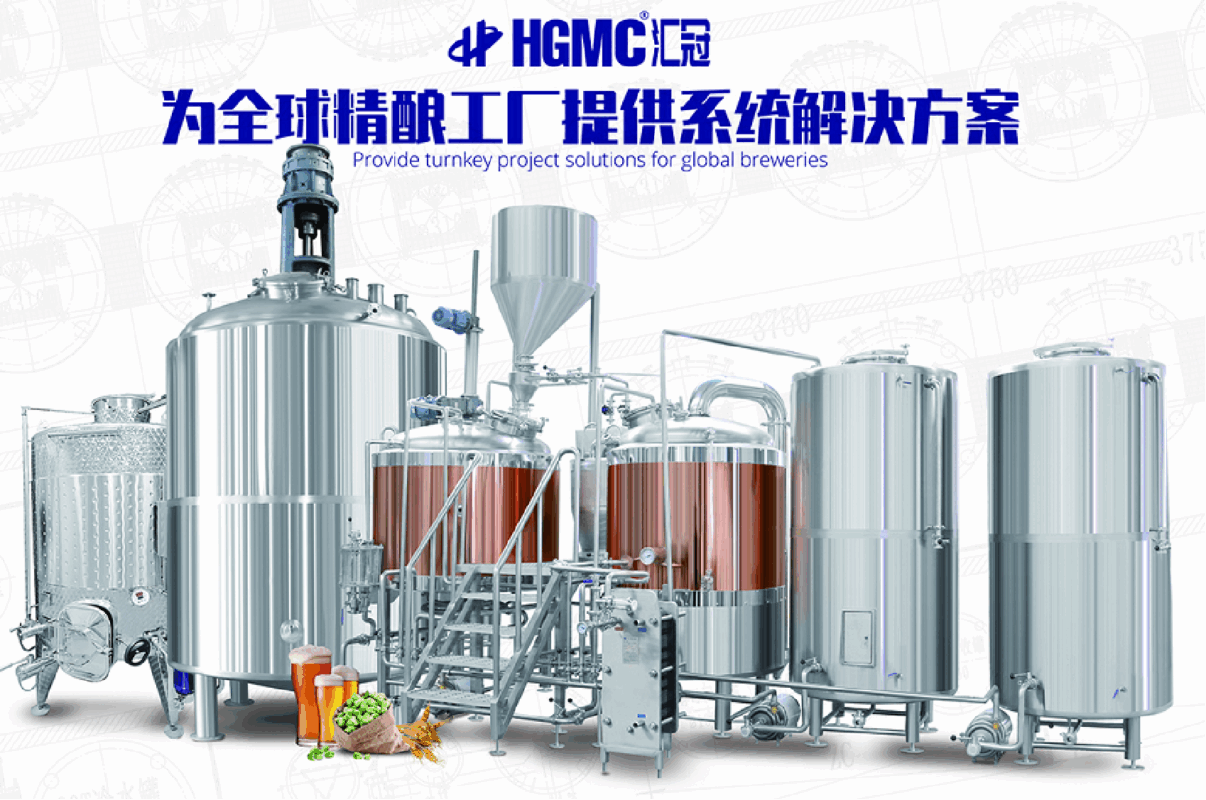
HGMC is recognized as one of the world’s leading manufacturers of beer brewing equipment, offering comprehensive solutions for breweries of all sizes.
Our Capabilities
✓ 30+ National Authorized Patents: Innovative designs for improved efficiency and quality
✓ 20+ High-Tech Achievements: Industry-leading automation and control systems
✓ ISO 9001:2015 Certified: Rigorous quality management throughout production
✓ Global Reach: Exported to 120+ countries worldwide
✓ Comprehensive Service: From individual equipment to complete turnkey brewery projects
✓ Product Range:
- Brewery equipment (10L to 10,000L+ capacity)
- Beverage production equipment
- Canning and bottling lines
- Complete facility design and installation
Our Commitment
Quality: Every component meets or exceeds international standards with rigorous testing protocols.
Innovation: Continuous R&D investment ensures our equipment incorporates the latest brewing technology.
Support: 24/7 technical assistance, comprehensive training programs, and reliable after-sales service.
Sustainability: Energy-efficient designs reduce operational costs and environmental impact.
Proven Track Record: Thousands of successful installations with documented customer satisfaction.
Whether you’re starting your first homebrew setup or expanding a commercial brewery, HGMC provides the expertise, equipment, and support to ensure your brewing success.
Frequently Asked Questions (FAQ)
General Questions
Q1: How much does beer brewing equipment cost?
A: Beer brewing equipment costs vary dramatically based on scale:
- Home brewing: $300-$3,000 for a complete setup
- Small brewpub: $25,000-$100,000 for 3-7 BBL system
- Craft production brewery: $250,000-$1,000,000 for 10-30 BBL
- Industrial brewery: $1,000,000-$10,000,000+ for large-scale operations
The investment should align with your production goals and business model. Always factor in installation, training, and working capital beyond equipment costs.
Q2: What’s the difference between 304 and 316 stainless steel?
A: Both are food-grade stainless steels, but:
- 304 stainless steel: Contains 18% chromium and 8% nickel; excellent corrosion resistance for most brewing applications; industry standard; more affordable
- 316 stainless steel: Contains additional 2-3% molybdenum; superior corrosion resistance especially to chlorides; recommended for coastal locations or high-chloride water; 20-30% more expensive
For most breweries, 304 stainless steel is perfectly adequate. Choose 316 if you’re in a coastal environment or have particularly corrosive water conditions.
Q3: Do I need a CIP system for a small brewery?
A: For brewpubs and commercial breweries, a CIP (Clean-In-Place) system is highly recommended and quickly pays for itself through:
- Time savings: Reduces cleaning from 4-6 hours to 45-90 minutes
- Labor reduction: Eliminates manual tank entry and scrubbing
- Consistency: Ensures standardized sanitation for quality control
- Safety: Reduces chemical exposure and confined space entry
- Documentation: Automatic logging for regulatory compliance
For home brewers, manual cleaning is usually sufficient. For any brewery producing more than 200 barrels annually, CIP is a worthwhile investment.
Q4: How long does brewing equipment last?
A: With proper maintenance:
- Stainless steel vessels: 20-30+ years (fermenters, bright tanks, brewhouse)
- Pumps and motors: 10-15 years with regular service
- Control systems: 8-12 years (may need updates for software compatibility)
- Hoses and gaskets: 1-3 years (regular replacement items)
- Heat exchangers: 10-15 years with proper cleaning
Quality equipment from reputable manufacturers like HGMC typically lasts longer due to superior materials and construction. Budget 2-3% of equipment value annually for maintenance and replacement parts.
Q5: What capacity brewery equipment should I start with?
A: Follow the “start smaller than you think” principle:
- Home brewing: 5-10 gallon (19-38L) systems allow learning without major investment
- Brewpub: 3-7 BBL (3.5-8 hL) provides variety without overwhelming demand
- Production brewery: 10-15 BBL (12-17.5 hL) balances efficiency with flexibility
Key consideration: It’s easier to expand by adding fermenters than replacing an entire brewhouse. Many successful breweries start with a smaller brewhouse and expand fermentation capacity as demand grows.
Q6: Can I install brewing equipment myself?
A: It depends on scale and expertise:
- Home brewing: DIY installation is common and straightforward
- Small commercial: Possible with plumbing/electrical experience, but professional installation recommended for:
- Glycol systems and refrigeration
- Electrical connections (often requires licensed electrician)
- Gas connections (requires certified technician)
- Pressure vessels (may require inspection and certification)
- Large commercial: Professional installation is essential for safety, warranty compliance, and regulatory approval
Most reputable manufacturers like HGMC include installation and commissioning in their turnkey packages, ensuring proper setup and operator training.
Q7: What are the most important features for automated brewing equipment?
A: Priority automation features:
Essential (Highest ROI):
- Temperature control and monitoring
- Automated CIP sequencing
- Recipe storage and replication
- Pump and valve control
Valuable (Improved Consistency):
- Dissolved oxygen monitoring
- Pressure regulation and control
- Volume measurement and tracking
- pH monitoring
Advanced (Optimization):
- Energy management systems
- Predictive maintenance alerts
- Remote monitoring and control
- Integration with inventory management
Start with temperature control and basic automation, then add features as your operation scales.
Q8: How much space do I need for a small commercial brewery?
A: Minimum space requirements:
3 BBL Brewpub System:
- Brewing area: 150-200 sq ft
- Fermentation: 200-300 sq ft
- Cold storage: 100-150 sq ft
- Packaging/storage: 100-150 sq ft
- Total: 550-800 sq ft
7 BBL Production Brewery:
- Brewing area: 300-400 sq ft
- Fermentation: 400-600 sq ft
- Cold storage: 200-300 sq ft
- Packaging: 200-300 sq ft
- Storage: 300-400 sq ft
- Office/lab: 200-300 sq ft
- Total: 1,600-2,300 sq ft
Always add 20-30% buffer for workflow, maintenance access, and future expansion. Ceiling height minimum: 14-16 feet for tank access.
Q9: What’s the typical lifespan before ROI on brewing equipment?
A: ROI timelines vary by business model:
Brewpub/Restaurant:
- Investment: $50,000-$100,000
- Timeline: 18-36 months
- Key factor: High margins on direct-to-consumer sales (65-75%)
Distribution-Focused Brewery:
- Investment: $250,000-$1,000,000
- Timeline: 3-5 years
- Key factor: Lower margins (35-50%) but higher volume
Contract Brewing:
- Investment: Minimal (using existing facility)
- Timeline: 6-18 months
- Key factor: No capital expenditure, but limited control
Factors affecting ROI: local market demand, pricing strategy, distribution costs, brewing efficiency, and marketing effectiveness.
Q10: How do I maintain beer quality consistency with new equipment?
A: Quality consistency requires:
1. Standardization:
- Document every recipe precisely (weights, temperatures, timing)
- Use the same ingredient sources and specifications
- Maintain detailed brew logs
2. Process Control:
- Automated temperature management (±0.5°C accuracy)
- Oxygen management (pre-fermentation aeration, post-fermentation DO control)
- pH monitoring and adjustment
- Consistent yeast pitching rates
3. Sanitation:
- Strict CIP protocols
- Regular microbiological testing
- Documented cleaning procedures
4. Quality Testing:
- Gravity measurements at key stages
- Sensory evaluation (trained panel)
- Laboratory analysis (professional lab or in-house)
- Customer feedback tracking
5. Equipment Calibration:
- Annual temperature probe calibration
- Pressure gauge verification
- Volume measurement validation
- pH meter calibration
Industry data shows that breweries using automated equipment with documented SOPs achieve ±3% variation in key parameters vs. ±15% variation with manual processes.
Conclusion: Making the Right Investment in Beer Brewing Equipment
Selecting the right beer brewing equipment is one of the most critical decisions for anyone entering the brewing industry—whether as a hobbyist, brewpub owner, or commercial producer. The investment extends far beyond the initial purchase price; it determines your production capability, beer quality, operational efficiency, and ultimately, your success in this competitive market.
Key Takeaways
1. Match Equipment to Your Goals
- Home brewers: Focus on ease of use and experimentation
- Brewpubs: Balance production with customer experience
- Commercial breweries: Prioritize consistency, efficiency, and scalability
2. Invest in Quality
- Premium materials (304/316 stainless steel) ensure longevity
- Proper welding and construction prevent costly failures
- Reputable manufacturers provide reliable support
3. Plan for Growth
- Modular designs allow expansion without complete replacement
- Operating at 70% capacity provides flexibility
- Fermentation capacity should exceed brewhouse capacity
4. Prioritize Automation Wisely
- Temperature control delivers the highest ROI
- CIP systems are essential for commercial operations
- Advanced features add value as your operation scales
5. Partner with Experienced Manufacturers
- Proven track record reduces risk
- Comprehensive support ensures smooth operations
- Training programs accelerate your learning curve
The Craft Beer Opportunity
With the global craft beer market growing at 8.9% CAGR through 2030, there has never been a better time to invest in quality beer brewing equipment. Consumer demand for unique, locally-produced craft beer continues to rise, creating opportunities for brewers at every scale.
Whether you’re brewing your first batch in your kitchen or planning a multi-million dollar facility, the right equipment forms the foundation of your success. Take the time to research, visit operating breweries, consult with experienced manufacturers like HGMC, and make informed decisions that align with your vision and budget.
Next Steps
Ready to start your brewing journey?
- Define your goals: Hobby, business, or passion project?
- Research your market: What’s the local demand and competition?
- Create a budget: Include equipment, installation, and working capital
- Contact manufacturers: Request quotes and specifications from reputable suppliers
- Visit facilities: See equipment in operation before committing
- Plan your space: Ensure adequate room for equipment and workflow
- Invest in education: Brewing courses and certifications improve success rates
HGMC is here to support your brewing ambitions with world-class equipment, expert consultation, and comprehensive after-sales service. With 30+ patented innovations and installations in 120+ countries, we bring the expertise and reliability you need to transform your brewing vision into reality.
Contact HGMC Today
For detailed quotations, technical specifications, or to discuss your specific brewing equipment needs, reach out to our expert team. We provide tailored solutions from individual equipment components to complete turnkey brewery installations.
