
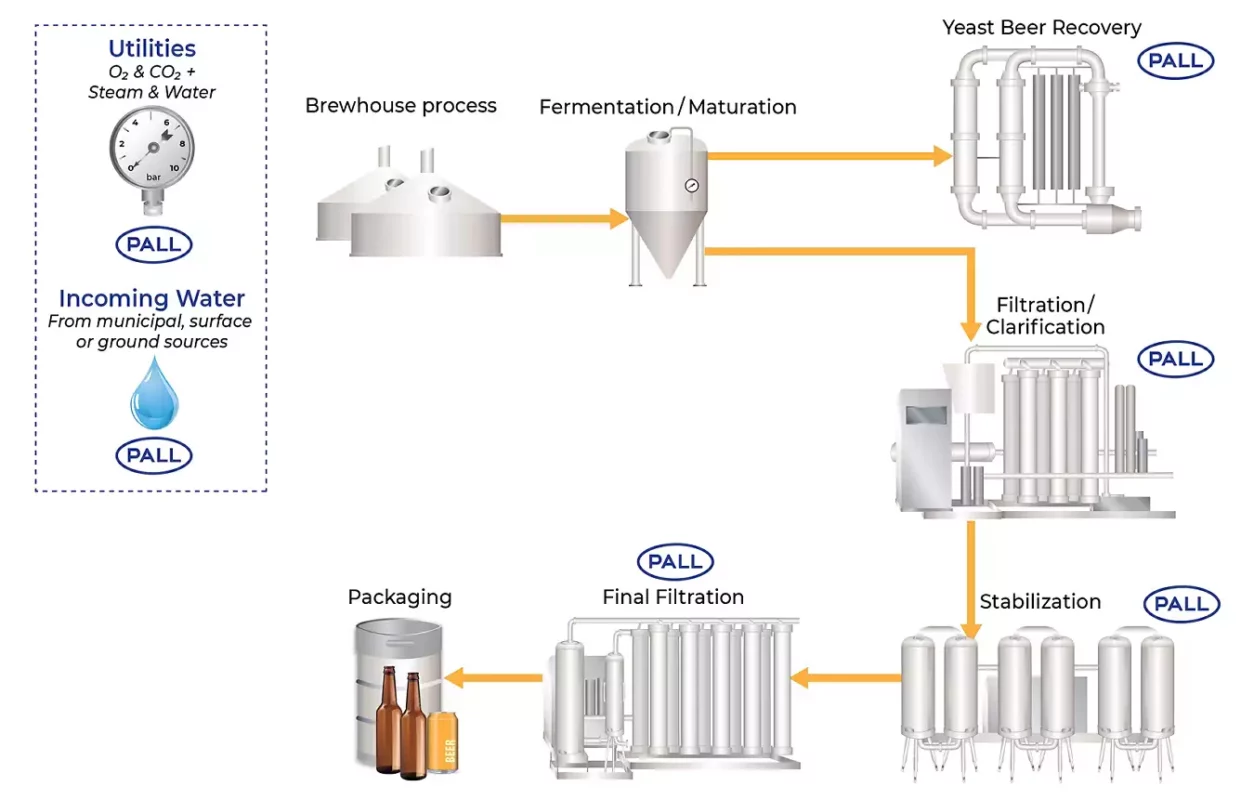
Beer brewing is both a science and an art. For thousands of years, people have enjoyed beer in countless styles—from crisp lagers to hop-forward IPAs and rich stouts. Today, more entrepreneurs and beverage companies are launching craft breweries or expanding production to meet growing demand.
If you’re new to brewing or planning a commercial brewery project, the process can feel overwhelming at first. In reality, the beer brewing process can be simplified into four essential steps: mashing, separation (lautering), boiling, and fermentation. Across these stages, the same four core ingredients—malt, water, hops, and yeast—work together to create the flavor, aroma, color, and mouthfeel of the final beer.
In this guide, we’ll break down the four basic steps in brewing beer, explain what happens at each stage, and highlight the key equipment used in modern commercial breweries. We’ll also introduce what a turnkey brewery project typically includes for customers in the USA, Canada, Australia, and Europe.
- The Four Key Ingredients for Brewing Beer
Before diving into the process, it helps to understand what beer is made from. Every beer recipe is built on four essential ingredients:
Malt
Malt (most commonly malted barley) is the primary source of fermentable sugars. During brewing, the starches in malt are converted into sugars, which yeast later consumes to produce alcohol and CO2. Different malt types also influence beer color, foam stability, body, and flavors such as bread, biscuit, caramel, coffee, or chocolate notes.
Water
Water is the main ingredient by volume and has a major impact on brewing performance and flavor. Mineral content (such as calcium, chloride, sulfate, and bicarbonate) affects mash efficiency, hop bitterness perception, and overall balance. Commercial breweries often treat and adjust water to match target beer styles and maintain batch-to-batch consistency.
Hops
Hops contribute bitterness, aroma, and flavor. The timing of hop additions matters: early additions in the boil add bitterness, while later additions (or dry hopping during fermentation) emphasize aroma and fresh hop character such as citrus, pine, floral, or tropical fruit notes.
Yeast
Yeast is the “engine” of fermentation. It converts sugars into alcohol and CO2, while also producing many flavor-active compounds. Ale and lager yeasts behave differently and require different temperature ranges, which is why precise fermentation temperature control is critical in commercial brewing.
- Step One: Mashing (Making Sweet Wort)
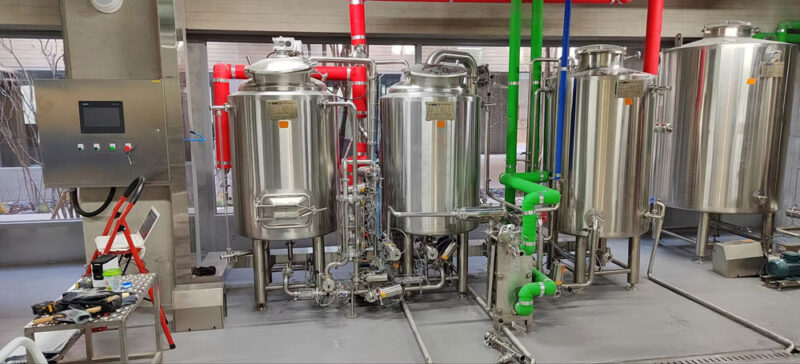
The first step in brewing beer is called mashing. During mashing, crushed malted grains are mixed with hot water to create a thick mixture sometimes called “mash.” This is typically done in a vessel known as a mash tun (or in a combined mash/lauter tun in many commercial breweries).
What happens during mashing?
- Enzymes naturally present in malt become active at specific temperatures.
- These enzymes convert grain starches into sugars.
- The result is a sweet liquid called wort, which contains the fermentable sugars needed for fermentation.
Typical mash time
In many brewing processes, mashing takes about 60–90 minutes, though this can vary depending on recipe, mash temperature schedule, and brewery process design.
Why mashing matters in commercial brewing
For commercial breweries, mashing is not just about “making sugar.” It influences:
- Brewhouse efficiency (how much extract you get from malt)
- Wort fermentability (dry vs. full-bodied beer)
- Production repeatability and quality consistency
Key equipment commonly used
- Mash tun or mash mixer (with agitation and temperature control)
- Hot liquor tank (HLT) for brewing water
- Automated temperature monitoring and controls (manual or PLC-based, depending on project level)
- Step Two: Separation (Lautering / Wort Separation)
After mashing, the brewer must separate the liquid wort from the spent grain (the solid grain husks and particles). In simplified explanations, this is often called “separation.” In professional brewing terms, it is usually called lautering or wort separation.
How wort separation works
- The mash is transferred to a lauter tun (or remains in a mash/lauter tun).
- The grain bed naturally forms a filter layer.
- Clear wort is recirculated at first (vorlauf) until it runs bright.
- Wort is collected into the kettle, and sparge water is used to rinse remaining sugars from the grain.
Why separation is critical
Wort separation strongly affects:
- Brewhouse cycle time (how many brews per day you can achieve)
- Extract yield (raw material cost per liter/beer barrel)
- Risk of stuck mash (slow or blocked runoff), which can delay the entire brew day
Key equipment commonly used
- Lauter tun or mash/lauter tun (false bottom, rakes/knives, wort collection system)
- Automated valves and flow control (helps maintain stable runoff)
- Spent grain discharge design (important for fast turnaround and hygiene)
- Step Three: Boiling (Sterilization, Hop Utilization, and Wort Stability)
Once wort is separated, it is boiled in a brew kettle. Boiling is one of the most important steps for ensuring a stable, clean, high-quality beer.
What boiling does
- Sterilizes the wort to reduce microbial risk before fermentation
- Extracts bitterness from hops (isomerization of alpha acids)
- Helps remove unwanted volatile compounds
- Promotes protein coagulation (hot break), improving clarity and stability
- Concentrates wort slightly via evaporation, depending on target gravity and evaporation rate
Hop additions during boiling
Boiling is where many breweries add hops for bitterness and flavor. Late hop additions preserve more aroma, while early additions contribute a cleaner bitter base.
After boiling: whirlpool and cooling
After the boil, many breweries use a whirlpool tank or whirlpool function in the kettle to separate hop matter and trub. The hot wort is then cooled quickly using a plate heat exchanger before entering the fermentation tank.
Key equipment commonly used
- Brew kettle (steam-heated or electric, depending on project)
- Whirlpool tank or internal whirlpool design
- Plate heat exchanger for rapid cooling
- Aeration/oxygenation equipment (to support healthy fermentation)
- Controls and instrumentation for temperature and flow stability
- Step Four: Fermentation (Turning Wort into Beer)
Fermentation is where wort becomes beer. Once cooled, wort is transferred into a fermenter, and yeast is pitched. Yeast consumes sugars and produces alcohol and CO2, along with many flavor and aroma compounds that define the beer style.
Core fermentation controls
Commercial fermentation requires consistent, repeatable control of:
- Temperature (most critical)
- Yeast pitching rate and yeast health management
- Oxygenation level (especially important at the start)
- Fermentation pressure (affects CO2 retention and flavor expression)
- Fermentation time and maturation/conditioning
Why fermentation is the “quality center” of the brewery
In professional breweries, most quality issues and style inconsistencies come from fermentation management rather than the brewhouse. That’s why advanced breweries invest heavily in reliable fermentation tanks, glycol cooling, and CIP hygiene systems.
Key equipment commonly used
- Conical fermentation tanks (jacketed, insulated, pressure-rated)
- Glycol chiller system (for precise temperature control)
- Bright beer tanks (BBTs) for carbonation and stabilization (optional but common)
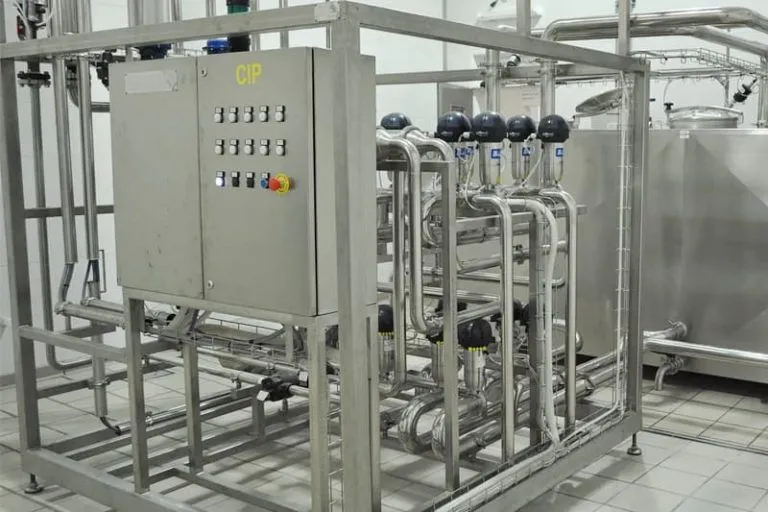
- CIP cleaning system for sanitary operation
- CO2 system and safety valves for pressure management
- From Process Knowledge to Production Reality: Turnkey Brewery Projects (USA/Canada/Australia/Europe)
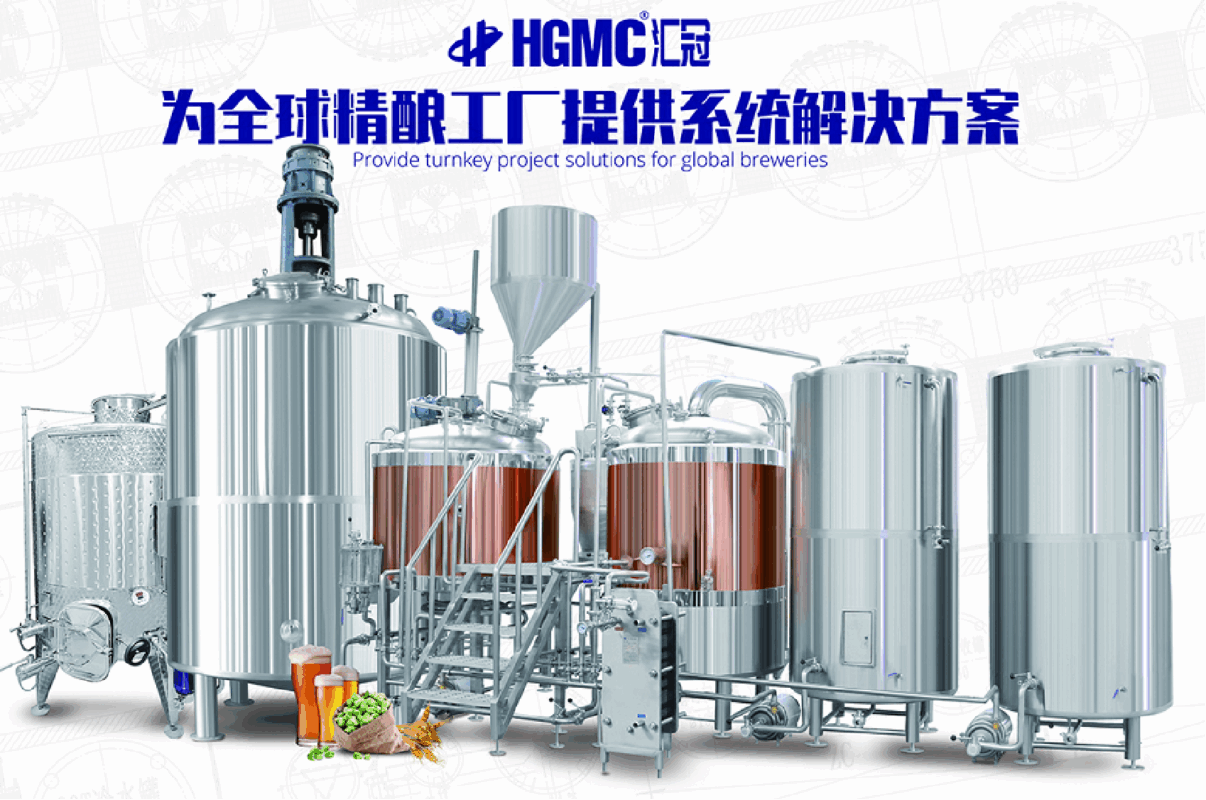
Understanding the beer brewing process is the foundation—but building a commercial brewery requires more than the four steps. To brew consistently at scale, a brewery must integrate process equipment, utilities, automation, hygiene design, and installation/commissioning support.
What a turnkey brewery solution typically includes
A turnkey brewery project is designed to help customers go from concept to production with a complete, coordinated delivery. Depending on scope, it may include:
Brewhouse system
- Mash, lauter, kettle, whirlpool configuration (2-vessel, 3-vessel, 4-vessel, or customized)
- Wort transfer piping, pumps, valves, and automation
- Heating method design (steam system planning, energy efficiency, heat recovery options)
Cellar system (fermentation & brite tanks)
- Fermenters, BBTs, yeast management options
- Tank sizing and quantity planning based on target styles and throughput
- Tank jacket zoning and temperature control valve groups
Glycol cooling system
- Correct load calculation and peak fermentation load design
- Glycol piping design, insulation, and control strategy
- Redundancy planning for stable summer operation
CIP (Cleaning-In-Place) system
- Caustic/acid/hot water or sanitation loops (project-dependent)
- Spray ball coverage design and sanitary piping
- Documentation and SOP support for consistent hygiene
Utilities and plant engineering support
- Steam boiler or electric heating options
- Water treatment (softening/RO), compressed air, CO2 supply
- Drainage planning, floor slope guidance, and process flow layout concepts
Packaging integration (optional)
- Kegging, canning, bottling options
- Filtration or pasteurization (if required by product strategy)
- Packaging line layout integration with cold room and logistics flow
Why this matters for North America, Australia, and Europe
Customers in the USA, Canada, Australia, and Europe typically focus on:
- Sanitary design and reliable documentation
- Stable automation and repeatability
- Installation quality and commissioning support
- Long-term service, spare parts, and training
A well-designed turnkey brewery system reduces startup risk, shortens time to production, improves batch consistency, and makes future expansion easier.
- Conclusion: A Simple Brewing Framework with a Scalable Commercial Path
The beer brewing process can be simplified into four core steps: mashing, separation (lautering), boiling, and fermentation. Each step transforms the same four ingredients—malt, water, hops, and yeast—into a finished beer with unique character.
For commercial breweries, the goal is not only to brew beer successfully once, but to brew it consistently, hygienically, and efficiently—every batch, every week, at the target capacity. That’s where professional equipment engineering and turnkey project delivery make a real difference.
If you are planning a new craft brewery or expanding production, a turnkey brewery solution can help align process design, equipment configuration, plant layout, utilities, installation, and commissioning—so you can reach stable production faster and scale with confidence.
