
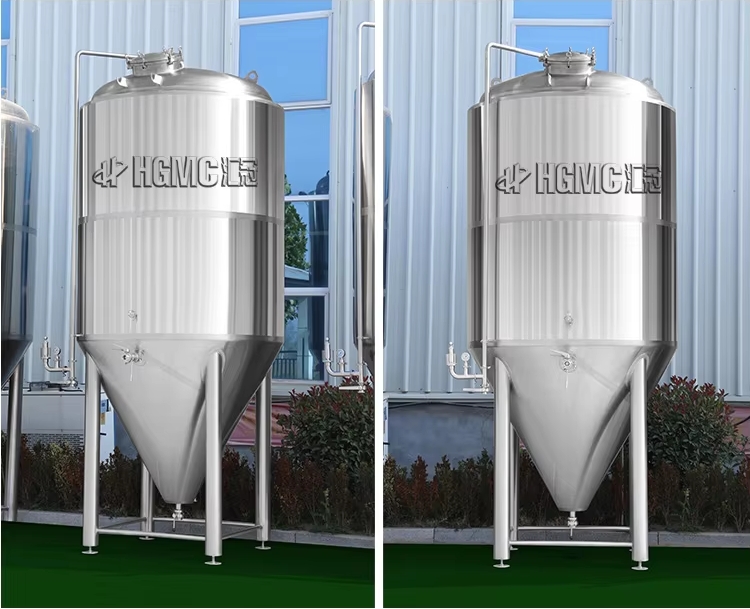
Choosing the best beer brewery tanks is one of the most important decisions a brewery can make. Tanks directly affect fermentation performance, oxygen pickup, cleaning efficiency, production scheduling, and ultimately beer flavor stability. Whether you’re building a new brewhouse or upgrading capacity, this guide breaks down how to select brewery tanks that match your beer styles, batch size targets, and growth plan—using practical engineering factors and data-backed references.
Quick Take: What “Best” Means for Brewery Tanks
In practice, “best beer brewery tanks” doesn’t mean the most expensive tank. It means the best fit across:
- Target beer styles and process (ales vs lagers, dry hopping, pressure fermentation, carbonation needs)
- Hygiene and cleanability (CIP design, surface finish, dead-leg control)
- Temperature precision (jacket design, sensors, insulation)
- Compliance and safety (pressure rating thresholds, relief devices)
- Lifecycle cost (downtime risk, corrosion, maintenance, scalability)
A tank that is easy to clean, stable in temperature control, and designed for your process will usually outperform a “premium” tank that doesn’t match your workflow.
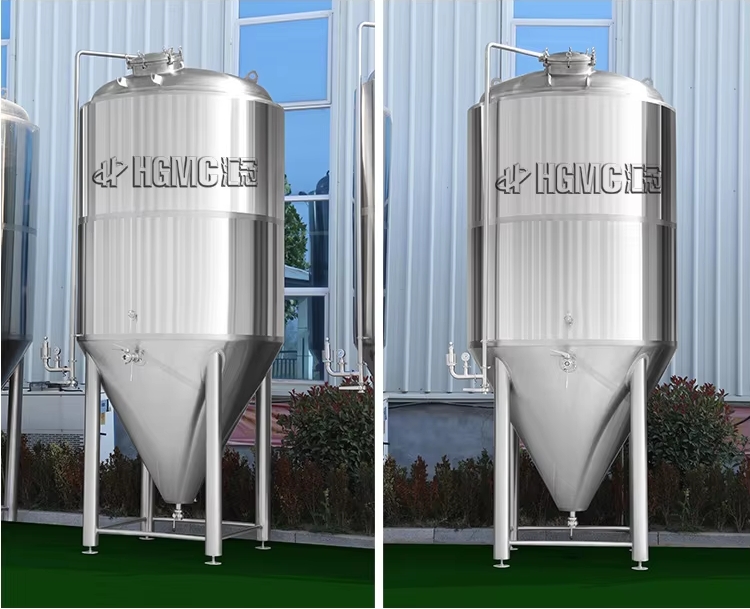
1) Factors to Consider When Selecting a Beer Brewery Tank
1.1 Understand your production scale (capacity planning)
Capacity isn’t just “liters per tank.” It’s “how many sellable barrels per month can we reliably produce.”
A simple planning framework:
- Monthly target volume (e.g., 500 kegs/month)
- Average fermentation + conditioning time per beer style
- Number of turns each tank can do per month
- Packaging schedule and brite tank buffer
A common rule is to design tank capacity so you’re not constantly running at 100% utilization. Over-utilization increases risk: any delay (slow fermentation, lab hold, packaging downtime) cascades into missed production targets.
1.2 Space and layout constraints
Tanks are “vertical real estate.” Ceiling height, glycol piping routes, floor drains, and forklift access can limit what you can install more than budget does.
Checklist:
- Clear height for tank + manway access + CIP spray device removal
- Floor loading and anchoring
- Drain slope and trench drain placement
- Service access to valves, sample ports, and racking arm
- Future expansion space (adding 1–2 tanks later without redoing utilities)
1.3 Material choice (304 vs 316/316L stainless)
Most commercial brewery tanks use 304 or 316/316L stainless steel. The key difference is corrosion resistance—especially in chloride exposure and certain cleaning/chemical environments.
- Adding molybdenum is a primary reason 316 provides improved chloride corrosion resistance compared with 304; this is widely referenced in stainless steel processing guidance for breweries. (For example, “adding 2% molybdenum to Type 304 makes Type 316, which has better chloride corrosion resistance.”)[1]
- Stress corrosion cracking (SCC) can affect common stainless grades used in breweries (304/304L/316/316L), so correct chemical handling and design matter in addition to alloy selection.[2]
Practical guidance:
- Choose 304 for standard brewing environments with good chemical control and water quality.
- Choose 316/316L when you expect harsher chemical exposure, higher chlorides, or want extra corrosion margin for long service life (especially in aggressive cleaning regimes or challenging water conditions).
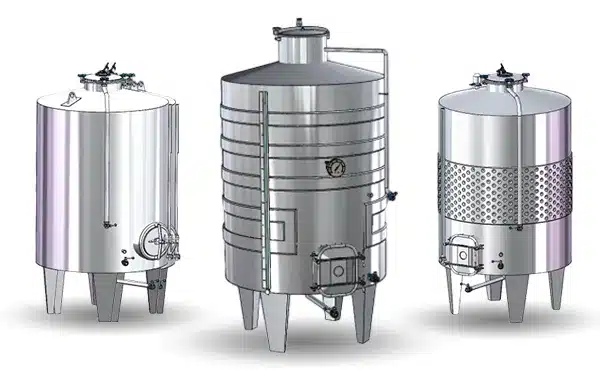
2) Understanding Different Types of Brewery Tanks Available
2.1 Fermentation tanks (conical fermenters)
Fermentation tanks are where wort becomes beer. Conical geometry helps collect yeast and trub, enabling easier dumping/harvesting and improving operational efficiency.
Best for:
- Primary fermentation
- Yeast harvesting
- Dry hopping (with proper ports and CIP design)
- Pressure fermentation (if pressure-rated)
2.2 Unitanks (ferment + condition + carbonate)
Unitanks combine fermentation and carbonation/conditioning in one vessel. For many breweries, unitanks reduce transfers, reduce oxygen exposure risk, and simplify tank scheduling—if properly sized and pressure-rated.
2.3 Bright tanks (brite tanks)
Bright tanks are typically used for conditioning, clarification, carbonation adjustment, and packaging buffer. A bright tank is described as a pressure-rated, temperature-controlled tank used to hold beer in preparation for packaging.[3]
Best for:
- Clarifying/polishing
- Carbonation stabilization
- Packaging workflow (canning/bottling/kegging)
2.4 Pressure-rated vessels and compliance (ASME threshold)
If you plan to carbonate in-tank, do spunding, or run higher pressures, compliance matters. The Brewers Association notes that an ASME-rated tank is any brewing process tank where working pressures exceed 15 psi, and in most cases tanks operating above 15 psi must be ASME coded.[4]
This is a key buying decision:
- If your process needs higher pressure: specify pressure rating and appropriate safety devices.
- If you never exceed low pressure: you may avoid unnecessary cost—but ensure your operational practices won’t change later.
3) Temperature Control Features That Protect Beer Quality
Fermentation temperature is one of the most powerful levers for controlling flavor compounds (esters, higher alcohols, diacetyl cleanup, sulfur expression). Industrial brewing literature notes that temperature influences fermentation rate and volatile formation, and improper temperature increases can negatively affect foam stability, color, pH, and bitter compound loss in certain processes.[5]
What to look for
- Jacket design (zoned jackets can improve control across cone/cylinder)
- High-accuracy temperature probe location and redundancy
- Insulation quality (reduces glycol load and stabilizes control)
- Valve and piping design that prevents warm/cold spots and supports CIP
4) CIP Cleaning, Hygiene Design, and Why It Impacts Consistency
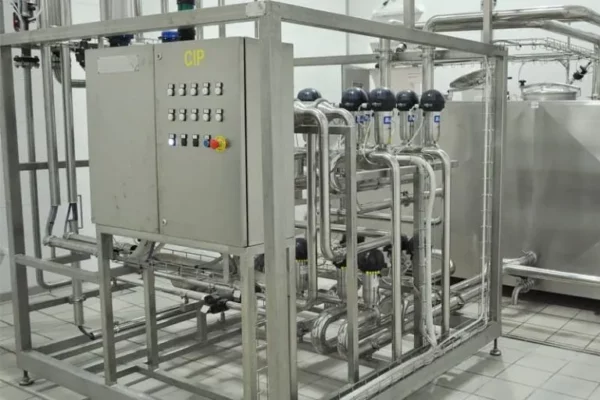
Cleaning-in-place (CIP) is essential for breweries at any scale because it allows thorough cleaning of interior surfaces without major disassembly, but it involves corrosive chemicals and heat—so safe, repeatable CIP design matters.[6]
A practical CIP cycle commonly includes pre-rinse, caustic wash, rinse, acid wash, rinse, and sanitization (e.g., peracetic acid), as summarized in brewery CIP guidance from established tank/process suppliers.[7]
Tank design details that make CIP easier (and safer)
- Smooth internal welds and proper surface finishing
- No dead corners; minimized dead legs in piping
- Correctly sized and positioned spray ball/nozzles
- Adequate CIP pump flow and pressure for spray devices
- Ability to cycle valves during CIP
5) Data Snapshot: Market context (why tank investment is rising)
If you’re producing brewery equipment and targeting Google Ads/SEO, adding a market context section improves credibility and supports buyer intent.
One example of widely cited market data: Grand View Research estimates the global brewery equipment market size at USD 18.45 billion in 2024 and projects growth at a 6.1% CAGR from 2025 to 2030.[8]
6) Buying Checklist: “Best Beer Brewery Tanks” Selection Criteria
Core specifications to confirm
- Working volume and total volume (headspace for krausen/foam)
- Pressure rating (especially if carbonating/spunding)
- Steel grade and thickness (cylinder/cone/head)
- Jacket type, zones, and design pressure
- Insulation thickness and cladding
- Manway style and placement
- Sample valve type (sanitary, easy to clean)
- Racking arm (if needed) and seal quality
- CIP spray device specification and coverage
- Relief valves, vacuum protection, and safety compliance
Operational questions (to avoid mistakes)
- Can your team clean this tank efficiently every cycle?
- Does the tank fit your dry hop process (ports, CIP, oxygen management)?
- Can the tank support your future process (more lagers, more pressure, more carbonation in-vessel)?
- Will your packaging line benefit from a larger brite tank buffer?
7) FAQ: Best Beer Brewery Tanks (Buyer Questions)
Q1: What’s the difference between a fermenter, unitank, and brite tank?
A fermenter is primarily for fermentation; a unitank can ferment and condition/carbonate in one vessel; a bright tank is typically a pressure-rated, temperature-controlled tank used to hold beer before packaging and may include carbonation equipment like a carbonation stone.[3]
Q2: Do I need an ASME-rated tank?
If your working pressure exceeds 15 psi, you are generally in ASME territory, and the Brewers Association notes that in most cases brewing process tanks operating above 15 psi must be ASME coded.[4]
If your process is low-pressure only, you may not need it—but plan for future process changes.
Q3: Is 304 stainless steel “good enough” for brewery tanks?
Often yes—304 is common and widely used. The better question is whether your cleaning chemicals, water chloride levels, and operating practices justify 316/316L for added corrosion margin. Stainless steel guidance for breweries commonly highlights that Type 316 (created by adding molybdenum) offers better chloride corrosion resistance than Type 304.[1]
Q4: Why is CIP capability such a big deal?
CIP enables thorough cleaning without major disassembly, improving repeatability and reducing labor—however it uses corrosive chemicals and heat, so proper design and safe procedures matter.[6]
Q5: How do I size tanks for growth?
Start with realistic demand forecasts and a conservative assumption about fermentation time. If you expect more lager production later (longer tank residency), build extra capacity early or choose tanks that can flex between ale/lager processes with strong temperature control.
Conclusion
The best beer brewery tanks are the tanks that protect your beer quality while minimizing operational risk: stable temperature control, hygienic CIP-ready design, correct pressure rating, and a material choice that matches your cleaning environment. When you align tank selection with your actual brewing workflow—fermentation days, packaging rhythm, and growth plan—you get better beer consistency and better ROI from every square meter of brewhouse space.
If you want to target Google SEO for “Best Beer Brewery Tanks,” structure your page with clear H2/H3 sections, add visuals with descriptive alt text, include a data-backed market paragraph, and publish an FAQ block that answers purchase-intent questions (pressure rating, 304 vs 316L, unitank vs brite).
