
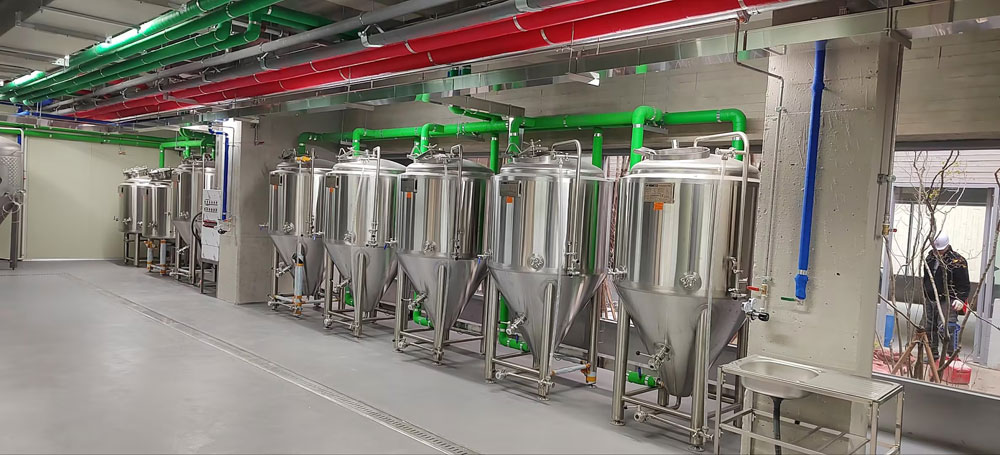
When breweries scale from pilot batches to consistent commercial output, one category of equipment quickly becomes the “quality gate” for every beer style: brewery tanks. From fermentation to clarification, carbonation, and serving, the right tank design directly impacts flavor stability, production efficiency, sanitation outcomes, and long-term operating cost.
At the same time, market demand continues to push breweries to modernize. The global beer market was estimated at about USD 839.31 billion in 2024 and is projected to grow to about USD 1,248.3 billion by 2030 (6.8% CAGR, 2025–2030), highlighting the ongoing need for reliable, scalable brewing infrastructure.[1] In the craft segment, the global craft beer market was estimated at about USD 92.19 billion in 2023 and projected to reach about USD 178.57 billion by 2030 (9.9% CAGR, 2024–2030).[2] For breweries competing in a growing and premiumizing market, tank selection is no longer just a capital purchase—it’s a performance strategy.
Key Market Data: Why Tank Quality Matters More Than Ever
Modern breweries face two pressures at once:
- consumers demanding consistent quality and variety, and
- operators needing better cost control (energy, downtime, cleaning labor).
Here are three data signals that help explain why tank choices matter:
- Beer demand remains massive and growing globally. The 2024 global beer market size estimate (USD 839.31B) and growth outlook demonstrate long-term equipment demand.[1]
- Craft continues to expand globally. Craft beer’s projected growth (to USD 178.57B by 2030) suggests more new breweries and more capacity expansions—both driven by tank investments.[2]
- In the U.S., craft still represents a meaningful share by volume and value. Brewers Association reports that overall U.S. beer production/imports were down 1% in 2024, while craft volume declined by 4%, yet craft retail dollar sales increased 3% to $28.8B (24.7% of the $117B U.S. beer market).[3] This “value up while volume softens” pattern pushes breweries to protect quality and margins—again pointing back to tank performance, yield, and stability.
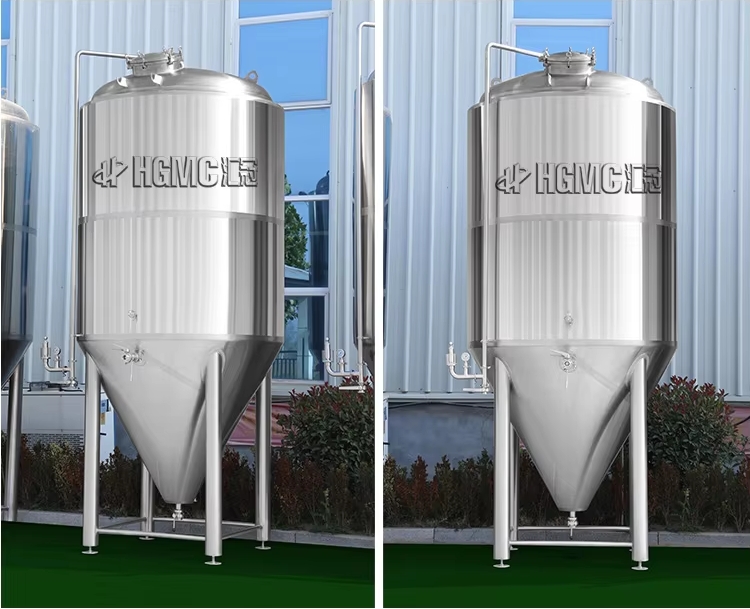
Types of Brewery Tanks (and What Each One Does)
1) Fermentation Tanks (Unitanks / Conical Fermenters)
Fermentation tanks are where yeast converts wort into beer—producing alcohol, CO₂, and key flavor compounds. Good fermenters help you control:
- fermentation temperature stability
- pressure (for spunding / natural carbonation)
- yeast harvesting and dumping
- CIP effectiveness and sanitation repeatability
Common configurations:
- Conical fermenter (most common for yeast collection)
- Unitank (ferment + carbonate in the same vessel)
- Jacketed fermenter (glycol cooling zones for tighter control)
What buyers often overlook: temperature control is not only about hitting a target number—it’s about avoiding swings. Even small fluctuations can change ester profiles, attenuation, and clarity outcomes across batches.
2) Bright Beer Tanks (BBT / Brite Tanks)
Bright beer tanks are used after fermentation for:
- clarification and settling
- carbonation (stone + pressure)
- cold storage before packaging
- consistent CO₂ volumes prior to canning/bottling/kegging
A properly designed BBT can improve packaging efficiency by stabilizing temperature, carbonation, and clarity before filling—reducing dissolved oxygen risk and minimizing foaming during packaging.
3) Conditioning / Lagering Tanks
Conditioning tanks support maturation and “flavor polishing.” They’re often used for:
- lagers requiring longer cold conditioning
- beers benefiting from extended settling time
- smoothing hop burn or harsh edges in some styles
These tanks may look similar to brights, but spec decisions (jackets, insulation, pressure rating, internal finish) should be based on your conditioning temperature range and time in tank.
4) Serving Tanks
Serving tanks are used in taprooms, beer halls, and certain distribution models to:
- keep beer under stable pressure
- maintain freshness and carbonation
- serve directly to taps (often with CO₂/N₂ blend control)
For taproom economics, serving tanks can reduce keg labor and improve consistency if cleaning and changeover are well managed.
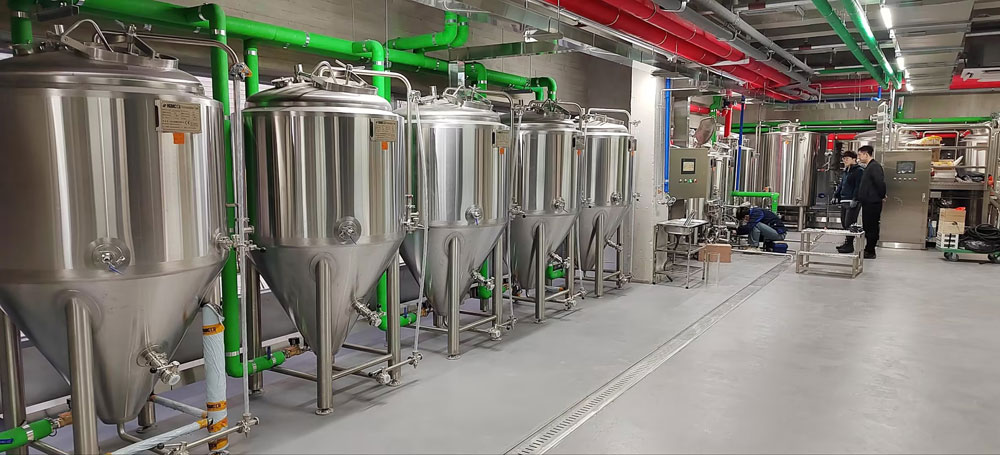
Factors to Consider When Choosing Brewery Tanks for Sale
1) Tank Size & Capacity Planning
Start from your target output and how many turns you can realistically do per month.
A practical approach:
- Determine your target monthly volume (e.g., 60,000 L/month)
- Estimate fermentation cycle time by beer type (e.g., 12–18 days ales, longer for lagers)
- Decide how many fermenters you need for parallel batches
- Add capacity buffer for seasonal peaks and maintenance downtime
Tip: buying “just enough” tanks often creates a bottleneck later—especially if your cellar has no space left for expansion.
2) Material: Why 304 vs 316 Stainless Steel Matters
Most breweries use 304 stainless steel for standard applications; 316 is often chosen for higher chloride exposure, aggressive CIP chemistry, or more demanding environments.
Authoritative, widely accepted guidance:
- Worldstainless explains stainless steel’s protective passive layer and why grades like AISI 304 are widely used in food and beverage equipment due to inertness and tolerance to detergents.[4]
- Nickel Institute also highlights stainless steel’s cleanability, corrosion resistance, and suitability for strict hygiene standards in food applications.[5]
In buyer-friendly terms:
- Choose 304 for most breweries with standard cleaning regimes.
- Consider 316 when your environment or process is more corrosive (salt/chlorides, coastal areas, harsher chemicals, etc.), or when you want extra corrosion margin.
3) Surface Finish, Weld Quality & Sanitary Design
If you want fewer infection risks and faster CIP, focus on:
- internal polish (and consistency)
- elimination of dead legs
- sanitary valves and gaskets
- reliable manway design and sealing
- correct slope and drainage
These “details” decide whether your cellar runs smoothly—or becomes a cycle of leaks, contamination scares, and long cleaning shifts.
4) Cooling Jackets, Insulation & Energy Efficiency
Temperature control affects quality, but it also affects operating cost. Well-designed jackets can improve control while reducing waste.
Industry sources commonly note that built-in cooling jackets provide precise control and can improve energy efficiency by targeted cooling.[6] Premium tank suppliers also emphasize insulation as a way to reduce heat loss and minimize energy use while improving process control.[7]
What to look for:
- jacket zone coverage aligned with your fermentation profile
- insulation thickness and jacket placement
- temperature probe location (accurate reading, fast response)
- glycol connection quality and serviceability
5) Pressure Rating & Safety Features
Tanks can see pressure in carbonation, serving, and even fermentation (spunding). Confirm:
- rated working pressure and tested pressure
- PRV sizing and compliance expectations
- pressure gauge quality and placement
- carbonation stone design and CIP compatibility
If you plan to naturally carbonate or do pressure fermentation, this is non-negotiable.
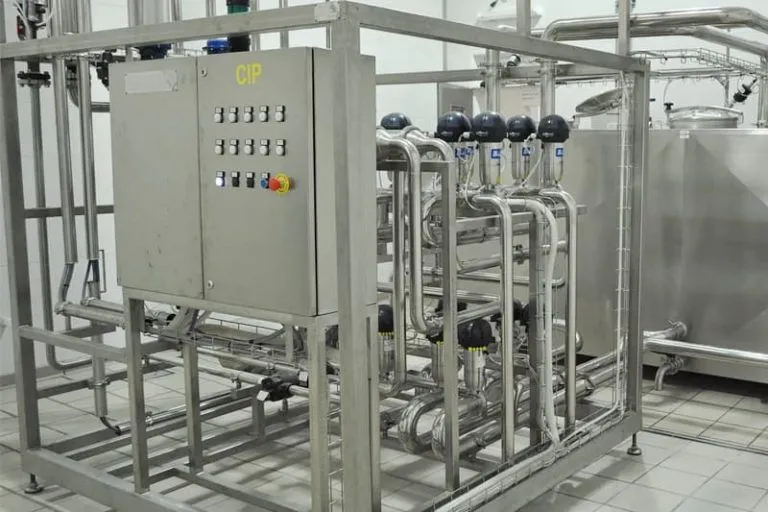
6) Cleaning, CIP Readiness & Maintenance Access
For most breweries, cleaning labor is one of the most underestimated costs.
A tank that is truly CIP-friendly should include:
- effective spray ball coverage
- easy inspection access
- sanitary pump/return sizing
- minimal shadow zones
- simple gasket replacement and valve servicing
Practical Buying Checklist (Use This Before Requesting a Quote)
Before you compare brewery tanks for sale, prepare these specs:
- Beer styles and process: ale/lager/mixed, dry hopping, spunding?
- Target batch size (HL/BBL/L) and monthly volume
- Fermentation duration assumptions (by flagship beers)
- Cooling system type (glycol loop capacity, setpoints)
- Ceiling height and door width constraints (shipping + installation)
- Preferred steel grade (304/316), internal finish level
- Instrumentation needs (thermowell, sample valve, pressure gauge, etc.)
- CIP method (manual vs automated, pump size, chemical regime)
- Future expansion plan (space + modular additions)
Q&A (FAQ) — Brewery Tanks
Q1: What are the most important brewery tanks for a startup brewery?
Most startups prioritize:
- Fermentation tanks (unitanks or conicals)
- Bright beer tank (especially if packaging)
- Hot-side vessels come earlier in the brewhouse, but for cellar performance and beer consistency, fermenters + brights are the core.
Q2: Should I choose unitanks or separate fermenters + brite tanks?
- Unitanks: simplify footprint and transfers; great for flexible operations.
- Fermenter + BBT: can improve packaging workflow and allow fermentation and carbonation/holding to run in parallel.
If packaging volume is significant, many breweries find a dedicated BBT worth it.
Q3: Is 304 stainless steel “food grade” for brewery tanks?
Yes—304 is widely used in food and beverage equipment. Stainless steel’s cleanability and corrosion resistance are key reasons it’s used for hygienic applications.[4][5]
Q4: When is 316 stainless steel worth the extra cost?
Consider 316 when you face higher corrosion risk (chlorides, aggressive cleaning chemicals, challenging environments) or when you want extra longevity margin. For many standard breweries, 304 is sufficient; for harsher conditions, 316 can reduce long-term corrosion risk and maintenance.
Q5: How do cooling jackets impact beer quality?
Fermentation generates heat. Cooling jackets remove that heat to keep yeast behavior consistent. Better temperature stability reduces batch variation and helps hit target flavor profiles more reliably. Cooling jackets are also associated with efficient, targeted cooling and can reduce energy waste compared with less controlled cooling methods.[6]
Q6: What data supports the business case for investing in quality tanks?
Market growth and premiumization trends support long-term demand:
- Global beer market size and growth outlook shows continuing scale.[1]
- Craft beer growth projections point to more breweries and expansions.[2]
- Brewers Association data shows craft dollar sales growth even in a softer volume environment—making quality and consistency essential for protecting margins.[3]
Conclusion: The Right Brewery Tanks Reduce Risk and Improve Profitability
Brewery tanks aren’t just stainless steel vessels—they’re process control tools. The right tanks help breweries:
- achieve consistent flavor and clarity
- reduce contamination risk through sanitary design
- improve packaging stability and reduce loss
- control temperature precisely (and more efficiently)
- scale production without rebuilding the cellar
Given the global beer market’s size and continued growth outlook,[1] and the craft segment’s projected expansion,[2] breweries that invest in well-designed, hygienic, and energy-conscious tank systems are better positioned for long-term competitiveness.
