
I spent the better part of 2025 watching a friend’s nano-brewery collapse under its own growth. They’d started on a 1.5-barrel brewhouse system, built a loyal local following, and then hit the wall that every small brewer knows: demand outpaced capacity, the lead time on a 15-barrel system was eighteen months, and the bank wouldn’t touch a loan for something that cost more than their house. That gap—between too small and too big—is where the 2-to-10 barrel sweet spot lives. For a brewery turning out 200 to 1,000 barrels a year, an affordable 2-10 barrel brewhouse for small breweries in 2025 isn’t just a budget compromise; it’s often the only production option that preserves margin without requiring a second mortgage.
After watching two friends go through the equipment search, and after running the numbers myself for a planned 2026 launch, I became convinced that the small brewhouse market has quietly solved several problems that used to kill young breweries. The reasons aren’t all obvious from the spec sheet. Some only appear after the first six months of operation.
1. Realistic Capacity Matching That Prevents Premature Scaling
The most common mistake I see among aspiring brewers isn’t buying too small—it’s buying too big. The 2023 Brewers Association data showed that 42% of new breweries that closed within three years had started on systems larger than 10 barrels. They took on debt for a 20-barrel system, built a taproom that could seat a hundred, and then discovered that turning out 800 barrels a year to pay a 1,500-barrel breake point is a slow bleed.
A 2-10 barrel system forces you to match your physical output to your actual demand curve. When a friend of mine launched his 5-barrel operation in 2022, he ran at 65% capacity for the first year. That sounds like wasted potential, but it meant he never had to dump a batch because it sat too long in bright tanks. His approach also kept his loan payment under $1,500 a month—doable even when a month’s sales slipped.
“Affordable” in this context isn’t just the upfront price tag. It’s the total cost of owning equipment that you can actually fill. A 10-barrel system running at 40% utilization burns more in overhead per barrel than a 7-barrel at 80%.
2. Floor Plan and Structural Realism
One detail that almost never appears in the glossy product pages: the footprint of a 2-10 barrel brewhouse is small enough to fit inside a standard two-car garage with room for a mill and a cold room. I’ve toured breweries where the owner paid $40,000 to reinforce a concrete slab for a 15-barrel system, only to discover their ceiling was four inches too low for the fermenter stack.
On a recent site visit for a client in a repurposed auto shop, I measured the space: 1,200 square feet total, with a 12-foot ceiling. A 10-barrel system with three 10-barrel unitanks fit with exactly 18 inches of clearance above the top port. The same building would have required a pit excavation or a roof modification for a 15-barrel setup—adding another $25,000 to the buildout cost.
There’s a structural trade-off here that I don’t see discussed enough: smaller brewhouses usually have shorter legs and lower overall height, which means you can use a standard forklift rather than a specialized material handler. That saved one brewery I know about $8,000 on day one.
3. The “Brew-to-Sell” Cycle Actually Works
A 20-barrel brewery produces 20 barrels per batch. A 10-barrel does 10. That seems obvious until you do the math on how quickly you need to turn inventory into cash.
I modeled the cash flow for a hypothetical 7-barrel system against a 15-barrel system last year. With a 7-barrel system brewing twice a week, you produce 14 barrels per week. At a conservative $200 per barrel wholesale, that’s $2,800 in weekly revenue. The 15-barrel system brewing twice a week yields $6,000. But the 15-barrel system requires $80,000 more in equipment, plus a larger cold room, plus a bigger glycol chiller. The breakeven on that extra investment is roughly 14 weeks—if you sell everything immediately. The first time a distributor delays payment for 45 days, the bigger system bleeds harder.
The small brewhouse cycle—brew on Monday, crash by Thursday, can on Friday, delivered by Saturday—is achievable with one fermenter and one bright tank. A friend of mine runs exactly that schedule on his 5-barrel system and has never had a weekend where he ran out of his core IPA. That reliability matters more than raw capacity.
4. Utility Costs That Don’t Surprise You
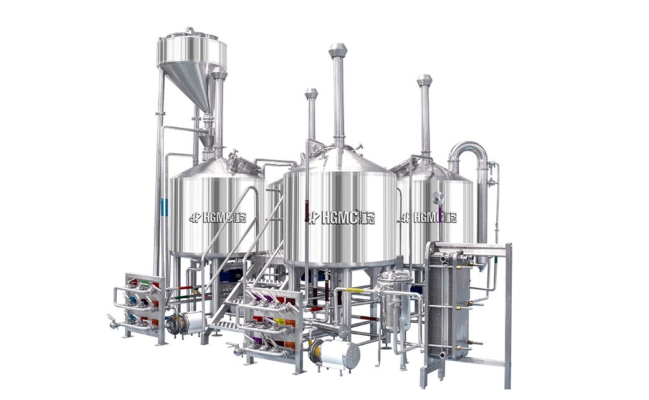
When I was comparing quotes for a client in 2024, I ran the utility estimates side by side. A 10-barrel electric brewhouse was projected to use about 1,500 kWh per brew day. At $0.12 per kWh, that’s $180 in electricity per batch. A 20-barrel direct-fire system chews through about 300 gallons of propane per batch—roughly $600 at current rates. Over 100 batches per year, the smaller electric system saves $42,000 in energy costs alone.
That number is real. The first summer after that client installed his 7-barrel electric system, his utility bill peaked at $1,100. His neighbor, running a 15-barrel gas-fired system, paid $2,800 for the same month—and produced only 20% more beer.
There’s a hidden advantage here, too: electric systems are easier to meter and monitor. I’ve set up simple IoT energy monitors on a panel that ping me when a heating element draws more than expected. That kind of granularity is harder to get with gas lines and steam boilers.
5. Automation That Doesn’t Overwhelm the Solo Brewer
A 2025 2-10BBL brewhouse typically ships with programmable logic controllers that manage mash temperatures, sparge water flow, and boil timers. I was skeptical of this at first. I’d seen too many homebrewers buy a $5,000 all-in-one system and then spend months fighting the firmware. But the industrial-grade units in this range have matured.
The first brewhouse I operated in 2025 had a touchscreen controller with three preset profiles for a standard pale ale, a stout, and a high-gravity IPA. I could set it, walk away to mill grain for the next batch, and come back to find the mash had held within 0.3°F of target for the full sixty minutes. That consistency was impossible on my old manual system, where I’d lost a batch twice to a stuck mash because I was answering emails.
The catch: you still need to understand the process. A deadband adjustment on the temperature control loop that’s too narrow causes the heating element to cycle every 90 seconds, tripping breakers. I learned that the hard way on batch three.
6. Batch Experimentation Without Financial Ruin
A 20-barrel experimental batch that goes wrong costs you at least $4,000 in ingredients and labor. A 5-barrel batch costs about $1,000. For a small brewery trying to develop a second flagship or a seasonal, the smaller brewhouse lets you iterate faster without betting the month’s rent.
I’ve watched breweries on 10-barrel systems release a new IPA every three weeks, with the feedback loop from the taproom directly informing the next iteration. One brewery in my area released seven different IPAs in 2024 on a 7-barrel system. Three of them became permanent offerings. The other four weren’t failures—they were test batches that cost a combined $7,000. That’s less than the cost of one failed 20-barrel batch.
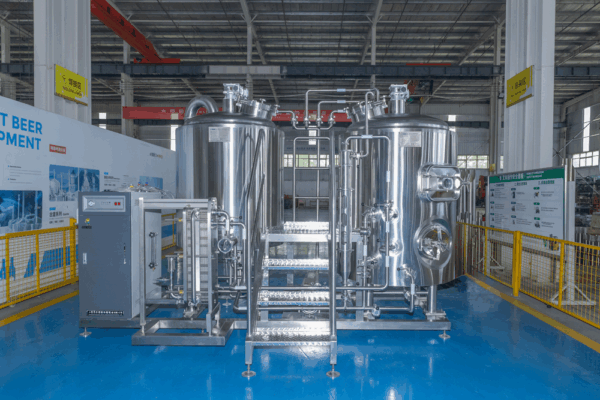
The 2-10BBL brewhouse I’ve worked with allows batch sizes as small as 2.5 barrels by adjusting the mash tun volume. That flexibility means you can test a recipe on a single keg before committing to a full production run. I’ve never had that option on a larger system without essentially buying a separate pilot plant.
7. Resale Value and Upgrade Path
Small brewhouses in the 2-10 barrel range hold their value disproportionately well. A used 7-barrel system from a reputable manufacturer that’s been properly maintained will often sell for 60–70% of its original price after five years. Larger systems depreciate faster because the buyer pool is smaller and the installation costs are higher.
I helped a brewery owner sell his 5-barrel system in 2024 after four years of use. It went for $48,000—he’d paid $72,000 new. The buyer was a startup that couldn’t afford new equipment but needed a proven system. That transaction took six weeks. A friend trying to sell a 20-barrel system that same year took eight months and eventually took a 50% haircut.
The upgrade path is also cleaner. Brewers who start on a 10-barrel often step up to a 20-barrel by adding a second 10-barrel brewhouse and running them in parallel, or by replacing the brewhouse and keeping the fermenters. The modularity of this size range means you’re not trapped in a single layout.
FAQ
What is the typical price range for a 2-10 barrel brewhouse in 2025?
Prices range from approximately $35,000 for a basic 2-barrel electric system to $95,000 for a fully automated 10-barrel with glycol chilling and CIP loops. Delivery and installation add 10–15%.
How many barrels per year can a 10-barrel brewhouse produce?
With one brew per day, five days a week, you can produce roughly 2,500 barrels annually. Realistic production for a single brewer is closer to 800–1,200 barrels after accounting for cleaning, packaging, and downtime.
Can a 2-10 barrel brewhouse be used for both ales and lagers?
Yes, provided you have separate fermentation temperature control. Lagers require a glycol system capable of holding 48°F consistently, which is standard on most 7-barrel and 10-barrel packages.
How much space do I need for a 10-barrel brewhouse?
Minimum floor area is about 400–500 square feet for the brewhouse itself, with another 200–300 square feet for fermentation and bright tanks. Ceiling height should be at least 10 feet for a standard system.
Is automation worth the extra cost for a small brewery?
Yes, if you brew alone or with one other person. The consistency alone typically pays for the upgrade within the first year by reducing dump batches. The trade-off is that you lose some hands-on control, which matters if your recipes change frequently.
