
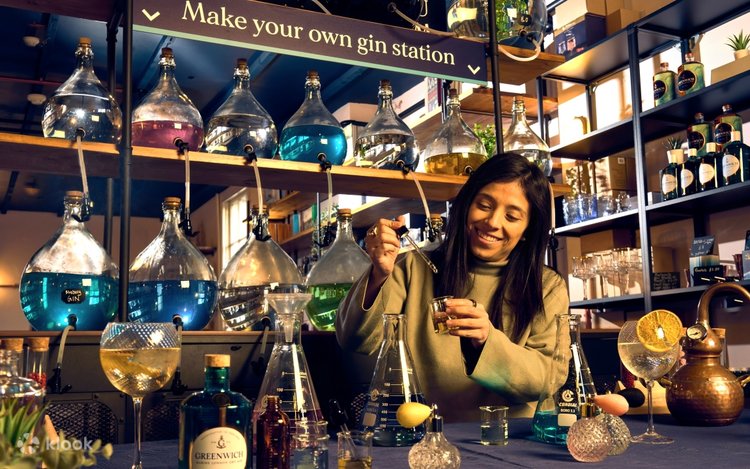
Beer is brewed, not distilled. That is the first thing anyone learns about the process: malt, water, hops, yeast, fermentation, conditioning, packaging. No distillation column, no reflux control, no condenser. Yet walk into any mid-sized to large brewery today and you will find distillation equipment running somewhere in the facility—recovering alcohol from tank vapors, stripping volatile organic compounds from wastewater, or gently removing ethanol from finished beer to produce a non-alcoholic product that still tastes like something worth drinking.
The contradiction is only surface-level. Distillation in breweries solves real operational problems: resource waste, regulatory pressure on effluent discharge, and the growing demand for flavorful low-alcohol and non-alcoholic beer. This article provides a practical, technical look at where distillation fits in a brewery, what equipment types exist, how their components work, and what tradeoffs you face when choosing one setup over another.
The Role of Distillation Technology in Breweries
Distillation is not a core brewing step, but it touches at least four areas that directly affect a brewery’s bottom line and compliance burden.
Alcohol recovery and reuse. During fermentation, active CO₂ stripping carries ethanol vapor out of the fermenter. During bright beer tank venting, alcohol-laden air is pushed into the atmosphere. On a production scale of 10,000 hectoliters per year, that loss can translate into thousands of liters of ethanol simply disappearing. A condenser system paired with a small rectification column can capture those vapors, concentrate the alcohol, and return it to the blending tank or sell it as industrial ethanol. The savings cover the equipment cost within two to three years for most medium-sized operations.
By-product extraction. Hop oils and yeast-derived flavor compounds have commercial value beyond the beer itself. A pot still operating at low throughput can isolate hop essential oils for use in hop-forward non-alcoholic beverages or food flavorings. Some larger breweries run continuous distillation columns to recover higher-value fractions from spent yeast slurry.
Wastewater treatment. Brewery wastewater carries residual ethanol, fusel alcohols, and other volatile organic compounds (VOCs). Discharge limits in many regions require BOD and COD reductions before effluent enters municipal treatment systems. Distillation strips out those volatiles, reducing the load on downstream biological treatment and in some cases generating enough recovered alcohol to offset the energy cost of running the stripper.
Non-alcoholic and low-alcohol beer production. This is where distillation intersects most directly with the finished product. The non-alcoholic beer market has been growing at roughly 7% annually, driven by health-conscious consumers and stricter drinking-and-driving attitudes in several large markets. Vacuum distillation removes ethanol at 30–45 °C rather than 78 °C, so the beer’s original flavor compounds—many of which are heat-sensitive—survive the process far better than they would in a conventional atmospheric still.
Common Types of Distillation Equipment Used in Breweries
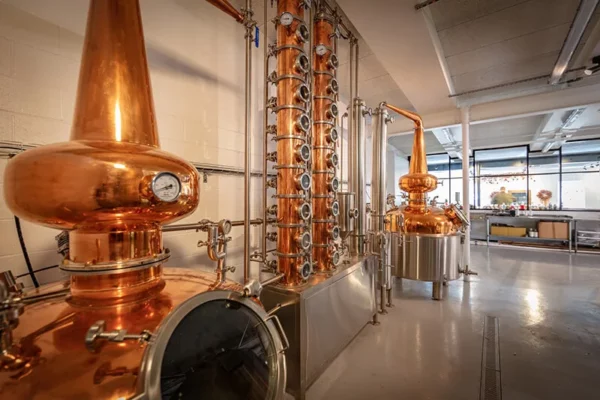
Four equipment types dominate the brewery landscape. Each fits a different scale, budget, and flavor-retention requirement.
| Equipment Type | Key Application | Efficiency | Capital Cost | Flavor Retention |
|---|---|---|---|---|
| Pot Still | Small-scale by-product extraction | Low | Low | Excellent |
| Continuous Column | Alcohol recovery, non-alcoholic beer | High | High | Moderate |
| Vacuum Unit | Non-alcoholic/premium beer | Medium | High | Superior |
| Membrane Distillation | Emerging alcohol removal, water reuse | High | Very High | Good |
Pot still. The simplest design—a heated boiler, a swan neck, and a condenser. Boil the liquid, collect the condensed vapor. No reflux, no fractionation. Efficiency is low, but flavor retention is excellent because there is no prolonged thermal exposure and no aggressive vapor-liquid contact that strips delicate aromatics. A pot still is the right choice if you are extracting hop oil from a 200-liter batch once a month. It is the wrong choice if you need to de-alcoholize 50 hectoliters of beer per shift.
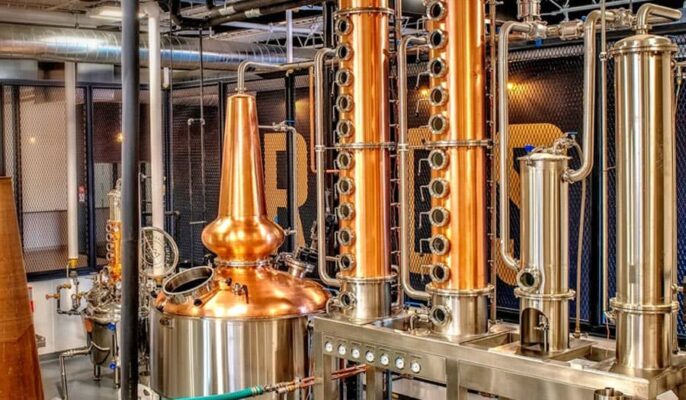
Continuous distillation column. A reboiler at the bottom, a rectification column packed with trays or structured packing, a condenser at the top, and a reflux return system. The beer enters somewhere in the middle of the column; ethanol rises, water and non-volatiles drop. Continuous columns can achieve >95% alcohol recovery efficiency and run 24/7. The capital cost is high—stainless steel columns sized for brewery throughput, with automation for reflux ratio and temperature control, easily run into six figures. Flavor retention is moderate because the beer is held at elevated temperature for the duration of its path through the column.
Vacuum distillation unit. The column operates at 0.1–0.5 bar absolute pressure. At that vacuum, ethanol boils at roughly 30 °C instead of 78 °C. The result is significantly less thermal damage to hop oils, esters, and other volatile flavor compounds. Vacuum units are the standard in premium non-alcoholic beer production. The tradeoff: they require a vacuum pump, a condenser sized for sub-atmospheric vapor, and pressure control systems that respond quickly enough to prevent pressure swings from flooding the column. Some breweries have installed vacuum units only to abandon them after repeated failures with pressure regulation that led to inconsistent product quality and frequent shutdowns.
Membrane distillation. An emerging approach that combines a temperature gradient with a hydrophobic membrane. Vapor passes through the membrane while liquid is retained. The technology is energy-efficient and modular, but membrane fouling—especially from proteins and hop resins—is still a serious operational problem. Membrane distillation has not reached the reliability level that most production breweries require. It remains in pilot and early-adopter territory.
Key Structural Components of Distillation Equipment
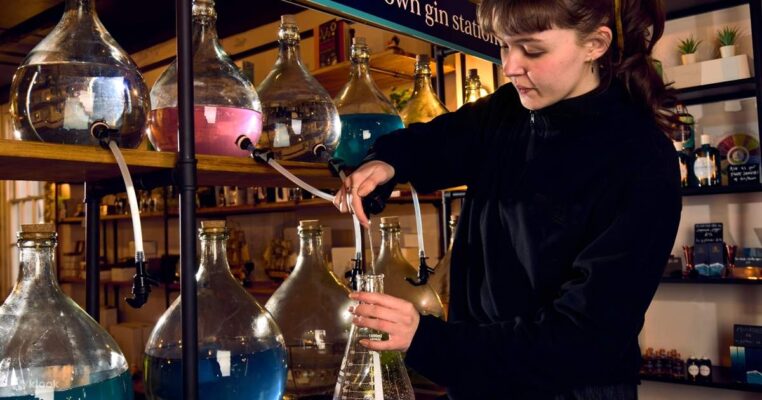
Understanding the components helps you evaluate vendor proposals and troubleshoot operational issues.
Distillation column. The vertical vessel where vapor and liquid interact. Material choice matters: carbon steel is cheaper but can introduce iron contamination in a food-grade environment; 304 or 316L stainless steel is standard. The column body includes flanges, manholes for access, and internal supports for trays or packing. Column diameter and height determine the number of theoretical stages and, ultimately, the separation quality.
Trays and packing layers. Trays—bubble-cap, sieve, or valve—force vapor to bubble through a liquid layer on each stage. Bubble-cap trays handle wide flow ranges well but are expensive. Sieve trays are simpler and cheaper but more sensitive to vapor velocity changes. Valve trays offer a middle ground.
Packing layers are an alternative. Random packings, such as Raschig rings and Pall rings, are dumped into the column. They are easy to install but create uneven liquid distribution at larger diameters. Structured packings, such as metal corrugated sheets, provide a more uniform surface for vapor-liquid contact and can increase mass transfer efficiency by 30–50% compared to random packings. However, in a brewery context, cleanability matters just as much as efficiency. Structured packing with narrow channels is difficult to clean in place (CIP). If your distillation column processes beer or yeast slurry, the packing will foul. You need to know whether your CIP system can reach every internal surface before you choose structured packing over trays.
Reboiler. The reboiler supplies the heat that drives the column. Shell-and-tube reboilers are the most common configuration. Thermosiphon reboilers rely on natural circulation—liquid flows into the reboiler, vaporizes partially, and the resulting two-phase mixture rises back into the column. Forced circulation reboilers use a pump, which adds cost but prevents fouling in services where solids are present, such as yeast extract concentration.
Selecting the Right Distillation Setup for Your Brewery
The choice depends on three factors: what you are trying to recover or remove, at what scale, and with what flavor expectations.
If your goal is alcohol recovery from fermenter off-gas or tank venting, a small continuous column with a condenser and a buffer tank is usually sufficient. The recovered alcohol does not need to be potable; it can be sold as industrial ethanol or reused in cleaning solutions. The efficiency gain pays back the investment relatively quickly.
If your goal is non-alcoholic beer production, vacuum distillation is the current standard for premium products. But you should budget for a robust pressure control system and expect a learning curve. Some breweries have told me they spent the first six months of operation dealing with pressure fluctuations that caused the column to flood or dry out unpredictably. The fix was a combination of a faster-responding vacuum pump controller and a larger buffer tank to dampen feed composition changes. If your brewery cannot afford that tuning period, consider blending a dealcoholized base with a small amount of full-strength beer instead of aiming for a single-pass vacuum process.
If your goal is by-product extraction on a small scale, a pot still is the simplest and most cost-effective option. The only maintenance concern is cleaning the boiler after each batch, because hop resins and yeast solids tend to stick to heating surfaces.
The future of brewery distillation likely involves more integration with automation and better membrane materials that resist fouling from beer components. Membrane distillation could eventually displace vacuum units for de-alcoholization if the fouling problem is solved, but that is still several years out. For now, the operational choice remains a balance between capital cost, flavor retention, and the willingness to manage a more complex process.
FAQ
What is the main difference between a pot still and a continuous distillation column?
A pot still processes a fixed batch and produces one cut at a time, with no fractionation. A continuous column runs uninterrupted, feeding liquid in at one point and drawing off product and residue continuously, with the ability to achieve higher purity and efficiency through reflux and multiple theoretical stages.
Can vacuum distillation be used for any type of beer?
It works best with beers that have a clean flavor profile, such as lagers and pilsners. Heavy dry-hopped beers or beers with high suspended solids can cause foaming in the vacuum column and accelerate fouling. Pre-clarification through centrifugation or filtration is recommended before vacuum distillation.
How does membrane distillation compare to traditional vacuum distillation for alcohol removal?
Membrane distillation operates at lower temperatures and has lower energy consumption per liter of alcohol removed. However, membrane fouling from proteins, hop oils, and polyphenols shortens membrane life and increases operating cost. Vacuum distillation is more mature and more reliable for production-scale use today.
Is distillation equipment necessary for small craft breweries?
Not for most. If you are producing under 5,000 hectoliters per year, the capital cost of even a basic continuous column rarely justifies the alcohol recovery savings. Pot stills for hop oil extraction are an exception if you have a specific by-product use case. Otherwise, third-party toll distillation services are a more practical option.
What are the main maintenance challenges for brewery distillation equipment?
Fouling from organic residues is the most persistent issue. CIP cycles must be designed to clean packing or tray surfaces without leaving rinse residue. Vacuum pumps require regular seal inspection. Reboiler tubes can scale from hard water if the brewery does not pre-treat its hot water supply.
