
The moment arrives when your pilot system stops feeling like a test kitchen and starts feeling like a bottleneck. You are running two batches back-to-back just to keep the taproom stocked, and your distributors want numbers your current setup cannot deliver. A 1000L to 3000L brewing system looks like the logical next step, but the jump from nano or pilot scale to semi-production is not simply about buying bigger tanks. It changes your building requirements, your utility infrastructure, and your daily operating rhythm. Many breweries rush into this expansion based on fermentation volume alone and end up with a glycol chiller that cannot keep up, a floor that was never designed for a 7,800-pound tank, or a heating system that takes too long to reach strike temperature. Understanding the physical, thermal, and automation prerequisites — backed by audit data from breweries that have already done it — separates an expansion that works from one that drains capital.
What Physical and Utility Demands Come with a 1000L–3000L Brewing System
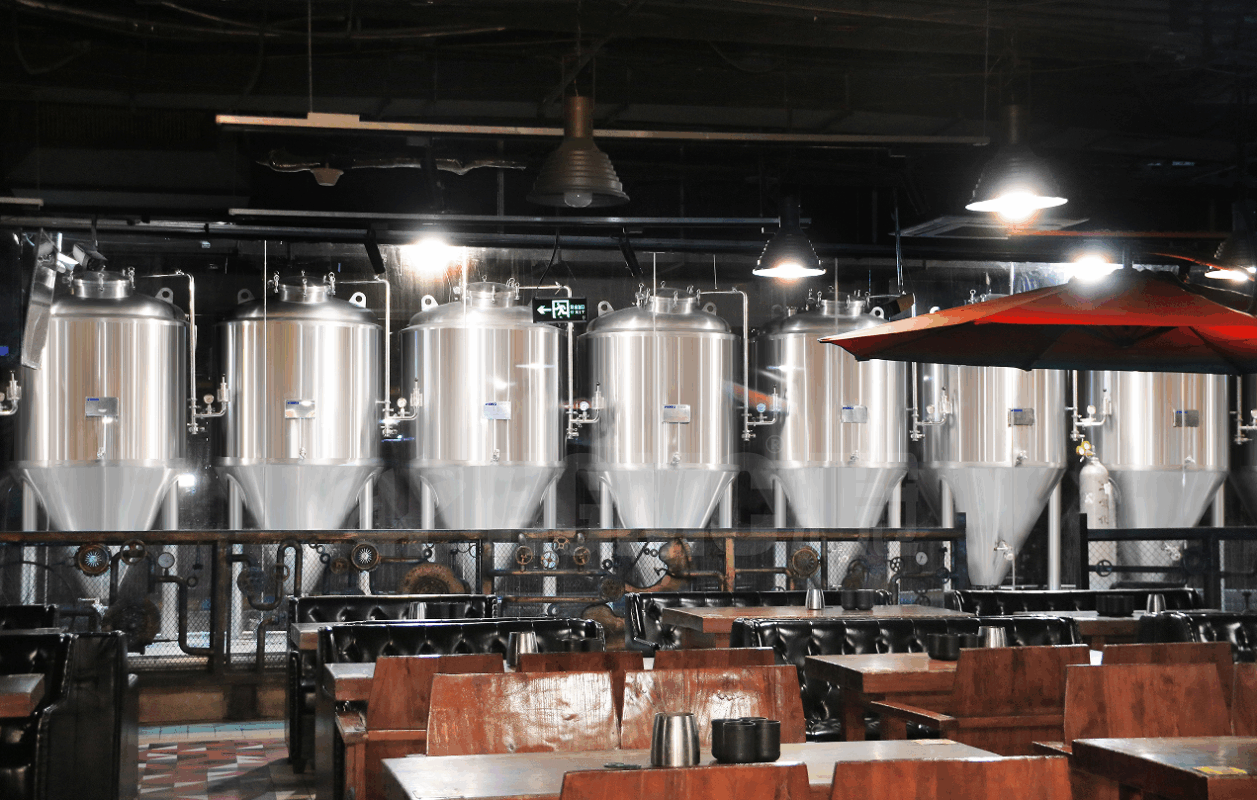
A filled 3000L fermentation tank weighs approximately 7,800 pounds. That weight must sit on a reinforced concrete foundation meeting ASTM C109 compressive strength standards. If your current floor was poured for a 200L pilot system, it will not hold. Floor load minimums for this equipment class start at 150 pounds per square foot, and many standard commercial slabs fall below that rating. You do not discover this problem until the concrete begins to crack under a full fermentation load.
Ceiling height is another constraint that gets overlooked during early planning. Vessel geometry plus overhead piping and tri-clamp access require at least 4.5 meters of clearance. A brewhouse with that headroom often means modifying an existing space or purpose-building a new one. A 304L stainless steel vessel with a 4mm inner wall and 2mm cooling jacket occupies more vertical space than most brewers estimate from equipment spec sheets.
Heating requirements add another layer of infrastructure planning. Steam or electric heating must ramp at 1°C per minute to maintain enzyme activity and consistent mash temperature profiles. The power draw scales non-linearly with vessel size. A 1000L brewing system typically needs 45 to 65 kW, a 2000L system needs 85 to 115 kW, and a 3000Lbrewing system needs 130 to 170 kW. Many existing electrical services in mid-sized breweries max out around 100 kW, which means a 3000L upgrade triggers a service upgrade that costs thousands before the brewhouse even arrives.
The glycol chiller is the single most common failure point in this scaling step. For a 3000L brewing system handling four active fermenters simultaneously, the chiller must provide at least 25HP of cooling capacity. Undersize it, and fermentation temperatures drift 3°C to 5°C higher during peak ambient heat, triggering the formation of fusel alcohols. Those higher alcohols produce solvent-like off-flavors that ruin a carefully designed recipe. One brewery I spoke with lost an entire seasonal release batch before they identified the chiller as the culprit. The chiller and steam boiler should live in a dedicated utility room, separate from the fermentation cellar, to prevent their waste heat from interfering with temperature-controlled fermentation zones.
Automated systems at this scale use VFD-controlled centrifugal pumps that prevent shear stress on yeast during transfers. In-line oxygen meters keep dissolved oxygen below 30 ppb, a threshold that becomes harder to maintain as transfer distances and pipe diameters increase. 2-inch or 3-inch tri-clamp connections support high-flow transfers but also require more careful gasket maintenance and tighter clamping torque than smaller fittings.
How Automation and System Design Boost Brew-Day Efficiency
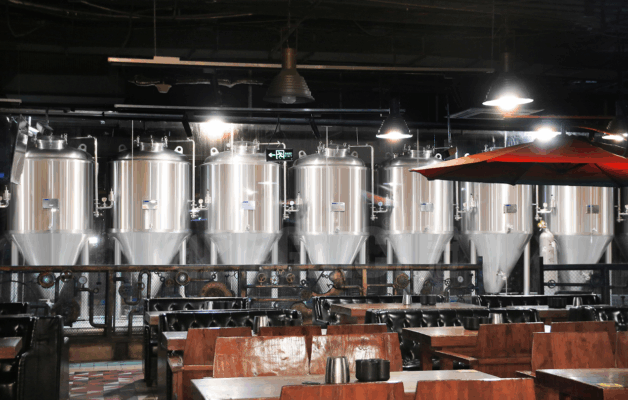
Scaling to 1000L–3000Lbrewing system changes the economics of labor on the brew deck. Automated spent grain removal alone saves 55 minutes per brew day. With a side-mounted grain chute and an automated plow, a single brewer can run back-to-back batches, effectively doubling the facility’s daily output without adding a second brewer. That 55-minute saving is not trivial — it is the difference between squeezing in two batches and settling for one.
The vessel design at this scale includes specific engineering features that improve consistency. The lauter tun uses differential pressure sensors to monitor bed compaction in real time, preventing stuck mashes and ensuring steady runoff. The whirlpool has a tangential inlet that operates at 12 meters per second, producing clear trub separation that reduces kettle loss. A two-stage plate heat exchanger cools 2000L of wort to 15°C in 45 minutes — a rate that a single-stage unit cannot match, especially during summer months when ground water temperatures rise.
The CIP skid is where automation pays for itself in sanitation consistency. A dual-tank system, one caustic and one acid, achieves a 99.9% sanitation rate batch after batch. Breweries using a dedicated CIP skid for 3000L tanks report a 15% reduction in water waste compared to manual cleaning methods, based on 2023 operational data. The system recovers final rinse water for the initial pre-rinse of the next tank, cutting water consumption further. Polish the internal surfaces to a 0.4-micron RA finish — the standard for production-scale brewhouses — and organic matter has fewer microscopic ridges to cling to, reducing chemical consumption by another 20%.
| System Capacity | Annual Output (1 brew/week) | Floor Space Required | Power Requirements |
|---|---|---|---|
| 1000L (8.5 BBL) | 520 HL | 900–1,100 sq ft | 45–65 kW |
| 2000L (17 BBL) | 1,040 HL | 1,300–1,600 sq ft | 85–115 kW |
| 3000L (25.5 BBL) | 1,560 HL | 2,000–2,500 sq ft | 130–170 kW |
These numbers matter during facility planning because floor space estimates often ignore the utility room, the cold storage area, and the packaging zone. A brewhouse that claims 1,100 square feet of equipment footprint can easily require 2,500 square feet once you add the chiller room, boiler room, grain storage, and keg washing station.
Financial and Yield Gains That Justify the Investment
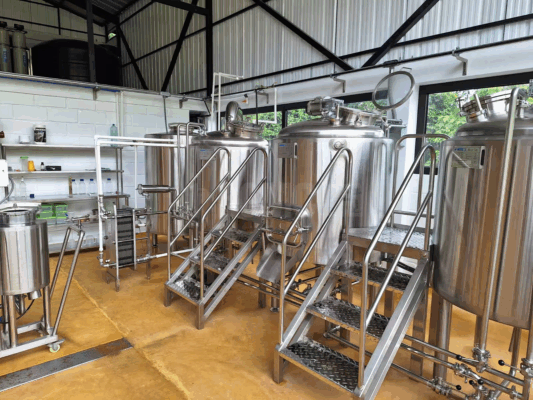
The most visible financial shift at this scale is raw material procurement. Purchasing malt in 1-ton super sacks instead of 25 kg bags reduces the cost per pint by 12%. That saving flows directly to gross margin on every barrel sold. A taproom pouring 400 barrels a year sees the difference within the first malting contract renewal.
Yield recovery becomes a meaningful number at 2000L and above. A centrifugal separator installed on a 2000L brewing system recovers 6% to 9% more finished beer from the whirlpool and fermenter bottoms. That translates to an extra 120 to 180 sellable liters per batch. Over a year of weekly brewing, that recovered volume is roughly 6,240 to 9,360 additional liters — enough to cover the monthly financing cost of the separator itself. Many breweries find that this recovered volume alone makes the equipment payment sustainable over a three-year ROI window.
CO₂ recovery ports built into the fermentation tanks allow the brewery to capture and reuse natural carbonation gas from active fermentation. That reduces gas procurement costs by approximately 10% annually. For a brewery packaging 2,000 barrels per year, that saving adds up to several thousand dollars that would otherwise go to industrial gas suppliers.
There is a counterintuitive energy pattern at this scale. A 2024 study of 300 microbreweries found that moving to larger vessels reduces electricity usage by 22% per liter of beer produced. The reason is thermal mass. A larger kettle retains heat more efficiently during the 90-minute boil, requiring less energy input to maintain rolling boil temperatures. The same principle applies to fermentation temperature control — larger volumes of liquid resist temperature swings more effectively than small batches, reducing the duty cycle on the glycol chiller. On paper, a bigger kettle looks like it should consume more power per batch, but the per-liter metric consistently favors the larger system.
Labor cost reduction is the most straightforward financial argument. Scaling from pilot to 1000L–3000L reduces labor cost per hectoliter by 35%. A single brewer running back-to-back batches on a properly automated system produces more volume per labor hour than two brewers working two small systems. The brewhouse does not have to add headcount to double production.
Managing Downtime and Maintenance at Scale
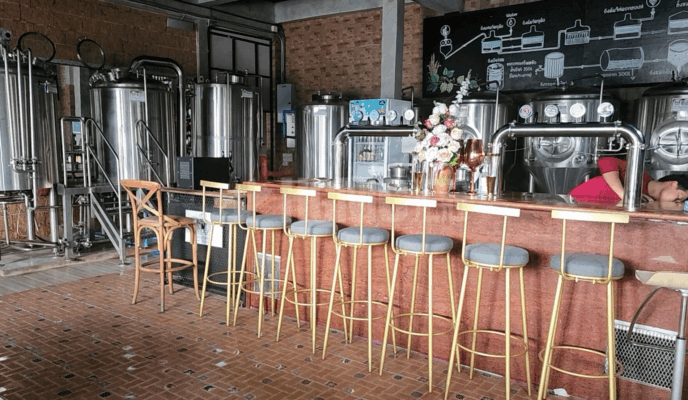
A larger system brings higher maintenance complexity, but the labor savings often offset it. The 55-minute daily saving from automated spent grain removal frees time that can go to equipment inspections and preventive maintenance. The trade-off is that you now maintain more components — VFD drives, differential pressure sensors, tangential inlet valves, two-stage heat exchangers — and each of those components requires scheduled calibration and replacement cycles.
The most critical maintenance parameter at this scale is dissolved oxygen control during transfer. In-line oxygen meters must keep readings below 30 ppb to achieve a 180-day shelf life in packaged beer. A leaky gasket on a 3-inch tri-clamp or a slow-closing valve can push dissolved oxygen above that threshold, and you will not detect it until the beer shows oxidation notes weeks later. Breweries at this scale typically replace gaskets on every fourth or fifth CIP cycle, even if they appear sound visually.
Operating pressure for carbonating and transferring reaches 30 PSI in 3000L brewing systems. That pressure requires pressure-rated vessels and valves, and it demands annual hydrostatic testing on the fermenters and brite tanks. Skipping that test to save a day of downtime is a risk that no brewery should take at this volume level, because a pressure failure at 3000L releases thousands of liters in seconds.
The 304L stainless steel construction with 4mm walls and 2mm cooling jackets is durable, but the cooling jacket welds are stress points. A 2023 analysis showed that internal surfaces polished to 0.4-micron RA not only reduce chemical consumption by 20% but also make inspection easier — biofilm and beer stone are visible against the polished surface, whereas a rougher finish hides contamination until it becomes a flavor problem.
Planned downtime for tank inspection, gasket replacement, and sensor calibration typically runs one day per month on a 3000L brewing system. That is higher than a pilot system where you can inspect everything in a few hours, but the production output over the remaining 29 days makes the downtime acceptable. The key is scheduling it during the slow production week rather than reacting to a failure mid-batch.
FAQ
What ceiling height do I need for a 1000L–3000L brewing system?
At least 4.5 meters of clearance. That accounts for vessel height, overhead piping, tri-clamp access for cleaning and inspection, and the head space needed for grain handling equipment. A lower ceiling forces compromises on vessel geometry or makes routine maintenance difficult.
Can I run a 3000L system with my existing electrical service?
A 3000L system requires 130 to 170 kW of power, which most standard 100 kW services cannot support. You will likely need a service upgrade from your utility provider. Factor that cost into your expansion budget before ordering equipment, because the upgrade process can take 8 to 12 weeks.
How much does a CIP skid actually save in water and chemicals?
Breweries using a dedicated dual-tank CIP skid for 3000L tanks report 15% less water waste compared to manual cleaning. Polished 0.4-micron RA surfaces reduce chemical consumption by an additional 20%. The CIP skid pays for itself within two years for a brewery brewing weekly at 2000L or above.
Is it worth installing a centrifugal separator on a 2000L brewing system?
Yes. The separator recovers 6% to 9% more beer from whirlpool and fermenter bottoms, adding 120 to 180 sellable liters per batch. That extra volume often covers the equipment financing cost over a three-year period, making the investment self-funding.
How long does it take to see a return on investment after scaling up?
Most breweries reach ROI within three years on a 1000L–3000L brewing system, driven by a 35% reduction in labor cost per hectoliter, 12% raw material savings from bulk purchasing, and yield recovery from centrifugal separation. The exact timeline depends on utilization rate — breweries running weekly batches recoup faster than those brewing sporadically.
