
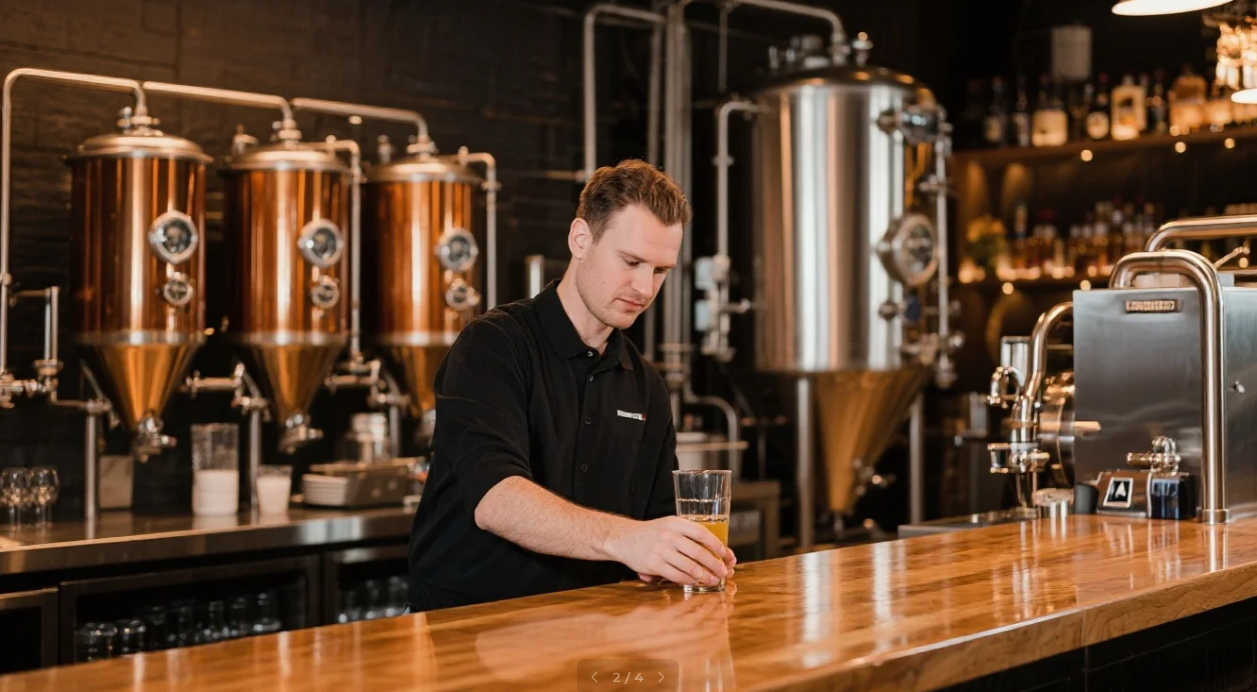
The hospitality sector is quietly undergoing a structural shift. Restaurants and hotels that once bought kegs from regional distributors are now installing compact brewing equipment behind their own walls. The global brewpub market is projected to grow at a CAGR of 8.2% through 2030, and the reasoning is straightforward: producing beer on-site can lift beverage margins by 200% to 300% compared to purchasing from external suppliers.
But the transition from buyer to producer is not simply a matter of buying a kettle and turning it on. It involves spatial constraints, building code navigation, a fundamentally different profit-and-loss structure, and operational friction that many venue operators underestimate.
This article examines the real factors that determine whether a microbrewery makes sense for a hospitality venue—covering layout, finances, technical requirements, and the unexpected role of aesthetics.
Spatial and Layout Constraints for Urban Venues
Floor space is the first hard constraint. Most urban restaurants and hotel bars operate on tight footprints where every square foot carries rent. Compact brewing systems in the 3-bbl to 5-bbl range typically require 250 to 400 square feet of dedicated area. That includes the brewhouse itself, fermentation vessels, a glycol chiller, and storage for grain and cleaning chemicals. For venues that cannot spare that much contiguous floor space, modular skid-mounted designs offer a workaround—all pumps, heat exchangers, and piping are pre-assembled on a single frame, reducing the installation footprint by roughly 30%.
The choice between electric and steam heating is where many retrofit plans stall. Traditional steam-fired kettles require boiler infrastructure, gas venting, and high-pressure steam pipes. In older urban buildings, running gas lines and installing a boiler can trigger structural modifications that cost $20,000 to $45,000 more than an equivalent electric system. Electric-heated vessels deliver approximately 95% energy transfer efficiency and eliminate the need for boiler permits and ventilation upgrades. For venues in basements or behind bar areas where gas access is limited or impossible, electric systems are often the only viable path.
Placement options vary. Some venues install the brewhouse in a basement and run beer lines up to the bar. Others place the equipment in a visible corner of the dining area, treating the stainless steel vessels as part of the decor. The key constraint is floor loading—a 5-bbl system with full fermenters can exceed 3,000 pounds, which older building slabs may not support without reinforcement. A structural engineer should evaluate load capacity before committing to a location.
Steam systems remain common in larger production facilities, but for hospitality venues in converted commercial spaces, the build-out cost and permitting timeline often make them impractical. I have seen multiple projects stall for six months or more while waiting for gas line permits and boiler inspections. Electric systems bypass that entirely.
Financial Impact: From Keg Buyer to Beer Producer
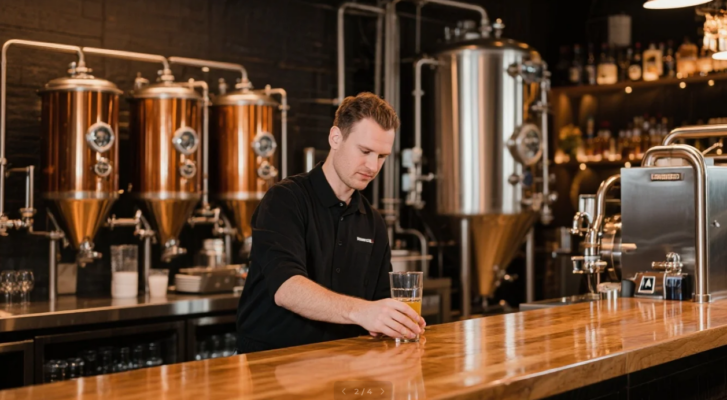
The financial case for onsite brewing is straightforward on paper but requires careful unpacking. A purchased keg of commercial beer typically costs a restaurant $180 to $250 depending on brand and distributor markup. Brewing that same volume—approximately 15.5 gallons per keg—costs $45 to $70 in raw materials, including malt, hops, yeast, and water treatment chemicals. The gross margin difference is substantial.
For a venue moving 500 barrels annually—roughly 1.4 barrels per day—this shift represents a gross profit increase of over $60,000 per year, assuming stable utility and labor costs. Data from 85 North American brewpubs indicates that onsite brewing hardware reaches its break-even point within 14 to 22 months. That timeline is accelerated by the elimination of distributor markups, transport fees, and the typical 25–30% retail markup that distributors add to keg prices.
The impact on average check size is also measurable. Research from 2024 shows that venues with onsite brewing capacity see a 15% to 20% uptick in average guest check size. Customers perceive house-made beer as premium and are willing to pay $7 to $9 per pint rather than the $5 to $6 they would pay for a macro-brewed lager. That price premium is not purely about taste—it reflects the perceived authenticity and craftsmanship of a tank-to-glass experience.
But the P&L changes in ways that are easy to overlook. Labor costs shift upward because brewing adds 10 to 15 hours of production work per week, even with automation. Utility costs increase—electricity for heating and cooling, water for cleaning and brewing, and wastewater surcharges in municipalities that charge by volume. A venue producing 500 barrels annually will use roughly 2,500 barrels of water just for brewing, plus additional volume for cleaning. Those costs must be factored into the margin calculation.
The break-even window of 14 to 22 months assumes consistent production volume and no major equipment failures. If a venue underproduces or experiences batch spoilage, that timeline extends. The financial model works best for venues that already have high beer sales volume and a stable customer base.
Technical Requirements: Water, Automation, and Fermentation
Water management is the most common retrofit failure point. A standard brew day generates a water-to-beer ratio of roughly 5:1—for every barrel of beer produced, five barrels of water are used in brewing and cleaning. That volume of hot, alkaline wastewater must be drained quickly. Many restaurant kitchens have undersized floor drains designed for dishwashing runoff, not for the rapid discharge of a brewing system. Retrofitting high-capacity trench drains or floor sinks can cost $5,000 to $15,000 depending on concrete cutting and plumbing access.
Modern equipment addresses this with closed-loop CIP (clean-in-place) systems that recirculate cleaning solutions rather than dumping them after each cycle. These systems reduce total water consumption by approximately 20% and limit chemical discharge into municipal sewers. For venues in jurisdictions with strict wastewater permitting, closed-loop CIP can be the difference between approval and rejection.
Automation is what makes onsite brewing viable for venues without a full-time brewer. PLC-driven systems monitor fermentation temperature with 0.5°C precision, maintaining stability across the entire fermentation cycle. If the cooling loop deviates beyond that threshold, the system sends an alert to a smartphone. In a 2025 pilot study involving hotels, venues using automated cellar alerts reduced their spoiled batch rate to less than 1%. That is a meaningful improvement over manual monitoring, where spoilage rates of 3% to 5% are common in small-scale operations.
Fermentation vessel design also matters for space-constrained venues. Slim-line fermenters are narrower than traditional wide-body tanks, allowing venues to stack fermentation capacity vertically and save about 15% of floor space. A slim-line 5-bbl fermenter occupies roughly the same footprint as a standard 3-bbl tank, which can make the difference between fitting four tanks versus three in a tight room.
Direct-draw serving tanks eliminate the kegging step entirely. These tanks connect directly to the bar tap system, reducing labor by approximately 10 hours per week and preventing oxidation that occurs during keg filling and transport. Compact glycol chillers, which maintain serving temperature, can be tucked into storage closets or under stairs, operating silently enough for dining room or hotel guest areas.
Building code navigation for utility access is a recurring bottleneck. Floor drains must meet local plumbing code for commercial kitchens, which often requires grease traps and backflow prevention. Electrical panels may need upgrading to handle the load of heating elements and pumps. In older buildings, running new water lines and drain pipes through concrete slabs adds cost and timeline. I have seen projects where drainage alone added three weeks to the construction schedule.
Aesthetics as a Marketing Asset
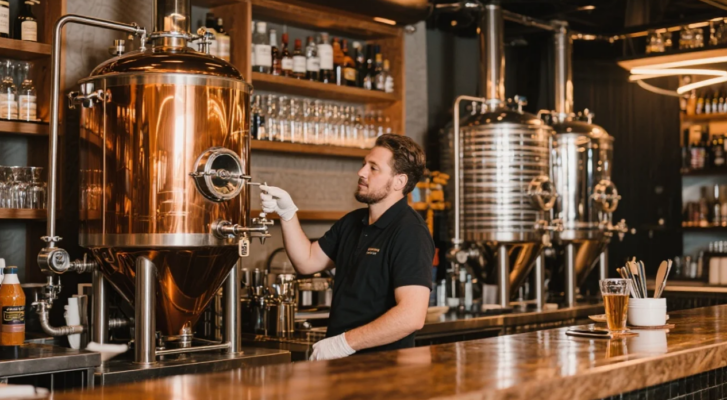
The equipment itself becomes a marketing tool. A 2024 hospitality survey of 200 venues found that showpiece brewhouses placed behind glass in dining areas contributed to a 25% increase in social media engagement and foot traffic. Customers photograph the vessels, tag the venue, and share the experience organically. That user-generated content has advertising value that is difficult to replicate with traditional marketing spend.
Polished stainless steel vessels are the standard, but some venues opt for copper-clad finishes that develop a patina over time. Custom-finished vessels act as a visual anchor for the brand, reinforcing the craft identity of the establishment. For hotels positioning themselves as lifestyle destinations, the brewhouse becomes part of the guest experience—guests can watch the brewing process while eating dinner or having a drink at the bar.
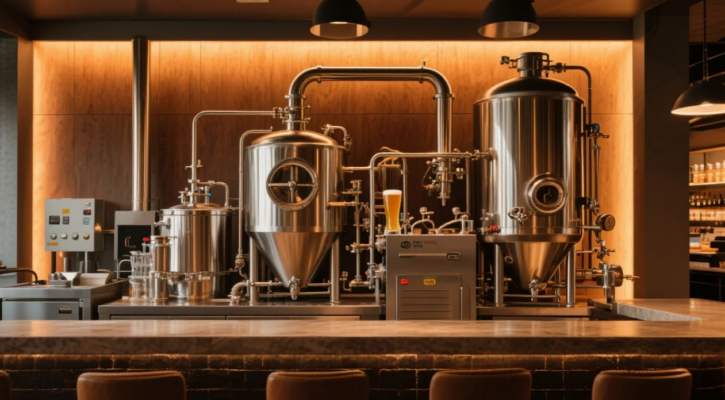
The architectural integration matters. Low-profile piping and hidden wiring ensure that the equipment looks intentional rather than industrial. Vessels are designed with clean lines and minimal external plumbing, making them suitable for placement in dining areas rather than relegated to a back room. By 2026, it is estimated that 12% of new boutique hotel developments will include micro-brewing as a primary lifestyle amenity. That figure reflects the recognition that brewing equipment can serve dual purposes: production and atmosphere.
The visual presence of stainless steel vessels in a dining area can increase social media engagement by 25%, making the equipment a marketing asset as much as a production tool. This is a non-obvious return on investment that does not appear on a standard P&L statement but directly affects foot traffic and brand perception.
FAQ
How much space is needed for a small brewery in a restaurant or bar?
A 3-bbl to 5-bbl system typically requires 250 to 400 square feet of dedicated floor space, including the brewhouse, fermentation vessels, glycol chiller, and storage. Modular skid-mounted designs can reduce that footprint by roughly 30% by consolidating pumps and piping onto a single frame. Basement or behind-bar placement is possible if floor loading and drainage are adequate.
What is the typical ROI timeline for an onsite brewing system?
Data from 85 North American brewpubs indicates a break-even point of 14 to 22 months. That timeline assumes consistent production volume of at least 500 barrels annually and stable utility and labor costs. The elimination of distributor markups and transport fees accelerates the return.
Can existing kitchen staff operate a microbrewery without a trained brewer?
PLC-driven automation allows non-specialist staff to manage fermentation with 0.5°C temperature control and smartphone alerts. Many venues train existing kitchen or bar staff to handle brewing cycles, though a basic understanding of sanitation and recipe formulation is still required. Spoilage rates drop below 1% with automated cellar monitoring.
What are the main utility and drainage requirements for retrofitting?
A standard brew day uses a 5:1 water-to-beer ratio, requiring high-capacity floor drains or trench drains. Electrical panels may need upgrading for heating elements. Electric systems avoid gas venting and boiler permits, reducing build-out costs by $20,000 to $45,000 compared to steam-fired systems. Older buildings may need structural reinforcement for floor loading.
How does onsite brewing affect the taste and freshness of beer compared to purchased kegs?
Beer served directly from fermentation or serving tanks reaches the glass within days of finishing fermentation, minimizing oxidation and flavor degradation. Purchased kegs may sit in distributor warehouses for weeks or months before reaching the venue. Tank-to-glass freshness is a primary selling point and contributes to the 15–20% increase in average check size observed at venues with onsite brewing.
