
The first budget a brewer drafts usually starts with a single search: how much does brewery equipment cost? The answers come back so wide they barely look like the same question. A compact nano setup can land around $10,000, while a production-scale facility runs past $1 million. Between those numbers sits every possible combination of tanks, controls, and packaging lines, and the spread has little to do with brewhouse size alone.
A brewhouse handles only the hot side — mashing, lautering, boiling, and whirlpool separation. It can produce wort in a day, but beer occupies fermenters for weeks before it is ready. Treating the brewhouse as the whole project is the fastest route to an underfunded build. The real cost lives in the full production loop: cellar, cooling, cleaning, and packaging.
What Brewery Equipment Costs by Brewery Size
Brewery Equipment budgets rise with production capacity, process complexity, and automation. The ranges below describe what is typically included at each commercial scale, and what tends to push a quotation higher.
| Brewery scale | Typical capacity | Equipment investment | Typical setup |
|---|---|---|---|
| Nano brewery | 1–3 BBL | $10,000–$50,000 | Compact brewhouse, small fermenters, glycol chiller, wort pump, manual cleaning |
| Small microbrewery | 5–10 BBL | $50,000–$150,000 | Brewhouse, hot/cold liquor tanks, multiple fermenters, glycol cooling, CIP unit, keg cleaning |
| Growing microbrewery | 10–30 BBL | $150,000–$400,000+ | Larger tank count, advanced automation, brite tanks, bigger utility capacity, production controls |
| Production brewery | 30–100 BBL+ | $400,000–$1M+ | Multi-vessel brewhouse, centralized CIP, filtration, CO2 systems, canning or bottling line |
A nano brewery at 1–3 BBL typically starts around $10,000 to $50,000. This scale suits limited local production, taproom sales, or very small commercial brewing. A typical package includes a compact brewhouse, a few small fermentation tanks, a glycol chiller, a wort pump, a heat exchanger, and manual cleaning equipment. The price climbs quickly once kegging or packaging equipment enters the plan.
Small microbreweries at 5–10 BBL usually fall between $50,000 and $150,000. Brewpubs, restaurant breweries, and taprooms with local keg distribution operate at this tier. The configuration gets more complete here: a brewhouse, hot and cold liquor tanks, multiple fermenters, a glycol cooling system, a CIP unit, pumps, a control panel, and basic keg cleaning and filling gear.
Growing microbreweries at 10–30 BBL run from $150,000 to $400,000 or more. The range depends on tank count, automation level, heating method, and packaging requirements. Breweries supplying local bars, restaurants, and regional distribution channels need additional fermentation tanks, brite tanks, a more capable cooling system, larger utility capacity, and better production controls to keep beer consistent.
Production breweries at 30–100 BBL and above require $400,000 to more than $1 million. These facilities distribute high volumes of keg, can, or bottle product. The equipment list includes a larger multi-vessel brewhouse, extensive fermentation capacity, automated controls, centralized CIP systems, high-capacity glycol cooling, filtration, CO2 systems, and a complete canning or bottling line. High-speed packaging, advanced automation, and custom process layouts push the budget further.
Capacity alone does not drive these figures. Two breweries with identical brewhouse sizes can carry very different price tags depending on what surrounds the hot side.
What a Commercial Brewery Actually Needs Beyond the Brewhouse
A commercial brewery needs equipment for the entire production process, not just wort production. Buying a brewhouse without supporting systems creates expensive bottlenecks that surface months after installation.
The essential systems break down roughly like this:
- Malt mill and grain handling equipment
- Brewhouse system
- Hot liquor tank and cold liquor tank
- Wort pump and heat exchanger
- Process piping and valves
- Fermentation tanks and brite beer tanks
- Glycol chiller and cooling system
- CIP cleaning system
- PLC or manual control system
- Keg cleaning and filling equipment
- Canning or bottling line when packaged beer is required
Plan your fermentation capacity first. A brewhouse can produce wort in one day, but beer needs several weeks for fermentation, maturation, clarification, and carbonation. If the tank count is too low, the brewhouse sits idle while beer occupies every available fermenter. That idle time is lost output, not just an inconvenience.
The cellar side carries more of the project cost than most first-time planners expect. Fermentation tanks manage temperature, pressure, yeast collection, carbonation, and sanitary cleaning, and they outnumber brewhouse vessels by a wide margin. Brite tanks add another layer of capacity for clarification and carbonation before packaging. Glycol cooling must be sized for peak fermentation load, which is higher than steady-state operation.
Cleaning infrastructure is easy to underestimate. A CIP unit, caustic and sanitizer storage, and the piping to deliver them to every vessel add up quickly. Manual cleaning works at nano scale but becomes a labor bottleneck once tank count grows.
Why Brewery Equipment Prices Vary So Much
Equipment quotations can differ greatly even when two projects appear similar on paper. The differences sit outside the brewhouse, and they move budgets more than vessel size does.
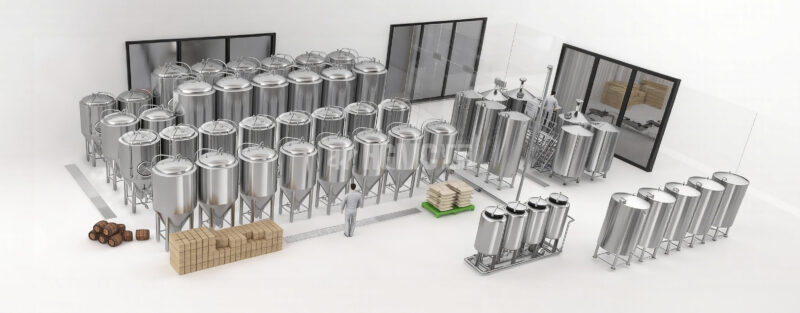
Production capacity drives the first major spread. A 10 BBL brewhouse with four fermenters costs far less than the same brewhouse with twelve fermenters and a matching brite tank. Fermentation capacity, not brewhouse size, is the real production constraint in most small breweries, and it is routinely underestimated in early planning.
Beer styles matter too. A brewery running mostly ales can rotate fermenters faster than one producing lagers that condition for weeks. Higher turnover means fewer tanks for the same output, but it also means less scheduling flexibility when a style change or a stuck fermentation eats into capacity.
Automation level swings quotations more than brewhouse size itself. A manual control panel with individual vessel controls costs a fraction of a PLC-driven system with automated valve sequences, recipe management, and data logging. The automation premium is easy to defer during planning and painful to retrofit later. The same applies to packaging: a manual two-head filler and a high-speed canning line with a seamer, rinser, and labeler sit at opposite ends of the price spectrum, and both attach to the same brewhouse.
Heating method adds another variable. Direct-fired kettles cost less upfront than steam systems, but steam offers finer temperature control and faster heating. The utility infrastructure for steam — boiler, piping, condensate return — adds cost that direct firing avoids.
The consequence of under-specifying fermentation capacity is concrete. One brewer I know bought a 15 BBL brewhouse with four 15 BBL fermenters. The brewhouse produced a batch in about six hours, but the fermenters were occupied for two to three weeks per beer. The brewhouse ran one batch per week and sat idle the rest of the time. The math on the investment looked reasonable on paper; in practice, the brewery was paying for capacity it could not use. The fix — two more fermenters and a brite tank — cost roughly a third of the original brewhouse price.
The final cost also depends on cooling, cleaning, controls, utilities, installation, and packaging. These line items routinely add 30–50% above the equipment quotation itself.
Budgeting for Installation, Utilities, and Hidden Costs
The equipment quotation is the starting point, not the end of the project. Installation, utilities, and facility work determine whether a budget holds or collapses.
Installation labor varies by region and by the complexity of the process layout. A multi-vessel brewhouse with extensive process piping and valves requires more rigging, welding, and commissioning time than a compact two-vessel system. Custom process layouts push this higher, since standard prefabricated piping kits do not fit.
Utilities deserve a dedicated line in the budget. Glycol cooling capacity must match peak fermentation load, which means sizing for the hottest fermentation activity, not average output. A glycol chiller that is too small struggles to hold fermentation temperature on summer days, and the result is off-flavors in beer that cannot be corrected later. Electrical service, water supply, drainage, and ventilation all carry their own costs, and older buildings often need upgrades before any equipment arrives.
Cleaning infrastructure is another hidden cost center. A centralized CIP system with dedicated pumps, tanks, and distribution piping costs more than a portable CIP cart, but it saves labor on every cleaning cycle. The tradeoff between upfront cost and ongoing labor is worth calculating before purchase.
Packaging decisions shape the budget more than any other single choice. Keg distribution requires keg cleaning and filling equipment, which is modest in cost. Canning or bottling lines start at a meaningful investment and climb steeply with speed and automation. A brewery can start with kegs only and add a canning line later, but the facility space and utility capacity should be planned from the beginning.
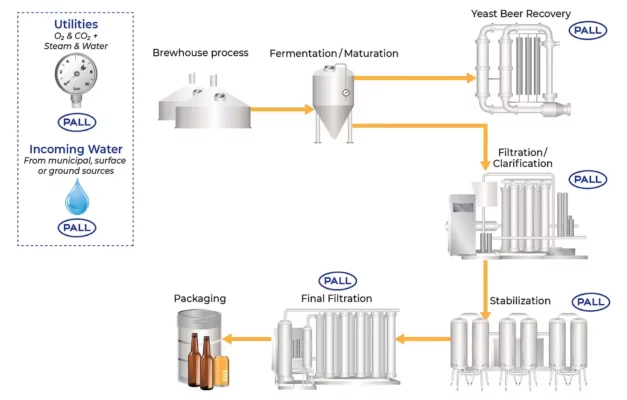
The final cost is not based on brewhouse size alone. It depends on the entire production loop: fermentation capacity, cooling, cleaning, controls, utilities, installation, and packaging equipment. A brewhouse without these systems is a collection of idle stainless steel. The breweries that stay within budget treat the brewhouse as one component of a complete system, and they plan the whole loop before signing for the hot side.
FAQ
Does brewery equipment cost depend only on brewhouse size?
No. Brewhouse size sets the hot-side capacity, but the total investment depends on fermentation tank count, cooling capacity, cleaning systems, automation level, and packaging equipment. Two breweries with the same brewhouse can differ by hundreds of thousands of dollars based on what surrounds it.
Why do quotes for similar-sized breweries vary so much?
The variation comes from tank quantity, automation systems, heating method, and packaging plans. A manual brewhouse with four fermenters and keg-only distribution costs far less than an automated brewhouse with twelve fermenters and a canning line. Custom process layouts and facility constraints add further spread.
Can a brewery start without canning or bottling equipment?
Yes. Many breweries begin with keg distribution only, which requires keg cleaning and filling equipment but avoids the cost of a canning or bottling line. The facility space and utility capacity for packaging should still be planned upfront, since adding a line later is easier when the building already supports it.
What is the most common budgeting mistake in brewery planning?
Under-specifying fermentation capacity. A brewhouse can produce wort in a day, but beer occupies fermenters for weeks. Too few tanks means the brewhouse sits idle while production stalls, and the cost is paid in lost output, not just money.
How much fermentation tank capacity is needed to match a brewhouse?
A common starting point is three to four times the brewhouse batch size in fermentation capacity, depending on beer styles and turnaround time. Ales ferment faster than lagers, so breweries running mostly lagers need more tanks for the same output. The exact ratio depends on the production schedule and how much flexibility the brewery wants.
