
Equipment is the largest capital outlay a commercial brewery will ever make, and it is also the hardest thing to change once the concrete is poured and the piping is welded. Most owners discover this the hard way: they order a system based on what felt impressive at a trade show, then spend the next three years watching tanks sit half-empty while the loan payments come due.
The truth is that a brewery does not need the biggest system or the most automation to succeed. It needs a balanced setup matched to real production volume, staffing, and sales channels. Equipment selection is a production-planning exercise, not a shopping decision. A 10-barrel brewhouse with the right cellar capacity and a disciplined crew will outperform a 30-barrel showpiece that nobody can keep fed with wort.
The brewhouse batch size multiplied by the weekly brew count gives the starting output benchmark against which all other capacity is measured. Everything else—fermentation tanks, glycol cooling, packaging, even the number of vessels—flows from that single calculation.
Define Production Goals Before Evaluating Equipment
Before any vendor quote means anything, the brewery needs to answer three questions in writing: how much beer will be produced per month, how many times per week the brewhouse will run, and how the finished beer will reach customers. The third question gets skipped more often than it should.
Sales channels change equipment needs in ways that are not obvious at first. A taproom-only operation can get away with a smaller packaging footprint and fewer brite tanks, because beer moves out in kegs or direct from serving tanks. A brewery selling packaged product needs canning or bottling lines, more cold storage, and a keg cleaning station that actually keeps up with returns. Distribution through wholesalers adds another layer: consistent shelf life, date coding, and packaging speeds that match what the market will absorb.
The future growth plan matters, but only in one direction. Overbuilding is the more common and more expensive mistake. A brewery that orders a 30-barrel system while selling 200 barrels a year has parked capital in stainless steel that will not earn its keep for years. The equipment should match the sales plan that exists, not the one the owner hopes to have by next spring. Expansion is easier to justify later, with real numbers, than idle capacity is to explain to an investor now.
The Core Equipment List for a Complete Brewery
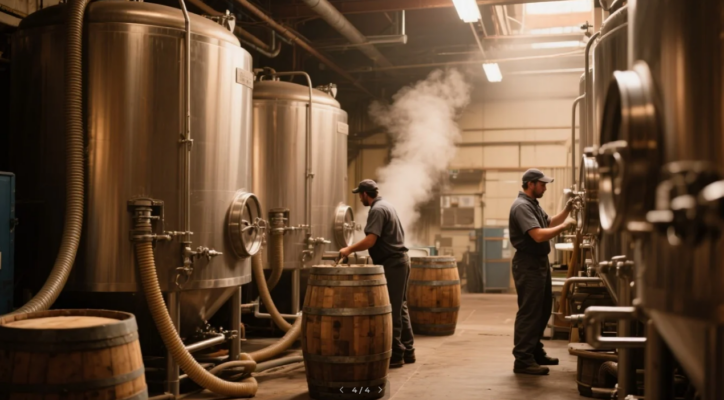
A commercial brewery is a production system, not a collection of standalone machines. The core list spans roughly 13 equipment categories before optional systems are considered. Trying to save money by skipping one of them usually just shifts the cost elsewhere—often into labor or lost batches.
The essential categories start with grain handling: a malt mill and the conveying that feeds it. The brewhouse itself comes next, followed by the hot liquor tank and cold liquor tank that supply brewing and dilution water. A wort pump and plate heat exchanger move and cool the wort. Then come the fermentation tanks, brite beer tanks, and the glycol chiller that keeps everything at temperature. The CIP system, process piping, valves, and fittings tie it all together, and the control system runs it. Finally, keg cleaning and filling equipment, plus canning or bottling where the sales plan requires it.
Optional systems—filtration, yeast propagation, CO2 recovery, water treatment, automated packaging—must earn their place. Each one adds cost, floor space, and maintenance. A yeast propagation unit is hard to justify for a brewery buying fresh pitch every week. CO2 recovery only pays for itself at serious volume. Water treatment may be non-negotiable in some municipalities and a waste of money in others.
| System category | Function | Influence on capacity | Typical tradeoff when undersized |
|---|---|---|---|
| Brewhouse | Converts grain and water into wort | Sets maximum wort output per day | Cannot produce enough wort to keep tanks filled |
| Fermentation and brite tanks | Hold beer through fermentation and conditioning | Sets how much beer can be in process at once | Brewhouse sits idle while tanks are full |
| Cooling/glycol | Controls fermentation and serving temperatures | Limits how many tanks can run simultaneously | Temperature swings ruin batches or slow fermentation |
| CIP and piping | Cleans vessels and transfers product | Affects turnaround time between batches | Manual cleaning eats hours and risks contamination |
| Packaging equipment | Fills kegs, cans, or bottles | Determines how fast finished beer leaves the cellar | Beer backs up and brite tanks stay occupied |
Choosing Between a Two-, Three-, or Four-Vessel Brewhouse
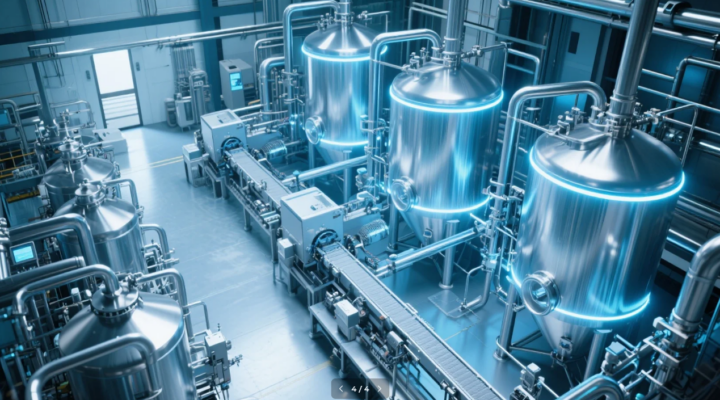
Vessel count is the decision that gets the most attention and causes the most regret. It affects budget, floor space, brewing frequency, and style flexibility—but the right answer depends entirely on production requirements, not on what the vessel number sounds like.
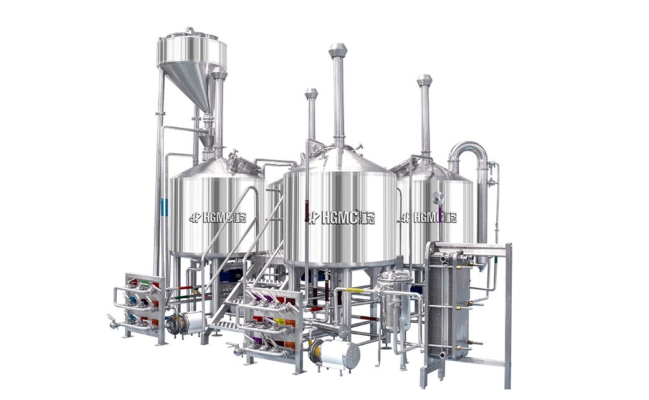
A two-vessel system is compact and economical. It works well for taproom breweries and restaurant operations with limited space, lower batch frequency, or a focused beer portfolio. The tradeoff is workflow: with fewer vessels, some steps that could run in parallel must run in sequence, which slows the brew day.
A three-vessel system separates more functions and allows better workflow and more flexible scheduling. Breweries that want to brew more frequently or handle a wider range of styles usually land here. The extra vessel costs more and takes more floor space, but it buys back time on brew days.
A four-vessel system offers the greatest flexibility and can support higher output and more complex schedules. It also requires meaningfully more floor space and stronger utilities than a two-vessel system for the same nominal capacity. Steam generation, electrical service, and ventilation all need to scale up. For a brewery that does not actually need that flexibility, the four-vessel purchase is money spent on capability that never gets used.
Choosing by vessel number alone, rather than production requirements, leads to one of two failures: idle capacity that never pays for itself, or a brewhouse starved of cellar space because the fermentation tanks cannot keep up. I have watched a brewery install a four-vessel system and then discover that its real constraint was the number of tanks in the cellar, not the speed of the brewhouse.
Matching Brewhouse and Fermentation Capacity
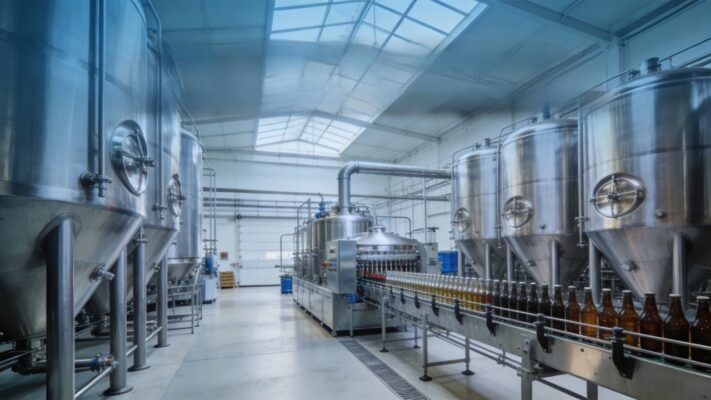
The brewhouse produces wort in batches. Fermentation tanks hold beer through fermentation, maturation, and conditioning. These two capacities must be calculated together, and the calculation is where most planning errors happen.
The inputs are straightforward: brewhouse batch size, number of brews planned each week, fermentation duration, beer styles and maturation requirements, seasonal production changes, number of brands or recipes, and the packaging schedule. A facility brewing multiple styles needs more tanks because beers ferment and mature at different rates, while lager-style products occupy cellar space longer. A brewery that plans to make a lager-heavy portfolio needs more tank capacity than an ale-focused operation of the same brewhouse size.
The non-obvious part is that fermentation capacity, not brewhouse size, is usually the true bottleneck in a growing brewery. Most owners feel the brewhouse is the constraint because that is where the visible work happens. But the actual stall comes when every fermentation tank is occupied and the brewhouse has nowhere to put the next batch of wort. The brewhouse goes idle, and the brewery is effectively producing nothing until a tank frees up.
A balanced system prevents this. It also prevents the opposite failure: overinvesting in a large cellar that sales demand never fills. The calculation should start with the production goals defined earlier—batch size times weekly brew count—and work forward into tank volume and count. If the math says the brewery needs 200 barrels of cellar capacity and the plan calls for 300, that extra 100 barrels is stainless steel doing nothing.
Matching Automation, Heating, and Cooling to the Operating Model
Automation is a labor-strategy decision, not an efficiency badge. A manual system with disciplined brewers can outperform an expensive automatic system that nobody is trained to run properly. I have seen this play out more than once: a brewery buys full automation, then hires staff who only know how to push the buttons the vendor showed them, and the system never gets used to its potential.
Manual systems suit smaller commercial breweries with experienced brewers who want direct process involvement. They reduce initial investment but require more hands-on labor and strong operating discipline. Semi-automatic systems improve consistency by controlling temperature, pump operation, liquid transfer, and timing. Semi-automatic control of temperature, pumps, transfer, and timing is often the practical threshold for a growing brewery seeking repeatability without full automation cost. Fully automatic systems support frequent production and reduce repetitive tasks, but they make sense only for higher output targets or limited labor resources.
The goal of automation is not to replace brewing knowledge. It is to help brewers repeat successful processes and reduce manual errors. A brewery that understands this will buy the level of automation its operating model supports, not the level that looks impressive on a spec sheet.
Heating and cooling follow the same logic. The brewhouse heating method—direct fire, steam, or electric—affects both capital cost and ongoing utility expense. The glycol chiller must be sized to the total tank load, not just the brewhouse. Undersized cooling causes temperature swings that ruin batches or slow fermentation to a crawl. Every addition to the system should serve a documented production purpose, whether it is a new vessel, a higher automation level, or a larger chiller.
FAQ
How much does a commercial craft brewery’s equipment budget typically range?
A complete production system for a small commercial brewery usually lands between $250,000 and $750,000, depending on capacity and automation level. A 10-barrel brewhouse with fermentation tanks, glycol cooling, and basic packaging typically falls in the lower half of that range. Full automation, four-vessel configurations, and high-speed canning lines push costs toward the upper end.
Can a two-vessel brewhouse support a brewery that wants to grow later?
Yes, but growth will require more than just brewing more often. A two-vessel system can support a taproom brewery through its first several years, and expansion can come later by adding cellar capacity or upgrading the brewhouse. The key is to leave room in the building for additional tanks and to keep the utility infrastructure sized for future expansion.
How many fermentation tanks does a brewery need for a given brewhouse size?
Multiply the weekly brew count by the fermentation and maturation duration in weeks, then divide by the tank batch size. A brewery brewing three batches per week with a three-week turnaround needs roughly nine tanks’ worth of capacity. Lager-heavy portfolios need more because those beers occupy tanks longer, and multiple styles require more tanks since fermentation rates differ.
Is fully automatic equipment worth the extra investment for a small brewery?
Only if the brewery has the labor constraint that automation solves. A small brewery with experienced brewers and manageable output often gets better results from a semi-automatic system that the crew actually understands. Full automation adds significant cost and complexity, and it only pays off when production volume is high enough or staffing is thin enough to justify it.
