
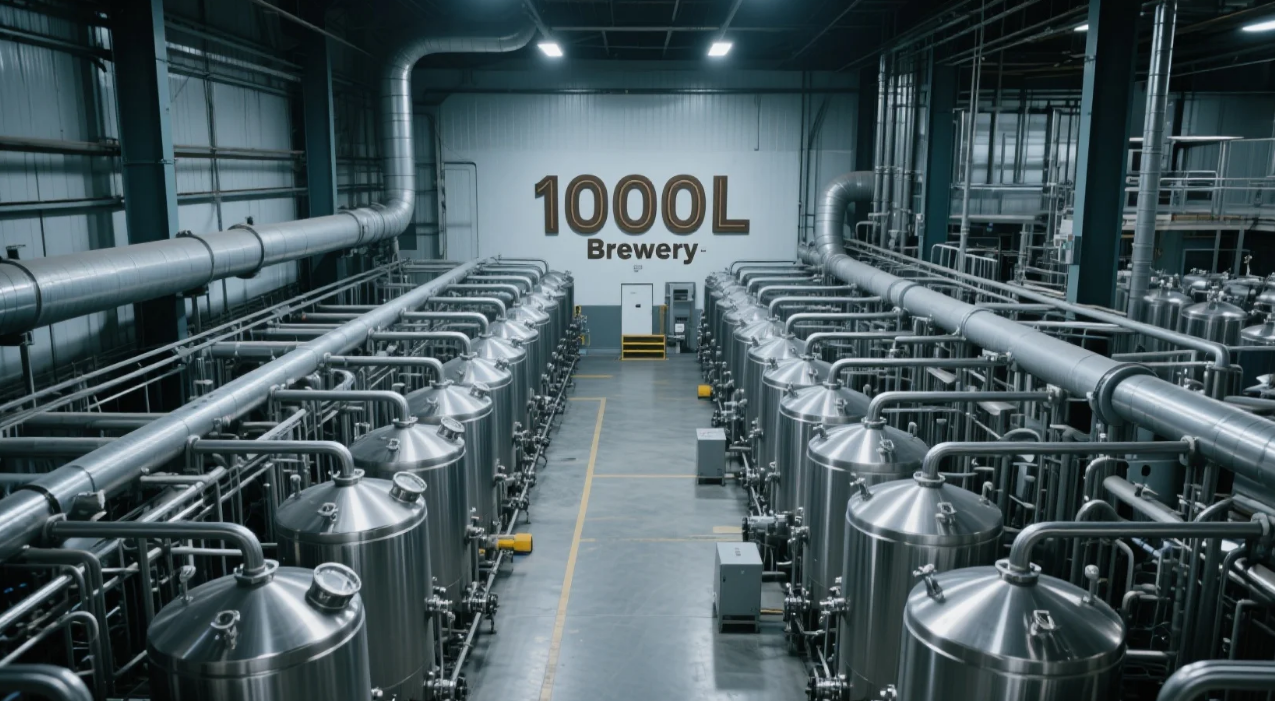
A 1000L brewhouse quotation is often treated as if it were a brewery budget. That is where many projects start drifting. The vessel package may be selected before anyone has checked drainage, electrical service, fermenter turnover, packaging space, glycol capacity, or the cash needed to operate before sales become predictable.
A 1000L brewery startup budget must cover more than the brewhouse. It needs enough production equipment, fermentation and cooling capacity, packaging capability, facility infrastructure, approvals, installation support, and working capital to turn wort into saleable beer on a repeatable schedule.
A project reviewed after the fact showed the problem clearly. The initial quotation covered the main vessels, but not enough fermenters, the glycol cooling system, packaging equipment, electrical upgrades, installation, or opening inventory. Six months after the order, the opening date had moved because the building work was incomplete. Even after commissioning, the brewery could not support its planned production schedule because cellar capacity was too limited.
What a 1000L Brewery Startup Budget Must Cover
A 1000L brewhouse produces approximately 1000 liters of wort per batch. That number describes the nominal batch size; it does not describe how many batches can be brewed each week, how quickly beer can be sold, or whether the finished product can be packaged without creating a bottleneck.
The equipment quotation and the startup budget should therefore be treated as two different documents. The quotation describes what a supplier is providing. The startup budget describes what the business must spend before it can brew, pass inspections, package beer, sell it, and continue paying staff and suppliers while revenue develops.
The production side usually includes the brewhouse, fermentation tanks, bright tanks, a glycol cooling system, and a CIP system. It may also require a malt mill, grain handling equipment, water treatment, heating equipment, pumps, pipelines, valves, platforms, heat exchangers, and control panels. A quotation that lists stainless steel vessels but excludes the connections between those vessels is not necessarily wrong, but it is incomplete for project planning.
Packaging adds another layer. Kegging may require a relatively compact setup, while canning and bottling introduce rinsing, filling, seaming or capping, labeling, conveyors, compressed air, storage, and additional cleaning requirements. Packaging equipment also changes the labor plan. A taproom-focused brewery may manage with a small kegging operation, while a distribution brewery may need a dedicated packaging area and enough finished-goods storage to prevent tank turnover from being delayed.
The non-equipment categories are less visible in a vessel quotation but can determine whether the project opens on time:
- Building renovation, floors, drainage, ventilation, electrical upgrades, and utility connections
- Freight, unloading, installation, commissioning, operator training, and spare parts
- Licenses, inspections, insurance, laboratory supplies, cleaning chemicals, and safety equipment
- Malt, hops, yeast, packaging materials, labels, kegs, cans, bottles, and opening inventory
- Payroll, rent, utilities, repairs, and other working capital during the first operating period
The final category is often underestimated. Working capital is not a decorative reserve added after the capital expenditure is calculated. Beer can be brewed weeks before it is sold, packaging materials may need to be purchased in advance, and wholesale customers may not pay immediately. A brewery can have full tanks and still be short of cash.
Published brewery benchmarking also tends to separate annual production, sales channels, and operating costs from the nominal size of the brewhouse. That distinction matters because a 1000L label is a process-volume reference, not a universal output benchmark. Two breweries with the same brewhouse size can have very different revenue capacity and cash requirements if one sells fresh draft beer and the other packages several lager brands for distribution.
A low initial quote becomes expensive when every omitted item is discovered separately. Fermenters are added after the floor plan is fixed, cooling equipment is resized after tanks arrive, and electrical work is scheduled after the contractor has already opened the walls. Each correction can affect freight, installation, inspection timing, and the opening schedule.
How the Brewhouse Configuration Changes the Investment
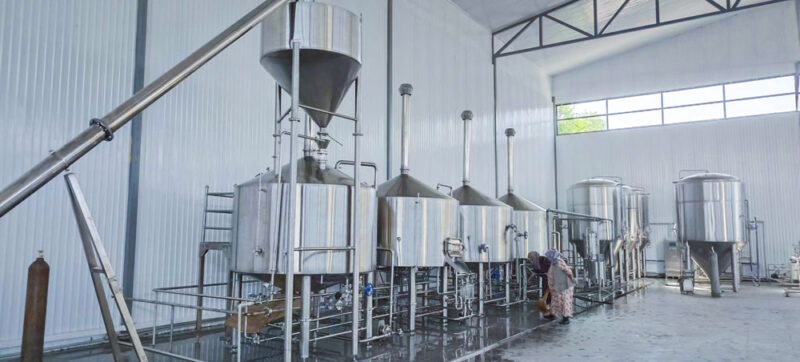
There are three common configuration levels to compare: a two-vessel brewhouse, a three-vessel brewhouse, and a four-vessel brewhouse. The difference is not simply the number of stainless vessels. It affects workflow, labor, floor space, heating demand, cleaning routines, and how easily the brewery can schedule several brews close together.
| Configuration | Operational fit | Main advantage | Cost or installation implication |
|---|---|---|---|
| Two-vessel system | Brewpub or modest production schedule | Lower complexity and smaller footprint | More manual sequencing and less process flexibility |
| Three-vessel system | Regular commercial production | Better separation of mash, lauter, and boil work | More equipment, piping, controls, and installation planning |
| Four-vessel system | Higher utilization or demanding schedules | Greater process separation and scheduling flexibility | Larger footprint, higher utility demand, and more complex commissioning |
A two-vessel brewhouse can suit a brewery that produces a limited range of ales and does not need to brew several times in a day. It may reduce the initial equipment burden, but the brewer may spend more time waiting for one stage to finish before the next stage can begin. That can be acceptable when labor is available and the production plan is moderate.
A three-vessel brewhouse usually creates a more workable commercial rhythm. Mash and lauter operations can be separated from the kettle and whirlpool functions, giving the operator more control over timing. The extra flexibility is useful when the brewery must maintain a regular brew schedule rather than brew only when cellar space becomes available.
A four-vessel brewhouse provides still more separation. It can support a higher-utilization production model, but it also adds floor-space requirements, cleaning points, valves, pumps, and control logic. The additional equipment only pays operationally when the production plan uses it. A brewery with two planned brews per week may carry complexity that never produces a measurable benefit.
Heating changes the building plan as well. Electric heating may simplify some utility arrangements, but it can require substantial electrical upgrades and affect peak-load calculations. A steam system may fit a larger or more intensively operated brewery, but it introduces a boiler, steam distribution, condensate management, ventilation, and inspection requirements. The cheapest heating option on the equipment sheet may not be the cheapest option once the building connection is included.
Controls create a similar tradeoff. Semi-automatic controls can keep the operator involved in transfers, valve changes, and timing decisions while reducing some repetitive work. Automated controls can improve repeatability and reduce manual workload, but they require more programming, sensors, commissioning time, and operator training. Automation can also make troubleshooting harder when the brewery staff understand the recipe but not the control logic.
Every quotation should state whether it includes the hot liquor tank, pumps, heat exchanger, platforms, integrated piping, instrumentation, and automation. “Complete brewhouse” can mean the main vessels only, or it can mean a process package ready to connect to the cellar. Those are materially different scopes.
A practical review marks each item as included, excluded, or supplied by others. It also records who is responsible for final connections, water and steam testing, electrical termination, software configuration, and operator training. This removes a common source of disputes: the buyer assumes the system is ready to run, while the supplier assumes the site contractor will complete the last part of the installation.
Why Fermentation Capacity Often Determines Real Output
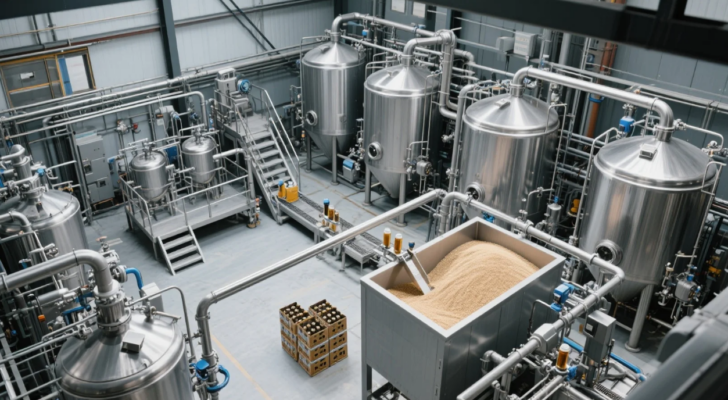
The brewhouse determines how much wort can be made in one batch. Fermenters determine how long that wort occupies the cellar before it can be transferred, packaged, or sold. In day-to-day operation, fermentation capacity may constrain real output more than brewhouse size.
A production plan starts with the number of brews per week, but it cannot stop there. Fermentation time, maturation, lagering requirements, carbonation, tank turnaround, and the number of beer styles being produced at the same time all affect the number of fermenters required. A brewery making one fast-turning pale ale has different needs from one making lagers, barrel-aged products, seasonal releases, and several draft-only beers.
Bright tanks add another scheduling variable. They can support carbonation, clarification, and short-term holding before packaging, but they do not replace fermentation capacity. If the bright tank is occupied by beer waiting for a packaging slot, the next fermented batch may have nowhere to go. If packaged beer is sold primarily through a taproom, the brewery may accept a different tank rhythm than a business supplying restaurants and distributors.
The sales channel changes the calculation:
- Draft beer can move from a bright tank to kegs with relatively little processing time.
- Packaged beer needs a filling, storage, quality-control, and dispatch schedule.
- Lager-heavy portfolios may keep fermenters occupied longer than faster-maturing ales.
A 1000L brewhouse capable of producing four batches per week cannot support four batches per week if the available fermenters are still full when the next brew day arrives. In that situation, the brewhouse is not the limiting asset. The cellar is.
Expansion planning should consider the next two to five years of production and demand. That does not mean buying every future tank on the first day. It means leaving room for additional fermenters, confirming that the glycol cooling equipment can be expanded, reserving floor space, and checking that drainage and electrical service will not need to be rebuilt during the first expansion.
Starting with limited capacity can protect cash and reduce unused equipment. The tradeoff is that the brewery may have to turn away demand, brew a narrower portfolio, or leave the brewhouse idle while waiting for tanks to empty. Investing ahead of demand creates financing and utilization risk. Tanks that sit empty do not improve the operating result, and oversized cooling equipment can increase installation and maintenance costs.
The right comparison is not “How many 1000L tanks can fit?” It is “What tank schedule supports the intended beer portfolio?” A brewery should calculate how long each core product occupies a fermenter, how many batches are planned each week, when bright tanks become available, and how much seasonal demand can be handled without cancelling regular production.
This is also where a low quotation can create a misleading sense of progress. The project may have a brewhouse delivery date, but the opening depends on the entire cellar becoming usable. If fermenters arrive late, or if glycol cooling has not been commissioned, the brewhouse can be installed and still remain commercially idle.
Utilities, Facility Work, Packaging, and Project Readiness
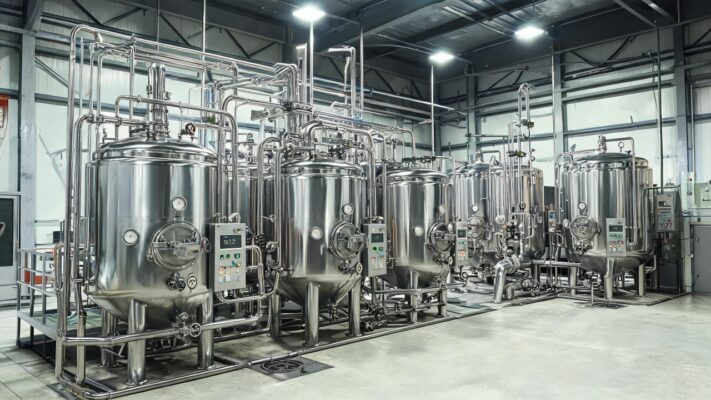
A commercial brewery is installed inside a building, not inside a quotation. Before commissioning, the site needs suitable drainage, electrical service, ventilation, water supply, heating, cooling, and utility connections. The building may also require floor reinforcement, washable wall finishes, condensate handling, hot-water distribution, and safe access around tanks and platforms.
Glycol cooling equipment is a common example of a hidden dependency. The chiller must serve the actual fermentation and bright-tank load, not only the size of the brewhouse. Insufficient cooling capacity can extend fermentation schedules, reduce tank turnover, and create quality problems during warm production periods. Oversizing may avoid that risk but can increase electrical demand and capital cost.
Packaging decisions should be made early because they affect the floor plan. Kegging equipment needs keg washing, filling, storage, and a practical route to the cold room or dispatch area. Canning equipment adds depalletizing or can handling, rinsing, filling, seaming, date coding, and finished-case storage. Bottling equipment may require different handling space, packaging materials, labeling arrangements, and labor.
Packaging can determine whether an apparently affordable process package is commercially usable. A brewery that expects most revenue from packaged beer cannot treat packaging as a later purchase without testing the consequences. If the tanks are full but the canning line is slow, unreliable, or located too far from cold storage, fermentation capacity will not translate into sales.
The brewery model should be defined before quotations are compared. A brewpub, restaurant brewery, taproom-focused operation, and small distribution brewery can all use a 1000L brewhouse, but their requirements differ in packaging, storage, labor, delivery, and inspection planning.
Freight is another separate project item. Large vessels may require special unloading equipment, temporary access, customs handling, or local transport from a port. Installation may include mechanical assembly but exclude electrical work, piping to utilities, insulation, or final testing. Commissioning and training should be scheduled rather than treated as informal assistance after delivery.
Licensing, inspections, and insurance can also become schedule-critical. The building may be ready for equipment while the operating license is still pending, or the equipment may be installed before an inspector has approved drainage, ventilation, pressure systems, or electrical work. Opening inventory and working capital then determine whether the business can operate during the remaining approval period.
A quotation-review sequence helps expose these dependencies:
- Define the production model, beer portfolio, labor plan, and sales channels.
- Check every inclusion and exclusion, including installation items.
- Match fermenters, cooling, and packaging capacity to the brew schedule.
- Confirm facility requirements for electricity, drainage, ventilation, water, and heating.
- Reserve contingency for freight, non-equipment work, delays, and working capital.
The sequence is deliberately unglamorous. It prevents the equipment quote from becoming the only number that receives attention.
A Practical Way to Build the 1000L Brewery Budget
The budget can be organized into four planning layers: production equipment; cellar and utilities; facility and installation; and launch capital. Each layer should be connected to the production plan, brew schedule, sales demand, labor availability, beer styles, and expansion target.
Production equipment includes the brewhouse configuration, malt mill, water treatment, heating method, pumps, heat exchanger, CIP system, controls, and transfer equipment. The scope should state whether platforms, integrated piping, valves, instrumentation, and spare parts are included.
Cellar and utilities covers fermenters, bright tanks, glycol cooling equipment, hot-water capacity, electrical load, water supply, compressed air where required, and utility distribution. This layer should be tested against the number of planned brews, fermentation time, maturation requirements, and tank turnaround.
Facility and installation includes drainage, floors, ventilation, electrical upgrades, heating connections, unloading, freight, mechanical installation, commissioning, inspections, and licensing. These costs depend heavily on the building. A site with suitable utilities can have a very different project burden from a vacant industrial unit requiring extensive renovation.
Launch capital includes opening inventory, packaging materials, yeast and ingredients, cleaning chemicals, insurance, rent, payroll, repairs, marketing, and cash reserves. Working capital should cover the period between initial spending and dependable sales rather than only the first brew day.
The proposed system should be tested against current demand and long-term production targets. A simple production model can compare weekly brew capacity with fermentation capacity, packaging capacity, utility capacity, and available labor. If any one of these is lower than the intended output, the advertised brewhouse capacity is not the practical capacity of the brewery.
The warning signs in a quotation are usually easy to describe:
- Scope is unclear or uses “complete system” without an equipment schedule.
- Installation, commissioning, or utility connections are not assigned.
- Automation is mentioned without specifying sensors, software, or operator training.
- Facility work is absent even though the building has not been assessed.
- Working capital is missing from the project budget.
The final selection should follow the operating model and future production plan, not merely the lowest equipment quote. Before purchase, the brewery should define its sales channel, map the brew and tank schedule, confirm packaging requirements, inspect utility capacity, identify excluded work, and reserve cash for the period when the equipment is installed but revenue is still uneven.
That process does not eliminate uncertainty. It makes the expensive uncertainties visible early enough to manage them.
FAQ
Is the price of a 1000L brewhouse the same as the total cost of opening a brewery?
No. The brewhouse is only one part of the project, while the total budget also includes fermentation, glycol cooling, packaging, facility work, installation, licenses, inventory, and working capital. The gap often becomes visible during the months between equipment delivery and commercial opening.
Which equipment is normally needed beyond the 1000L brewhouse?
A commercial brewery normally needs fermenters, bright tanks, a CIP system, glycol cooling, a malt mill, water treatment, pumps, pipelines, valves, heat exchangers, and packaging equipment. The exact scope depends on whether beer is sold mainly through draft, cans, bottles, or a combination of channels.
How does the number of fermenters affect production capacity?
More fermenters allow more batches to remain in fermentation or maturation at the same time and reduce the chance that the brewhouse sits idle. The calculation should use fermentation time, the weekly brew schedule, tank turnaround, and seasonal demand rather than simply matching one fermenter to each brewhouse batch.
Should a small brewery choose a two-vessel, three-vessel, or four-vessel system?
A two-vessel system may fit a modest brewpub schedule, while a three-vessel system offers more workflow flexibility for regular commercial production. A four-vessel system suits higher utilization or more demanding schedules, but its added floor space, utility demand, labor, and commissioning complexity need to be justified by the production plan.
What facility and utility costs are commonly overlooked in a 1000L brewery plan?
Electrical upgrades, drainage, ventilation, glycol connections, water treatment, unloading, final piping, inspections, and commissioning are frequently missed. These items can delay opening by weeks or months when they are discovered after the equipment has already been ordered.
