
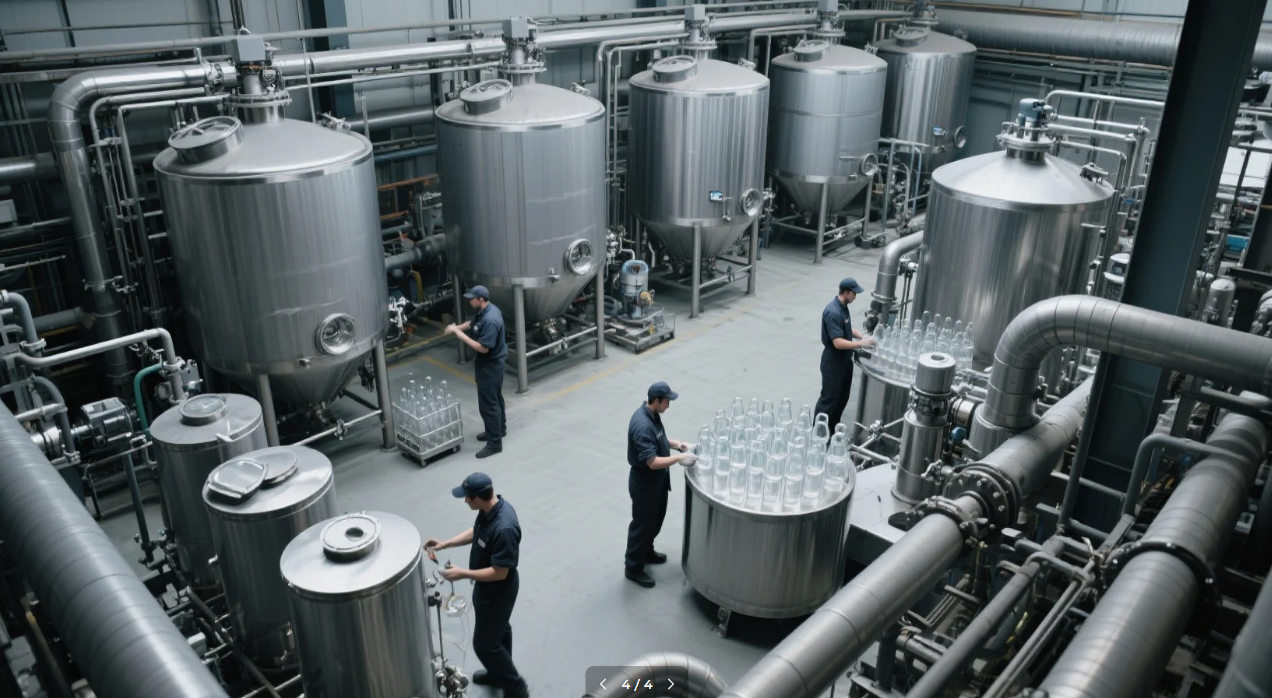
A common brewery planning mistake is to approve the brewhouse first and solve everything else later. The tank drawings then reveal that the building has no practical route for installation, the glycol system cannot remove heat quickly enough, or the packaging line cannot keep up with finished beer production. The equipment may be well made, but the plant still cannot deliver its intended output.
A commercial brewery should be planned as an integrated production system. Brewhouse volume, fermentation time, tank availability, cooling, utilities, cleaning, packaging, building access, and future expansion must be checked together before any equipment specification is approved. The largest vessel is not automatically the capacity constraint; fermentation and packaging often decide how much beer becomes sellable product.
The practical answer is to define the operating model first, then map the full process from grain intake to packaged beer. Capacity should cover the opening configuration and the first 1–3 years of expected production, while the building and utility interfaces should be confirmed before equipment manufacturing begins. This prevents a high-output brewhouse from becoming an expensive underused asset.
Define the Brewery’s Operating Model Before Choosing Equipment
The diagnostic stage starts with the business model, not a tank quotation. A taproom may need a broad beer menu, frequent small batches, and dependable draft beer storage. A brewpub may have similar variety but less need for a high-speed packaging line because much of the beer is served on site. A regional distributor supplying kegs, cans, or glass bottles requires more consistent production scheduling, finished-goods storage, and outbound logistics.
A production brewery with a smaller number of high-volume brands has a different problem. It may benefit from longer runs, larger fermentation tanks, a dedicated packaging line, and fewer recipe changeovers. Selecting the same brewhouse and tank arrangement for all four models usually creates unused equipment in one area and a bottleneck in another.
The planning inputs should be documented before the manufacturer sizes the system:
- Annual target output, expected volume during the first 1–3 years, sales channels, beer styles, fermentation times, and packaging formats.
- Available floor space, ceiling height, loading access, drainage, water quality and flow, electricity, steam, compressed air, and cooling conditions.
- Required automation, staffing assumptions, future fermentation tank additions, and possible packaging expansion.
Annual production estimates should be treated as operating forecasts rather than a single opening-day number. Industry capacity benchmarks often describe breweries in annual barrels or hectoliters, but those figures do not show how many styles are brewed, how long each beer occupies a tank, or whether the packaging schedule is concentrated on one day per week. A brewery selling mostly draft beer can carry less packaging inventory than one shipping cans through regional distributors.
Packaging format changes the plant in less obvious ways. Kegs require washing, filling, empty-keg storage, and handling space. Cans require depalletizing, rinsing or purging, seam inspection, date coding, and a reliable supply of ends and trays. Glass bottles add breakage control, more weight in finished-product movement, and different storage requirements. A packaging line selected only by hourly speed can still fail if the plant cannot stage materials or move pallets safely.
Building conditions deserve the same early scrutiny as brewing equipment. A tall fermentation tank may fit on a drawing but be impossible to stand upright under the ceiling. A brewhouse may fit through the main door while a bright beer tank does not. Drainage that looks adequate during construction can become a daily sanitation problem when hoses, CIP discharge, and hot liquor flows meet a shallow floor slope.
Water, electricity, steam, and glycol cooling also need confirmed connection points and operating capacities. A brewery can lose weeks during installation because a utility was technically available but located on the wrong side of the building, sized for intermittent use, or unable to support simultaneous brewing and cleaning. These constraints can limit the project before equipment specifications become the main issue.
Match Brewhouse Output With Fermentation and Packaging Capacity
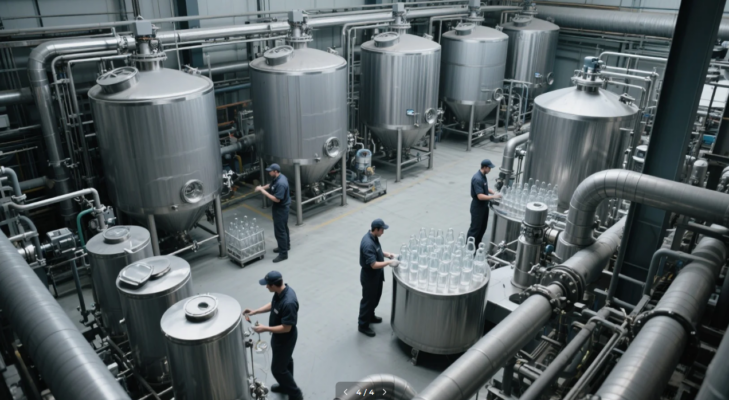
The brewhouse converts malt into wort through mashing, lautering, boiling, whirlpooling, and wort cooling. A two-vessel brewhouse may combine functions to reduce footprint and cost. A three-vessel brewhouse separates more process steps and can improve scheduling flexibility. A four-vessel brewhouse typically provides more parallel activity, which can support frequent brewing and more complex production plans, provided the rest of the plant can absorb the output.
Commercial systems may use 2, 3, or 4 vessels depending on brewing frequency, recipe flexibility, available space, budget, efficiency targets, and automation requirements. The choice affects labor and scheduling, but it does not by itself determine finished-beer capacity.
| Configuration | Operational strengths | Planning constraints | Suitable brewery profile |
|---|---|---|---|
| Two-vessel brewhouse | Compact layout, lower equipment count, simpler initial investment | Less parallel processing and more scheduling pressure | Taproom, brewpub, or smaller craft brewery |
| Three-vessel brewhouse | Better separation of mashing, lautering, and boiling; flexible daily scheduling | Requires more space, piping, and operator coordination | Growing brewery with varied recipes and regular production |
| Four-vessel brewhouse | Higher parallel activity, strong recipe and throughput flexibility | Higher cost, utility demand, automation needs, and commissioning complexity | Production brewery with frequent batches and planned scale |
The capacity mistake appears when a brewery counts brew length rather than tank occupancy. Wort may be produced in a day, but beer still needs fermentation, maturation, clarification, carbonation, and a place to wait for packaging. A lager may occupy a fermentation tank for substantially longer than a fast-turning ale. A mixed portfolio therefore needs tank quantity calculated by schedule, not simply divided by nominal tank volume.
A practical production model connects brew length with fermentation tank volume, tank turnover time, bright beer tank availability, packaging speed, and cooling load. If a brewhouse produces several batches per day, fermentation tanks must receive that wort without compressing fermentation time or forcing premature transfers. Bright beer tanks also need enough volume and turnover capacity to prevent packaged beer from waiting behind another brand.
One brewery approved a brewhouse capable of several daily batches during the first design phase. Six months after commissioning, the plant could brew at the planned rate, but it did not have enough fermentation volume to hold the beer through maturation. Glycol recovery also became slow during consecutive brew days, and the can filler was scheduled for fewer hours than the brewing team expected. The consequence was underused brewhouse capacity, delayed expansion, and a production schedule built around tank availability rather than customer demand.
The failure was not a defective machine. Each major machine performed within its own specification. The problem was that the specifications had been approved separately. The brewery had purchased theoretical wort capacity without purchasing enough time, cooling, storage, and packaging capacity to turn that wort into saleable beer.
Fermentation time and tank availability often determine real brewery output more than brewhouse size. This is especially visible when the sales mix changes. A distributor order for cans can consume a bright beer tank and packaging slot quickly, while taproom draft sales may allow the brewery to package less frequently. More brewhouse capacity can therefore increase scheduling pressure rather than increase revenue.
Wort cooling and glycol cooling should be modeled at the same time. The cooling system must handle wort transfer, fermentation temperature control, tank pull-down, bright beer storage, and ambient conditions. In warm weather, a brewery may discover that the glycol system can maintain existing tanks but cannot quickly cool a newly filled fermentation tank. The result is longer turnaround and a lower effective production rate.
Packaging equipment introduces another limit. A keg filler, can filler, or bottle filler may be rated for a certain hourly output, but actual performance includes changeovers, cleaning, quality checks, foam control, label or tray changes, and short production runs. A filler that appears oversized can be useful if it reduces labor during peak orders; it can also be wasteful if the brewery packages only a few hours each week.
When a brewhouse expansion is considered, the first question should not be whether another batch can be brewed. It should be whether fermentation tanks, cooling, bright beer storage, packaging, utilities, and labor can absorb the additional batch without reducing consistency.
Specify the Supporting Systems That Make Production Work
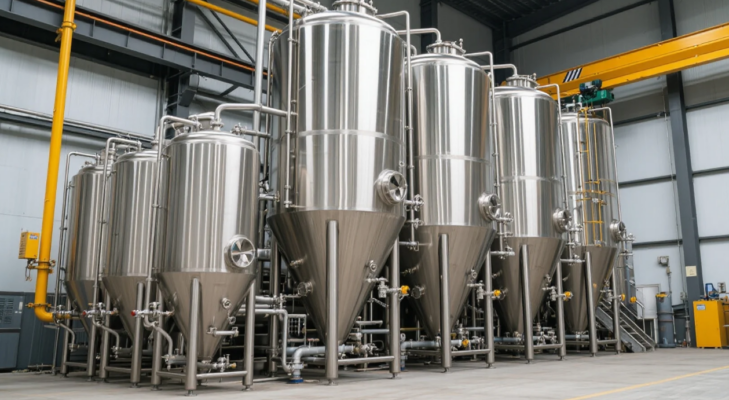
A brewhouse and a group of tanks do not constitute an operational brewery plant. Malt must arrive, be milled, moved, and measured. Wort and beer must travel through sanitary piping without unnecessary dead legs or difficult-to-clean sections. Pumps, valves, heat exchangers, sensors, control panels, and cleaning circuits must work together under real production conditions.
The malt mill and grain handling system affect dust control, transfer time, operator effort, and the consistency of the grist. A small brewery may handle bags manually, while a larger operation may need silos, conveyors, augers, or enclosed transfer. That decision affects floor loading, access for maintenance, and the route between receiving and the brewhouse.
The CIP system is another frequent source of overlooked work. Cleaning tanks and pipelines requires suitable pump capacity, chemical storage, heating, return lines, spray devices, and drain routing. If CIP circuits are not coordinated with tank placement, operators may need to connect hoses across walkways or clean one vessel at a time when the production schedule assumes parallel cleaning. The plant can still make beer, but the cleaning burden quietly removes hours from every shift.
Glycol cooling is shared infrastructure rather than an accessory attached to one tank. It supports fermentation temperature control, wort cooling support, bright beer storage, and sometimes cold-water production. Tank additions without a review of chiller capacity, buffer volume, pump sizing, and insulated piping can create a plant that works in mild weather but loses control during peak summer production.
A turnkey brewery solution spans at least 3 connected production stages: brewing, fermentation, and packaging. In practice, the interfaces between those stages create much of the operational work. The water system may need to support brewing, cleaning, and packaging at the same time. The steam system may feed brewhouse heating and hot-water generation. The compressed-air system may support valves, fillers, and instrumentation. CO₂ recovery may also be considered where the production scale and process make recovery practical.
Process controls need to reflect how operators actually work. A highly automated process control system can improve repeatability, but it can also create unfamiliar fault conditions if operators do not understand sensor readings, interlocks, manual overrides, and alarm priorities. A simpler system may be easier to maintain in a small brewery, while a growing production site may need automated recipes and recorded batch data to reduce variation across shifts.
Yeast propagation and yeast management should be included in the process map. Yeast storage, harvesting, pitching, oxygenation, and generation tracking influence fermentation reliability. The equipment does not need to be elaborate in every brewery, but the design should identify where yeast is handled, how it is cleaned, and how operators prevent cross-contamination.
Sanitary piping is where several otherwise correct systems meet. Pipe diameter, slope, valve position, drainability, insulation, and access for inspection affect both product recovery and cleaning time. A mismatched connection between the brewhouse, fermentation tanks, CIP system, and packaging line may require adapters, temporary hoses, or manual transfers. Those workarounds are often accepted during commissioning and then become permanent sources of labor and contamination risk.
Installation and commissioning should therefore be part of equipment planning, not an afterthought. Equipment can arrive on schedule and still remain idle while foundations, electrical panels, steam connections, floor drains, or control wiring are corrected. Operator training should cover normal production, cleaning, alarms, recipe changes, sampling, and shutdown procedures. A technically complete plant is not operational until staff can run it without relying on the installer for every abnormal condition.
Design the Plant Around Expansion and Daily Workflow
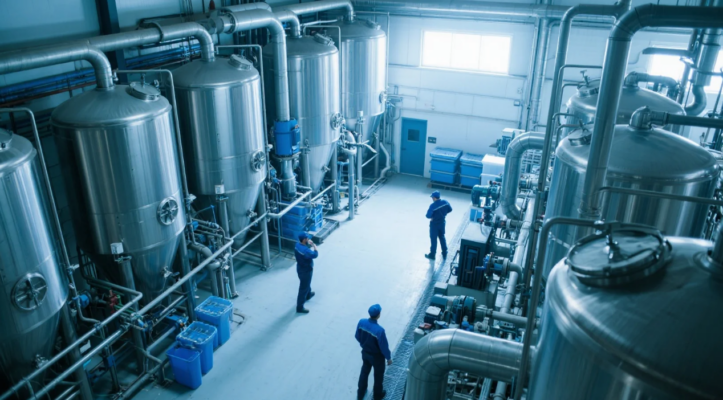
A brewery layout should describe movement, not just equipment location. Grain moves from receiving to milling and mashing. Wort moves to fermentation. Beer moves to bright beer storage, packaging, finished-goods storage, and dispatch. Cleaning chemicals, hoses, pallets, cans, kegs, bottles, and waste must also move without crossing product paths unnecessarily.
Loading access and ceiling height should be checked with actual equipment dimensions, lifting methods, and replacement plans. A tank may fit after installation but leave no route for removing a pump or heat exchanger. Maintenance access around fermentation tanks, the brewhouse, the glycol chiller, and packaging equipment must be preserved even when floor space is tight. Operators need room to sample, connect hoses, inspect valves, and clean safely.
Pipe runs deserve early attention because long or awkward routes add pressure loss, heat gain, cleaning volume, and maintenance points. They can also make future fermentation tank additions expensive. A layout that leaves one side of the tank farm accessible for expansion is usually more useful than a layout that fills every available square meter on day one.
Capacity planning should cover both the opening configuration and the first 1–3 years of expected production. That does not mean buying every future tank immediately. It means reserving space, drainage, cooling connections, electrical capacity, control channels, and safe lifting access before construction or manufacturing begins. Future packaging expansion may require more than a larger filler; it may need additional conveyors, staging, compressed air, power, finished-product storage, and loading capacity.
Automation changes staffing assumptions. A more automated brewhouse can reduce repetitive valve operations, but it does not eliminate the need for trained operators who can diagnose a failed sensor or an interrupted transfer. A lower-automation plant may need more hands during lautering and cleaning but can be easier to troubleshoot locally. The choice should be tied to shift coverage, maintenance skills, batch documentation, and the brewery’s tolerance for downtime.
The approval sequence should be kept practical:
- Confirm the business model, sales channels, beer styles, and first 1–3 years of demand.
- Map the process from grain receiving through brewing, fermentation, maturation, packaging, storage, and dispatch.
- Size fermentation, glycol cooling, utilities, CIP, and packaging against the production schedule.
- Check the building, loading route, floor drains, ceiling height, maintenance access, and expansion zones.
- Finalize equipment, sanitary piping, process controls, installation, operator training, and commissioning requirements.
A brewery can abandon a capacity expansion after discovering that the additional tanks would block a loading route or exceed the available glycol reserve. That is not necessarily a planning failure; postponing the purchase may be cheaper than forcing equipment into a layout that makes daily work worse. The less obvious cost of expansion is often not the tank itself but the new pipe run, control point, drain connection, access platform, and lost floor space around it.
The decision rule is straightforward: expansion space and utility capacity should be reviewed before equipment manufacturing begins. If the future tank location, cooling connection, packaging route, and maintenance access cannot be shown on the layout, the plant is not yet ready for final equipment approval.
FAQ
Why should fermentation capacity be planned before finalizing brewhouse size?
Fermentation capacity should be planned first because beer may occupy a tank for days or weeks after brewing. A brewhouse that produces multiple batches per day can remain underused if the brewery lacks enough tanks, cooling, maturation time, or packaging availability to receive that wort. The production schedule should model tank turnover by beer style across the first 1–3 years.
What is the difference between a two-vessel, three-vessel, and four-vessel brewhouse?
A two-vessel brewhouse combines more process functions and generally suits compact operations with lower batch frequency. Three-vessel and four-vessel brewhouses separate more stages and allow greater parallel activity, recipe flexibility, and scheduling capacity, but they require more space, utilities, controls, and operator coordination. The correct choice depends on the operating model rather than vessel count alone.
Which utilities must be reviewed when planning a commercial brewery plant?
The review should include water supply and drainage, electricity, steam or another heating source, compressed air, glycol cooling, CO₂ handling, ventilation, and floor loading. These utilities should be checked for simultaneous brewing, fermentation control, CIP, and packaging demand. Utility changes discovered during installation can delay commissioning by weeks.
Does a turnkey brewery solution include packaging equipment?
It can include packaging equipment, but the scope must be confirmed in the equipment specification. Keg fillers, can fillers, and bottle fillers have different space, cleaning, storage, compressed-air, and labor requirements. The brewery should verify whether the package includes conveyors, change parts, commissioning, operator training, and connections to bright beer storage.
What information should a brewery provide before an equipment layout is designed?
The brewery should provide expected annual output, first 1–3 years of production, beer styles, fermentation times, sales channels, packaging formats, available building drawings, ceiling height, loading access, floor drains, utility data, automation expectations, and expansion plans. Without those inputs, a layout can show that equipment fits while failing to show how people, materials, beer, and cleaning systems will move each day.
