
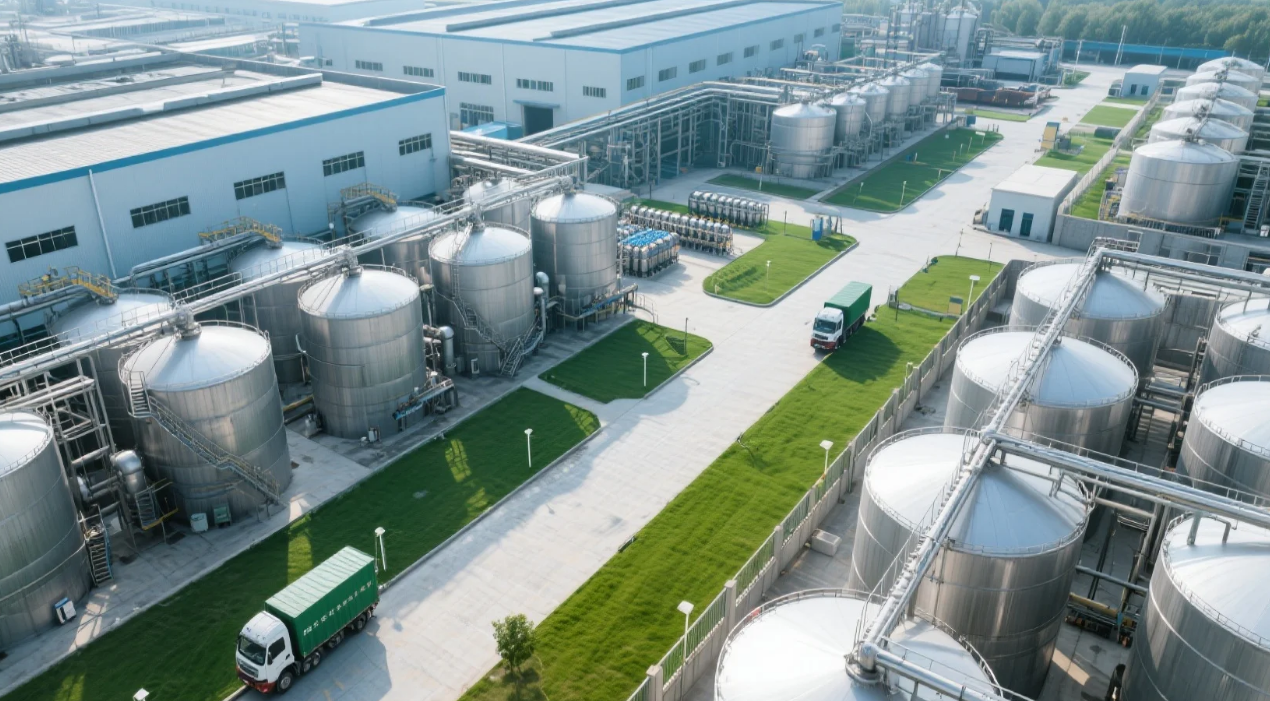
Choosing the right beer brewing equipment is essential for building an efficient, stable, and scalable brewery. Professional brewery projects require more than individual machines; they need an integrated system covering brewing, fermentation, cooling, cleaning, automation, and packaging.
A well-designed equipment solution helps brewers improve production efficiency, maintain consistent beer quality, reduce operating costs, and prepare for future expansion. Buyers should evaluate equipment capacity, material quality, process compatibility, and supplier support before investing in a complete brewing system.
What Beer Brewing Equipment Is Required for a Complete Brewery?
A complete beer brewing equipment system should integrate every production stage from raw materials to packaged beer. Many new brewery investors focus only on brewhouse vessels, but commercial beer production requires coordinated equipment for mashing, fermentation, storage, cooling, sanitation, and packaging.
A professional brewing system normally includes:
- Malt milling equipment
- Brewhouse system
- Fermentation tanks
- Bright beer tanks
- Glycol cooling system
- CIP cleaning system
- Automation control system
- Beer transfer pipelines
- Filling and packaging equipment
The main advantage of purchasing a complete equipment solution is that every component is designed to work together. Tank capacity, pump flow, cooling load, electrical requirements, and production workflow can be matched during the engineering stage, reducing installation problems and production delays.
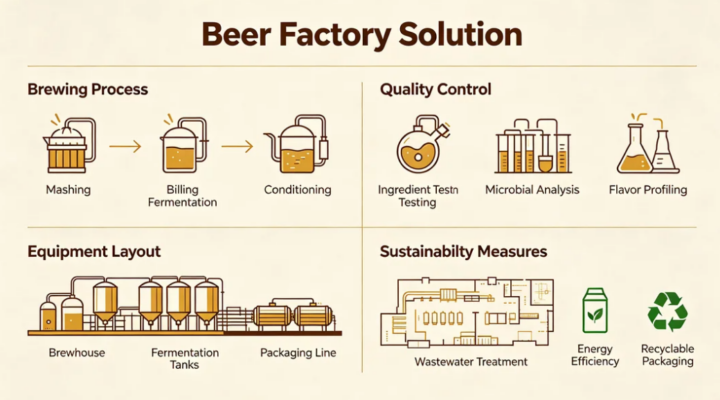
How Does the Brewhouse System Affect Beer Production Efficiency?
The brewhouse determines brewing capacity, process stability, and daily production efficiency. It is the first major equipment section where raw materials are transformed into wort through mashing, lautering, boiling, and whirlpool processes.
Different breweries require different brewhouse configurations depending on production goals.
Common Brewhouse Configurations Comparison
| Brewhouse Type | Main Equipment Structure | Capacity Range | Advantages | Suitable Buyers |
|---|---|---|---|---|
| 2 Vessel Brewhouse | Mash/Lauter Tank + Kettle/Whirlpool Tank | 100L-2000L | Compact design, lower investment | Brewpubs, small craft breweries |
| 3 Vessel Brewhouse | Mash Tank + Lauter Tank + Kettle/Whirlpool | 1000L-5000L | Higher efficiency and flexibility | Growing breweries |
| 4 Vessel Brewhouse | Separate Mash, Lauter, Kettle, Whirlpool | 5000L+ | Maximum production control | Commercial breweries |
A properly designed brewhouse improves wort quality by controlling temperature accuracy, extraction efficiency, and brewing consistency. For example, automated temperature regulation can help brewers repeat recipes accurately, while optimized vessel layouts reduce labor requirements.
Buyers should consider not only current production demand but also future expansion plans when selecting brewhouse capacity.
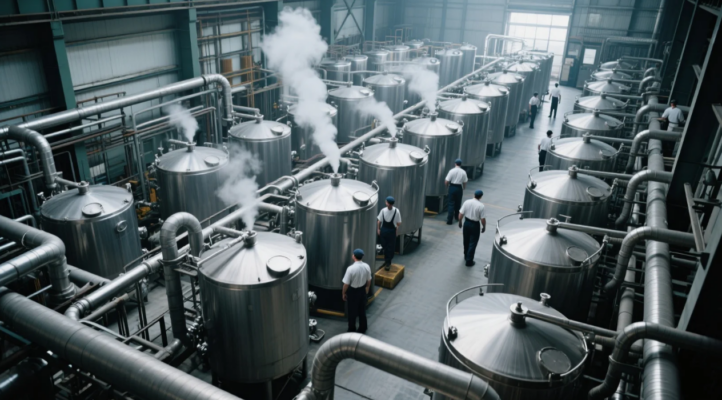
Why Are Fermentation Tanks Important in Beer Brewing Equipment Selection?
Fermentation tanks directly influence beer quality, flavor stability, and production flexibility. After wort production, yeast fermentation converts sugars into alcohol and creates the final characteristics of beer.
Most modern breweries use stainless steel cylindrical conical fermentation tanks because they provide:
- Excellent hygiene performance
- Easy cleaning capability
- Precise temperature control
- Long service life
- Pressure fermentation capability
Fermentation Tank Parameter Comparison
| Tank Type | Volume Range | Material | Working Pressure | Application |
|---|---|---|---|---|
| Small Fermenter | 100L-1000L | SUS304 Stainless Steel | 1-2 bar | Pilot brewing and brewpubs |
| Medium Fermenter | 1000L-5000L | SUS304/SUS316 Stainless Steel | 2 bar | Craft breweries |
| Large Fermenter | 5000L+ | SUS304/SUS316 Stainless Steel | 2-3 bar | Industrial production |
The number of fermentation tanks should match the brewhouse output. Insufficient fermentation capacity can create production bottlenecks because freshly brewed wort must wait for available tanks.
A professional brewery design usually calculates fermentation volume according to brewing frequency, beer style, fermentation time, and market demand.
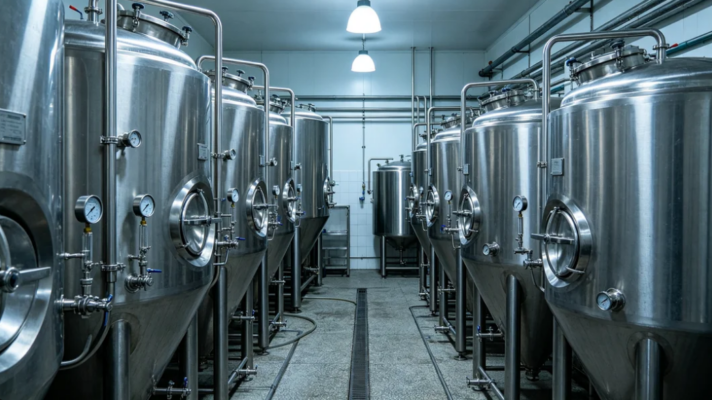
How Do Cooling and CIP Systems Improve Brewery Operation?
Cooling and cleaning systems are essential for maintaining stable beer quality and efficient operation. Although they do not directly produce beer, these supporting systems determine whether the brewery can operate continuously.
Cooling System
A complete cooling system normally includes:
- Glycol chiller
- Glycol storage tank
- Cooling pumps
- Insulated pipelines
- Temperature control devices
Precise cooling allows brewers to control fermentation temperatures, which directly affects yeast performance and beer flavor.
CIP Cleaning System
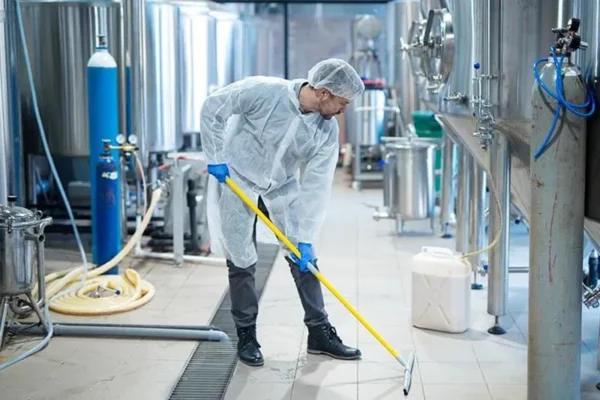
The CIP system improves sanitation efficiency by cleaning tanks, pipes, and equipment without complete disassembly.
A typical CIP system includes:
| Component | Function |
|---|---|
| Caustic Tank | Removes organic residues |
| Acid Tank | Removes mineral deposits |
| Hot Water Tank | Supports sterilization |
| Cleaning Pump | Circulates cleaning solution |
| Spray Ball System | Cleans tank interiors |
A brewery with an efficient CIP system can reduce downtime, improve hygiene standards, and maintain consistent production quality.
What Packaging Equipment Should Buyers Include in a Brewing System?
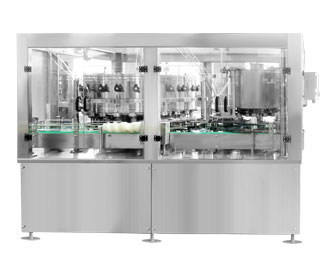
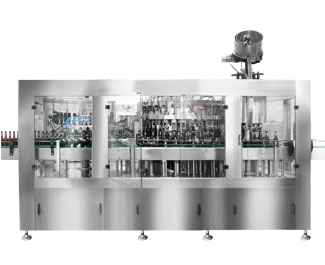
Packaging equipment should match the brewery’s sales channels and production scale. Brewing beer successfully is only part of the process; efficient packaging determines whether products can reach customers safely and consistently.
Common packaging solutions include:
- Keg filling systems
- Bottle filling machines
- Can filling machines
- Labeling machines
- Carton packaging equipment
Packaging Equipment Comparison
| Packaging Type | Main Equipment | Advantages | Suitable Application |
|---|---|---|---|
| Keg Packaging | Keg Washer and Filler | Low packaging cost, reusable containers | Taprooms and restaurants |
| Bottle Packaging | Bottle Filler + Labeler | Traditional market acceptance | Retail distribution |
| Can Packaging | Can Filler + Seamer | Lightweight and modern | Supermarkets and exports |
A complete brewery solution should consider packaging during the initial design stage. Space planning, beer transfer routes, storage areas, and production speed all influence packaging efficiency.
How Does Automation Improve Beer Brewing Equipment Performance?
Automation helps breweries achieve repeatable production and reduce operational errors. Modern beer brewing equipment can include different automation levels depending on budget and production requirements.
Manual System
Suitable for:
- Small breweries
- Experienced brewers
- Limited production volumes
Advantages:
- Lower investment cost
- Flexible operation
Semi-Automatic System
Suitable for:
- Growing craft breweries
Advantages:
- Better process consistency
- Easier employee training
- Reduced manual operation
Fully Automatic System
Suitable for:
- Large commercial breweries
Advantages:
- Recipe management
- Automatic temperature control
- Production data monitoring
- Reduced labor dependence
Automation should be selected according to actual business needs rather than simply choosing the highest level available.
What Should Buyers Check Before Purchasing Beer Brewing Equipment?
Buyers should evaluate equipment quality, supplier experience, customization ability, and after-sales support before making an investment.
Important evaluation factors include:
1. Stainless Steel Quality
High-quality breweries generally use food-grade stainless steel such as SUS304 or SUS316. Material selection affects corrosion resistance, hygiene performance, and equipment lifespan.
2. Production Capacity Matching
Equipment should match:
- Expected annual beer output
- Brewing frequency
- Fermentation cycle
- Packaging requirements
Oversized equipment increases investment costs, while undersized systems limit business growth.
3. Complete Engineering Support
Experienced suppliers can provide:
- Brewery layout design
- Equipment drawings
- Installation guidance
- Commissioning services
- Operator training
A complete turnkey approach reduces communication difficulties because one supplier manages equipment compatibility and project coordination.
Conclusion: How Can the Right Beer Brewing Equipment Support Brewery Growth?
The right beer brewing equipment provides the foundation for consistent quality, efficient production, and long-term brewery development. Buyers should not only compare equipment prices but also consider system design, production capability, automation options, packaging requirements, and technical support.
A complete brewing system that integrates brewhouse equipment, fermentation tanks, utilities, CIP cleaning, and packaging solutions allows breweries to operate more efficiently and adapt to future market growth.
Frequently Asked Questions About Beer Brewing Equipment
1. What equipment is included in a complete beer brewing system?
A complete system usually includes a brewhouse, fermentation tanks, bright beer tanks, cooling system, CIP system, control system, and packaging equipment.
2. What size beer brewing equipment should a new brewery choose?
The ideal size depends on expected production volume, available space, investment budget, and future expansion plans. Small breweries often start with 500L-2000L systems, while commercial breweries may require 5000L or larger systems.
3. Is stainless steel important for beer brewing equipment?
Yes. Stainless steel provides corrosion resistance, easy cleaning, and long-term durability, making it the preferred material for professional brewing equipment.
4. Should buyers purchase individual machines or a complete brewery solution?
A complete brewery solution can simplify project management because equipment design, installation, and system integration are handled together. This helps reduce compatibility problems and improves startup efficiency.
